Portret Julio González

Obrazy: 23 najsłynniejszych dzieł artysty Julio González – spojrzenie galerii

Aktualizacja: Listopad 2026 · ranking według naszego wskaźnika popularności (liczba wyszukiwań, wizyt i zamówień dla każdego dzieła) · 24 dzieł Julio González w naszym katalogu

W skrócie

Według opinii kuratorów galerii, najsłynniejszym obrazem Julio González jest Maternity (1906), którego oryginał znajduje się w Museu Nacional d'Art de Catalunya w Barcelona. Personnage à la Main Percée II 16-2 38 (1936) i Etude pour Danseuse à la Palette (1934) dopełniają trio, które zna każde oko. Z 24 dzieł Julio González w naszym katalogu, galeria prezentuje poniżej 23 najsłynniejszych prac – każda z nich jest oryginałem z podaniem roku powstania, muzeum oraz cech wyróżniających ją na tle innych.

1876 – 1942, Barcelona Cubism Najwięcej dzieł: Museu Coleção Berardo

10 najlepszych obrazów artysty Julio González w galerii

1
Maternity (1906) autorstwa Julio González

Maternity

1906 · Oil · Museu Nacional d'Art de Catalunya, Barcelona

A woman sits in profile, her form anchored by the heavy, organic mass of an infant held against her. The scene is hushed, draped in a palette of desaturated earth tones—ochre, beige, and muted browns. A pale blue sky peeks through the background, offering a cool contrast to the warmth of the skin. The lines are soft, blurred at the edges, as if seen through a morning mist. There is…

2
Personnage à la Main Percée II 16-2 38 (1936) autorstwa Julio González

Personnage à la Main Percée II 16-2 38

1936 · Ink On Paper · Museu Coleção Berardo, Lizbona

A stylized figure dominates the vertical plane, rendered with elongated limbs and simplified features that suggest a state of profound alienation. The form is defined by a rhythmic interplay of bold, dark outlines and delicate hatching, creating a sense of internal structure and movement. A circular object, reminiscent of a sun or a wheel, sits near the top center, anchoring the composition. The figure's anatomy is abstracted into geometric shapes—circles,…

3
Etude pour Danseuse à la Palette (1934) autorstwa Julio González

Etude pour Danseuse à la Palette

1934 · Charcoal · Museu Coleção Berardo, Lizbona

In this 1934 drawing, we encounter a figure caught in a moment of profound expression. The subject, a woman, appears to be in the midst of a performance, perhaps singing or speaking, as suggested by the open gesture of her mouth. There is a certain urgency in the way her form is rendered, an attempt to capture the fleeting energy of a dancer rather than a static pose. The composition…

4
Femme Etrange (1939) autorstwa Julio González

Femme Etrange

1939 · Ink On Paper · Museu Coleção Berardo, Lizbona

The artwork, titled Femme Etrange, is a monochromatic drawing executed in black ink on cream-colored paper. The central figure is a woman whose proportions are exaggerated, creating an unnatural silhouette. She is positioned slightly off-center to the left, dominating the vertical frame. Surrounding her are several other elements, including a bird in the upper left corner and faint bird shapes in the background. A heart-like shape is situated near the…

5
Deux études pour monsieur Cactus (L (1939) autorstwa Julio González

Deux études pour monsieur Cactus (L

1939 · Ink On Paper · Museu Coleção Berardo, Lizbona

In this 1939 ink drawing, the artist explores the intersection of animal form and musicality. Two stylized figures—a cat and a bird—interact alongside a central instrument, likely a guitar or violin. The composition is asymmetrical, utilizing a vertical format that allows smaller, gestural sketches to occupy the periphery. These secondary marks add a sense of movement to the page, suggesting a rapid, spontaneous process of artistic inquiry.

6
Head Shouting autorstwa Julio González

Head Shouting

The artwork titled Head Shouting is a creation by the artist Julio González. It is a work that carries many names, known in various contexts as Cap cridant or Tête de Montserrat criant. In other records, it appears as Head of the Montserrat, II or Head of Screaming Montserrat. The subject is a peasant woman with a face frozen in terror, a figure often identified as a Catalan Peasant Mother.

Obrazy artysty Julio González, uszeregowane od 11 do 23 miejsca

Tematy, które przyciągnęły wzrok Julio González

Cztery motywy najczęściej powracające w tych oryginałach, z których każdy doczekał się swojego najdoskonalszego przykładu.

Muzea przechowujące oryginały Julio González

5 muzeów, w których znajduje się najwięcej obrazów z tej strony.

Muzea Miasto Dzieła artysty Julio González Obrazy z tej listy
Museu Coleção Berardo, LizbonaMuseu Coleção Berardo Lizbona 7 Personnage à la Main Percée II 16-2 38, Etude pour Danseuse à la Palette, Femme Etrange
Museo Nacional Centro de Arte Reina Sofía, MadrytMuseo Nacional Centro de Arte Reina Sofía Madryt 6 Portrait de Marie-Thérèse (Portrait of Marie-Thérèse), Nature morte aux oignons (Still Life with Onions), Paysanne assise (Seated Peasant Woman)
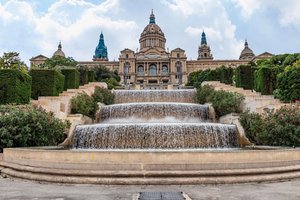
Museu Nacional d'Art de Catalunya, BarcelonaMuseu Nacional d'Art de Catalunya Barcelona 4 Maternity, Head Shouting, Self-portrait 113511-000
Staatliche Kunsthalle Karlsruhe, KarlsruheStaatliche Kunsthalle Karlsruhe Karlsruhe 1 Cactus Person II
Kröller-Müller Museum, OtterloKröller-Müller Museum Otterlo 1 Prayer

Julio González, jedno kultowe dzieło na dekadę

Dzieła według dekad

Wybierz dekadę, aby zobaczyć dzieło, które ją definiuje.

Obrazy artysty Julio González: odpowiedzi galerii

Który obraz Julio González jest najsłynniejszy ze wszystkich?Odkryj odpowiedź

Maternity (1906), Museu Nacional d'Art de Catalunya, Barcelona. Następne są Personnage à la Main Percée II 16-2 38 (1936) oraz Etude pour Danseuse à la Palette (1934).

Ile lat miał Julio González, gdy ukończył Maternity?Odkryj odpowiedź

30 lat: Maternity pochodzi z 1906, a Julio González urodził(a) się w 1876.

Które to 10 najlepszych obrazów Julio González?Odkryj odpowiedź

Maternity, Personnage à la Main Percée II 16-2 38, Etude pour Danseuse à la Palette, Femme Etrange, Deux études pour monsieur Cactus (L, Head Shouting, Self-portrait 113511-000, Les Plans Rigoureux, Femme au Miroir Rouge, Vert et Jaune i Cactus Person II. Powyższy ranking zawiera rok powstania oraz muzeum dla każdego z nich.

Ile dzieł stworzył/a Julio González?Odkryj odpowiedź

Nasz katalog zawiera 24 dzieł artysty Julio González, datowanych od 1906 do 1942.

Gdzie można znaleźć najsłynniejsze oryginały autorstwa Julio González?Odkryj odpowiedź

W większości znajdują się w Museu Coleção Berardo (Lizbona), Museo Nacional Centro de Arte Reina Sofía (Madryt) i Museu Nacional d'Art de Catalunya (Barcelona). Powyższa tabela muzeów zawiera ich pełną listę.

Kiedy Julio González stworzył swoje najsłynniejsze obrazy?Odkryj odpowiedź

W 1930s: 7 z 23 dzieł na tej stronie powstało w tym czasie, w tym Personnage à la Main Percée II 16-2 38.

Które z najsłynniejszych dzieł Julio González należą do jego najwcześniejszych i najpóźniejszych prac?Odkryj odpowiedź

Na tej stronie najwcześniejszy to Maternity (1906), a najpóźniejszy Personnage Spatial (1942).

Do jakich tematów Julio González powracał najczęściej?Odkryj odpowiedź

Woman (3), Figure (3) i Profile (2), w ramach 23 dzieł na tej stronie.

W jakiej technice najczęściej tworzył Julio González?Odkryj odpowiedź

Oil, dla 3 z 23 dzieł na tej stronie.

Z jakim nurtem związany jest Julio González?Odkryj odpowiedź

Cubism, sądząc po oryginałach na tej stronie.

Które oryginały artysty Julio González znajdują się w zbiorach Museu Coleção Berardo?Odkryj odpowiedź

Personnage à la Main Percée II 16-2 38, Etude pour Danseuse à la Palette i Femme Etrange: Museu Coleção Berardo, Lizbona posiada 7 dzieł widocznych na tej stronie.

Julio González: artysta

The Sculptor Who Found Beauty in Iron

Julio González stands as a monumental figure in the history of modern sculpture, a visionary who transformed the very language of three-dimensional form. Born in Barcelona on September 21st, 1876, González was destined for a life intertwined with metal. He descended from a lineage steeped in the meticulous traditions of craftsmanship; his grandfather was a goldsmith in Galicia, and his father, Concordio González, operated a workshop specializing in the fabrication of gold, silver, and iron. From his earliest years, the rhythmic clang of the hammer and the intense heat of the forge were not merely background noises but the foundational elements of his artistic vocabulary. This deep-seated mastery of metallurgy would later allow him to achieve what many thought impossible: treating iron with the same lyrical fluidity as a painter treats a brushstroke.

The trajectory of González’s life took a transformative turn when he moved to Paris in 1902, immersing himself in the electric atmosphere of Montmartre. It was here that his technical prowess met the radical spirit of the avant-garde. He found himself part of a vibrant circle of Spanish expatriates, most notably Pablo Picasso and Pablo Gargallo. The relationship with Picasso was particularly profound; their shared passion for experimentation led to a legendary artistic dialogue that would redefine the boundaries of sculpture. While Picasso provided the conceptual spark of Cubism, González provided the technical innovation required to translate those fragmented, multi-dimensional ideas into physical reality. Together, they pioneered a new way of seeing, moving away from the heavy, solid masses of traditional bronze and marble toward something far more ethereal.

Drawing in Space: A Revolution of Form

González’s true genius lay in his ability to treat iron as if it were a sketch drawn in mid-air. He moved beyond the concept of sculpture as a solid volume, instead embracing the idea of drawing in space. By utilizing flat pieces, strips, and rods of scrap and old iron, he could suggest the presence of a figure through nothing more than a few expressive, ascending lines. This technique allowed him to capture the essence of movement and light, creating works that felt both skeletal and incredibly alive. His favorite subjects—often women captured in moments of quiet introspection, dancing, or grooming—were rendered with a sketchy, rhythmic quality that emphasized line over mass.

As his career progressed, particularly from 1932 onwards, his work underwent a fascinating evolution toward a more sober and austere aesthetic. The complexity of his earlier assemblages gave way to a profound linearity. In masterpieces such as Prayer, the use of simple bars and rods creates a hauntingly beautiful suggestion of a kneeling woman, her arms reaching upward in a gesture of spiritual yearning. This period demonstrated his ability to strip away the unnecessary, leaving behind only the most potent emotional traces. His mastery of welding, cutting, and forging allowed him to manipulate the industrial medium of iron to convey the most delicate human emotions, bridging the gap between the industrial age and the human soul.

Legacy and Historical Significance

Though he remained largely unrecognized by the mainstream during much of his lifetime, the historical significance of Julio González cannot be overstated. He is widely revered as the "father of all iron sculpture of this century," a title that honors his role in legitimizing iron as a primary medium for fine art. His innovations paved the way for generations of abstract sculptors who would continue to explore the interplay between void and solid, line and volume. By breaking the traditional mold of sculpture, he liberated the medium from its reliance on weight and density, offering instead a vision of art that is light, transparent, and infinitely expressive.

Today, the legacy of González lives on in every modern work that dares to use negative space as a structural element. His life's work remains a testament to the power of tradition meeting innovation—a journey from the ancestral forge of Barcelona to the cutting edge of the Parisian avant-garde. Through his hands, the cold, unyielding nature of iron was transformed into a medium of profound grace, forever changing how we perceive the relationship between matter and space.