


1


Aktualizacja: Październik 2026 · ranking według naszego wskaźnika popularności (liczba wyszukiwań, wizyt i zamówień dla każdego dzieła) · 274 dzieł John Sell Cotman w naszym katalogu
W skrócie
Bristol, With The Church Of St Mary Redcliffe to obraz autorstwa John Sell Cotman, który przyciąga najwięcej spojrzeń. Następnie wzrok kieruje się na Cottages Along A River Bank i Bridge and Cows. Spośród 274 dzieł John Sell Cotman w naszym katalogu, tych 100 jest najbardziej znanych – każde z nich to unikatowy oryginał, przedstawiony wraz z rokiem powstania, muzeum oraz powodem, dla którego przetrwało próbę czasu.


 A dismasted brig1808 · British Museum
12
 Fish Swills And Rudder,1809
13
 St. Mary1805 · Te Papa
14
 Quidenham Hall, Norfolk1818 · Birmingham Museum and Art Gallery
15
 The Church of St Pierre, Caen1818 · Birmingham Museum and Art Gallery
16
 Street Scene at Alencon, Normandy1828 · Birmingham Museum and Art Gallery
17
 Harlech Castle1835 · Birmingham Museum and Art Gallery
18
 Hay Barges on the Medway1859 · Higgins Art Gallery And Museum
19
 Liber Studiorum: Plate 48, A Study1838 · Cleveland Museum of Art
20
 Norwich Market Place
21
 Southend, Pier Hill
22
 Yarmouth Sands, Norfolk
23
 A Ruined Porch
24
 East Winch, Norfolk; A Man And A Dog By A River With A Barn Beyond
25
 Collegiate Church Of St. Hildebert At Gournay
26
 Statue Of William, Duke Of Normandy
27
 A Study Of Farm Buildings
28
 A Figure On A Bridge Below Cottages, Wales
29
 St. Peter At Lisieux, Normandy- West Front
30
 Castle Acre Priory, Norfolk -
31
 Landscape, Boat On A River
32
 Mountainous Landscape, North Wales
33
 Domfront, Looking To The South East
34
 Saint George De Bocherville
35
 Wherries On Breydon
36
 An Old House At St Albans
37
 Saint James Of Compostela
38
 Llyn Ogwen1824 · Narodowe Muzea Liverpool
39
 Liber Studiorum: Plate 15, Cader Iris, North Wales1838 · Cleveland Museum of Art
40
 The Jesus Chapel, Norwich Cathedral with the tomb of Sir Thomas Windham1807 · Art Gallery of New South Wales
41
 Liber Studiorum: Plate 26, Monnow Bridge, Monmouthshire1838 · Cleveland Museum of Art
42
 WindmillTe Whare O Rehua Sarjeant Gallery
43
 Entmastete Brigg
44
 Melton Church Norfolk
45
 Tan-y-bwlch, North Wales
46
 Wenlock Priory
47
 The Gate House, Thornton Abbey, Humberside
48
 Kirkham Priory, York
49
 Sailing Wherries And Boats In A Choppy Sea
50
 East End Of Howden Church, Yorkshire
51
 Millbank On The Thames
52
 Church Of Fontaine-de-henri Near Caen
53
 In Rokeby Park
54
 A Screen, Norwich Cathedral
55
 The Refectory At Walsingham Priory
56
 Evening, Duncombe Park
57
 Welsh Mountains
58
 Chest In Dersingham Church, Norfolk
59
 Castle Acre Priory
60
 Bolton Priory, Yorkshire
61
 Cattle Grazing In A Mountainous Landscape
62
 Ouvres Church, Normandy
63
 Great Snoring Church, Norfolk
64
 Aberystwyth Castle
65
 Lake At Trentham, Staffordshire
66
 Notre Dame Sur L'eau, Domfront, Normandy
67
 Fantastic Figures Seated On A Mound
68
 Study of a Coffin Lid
69
 Studies of Two Coffin Lids
70
 East barsham hall
71
 An Ancient Alms Box, Walsingham Church, Norfolk
72
 Abbatial House, Abbey Of St Ouen, Rouen
73
 Yarmouth Beach, Fishing Pots
74
 Mortain, Normandy
75
 Abbey Church Ruins At Jumièges, Normandy, France
76
 Studies Of Four Coffin Lids
77
 Studies Of Five Coffin Lids
78
 Loch Ranza Castle, Isle Of Arran, Scotland
79
 Doorway And Window Of A Church
80
 The church of saint michael looking across the river waveney, beccles, suffolk
81
 Landscape In Normandy
82
 Framlingham Castle, Suffolk
83
 Caricature Of A Sailo
84
 Hell Cauldron
85
 Castle In A Landscape
86
 North Doorway Of Hales Church, Norfolk
87
 Hurch Of Graville Near Havre De Grace, Normandy
88
 Castle Acre Priory, Norfolk
89
 Studies of Two Coffin Lids from - Norfolk Churches
90
 Holt Heath, Near Norwich
91
 Beeston Castle, Cheshire- Entrance To The Castle
92
 Abbaye aux hommes, caen
93
 Hever Castle, Kent
94
 Five Coffin Lids From - Norfolk Churches
95
 Yarmouth, The North-west Tower
96
 Window On The North Side Of Burnham Ulph Church, Norfolk
97
 Studies Of Five Coffin Lids -
98
 Ruin Of A Norman Church
99
 A Castle Tower
100
 River And Windmill
Cztery motywy najczęściej powracające w tych oryginałach, z których każdy doczekał się swojego najdoskonalszego przykładu.
8 muzeów, w których znajduje się najwięcej obrazów z tej strony.
| Muzea | Miasto | Dzieła artysty John Sell Cotman | Obrazy z tej listy |
|---|---|---|---|
 Birmingham Museum and Art Gallery |
Birmingham | 7 | The Devil's Bridge, North Wales, Bolton Abbey, Yorkshire, St Mary's Abbey, York |
 Cleveland Museum of Art |
Cleveland | 3 | Liber Studiorum: Plate 48, A Study, Liber Studiorum: Plate 15, Cader Iris, North Wales, Liber Studiorum: Plate 26, Monnow Bridge, Monmouthshire |
 Scottish National Gallery |
Edynburg | 2 | Buildings On A River |
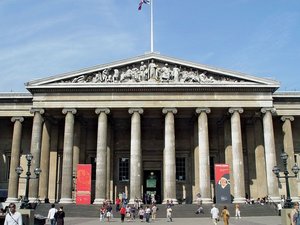 British Museum |
Londyn | 2 | A dismasted brig |
 Victoria and Albert Museum |
Londyn | 1 | The Chirk Aqueduct Of |
 Te Papa |
Wellington | 1 | St. Mary |
 Higgins Art Gallery And Museum |
Bedford | 1 | Hay Barges on the Medway |
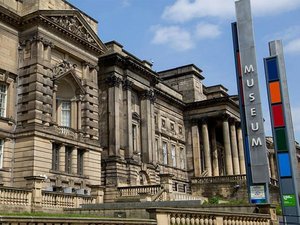 Narodowe Muzea Liverpool |
Liverpool | 1 | Llyn Ogwen |
Wybierz dekadę, aby zobaczyć dzieło, które ją definiuje.
Bristol, With The Church Of St Mary Redcliffe. Następne są Cottages Along A River Bank oraz Bridge and Cows.
Bristol, With The Church Of St Mary Redcliffe, Cottages Along A River Bank, Bridge and Cows, The Chirk Aqueduct Of, Silver Birches, Buildings On A River, The Devil's Bridge, North Wales, Bolton Abbey, Yorkshire, Coalbrookdale, i St Mary's Abbey, York. Powyższy ranking zawiera rok powstania oraz muzeum dla każdego z nich.
Nasz katalog zawiera 274 dzieł artysty John Sell Cotman, datowanych od 1801 do 1838.
W większości znajdują się w Birmingham Museum and Art Gallery (Birmingham), Cleveland Museum of Art (Cleveland) i Scottish National Gallery (Edynburg). Powyższa tabela muzeów zawiera ich pełną listę.
W 1800s: 8 z 100 dzieł na tej stronie powstało w tym czasie, w tym The Devil's Bridge, North Wales.
Na tej stronie najwcześniejszy to The Devil's Bridge, North Wales (1801), a najpóźniejszy Liber Studiorum: Plate 48, A Study (1838).
Temples (15), Buildings (14) i Landscape (10), w ramach 100 dzieł na tej stronie.
Etching, dla 2 z 100 dzieł na tej stronie.
Romanticism i Norwich school, sądząc po oryginałach na tej stronie.
The Devil's Bridge, North Wales, Bolton Abbey, Yorkshire i St Mary's Abbey, York: Birmingham Museum and Art Gallery, Birmingham posiada 7 dzieł widocznych na tej stronie.
John Sell Cotman, a name inextricably linked to the serene beauty and evocative atmosphere of early 19th-century England, emerged from the vibrant artistic community of Norwich to become a pivotal figure in British Romanticism. Born on May 16, 1782, into a family deeply rooted in the prosperous trades of silk merchantry and lace dealing, Cotman’s path wasn't immediately destined for the world of art. Yet, an innate sensitivity to the natural world—a profound connection to light, color, and texture—and a burgeoning talent quickly steered him away from commerce and toward a life dedicated to capturing its essence on canvas and paper. His early education at Norwich Grammar School provided a foundational understanding of classical studies, but it was his relocation to London in 1798 that truly ignited the flame within him, setting him upon a transformative artistic journey.
Cotman’s artistic identity became inextricably linked to the Norwich School, a distinctive movement of painters who distinguished themselves by their unwavering focus on depicting the unique character and charm of the Norfolk countryside. Unlike many of his contemporaries, preoccupied with grand historical narratives or idealized classical forms, the Norwich School artists cultivated a deep appreciation for the subtle nuances of their local landscape—the rolling fields, the meandering rivers, the quaint villages, and the ever-changing light. Cotman quickly rose to prominence within this group, developing a style characterized by masterful watercolor technique, meticulous attention to detail, and a uniquely Romantic sensibility. He possessed an exceptional ability to translate fleeting impressions into enduring works of art, capturing the atmosphere and mood of a scene with remarkable sensitivity. His paintings weren’t merely representations of landscapes; they were imbued with emotion—a sense of tranquility, melancholy, or quiet contemplation.
Cotman's artistic style was defined by his exceptional command of watercolor, a medium he elevated to new heights. He wasn’t simply applying color to paper; he was sculpting with washes—building up layers of translucent pigment to create atmospheric depth and luminous effects. His technique involved a delicate balance between controlled precision and spontaneous expression, allowing for both meticulous detail and a sense of fluidity and movement. He frequently employed dry brushstrokes to suggest texture and form, while utilizing broad washes of color to evoke the vastness of the sky or the shimmering surface of water. His etchings, often preparatory studies for his paintings, further demonstrated his versatility and technical skill, showcasing his ability to capture subtle tonal variations and intricate details with remarkable precision. He was a master of light and shadow, skillfully manipulating color to create a sense of depth and atmosphere that drew viewers into the heart of his landscapes.
Among Cotman’s most celebrated works are “Jesus Chapel, Norwich Cathedral with the tomb of Sir Thomas Windham,” a quintessential example of the Norwich School's style—a meticulously rendered depiction of a local landmark imbued with a sense of quiet reverence. “View From Yarmouth Bridge, Norfolk, Looking Towards Breydon, Just After Sunset” is another iconic image, capturing the beauty of the coastal landscape at twilight. His work was influenced by the Romantic movement’s emphasis on emotion and imagination, as well as by his encounters with other artists in London, particularly J.M.W. Turner and Thomas Girtin. These experiences broadened his artistic horizons and helped him to develop a more expressive and dynamic style. He also drew inspiration from the works of earlier landscape painters, such as Constable and Gainsborough, adapting their techniques to suit his own unique vision.
John Sell Cotman’s influence extended far beyond his prolific output. He played a crucial role in shaping the development of British art, particularly within the context of the Norwich School movement. His emphasis on direct observation, atmospheric effects, and emotional resonance resonated with subsequent generations of artists. Furthermore, his dedication to teaching ensured that his artistic principles were passed down to a new cohort of painters. Both of his sons, Miles Edmund Cotman and John Joseph Cotman, followed in their father’s footsteps, contributing to the family's enduring legacy within the art world. Today, Cotman’s works are held in prestigious collections worldwide—the Tate Gallery, the British Museum, the Victoria and Albert Museum, and the Yale Center for British Art—and continue to captivate viewers with their beauty, sensitivity, and profound connection to the natural world. He remains a celebrated figure, not only as a master of watercolor and etching but also as a key representative of the Romantic spirit in English art. His dedication to capturing the essence of place and emotion ensures his enduring relevance for generations to come.


