Portret John Guthrie Spence Smith

43 najsłynniejszych obrazów artysty John Guthrie Spence Smith – wybór z galerii

Aktualizacja: Listopad 2026 · ranking według naszego wskaźnika popularności (liczba wyszukiwań, wizyt i zamówień dla każdego dzieła) · 43 dzieł John Guthrie Spence Smith w naszym katalogu

W skrócie

Z wszystkich oryginałów pozostawionych przez John Guthrie Spence Smith, najsłynniejszym jest A Midlothian Farm (1925). Tuż za nimi znajdują się Self Portrait (recto) (1917) oraz Standing Female Nude. Nasz katalog zawiera 43 dzieł autorstwa John Guthrie Spence Smith; galeria zachowała 43 najbardziej podziwianych na świecie prac, z których każda została przedstawiona wraz z datą powstania, informacją o muzeum oraz jej historią.

1880 – 1951, Perth Impressionism Najwięcej dzieł: Royal Scottish Academy of Art - Architecture

10 najlepszych obrazów artysty John Guthrie Spence Smith: wybór galerii

1
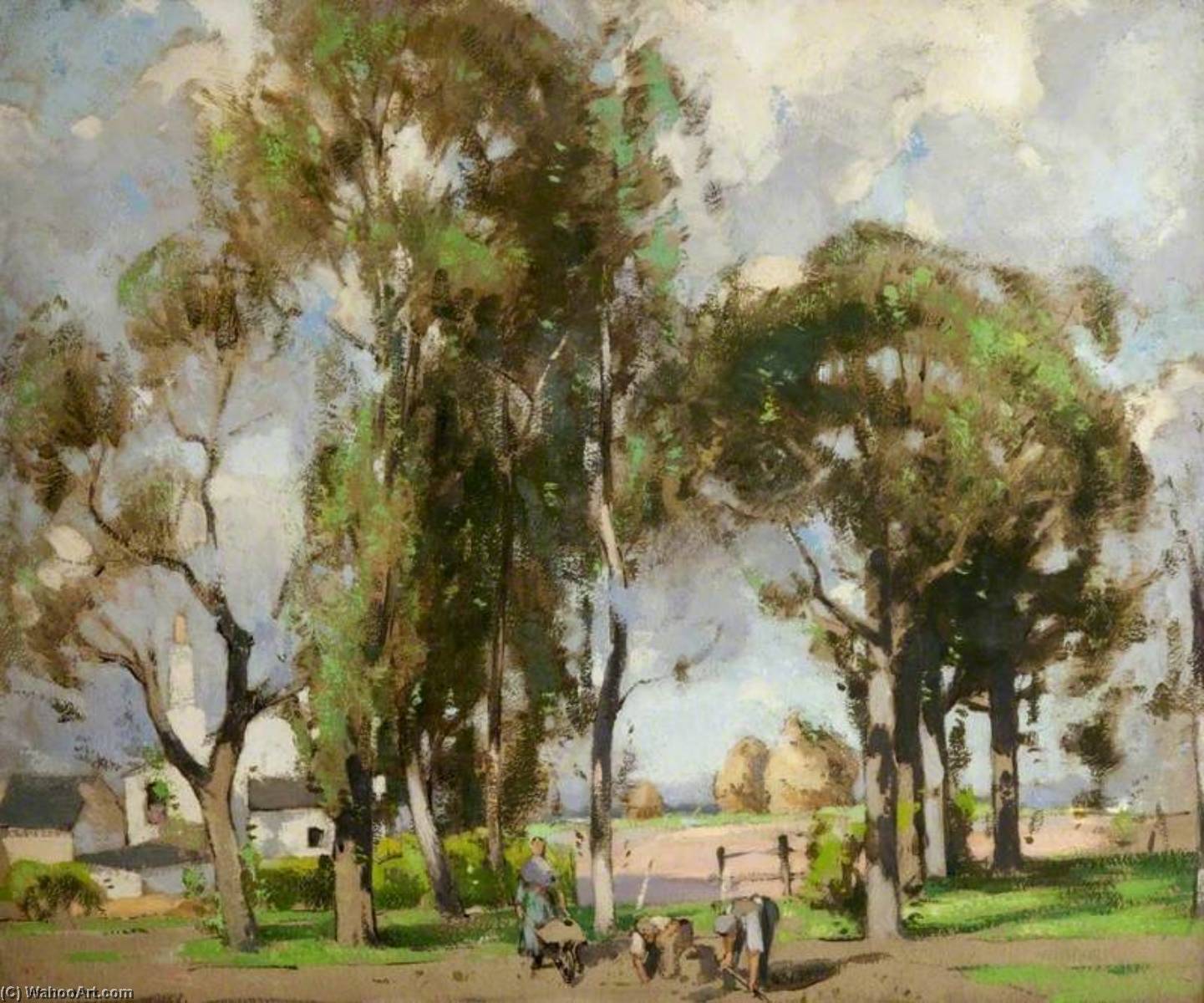
A Midlothian Farm (1925) autorstwa John Guthrie Spence Smith

A Midlothian Farm

1925 · Oil

A stillness settles over the Midlothian landscape in this 1925 work. Two men stand in the foreground, their figures anchored to the earth as they tend to the daily rhythms of the farm. A dog rests near them, a silent companion to the labor. Nearby, three horses occupy the space, their forms positioned with a natural, unforced grace. Trees rise in the background, framing the scene and creating a soft,…

2
Self Portrait (recto) (1917) autorstwa John Guthrie Spence Smith

Self Portrait (recto)

1917 · Oil On Canvas

The subject sits in a three-quarter view, his presence filling the space with a heavy, contemplative stillness. Light falls softly from the side, carving out the architecture of a face that seems to hold a lifetime of silent observation. There is a profound sense of introspection in his gaze, a look that suggests he is looking through the viewer rather than at them. The background is a soft arrangement of…

Kontynuacja zestawienia John Guthrie Spence Smith, od 11 do 43

Słynne obrazy John Guthrie Spence Smith epoka po epoce

Tematy, które przyciągnęły wzrok John Guthrie Spence Smith

Cztery motywy najczęściej powracające w tych oryginałach, z których każdy doczekał się swojego najdoskonalszego przykładu.

Muzea przechowujące oryginały John Guthrie Spence Smith

3 muzeów, w których znajduje się najwięcej obrazów z tej strony.

Muzea Miasto Dzieła artysty John Guthrie Spence Smith Obrazy z tej listy
Royal Scottish Academy of Art - Architecture, EdynburgRoyal Scottish Academy of Art - Architecture Edynburg 2 Canongate Kirk, Bakehouse Close
The Fleming Collection, LondynThe Fleming Collection Londyn 2 St Monance Kirk, Ballachulish Quarries
Wolverhampton Art Gallery, WolverhamptonWolverhampton Art Gallery Wolverhampton 1 Red Roofs

John Guthrie Spence Smith dekada po dekadzie: oryginały definiujące każdy okres

Dzieła według dekad

Wybierz dekadę, aby zobaczyć dzieło, które ją definiuje.

Pytania kolekcjonerów o obrazy John Guthrie Spence Smith

Z jakiego dzieła najbardziej znany jest John Guthrie Spence Smith?Odkryj odpowiedź

A Midlothian Farm (1925). Następne są Self Portrait (recto) (1917) oraz Standing Female Nude.

W jakim wieku był John Guthrie Spence Smith, gdy powstało A Midlothian Farm?Odkryj odpowiedź

45 lat: A Midlothian Farm pochodzi z 1925, a John Guthrie Spence Smith urodził(a) się w 1880.

Jakie są dziesięć najsłynniejszych obrazów, których autorem jest John Guthrie Spence Smith?Odkryj odpowiedź

A Midlothian Farm, Self Portrait (recto), Standing Female Nude, French Farmyard near Étaples, Landscape (verso), Pasture near Craigmillar, Cottages with Red Tiles, Castle, The Croft, Anstruther i Preston Kirk. Powyższy ranking zawiera rok powstania oraz muzeum dla każdego z nich.

Ile obrazów pozostawił po sobie John Guthrie Spence Smith?Odkryj odpowiedź

Nasz katalog zawiera 43 dzieł artysty John Guthrie Spence Smith, datowanych od 1911 do 1950.

W których muzeach znajdują się arcydzieła John Guthrie Spence Smith?Odkryj odpowiedź

W większości znajdują się w Royal Scottish Academy of Art - Architecture (Edynburg), The Fleming Collection (Londyn) i Wolverhampton Art Gallery (Wolverhampton). Powyższa tabela muzeów zawiera ich pełną listę.

W których latach John Guthrie Spence Smith namalował swoje najsłynniejsze dzieła?Odkryj odpowiedź

W 1920s: 9 z 43 dzieł na tej stronie powstało w tym czasie, w tym A Midlothian Farm.

Jakie są pierwsze i ostatnie słynne oryginały John Guthrie Spence Smith?Odkryj odpowiedź

Na tej stronie najwcześniejszy to French Farmyard near Étaples (1911), a najpóźniejszy Skinnergate, Perth (1950).

Jakie tematy John Guthrie Spence Smith wybierał najczęściej?Odkryj odpowiedź

Early 20th century (2) i Rural landscape (2), w ramach 43 dzieł na tej stronie.

Do jakiego nurtu artystycznego należy John Guthrie Spence Smith?Odkryj odpowiedź

Impressionism, sądząc po oryginałach na tej stronie.

Które dzieła John Guthrie Spence Smith znajdują się w Royal Scottish Academy of Art - Architecture?Odkryj odpowiedź

Canongate Kirk i Bakehouse Close: Royal Scottish Academy of Art - Architecture, Edynburg posiada 2 dzieł widocznych na tej stronie.

John Guthrie Spence Smith: życie i twórczość

John Guthrie Spence Smith: A Visionary of Scottish Landscapes

John Guthrie Spence Smith (1880-1951) remains a quietly significant figure in 20th-century British art, particularly within the rich tapestry of Scottish painting. Born in Perth, Scotland, into a family profoundly shaped by tragedy – his three older brothers succumbed to illness at young ages – Smith’s early life instilled a sensitivity and perhaps an unusual focus on observation. A childhood affliction robbed him of speech and hearing, a circumstance that arguably sharpened his visual perception and fostered a unique way of engaging with the world around him. This formative experience deeply influenced his artistic approach, imbuing his landscapes with a profound sense of stillness and quiet contemplation. Smith’s formal training began at Dundee College of Art, followed by studies at Edinburgh College of Art and the prestigious Royal Scottish Academy Life Drawing Classes under the tutelage of Robert Burns and Charles Hodge Mackie. These formative years exposed him to established artistic traditions while simultaneously nurturing his own distinctive style. He quickly distinguished himself as a talented artist, winning several prizes during his time at the RSA, demonstrating an early aptitude for capturing light, atmosphere, and the subtle nuances of the Scottish countryside. Crucially, he became involved with the Edinburgh Group, a collective of artists who challenged academic conventions and sought to forge a new path for modern art in Scotland. This association exposed him to innovative ideas and provided a platform for his work to be seen alongside other emerging talents.

A Distinctive Style: Landscape and Streetscapes

Smith’s artistic output is primarily characterized by meticulously rendered landscapes and evocative street scenes, predominantly depicting the familiar yet subtly transformed vistas of Perthshire, Angus, and the surrounding areas. He wasn't interested in dramatic, sweeping compositions; instead, he favored a measured approach, capturing the quiet dignity of rural life and the understated beauty of everyday settings. His palette was restrained, relying on muted earth tones – ochres, browns, greys, and blues – to create a sense of atmospheric depth and realism. He skillfully employed light and shadow to convey the changing moods of the Scottish weather, imbuing his paintings with a palpable sense of time and place. His work is often described as having a “colourist” quality, echoing the influence of artists like J.M. Whistler, though Smith’s approach was firmly rooted in his own unique vision.

Influences and Artistic Development

Smith's artistic journey reveals a complex interplay of influences. The traditional landscape painting of the Scottish Colourists – particularly their emphasis on capturing the essence of light and colour – undoubtedly shaped his early style. However, he also absorbed elements from Impressionism and Post-Impressionism, evident in his use of broken brushstrokes and his exploration of subjective perception. His time spent in France during World War I, though brief, provided a crucial opportunity to study the works of masters like Monet and Renoir, further expanding his artistic horizons. Following the war, he returned to Scotland, continuing to develop his distinctive style while maintaining close ties with the Edinburgh art community. His later work demonstrates an increasing confidence and maturity, reflecting a deeper understanding of both his subject matter and his own artistic voice.

Legacy and Recognition

Despite not achieving widespread fame during his lifetime, John Guthrie Spence Smith’s contribution to Scottish art is now increasingly recognized. His paintings are held in public collections across Scotland, including those of Glasgow, Paisley, Perth, and Greenock Museums, testament to the enduring quality of his work. His membership in the Royal Scottish Academy and his association with the Edinburgh Group cemented his place within a pivotal period of artistic innovation in Scotland. Smith’s legacy lies not only in his beautiful paintings but also in his quiet determination to pursue his artistic vision despite significant personal challenges. He represents a compelling example of an artist who found solace and expression through observation, capturing the essence of Scottish life with remarkable sensitivity and skill. His work continues to resonate with viewers today, offering a glimpse into a bygone era and a profound appreciation for the beauty of the Scottish landscape.

Further Resources