Portret John Gilbert

100 najsłynniejszych obrazów artysty John Gilbert – wybór z galerii

Aktualizacja: Listopad 2026 · ranking według naszego wskaźnika popularności (liczba wyszukiwań, wizyt i zamówień dla każdego dzieła) · 204 dzieł John Gilbert w naszym katalogu

W skrócie

Spośród wszystkich dzieł oryginalnych, które pozostawił John Gilbert, najsłynniejszym jest Fair Saint George (1881), znajdujący się w kolekcji Guildhall Art Gallery w Londyn. Tuż za nimi znajdują się The Taming of the Shrew (1860) oraz Sir John Falstaff Reviewing His Ragged Regiment (1858). Nasz katalog zawiera 204 dzieł autorstwa John Gilbert; galeria zachowała 100 najbardziej podziwianych na świecie prac, z których każda została przedstawiona wraz z datą powstania, informacją o muzeum oraz jej historią.

1817 – 1897, Blackheath Victorian romanticism Najwięcej dzieł: Guildhall Art Gallery

10 najlepszych obrazów artysty John Gilbert: wybór galerii

1
Fair Saint George (1881) autorstwa John Gilbert

Fair Saint George

1881 · Oil On Canvas · Guildhall Art Gallery, Londyn

The air feels heavy with the scent of damp earth and the metallic tang of polished steel. In this frozen moment, a knight stands as a pillar of strength against a backdrop of rolling hills and a restless, cloudy sky. He holds his lance upright, his hands gripping the shaft with a steady, practiced ease that suggests a pause in a much longer, more perilous trek. His armor catches the…

2
The Taming of the Shrew (1860) autorstwa John Gilbert

The Taming of the Shrew

1860 · Oil On Canvas · Birmingham Museum and Art Gallery, Birmingham

The Taming of the Shrew is a dramatic scene rendered by the English artist John Gilbert. This work captures a moment of friction from a comedy written by William Shakespeare between 1590 and 1592. The image functions as an illustration for the publication of Tales from Shakespeare by Charles Lamb. George Routledge released this specific version of the work.

3
Sir John Falstaff Reviewing His Ragged Regiment (1858) autorstwa John Gilbert

Sir John Falstaff Reviewing His Ragged Regiment

1858 · Oil · Birmingham Museum and Art Gallery, Birmingham

In this 1858 work, we find ourselves drawn into a dense, theatrical scene that feels less like a static image and more like a captured moment from a stage play. The composition centers on Sir John Falstaff, draped in heavy red robes, as he conducts a meticulous review of his ragged regiment. Around him, a crowd of rustic characters gathers, their presence creating a sense of bustling, lived-in energy. The…

4
Scene From Shakespeare's The Merchant Of Venice (1864) autorstwa John Gilbert

Scene From Shakespeare's The Merchant Of Venice

1864 · Watercolor · Birmingham Museum and Art Gallery, Birmingham

Scene From Shakespeare's The Merchant Of Venice by John Gilbert, a 19th-century watercolor painting, captures a dramatic moment from the play. Created about 1864, the work reflects the artist's deep engagement with literary narratives and the theatricality of the era. Gilbert, a prominent figure in British art, utilized the medium of watercolor to translate dramatic tension into a visual format.

5
The Return Of The Victors (1878) autorstwa John Gilbert

The Return Of The Victors

1878 · Oil On Canvas · Birmingham Museum and Art Gallery, Birmingham

The air thickens with the dust of a thousand marching feet in The Return Of The Victors. This grand scene, painted in 1878, captures a moment of triumphant movement as a victorious army sweeps through the landscape. The scale of the work suggests a panoramic view of history in motion, where the weight of victory meets the chaotic energy of a returning crowd. Every figure contributes to a sense of…

6
Margaret of Anjou Taken Prisoner after the Battle of Tewkesbury (1875) autorstwa John Gilbert

Margaret of Anjou Taken Prisoner after the Battle of Tewkesbury

1875 · Oil On Canvas · Guildhall Art Gallery, Londyn

The oil painting titled Margaret of Anjou Taken Prisoner after the Battle of Tewkesbury was executed by the British artist John Gilbert in 1875. This work depicts a specific historical event centered on the aftermath of the Battle of Tewkesbury. The subject matter focuses on the immediate consequences of the conflict, specifically capturing the brutality and the state of the battlefield following the engagement.

7
Don Quixote and Sancho at the Castle of the Duke (1883) autorstwa John Gilbert

Don Quixote and Sancho at the Castle of the Duke

1883 · Oil On Canvas

The scene unfolds within a stone courtyard, where the heavy architecture of a castle provides a rigid backdrop to a moment of profound human interaction. Two figures dominate the composition, their physical presence defined by a stark contrast in stature and temperament. One figure, clad in the metallic sheen of armor, reaches upward with an air of lofty idealism, his posture embodying the very essence of knightly fantasy. Beside him,…

8
Landscape with a Gypsy Encampment (1888) autorstwa John Gilbert

Landscape with a Gypsy Encampment

1888 · Oil On Canvas

A steep hillside descends toward a valley, where the earth meets a turbulent sky. Beneath a canopy of dark, heavy clouds, a small fire flickers, casting a warm glow against the encroaching gloom. Figures huddle near the flames, surrounded by the quiet presence of horses, camels, and sheep. The air feels thick with the scent of woodsmoke and the weight of an approaching storm. Light breaks through the darkness in…

9
Lancelot du Lac (1886) autorstwa John Gilbert

Lancelot du Lac

1886 · Oil On Canvas · Guildhall Art Gallery, Londyn

The river churns with a heavy, white froth, swallowing the light beneath the weight of armored horses. Two knights collide in the center of the surge, their swords and shields cutting through the spray. A tree leans precariously over the bank, its branches heavy with the threat of falling into the chaos below. In the foreground, a woman watches. Her face is a pale study in melancholy, a quiet stillness…

10
Ego et Rex Meus (1888) autorstwa John Gilbert

Ego et Rex Meus

1888 · Oil · Guildhall Art Gallery, Londyn

In this 1888 oil painting, two men are positioned in a close, vertical composition against the architectural backdrop of a stone building. The figure on the left wears a crown and is draped in heavy red robes accented with gold. He is turned toward the second man, his posture suggesting he is in the middle of speaking. The second man, characterized by a beard, is dressed in similar red and…

Kontynuacja zestawienia John Gilbert, od 11 do 100

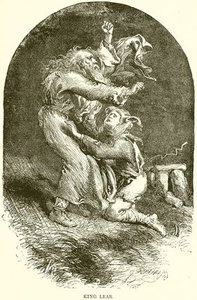
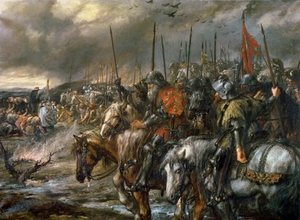
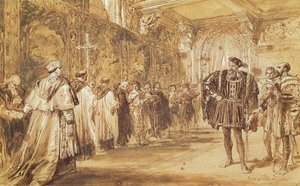
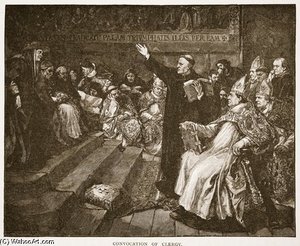
11The Ford (1891) autorstwa John GilbertThe Ford1891 · Guildhall Art Gallery 12Don Quixote and Sancho Panza (1840) autorstwa John GilbertDon Quixote and Sancho Panza1840 13Don Quixote Disputing with the Priest and the Barber (1844) autorstwa John GilbertDon Quixote Disputing with the Priest and the Barber1844 14Her Majesty the Queen Holding a Drawing Room at St James's Palace (1851) autorstwa John GilbertHer Majesty the Queen Holding a Drawing Room at St James's Palace1851 15'Henry VIII', Act I, Scene 1, Cardinal Wolsey and Buckingham (1861) autorstwa John Gilbert'Henry VIII', Act I, Scene 1, Cardinal Wolsey and Buckingham1861 · Kolekcja Royal Shakespeare Company 16Keston Common, Kent (1856) autorstwa John GilbertKeston Common, Kent1856 17Study Of Trees (1874) autorstwa John GilbertStudy Of Trees1874 · Birmingham Museum and Art Gallery 18Old Cottages At Lewisham (1876) autorstwa John GilbertOld Cottages At Lewisham1876 · Birmingham Museum and Art Gallery 19Preparing For The Charge (1873) autorstwa John GilbertPreparing For The Charge1873 · Birmingham Museum and Art Gallery 20Landscape Sketch (1877) autorstwa John GilbertLandscape Sketch1877 · Birmingham Museums And Art Gallery 21Don Sancho Panza, Governor of Barataria (1875) autorstwa John GilbertDon Sancho Panza, Governor of Barataria1875 · Manchester Art Gallery 22The Baggage Wagon (1884) autorstwa John GilbertThe Baggage Wagon1884 · Birmingham Museum and Art Gallery 23A Windy Day (1885) autorstwa John GilbertA Windy Day1885 · Birmingham Museum and Art Gallery 24The Horse Pond at Tarring, Sussex (1882) autorstwa John GilbertThe Horse Pond at Tarring, Sussex1882 25The Morning of the Battle of Agincourt (1884) autorstwa John GilbertThe Morning of the Battle of Agincourt1884 · Guildhall Art Gallery 26Don Quixote's Niece and Housekeeper (1891) autorstwa John GilbertDon Quixote's Niece and Housekeeper1891 · Guildhall Art Gallery 27Stock exchange autorstwa John GilbertStock exchange 28The aberdeen cabinet autorstwa John GilbertThe aberdeen cabinet 29King John autorstwa John GilbertKing John 30King Henry's Forces At The Siege Of Harfleur, autorstwa John GilbertKing Henry's Forces At The Siege Of Harfleur, 31Richard Ii autorstwa John GilbertRichard Ii 32Henry Iv, Part I autorstwa John GilbertHenry Iv, Part I 33War - After The Battle autorstwa John GilbertWar - After The Battle 34Marmion's Defence to Douglas autorstwa John GilbertMarmion's Defence to Douglas 35Queen Elizabeth I Knighting Francis Drake autorstwa John GilbertQueen Elizabeth I Knighting Francis Drake 36Coriolanus, autorstwa John GilbertCoriolanus, 37As You Like It autorstwa John GilbertAs You Like It 38King Lear autorstwa John GilbertKing Lear 39King Lear autorstwa John GilbertKing Lear 40The Battle Of The Standard autorstwa John GilbertThe Battle Of The Standard 41Morning Of The Battle Of Agincourt autorstwa John GilbertMorning Of The Battle Of Agincourt 42Titus Andronicus autorstwa John GilbertTitus Andronicus 43The Heir Of Linne autorstwa John GilbertThe Heir Of Linne 44Guy Fawkes Before King James autorstwa John GilbertGuy Fawkes Before King James 45Much Ado About Nothing autorstwa John GilbertMuch Ado About Nothing 46King Henry Vi autorstwa John GilbertKing Henry Vi 47The Merchant Of Venice autorstwa John GilbertThe Merchant Of Venice 48The Merchant Of Venice autorstwa John GilbertThe Merchant Of Venice 49Battle of the Standard, autorstwa John GilbertBattle of the Standard, 50Henry Viii And Cardinal Thomas Wolsey autorstwa John GilbertHenry Viii And Cardinal Thomas Wolsey 51Cordelia autorstwa John GilbertCordelia 52Convocation Of Clergy autorstwa John GilbertConvocation Of Clergy 53What Shall He Have That Killed The Deer autorstwa John GilbertWhat Shall He Have That Killed The Deer 54Wolsey autorstwa John GilbertWolsey 55King Henry VI, Part I autorstwa John GilbertKing Henry VI, Part I 56Cardinal Wolsey On His Way To Westminster Hall, autorstwa John GilbertCardinal Wolsey On His Way To Westminster Hall, 57The Brave Lord Willoughby autorstwa John GilbertThe Brave Lord Willoughby 58Valentine And Ursine autorstwa John GilbertValentine And Ursine 59Under The Greenwood Tree autorstwa John GilbertUnder The Greenwood Tree 60Rembrandt in his Studio autorstwa John GilbertRembrandt in his Studio 61Fairies In A Bird's Nest autorstwa John GilbertFairies In A Bird's Nest 62A Girl with Fruit (1882) autorstwa John GilbertA Girl with Fruit1882 · Guildhall Art Gallery 63Landscape with Hunting Party (1893) autorstwa John GilbertLandscape with Hunting Party1893 · Guildhall Art Gallery 64King Henry's Fleet Sails For France, autorstwa John GilbertKing Henry's Fleet Sails For France, 65Malvolio autorstwa John GilbertMalvolio 66Measure For Measure, autorstwa John GilbertMeasure For Measure, 67The Tempest autorstwa John GilbertThe Tempest 68Julius Caesar autorstwa John GilbertJulius Caesar 69Henry Iv, Part Ii autorstwa John GilbertHenry Iv, Part Ii 70Henry Vi, Part I, autorstwa John GilbertHenry Vi, Part I, 71Come Away, Come Away, Death autorstwa John GilbertCome Away, Come Away, Death 72The Merchant Of Venice, autorstwa John GilbertThe Merchant Of Venice, 73The Two Gentlemen Of Verona autorstwa John GilbertThe Two Gentlemen Of Verona 74Romeo And Juliet, autorstwa John GilbertRomeo And Juliet, 75Othello autorstwa John GilbertOthello 76Henry Vi, Part Iii, autorstwa John GilbertHenry Vi, Part Iii, 77After The Battle Of Naseby autorstwa John GilbertAfter The Battle Of Naseby 78Twelfth Night autorstwa John GilbertTwelfth Night 79The Merry Wives Of Windsor autorstwa John GilbertThe Merry Wives Of Windsor 80Joan La Pucelle Abandoned autorstwa John GilbertJoan La Pucelle Abandoned 81Valentine And Ursine autorstwa John GilbertValentine And Ursine 82As You Like It autorstwa John GilbertAs You Like It 83The Yellow Dwarf, autorstwa John GilbertThe Yellow Dwarf, 84Investiture Of A Knight Of The Garter autorstwa John GilbertInvestiture Of A Knight Of The Garter 85Andrew Barton autorstwa John GilbertAndrew Barton 86Macbeth autorstwa John GilbertMacbeth 87Henry Viii autorstwa John GilbertHenry Viii 88Hamlet autorstwa John GilbertHamlet 89Tempest autorstwa John GilbertTempest 90Taming Of The Shrew autorstwa John GilbertTaming Of The Shrew 91Othello autorstwa John GilbertOthello 92A Midsummer Night's Dream autorstwa John GilbertA Midsummer Night's Dream 93King Richard Ii autorstwa John GilbertKing Richard Ii 94Henry V autorstwa John GilbertHenry VMuseum of Fine Arts 95Timon Of Athens autorstwa John GilbertTimon Of Athens 96Joan Of Arc autorstwa John GilbertJoan Of Arc 97Apotheosis Of Shakespeare's Characters autorstwa John GilbertApotheosis Of Shakespeare's Characters 98Guy Fawkes Brought Before James I And His Council autorstwa John GilbertGuy Fawkes Brought Before James I And His Council 99Come Away Death autorstwa John GilbertCome Away Death 100The Merchant Of Venice autorstwa John GilbertThe Merchant Of Venice

Słynne obrazy John Gilbert epoka po epoce

Tematy, które przyciągnęły wzrok John Gilbert

Cztery motywy najczęściej powracające w tych oryginałach, z których każdy doczekał się swojego najdoskonalszego przykładu.

Muzea przechowujące oryginały John Gilbert

6 muzeów, w których znajduje się najwięcej obrazów z tej strony.

Muzea Miasto Dzieła artysty John Gilbert Obrazy z tej listy
Guildhall Art Gallery, LondynGuildhall Art Gallery Londyn 9 Fair Saint George, Margaret of Anjou Taken Prisoner after the Battle of Tewkesbury, Lancelot du Lac
Birmingham Museum and Art Gallery, BirminghamBirmingham Museum and Art Gallery Birmingham 9 The Taming of the Shrew, Sir John Falstaff Reviewing His Ragged Regiment, Scene From Shakespeare's The Merchant Of Venice
Manchester Art Gallery, ManchesterManchester Art Gallery Manchester 2 Don Sancho Panza, Governor of Barataria
Kolekcja Royal Shakespeare Company, AvonKolekcja Royal Shakespeare Company Avon 1 'Henry VIII', Act I, Scene 1, Cardinal Wolsey and Buckingham
Birmingham Museums And Art Gallery, BirminghamBirmingham Museums And Art Gallery Birmingham 1 Landscape Sketch
Museum of Fine Arts, BostonMuseum of Fine Arts Boston 1 Henry V

John Gilbert dekada po dekadzie: oryginały definiujące każdy okres

Dzieła według dekad

Wybierz dekadę, aby zobaczyć dzieło, które ją definiuje.

Pytania kolekcjonerów o obrazy John Gilbert

Z jakiego dzieła najbardziej znany jest John Gilbert?Odkryj odpowiedź

Fair Saint George (1881), Guildhall Art Gallery, Londyn. Następne są The Taming of the Shrew (1860) oraz Sir John Falstaff Reviewing His Ragged Regiment (1858).

W jakim wieku był John Gilbert, gdy powstało Fair Saint George?Odkryj odpowiedź

64 lat: Fair Saint George pochodzi z 1881, a John Gilbert urodził(a) się w 1817.

Jakie są dziesięć najsłynniejszych obrazów, których autorem jest John Gilbert?Odkryj odpowiedź

Fair Saint George, The Taming of the Shrew, Sir John Falstaff Reviewing His Ragged Regiment, Scene From Shakespeare's The Merchant Of Venice, The Return Of The Victors, Margaret of Anjou Taken Prisoner after the Battle of Tewkesbury, Don Quixote and Sancho at the Castle of the Duke, Landscape with a Gypsy Encampment, Lancelot du Lac i Ego et Rex Meus. Powyższy ranking zawiera rok powstania oraz muzeum dla każdego z nich.

Ile obrazów pozostawił po sobie John Gilbert?Odkryj odpowiedź

Nasz katalog zawiera 204 dzieł artysty John Gilbert, datowanych od 1840 do 1893.

W których muzeach znajdują się arcydzieła John Gilbert?Odkryj odpowiedź

W większości znajdują się w Guildhall Art Gallery (Londyn), Birmingham Museum and Art Gallery (Birmingham) i Manchester Art Gallery (Manchester). Powyższa tabela muzeów zawiera ich pełną listę.

W których latach John Gilbert namalował swoje najsłynniejsze dzieła?Odkryj odpowiedź

W 1880s: 10 z 100 dzieł na tej stronie powstało w tym czasie, w tym Fair Saint George.

Jakie są pierwsze i ostatnie słynne oryginały John Gilbert?Odkryj odpowiedź

Na tej stronie najwcześniejszy to Don Quixote and Sancho Panza (1840), a najpóźniejszy Landscape with Hunting Party (1893).

Jakie tematy John Gilbert wybierał najczęściej?Odkryj odpowiedź

Battle scene (6), Dramatic lighting (5) i Royalty (4), w ramach 100 dzieł na tej stronie.

Której techniki John Gilbert używał najczęściej?Odkryj odpowiedź

Oil On Canvas, dla 8 z 100 dzieł na tej stronie.

Do jakiego nurtu artystycznego należy John Gilbert?Odkryj odpowiedź

Victorian romanticism, sądząc po oryginałach na tej stronie.

Które dzieła John Gilbert znajdują się w Guildhall Art Gallery?Odkryj odpowiedź

Fair Saint George, Margaret of Anjou Taken Prisoner after the Battle of Tewkesbury i Lancelot du Lac: Guildhall Art Gallery, Londyn posiada 9 dzieł widocznych na tej stronie.

John Gilbert: życie i twórczość

Sir John Gilbert RA: Rzeźbiarz Wiktorianskiej Wyobraźni

John Gilbert (21 lipca 1817 – 5 października 1897), urodzony w Blackheath w hrabstwie Surrey, był brytyjskim artystą, którego niezwykle płodna twórczość ugruntowała jego sławę jako „Scott malarstwa”. To znamienne określenie odzwierciedlało jego nieporównany talent do chwytania ducha i majestatu klasyki literatury. W przeciwieństwie do wielu artystów swojej epoki, którzy poddawali się formalnemu szkoleniu, Gilbert szlifował swój kunszt poprzez samodyscyplinę i skrupulatną obserwację – głównie poprzez kopiowanie rycin – stając się mistrzem akwareli, olejów, a co najważniejsze, drzeworytu. Jego artystyczna podróż rozpoczęła się od praktyki w firmie pośrednictwa nieruchomości, lecz szybko przerodziła się w pasję do wizualnego opowiadania historii, która zdefiniowała całą jego karierę.

Wczesne lata i artystyczne początki

Formacyjne lata Gilberta zaszczepiły w nim głębokie poczucie dbałości o detal i precyzję – cechy, które później przełożył na zapierające dech w piersiach ilustracje. George Lance, jego jedyny nauczyciel, pielęgnował talent Gilberta, zachęcając go do eksperymatowania z różnymi mediami i budując w nim niezłomne oddanie doskonałości artystycznej. Mimo odmowy przyjęcia do Royal Academy Schools, determinacja popychała Gilberta naprzód, pozwalając mu opanować techniki umożliwiające tworzenie dzieł o niezwykłej pięknie i złożoności. Jego pierwsze zetknięcie ze sztuką nastąpiło poprzez grafikę warsztatową, praktykę, którą przyjął z całego serca, dostrzegając jej zdolność do uderzająco skutecznego przekazywania emocji i narracji. The Illustrated London News i Szekspir Przełom w karierze Gilberta nastąpił w 1856 roku, kiedy przyjął zaproszenie od Williama Mulready’ego i Thomasa Sheepshanksa do tworzenia drzeworytów dla czasopisma The Illustrated London News. Ta współpraca zapoczątkowała niezwykle płodny okres, który przyniósł ponad 2000 rycin – osiągnięcie zdumiewające jak na tamte czasy – demonstrując mistrzostwo Gilberta w tym wymagającym medium. Jednak jego najtrwalsze dziedzictwo kryje się w monumentalnym przedsięwzięciu: ilustrowanym folium Szekspirowskim (1862–63). Dzięki blisko 750 rysunkom, pieczołowicie wykonanym, aby uchwycić istotę dramatów Szekspira, Gilbert dokonał czynu uznawanego przez wielu współczesnych za niemożliwy, stając się czołowym interpretatorem dramatycznej wizji wielkiego poety. Skala i ambicja tego projektu podkreślały jego wiarę w transformacyjną moc sztuki – a konkretnie w jej zdolność do rozświetlania ludzkiej kondycji.

Technika i styl

Styl artystyczny Gilberta charakteryzował się mistrzowskim opanowaniem światłocienia, wykorzystującym dramatyczne kontrasty między światłem a cieniem w celu wzmocnienia ładunku emocjonalnego i oddania głębi uczuć. Preferował skrupulatny detal, mozolnie oddając tekstury i powierzchnie z niezwykłą dokładnością – co stało się znakiem rozpoznawczym jego twórczości i odróżnia go od wielu innych artystów okresu wiktoriańskiego. Jego malarstwo często przedstawiało krajobrazy przesycone atmosferycznym majestatem, odzwierciedlając fascynację ideałami romantycznymi oraz niezachwiane dążenie do uchwycenia wzniosłego piękna. Co więcej, artystyczne poszukiwania Gilberta wykraczały poza malarstwo również w stronę rzeźby, w której tworzył sugestywne figury ucieleśniające zarówno siłę, jak i grację.

Dziedzictwo i uznanie

Wpływ Gilberta na sztukę i ilustrację wiktoriańską jest niepodważalny. Pełnił funkcję prezydenta Royal Watercolour Society od 1871 roku, umacniając swoją pozycję jako czołowej postaci brytyjskich kręgów artystycznych. W uznaniu jego wkładu w sztuki wizualne został uhonorowany tytułem szlacheckim w 1872 roku, a następnie wybrany do Royal Academy w 1876 roku – co stanowi świadectwo jego trwałej reputacji pełnej doskonałości i innowacji. Jego praca nadal inspiruje artystów, służąc jako wzór dyscypliny artystycznej, technicznej wirtuozerii i wyobraźnego opowiadania historii. Konkurs Gilbert-Garret dla klubów szkicowania, ustanowiony w 1870 roku w St. Martins School of Art, pozostaje trwałym hołdem dla jego pionierskiego ducha i niezachwianej wiary w znaczenie edukacji artystycznej. Dziedzictwo Johna Gilberta wykracza poza jego osiągnięcia artystyczne; zapamiętany jest jako obrońca wartości humanistycznych – człowiek, który pragnął podnieść ludzkiego ducha poprzez piękno i kontemplację. Spoczywa w pokoju na cmentarzach Brockley i Ladywell w Surrey.