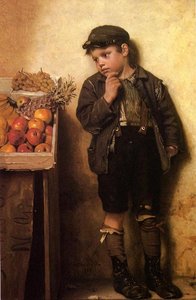
Portret Jan George Brown

Obrazy: 100 najsłynniejszych dzieł artysty Jan George Brown – spojrzenie galerii

Aktualizacja: Listopad 2026 · ranking według naszego wskaźnika popularności (liczba wyszukiwań, wizyt i zamówień dla każdego dzieła) · 329 dzieł Jan George Brown w naszym katalogu

W skrócie

Według opinii kuratorów galerii, najsłynniejszym obrazem Jan George Brown jest Claiming the Shot - A Group of Portraits after the Hunt in the Adirondacks (1865), którego oryginał znajduje się w Detroit Institute of Arts w Detroit. Curling, - A Scottish Game, at Central Park (1862) i The Country Gallants (1876) dopełniają trio, które zna każde oko. Z 329 dzieł Jan George Brown w naszym katalogu, galeria prezentuje poniżej 100 najsłynniejszych prac – każda z nich jest oryginałem z podaniem roku powstania, muzeum oraz cech wyróżniających ją na tle innych.

1831 – 1913, Durham Najwięcej dzieł: Metropolitan Museum of Art

10 najlepszych obrazów artysty Jan George Brown w galerii

1
Claiming the Shot - A Group of Portraits after the Hunt in the Adirondacks (1865) autorstwa Jan George Brown

Claiming the Shot - A Group of Portraits after the Hunt in the Adirondacks

1865 · Oil On Canvas · Detroit Institute of Arts, Detroit

John George Brown's "Claiming the Shot – A Group of Portraits after the Hunt in the Adirondacks," painted in 1865, isn’t merely a depiction of a hunting scene; it’s a carefully constructed tableau of American masculinity and the burgeoning spirit of frontier life. More than just a record of a successful hunt, the painting captures a potent blend of camaraderie, triumph, and the quiet dignity of men engaged in a…

2
Curling, - A Scottish Game, at Central Park (1862) autorstwa Jan George Brown

Curling, - A Scottish Game, at Central Park

1862 · Oil On Canvas · Museum of Fine Arts, Houston

John George Brown’s “Curling, - A Scottish Game, at Central Park” isn’t merely a depiction of a sporting event; it’s a meticulously crafted tableau of 19th-century leisure and the burgeoning spirit of American life. Painted in 1862, this oil on canvas transports us to a crisp winter afternoon within the verdant embrace of Central Park, capturing a scene brimming with both rustic charm and understated elegance. Brown, a British expatriate…

3
The Country Gallants (1876) autorstwa Jan George Brown

The Country Gallants

1876 · Oil On Canvas · Toledo Museum of Art, Toledo

Five gentlemen linger upon a rustic bridge, their presence anchored to a quiet afternoon by the weight of shared conversation. The scene unfolds along a tranquil river, where the water catches the light in soft, shifting patterns. One figure stands near the left edge, while others gather toward the center and right, creating a sense of natural, unforced companionship. A simple handbag rests on the ground near one man, a…

4
Swinging on a Gate, Southampson, New York (1878) autorstwa Jan George Brown

Swinging on a Gate, Southampson, New York

1878 · Oil On Canvas

The painting titled Swinging on a Gate, Southampson, New York, was executed by the artist John George Brown. This work dates to 1878. The composition focuses on a specific moment in a rural setting, capturing a scene from the late nineteenth century.

5
Sorry He Spoke (1863) autorstwa Jan George Brown

Sorry He Spoke

1863 · Oil

The painting depicts a group of children engaged in activity outside a building. Four children occupy the central and peripheral spaces of the composition. One child stands on the far left, while another is positioned on the far right. Two additional children are situated closer to the center of the scene. Three adults are also present: one stands near the left edge, one is on the right side, and a…

6
Resting in the Woods (1866) autorstwa Jan George Brown

Resting in the Woods

1866 · Oil

A woman sits beneath the canopy of a tree, positioned within a wooded setting. She wears a pink dress that provides a distinct point of color against the surrounding natural tones. Her posture suggests a state of rest or quiet contemplation. Near her, a handbag rests on the ground, indicating a temporary pause in her movement. The scene is populated by subtle details, including two birds located in the background—one…

7
Gathering Autumn Leaves (1875) autorstwa Jan George Brown

Gathering Autumn Leaves

1875 · Oil

Gathering Autumn Leaves, painted by John George Brown in 1875, captures a group of people amidst a wooded landscape. The scene focuses on a moment of seasonal transition, where the foliage of the trees and the forest floor are covered in fallen leaves. Within this setting, several individuals, including adults and children, are scattered throughout the woods. In the foreground, a woman holds a child who reaches toward the branches…

8
Shoeshine Boy with a Rose (1885) autorstwa Jan George Brown

Shoeshine Boy with a Rose

1885 · Oil

A young boy sits upon the ground, his legs crossed in a posture of stillness. He wears a hat, and a smile rests upon his face, softening the edges of his labor. In one hand, he holds a pair of shoes; his other hand rests lightly upon his knee. The scene is composed of simple, grounded elements: a chair tucked into the lower corner, another chair resting in the background,…

9
Lad with Flowers (1881) autorstwa Jan George Brown

Lad with Flowers

1881 · Oil

The scene unfolds through Lad with Flowers, a work painted by John George Brown in 1881. This portrait captures a specific moment in time, freezing a young boy in a quiet, serious pose. The boy holds a single rose, his gaze steady as he stands against a textured brick wall. In the background, the presence of two other figures adds a sense of depth to this urban setting, suggesting a…

10
The Wounded Playfellow (1884) autorstwa Jan George Brown

The Wounded Playfellow

1884 · Oil

The street is alive with the sudden, quiet drama of play. Four children, two boys and two girls, gather in a tight circle, their attention pulled toward a central point of shared concern. One boy cradles a dog in his lap, his small hands steadying the animal, while another boy leans in, gesturing toward something only the group can see. There is a sense of urgent, youthful empathy in the…

Obrazy artysty Jan George Brown, uszeregowane od 11 do 100 miejsca

11A Street Fair (1879) autorstwa Jan George BrownA Street Fair1879 12Two Girls on a Swing (1872) autorstwa Jan George BrownTwo Girls on a Swing1872 13Daisy McComb Holding a Pink Rose (1888) autorstwa Jan George BrownDaisy McComb Holding a Pink Rose1888 14Newsboy autorstwa Jan George BrownNewsboy 15News Boy autorstwa Jan George BrownNews Boy 16Shoeshine Boy with His Dog autorstwa Jan George BrownShoeshine Boy with His Dog 17Meditation (1900) autorstwa Jan George BrownMeditation1900 · Metropolitan Museum of Art 18Delivery Boy (1863) autorstwa Jan George BrownDelivery Boy1863 19Watching the Woodpecker (1866) autorstwa Jan George BrownWatching the Woodpecker1866 20The Fur Muff (1864) autorstwa Jan George BrownThe Fur Muff1864 21Coming Home from School (1876) autorstwa Jan George BrownComing Home from School1876 22Not to be Trifled With (1877) autorstwa Jan George BrownNot to be Trifled With1877 23Meditation (1881) autorstwa Jan George BrownMeditation1881 · Indianapolis Museum of Art 24Sympathy (1885) autorstwa Jan George BrownSympathy1885 25Sunshine (1879) autorstwa Jan George BrownSunshine1879 26Paddy's Valentine (1885) autorstwa Jan George BrownPaddy's Valentine1885 27A Leisure Hour (1881) autorstwa Jan George BrownA Leisure Hour1881 28Eying the Fruit Stand (1884) autorstwa Jan George BrownEying the Fruit Stand1884 29A Story of the Sea (1883) autorstwa Jan George BrownA Story of the Sea1883 30Plotting Mischief (1883) autorstwa Jan George BrownPlotting Mischief1883 31Weighed at the Mill (1883) autorstwa Jan George BrownWeighed at the Mill1883 32The Longshoremen's Noon (1879) autorstwa Jan George BrownThe Longshoremen's Noon1879 · National Gallery of Art 33Waiting for a Bite, Central Park (1886) autorstwa Jan George BrownWaiting for a Bite, Central Park1886 · Reading Public Museum 34Takin' It Easy (1904) autorstwa Jan George BrownTakin' It Easy1904 · Rhode Island School of Design Museum of Art 35Taking a Break (1904) autorstwa Jan George BrownTaking a Break1904 36This Corner Don’t Pay (1875) autorstwa Jan George BrownThis Corner Don’t Pay1875 · Birmingham Museum of Art 37Teaching Tricks (also known as Training the Dog) (1892) autorstwa Jan George BrownTeaching Tricks (also known as Training the Dog)1892 38Hiding in the Old Oak (1874) autorstwa Jan George BrownHiding in the Old Oak1874 39Fishing - Fort Lee, New Jersey (1870) autorstwa Jan George BrownFishing - Fort Lee, New Jersey1870 40The Three Tomboys (1868) autorstwa Jan George BrownThe Three Tomboys1868 41Crossing the Brook (1874) autorstwa Jan George BrownCrossing the Brook1874 42The Running Brook (1873) autorstwa Jan George BrownThe Running Brook1873 43Cowgirl autorstwa Jan George BrownCowgirl 44Lazy Bones autorstwa Jan George BrownLazy Bones 45Street Gallantry (1884) autorstwa Jan George BrownStreet Gallantry1884 · San Antonio Museum of Art 46The Music Lesson (1870) autorstwa Jan George BrownThe Music Lesson1870 · Metropolitan Museum of Art 47Tuckered OUt (1888) autorstwa Jan George BrownTuckered OUt1888 · Museum of Fine Arts 48Sunset, New York Harbor (1863) autorstwa Jan George BrownSunset, New York Harbor1863 49Marching Along (1863) autorstwa Jan George BrownMarching Along1863 50Look out for the Engine while the Bell Rings (1863) autorstwa Jan George BrownLook out for the Engine while the Bell Rings1863 51Learning to Curtsey (1863) autorstwa Jan George BrownLearning to Curtsey1863 52Early on the Stump (1862) autorstwa Jan George BrownEarly on the Stump1862 53Coming Thro' the Rye (1860) autorstwa Jan George BrownComing Thro' the Rye1860 54Young Recruits (1861) autorstwa Jan George BrownYoung Recruits1861 55Putting on Airs (1862) autorstwa Jan George BrownPutting on Airs1862 56The Picnic (1861) autorstwa Jan George BrownThe Picnic1861 57A Newspaper Boy Hitching a Ride (also known as Colored People Not Allowed on This LIne) (1863) autorstwa Jan George BrownA Newspaper Boy Hitching a Ride (also known as Colored People Not Allowed on This LIne)1863 58Thoughts by the Wayside (1861) autorstwa Jan George BrownThoughts by the Wayside1861 59Pay Toll (1862) autorstwa Jan George BrownPay Toll1862 60The Teacher (1866) autorstwa Jan George BrownThe Teacher1866 61Waiting for a Job (1871) autorstwa Jan George BrownWaiting for a Job1871 62Flying Kites (1867) autorstwa Jan George BrownFlying Kites1867 63Waiting for Her Suiter (1871) autorstwa Jan George BrownWaiting for Her Suiter1871 64Young Girl with Flowers (1871) autorstwa Jan George BrownYoung Girl with Flowers1871 65A Young Girl by the Window (1868) autorstwa Jan George BrownA Young Girl by the Window1868 66The Reluctant Bride (1869) autorstwa Jan George BrownThe Reluctant Bride1869 67Thus Perish the Memory of Our Love (1865) autorstwa Jan George BrownThus Perish the Memory of Our Love1865 68Hide and Seek (1867) autorstwa Jan George BrownHide and Seek1867 69Three Girls on a Swing (1868) autorstwa Jan George BrownThree Girls on a Swing1868 70Little Girl with Ermine Coat (1869) autorstwa Jan George BrownLittle Girl with Ermine Coat1869 71Winter Games (1871) autorstwa Jan George BrownWinter Games1871 72The Young Artist (1867) autorstwa Jan George BrownThe Young Artist1867 73When Greek Meets Greek, Then Comes the Tug of War (1866) autorstwa Jan George BrownWhen Greek Meets Greek, Then Comes the Tug of War1866 74Deerhunter in the Woods (1868) autorstwa Jan George BrownDeerhunter in the Woods1868 75The Peacemaker (1867) autorstwa Jan George BrownThe Peacemaker1867 76Silver Birches (1864) autorstwa Jan George BrownSilver Birches1864 77Young Girl in a New York Garden (1871) autorstwa Jan George BrownYoung Girl in a New York Garden1871 78The Tin Cup (also known as At the Well) (1864) autorstwa Jan George BrownThe Tin Cup (also known as At the Well)1864 79Little Miss Autumn (1865) autorstwa Jan George BrownLittle Miss Autumn1865 80Heading Out (1878) autorstwa Jan George BrownHeading Out1878 81Dress Parade (1878) autorstwa Jan George BrownDress Parade1878 · Norman Rockwell Museum 82What's Your Namr. (1876) autorstwa Jan George BrownWhat's Your Namr.1876 83Great Risk for Small Gains (1878) autorstwa Jan George BrownGreat Risk for Small Gains1878 84Grand Manan Fisherman Bringing Home His Oars (1878) autorstwa Jan George BrownGrand Manan Fisherman Bringing Home His Oars1878 85Coming over the Hills (1874) autorstwa Jan George BrownComing over the Hills1874 86The Crossing Sweeper (1874) autorstwa Jan George BrownThe Crossing Sweeper1874 87Walk In (1874) autorstwa Jan George BrownWalk In1874 88A Joint Investment (1878) autorstwa Jan George BrownA Joint Investment1878 89A Sure Thing (1876) autorstwa Jan George BrownA Sure Thing1876 90The Little Shoe-Shine Boy (1878) autorstwa Jan George BrownThe Little Shoe-Shine Boy1878 91The Cherry Picker (1875) autorstwa Jan George BrownThe Cherry Picker1875 92Casting the Net (1877) autorstwa Jan George BrownCasting the Net1877 93The Young Apple Salesman (1878) autorstwa Jan George BrownThe Young Apple Salesman1878 94Cleaning the Catch (1877) autorstwa Jan George BrownCleaning the Catch1877 95The Tomboy (1873) autorstwa Jan George BrownThe Tomboy1873 96I Won't Go! (1873) autorstwa Jan George BrownI Won't Go!1873 97School Bound (1873) autorstwa Jan George BrownSchool Bound1873 98The Flower Girl (1877) autorstwa Jan George BrownThe Flower Girl1877 99Pull for the Shore (1878) autorstwa Jan George BrownPull for the Shore1878 100Eating the Profits (1878) autorstwa Jan George BrownEating the Profits1878

Tematy, które przyciągnęły wzrok Jan George Brown

Cztery motywy najczęściej powracające w tych oryginałach, z których każdy doczekał się swojego najdoskonalszego przykładu.

Muzea przechowujące oryginały Jan George Brown

8 muzeów, w których znajduje się najwięcej obrazów z tej strony.

Muzea Miasto Dzieła artysty Jan George Brown Obrazy z tej listy
Metropolitan Museum of Art, Nowy JorkMetropolitan Museum of Art Nowy Jork 3 Meditation, The Music Lesson
Detroit Institute of Arts, DetroitDetroit Institute of Arts Detroit 2 Claiming the Shot - A Group of Portraits after the Hunt in the Adirondacks
Museum of Fine Arts, HoustonMuseum of Fine Arts Houston 2 Curling, - A Scottish Game, at Central Park
Birmingham Museum of Art, BirminghamBirmingham Museum of Art Birmingham 2 This Corner Don’t Pay
Museum of Fine Arts, BostonMuseum of Fine Arts Boston 2 Tuckered OUt
Toledo Museum of Art, ToledoToledo Museum of Art Toledo 1 The Country Gallants
Indianapolis Museum of Art, IndianapolisIndianapolis Museum of Art Indianapolis 1 Meditation
National Gallery of Art, WaszyngtonNational Gallery of Art Waszyngton 1 The Longshoremen's Noon

Jan George Brown, jedno kultowe dzieło na dekadę

Dzieła według dekad

Wybierz dekadę, aby zobaczyć dzieło, które ją definiuje.

Obrazy artysty Jan George Brown: odpowiedzi galerii

Który obraz Jan George Brown jest najsłynniejszy ze wszystkich?Odkryj odpowiedź

Claiming the Shot - A Group of Portraits after the Hunt in the Adirondacks (1865), Detroit Institute of Arts, Detroit. Następne są Curling, - A Scottish Game, at Central Park (1862) oraz The Country Gallants (1876).

Ile lat miał Jan George Brown, gdy ukończył Claiming the Shot - A Group of Portraits after the Hunt in the Adirondacks?Odkryj odpowiedź

34 lat: Claiming the Shot - A Group of Portraits after the Hunt in the Adirondacks pochodzi z 1865, a Jan George Brown urodził(a) się w 1831.

Które to 10 najlepszych obrazów Jan George Brown?Odkryj odpowiedź

Claiming the Shot - A Group of Portraits after the Hunt in the Adirondacks, Curling, - A Scottish Game, at Central Park, The Country Gallants, Swinging on a Gate, Southampson, New York, Sorry He Spoke, Resting in the Woods, Gathering Autumn Leaves, Shoeshine Boy with a Rose, Lad with Flowers i The Wounded Playfellow. Powyższy ranking zawiera rok powstania oraz muzeum dla każdego z nich.

Ile dzieł stworzył/a Jan George Brown?Odkryj odpowiedź

Nasz katalog zawiera 329 dzieł artysty Jan George Brown, datowanych od 1860 do 1904.

Gdzie można znaleźć najsłynniejsze oryginały autorstwa Jan George Brown?Odkryj odpowiedź

W większości znajdują się w Metropolitan Museum of Art (Nowy Jork), Detroit Institute of Arts (Detroit) i Museum of Fine Arts (Houston). Powyższa tabela muzeów zawiera ich pełną listę.

Kiedy Jan George Brown stworzył swoje najsłynniejsze obrazy?Odkryj odpowiedź

W 1870s: 41 z 100 dzieł na tej stronie powstało w tym czasie, w tym The Country Gallants.

Które z najsłynniejszych dzieł Jan George Brown należą do jego najwcześniejszych i najpóźniejszych prac?Odkryj odpowiedź

Na tej stronie najwcześniejszy to Coming Thro' the Rye (1860), a najpóźniejszy Takin' It Easy (1904).

Do jakich tematów Jan George Brown powracał najczęściej?Odkryj odpowiedź

Victorian era (8), Boy (7) i Girl (6), w ramach 100 dzieł na tej stronie.

W jakiej technice najczęściej tworzył Jan George Brown?Odkryj odpowiedź

Oil On Canvas, dla 30 z 100 dzieł na tej stronie.

Które oryginały artysty Jan George Brown znajdują się w zbiorach Metropolitan Museum of Art?Odkryj odpowiedź

Meditation i The Music Lesson: Metropolitan Museum of Art, Nowy Jork posiada 2 dzieł widocznych na tej stronie.

Jan George Brown: artysta

A Life Etched in Childhood: The World of John George Brown

John George Brown, a name perhaps less immediately recognizable than some of his contemporaries, nevertheless occupies a significant and deeply affecting niche within the landscape of 19th-century American art. Born in Durham, England, in 1831, his journey was one of determined self-improvement and astute observation, culminating in a career that captured the poignant realities – and often idealized sentiments – surrounding childhood during a period of rapid social change. Brown’s story isn't simply about artistic talent; it’s about an immigrant’s ambition, a keen eye for detail, and a shrewd understanding of the burgeoning American art market. His early life was marked by necessity rather than privilege. Apprenticed to a glass factory at just fourteen years old, he labored to support his family, yet even amidst the demanding work, a passion for drawing persisted. This dedication led him to evening classes at the School of Design in Newcastle, and later, further study at the Trustees Academy in Edinburgh – formative experiences that laid the groundwork for his future artistic endeavors. In 1853, Brown bravely crossed the Atlantic, settling in Brooklyn, New York, a city poised to become both his home and his muse. He continued his education at the Graham Art School and the National Academy of Design, honing his skills under the guidance of instructors like Thomas Seir Cummings, preparing himself for a life dedicated to capturing the essence of American experience.

From Portraiture to the Streets: Finding His Voice

Initially establishing himself as a portrait painter, Brown quickly discovered that his true calling lay elsewhere – in the vibrant, often overlooked world of everyday life. He began to focus on genre scenes, and it was through his depictions of street children that he truly found his voice. The 1860s witnessed the rise of Brown’s “street urchin” paintings, images that resonated deeply with a public fascinated by – and perhaps simultaneously troubled by – the realities of urban poverty. These weren't merely sentimental portrayals; they were carefully observed studies of character, capturing the resilience, resourcefulness, and quiet dignity of children navigating difficult circumstances. Bootblacks diligently polishing shoes, newsboys hawking papers on bustling street corners, flower sellers offering their wares – these scenes became Brown’s signature, imbued with a remarkable level of detail and empathy. His work wasn't born in isolation; it was influenced by the Barbizon school, particularly its emphasis on realism and depictions of everyday life, as well as the dramatic use of light and color championed by artists like J.M.W. Turner. However, Brown synthesized these influences into a uniquely American style, one that spoke to the specific social conditions and cultural anxieties of his adopted homeland.

A Master of Sentiment and Commerce

Brown was not only an artist but also a remarkably astute businessman. Recognizing the appeal of his work, he strategically copyrighted many of his most popular paintings, allowing for widespread reproduction as chromolithographs and photographic prints. This savvy move dramatically increased his fame and financial success, making him one of the wealthiest genre painters in the United States during his lifetime. However, this commercial success didn’t diminish the artistic merit of his work. Paintings like “The Net Mender” and “The First Point” exemplify his ability to capture moments of quiet beauty and emotional depth. "Claiming the Shot - A Group of Portraits after the Hunt in the Adirondacks" demonstrates a broader range, showcasing his skill in depicting group scenes with remarkable realism. His paintings offered more than just aesthetic pleasure; they provided valuable insights into 19th-century American society, particularly the lives of working children and the changing urban landscape. Often imbued with subtle moral undertones, Brown’s work reflected his belief in the importance of hard work, honesty, and resilience – values that resonated deeply with Victorian audiences.

Shifting Focus: From Youth to Age

As Brown matured as an artist, so too did his subject matter evolve. In his later years, he shifted his focus from depicting the energy and vitality of childhood to portraying the quiet dignity and solitude of old age. These paintings often featured elderly individuals in rural settings, evoking a sense of nostalgia for a simpler past. While this shift might seem dramatic, it was a natural progression for an artist deeply concerned with capturing the human condition in all its complexity. He continued to be an active member of various art institutions, serving as vice-president of the National Academy of Design from 1899 to 1904, demonstrating his ongoing commitment to the artistic community. His later works, though different in subject matter, retained the meticulous attention to detail and emotional sensitivity that characterized his earlier paintings.

A Lasting Legacy: Echoes of Childhood

John George Brown passed away in New York City in 1913, leaving behind a substantial body of work that continues to captivate and move audiences today. His paintings are held in prestigious collections around the world, including the National Gallery in London and the Detroit Institute of Arts, testament to his enduring artistic significance. He is remembered not only for his technical skill but also for his ability to capture the essence of a particular time and place – Victorian America – with honesty, empathy, and a touch of romanticism. His work serves as a poignant reminder of the challenges faced by children in the 19th century, while simultaneously celebrating their resilience and spirit. Brown’s legacy extends beyond his paintings; he represents a fascinating intersection of artistic talent, entrepreneurial acumen, and social commentary – a true chronicler of American life. His ability to transform everyday scenes into enduring works of art ensures that his vision will continue to resonate with generations to come.