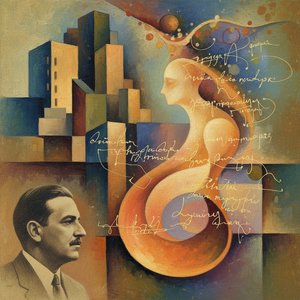
A Pioneer of Brazilian Modernism: The Life and Legacy of João Batista Vilanova Artigas
João Batista Vilanova Artigas, born in Curitiba, Brazil, in 1915, stands as a monumental figure in the evolution of Brazilian architecture. More than simply a builder of structures, Artigas was a visionary who sought to imbue his designs with social responsibility and artistic expression, ultimately becoming the founding father of the Paulista School. His journey began at the Polytechnic School of the University of São Paulo, where he earned his degree in 1937, an education that would serve as the bedrock for a career defined by innovation and a deep commitment to the Brazilian people. An early formative experience was his collaboration with Gregori Warchavchik on the ambitious remodeling of Praça da República, a project that hinted at the modernist sensibilities he would soon champion. From 1941 to 1947, Artigas dedicated himself to academia, shaping young minds as a professor of aesthetics, architecture, and planning at the University of São Paulo. This period culminated in the prestigious Guggenheim Fellowship awarded in 1946, solidifying his growing reputation within architectural circles and providing him with invaluable opportunities for international exposure.Early Influences and Architectural Style
Artigas’s formative years were marked by a profound engagement with European modernist thought, particularly Frank Lloyd Wright. His residential designs of this period embody Wright's Organicist Architecture principles: continuity of space, varied floor levels and roofs, horizontal windows—elements readily identifiable in his own home built in 1942 and the Casa Elza Berquó, completed in 1945. These projects demonstrate a masterful understanding of natural materials and their integration into architectural forms, reflecting Wright’s belief that buildings should harmonize with their surroundings. Simultaneously, Artigas absorbed the lessons of Le Corbusier's urban planning concepts, envisioning cities as functional spaces organized around monumental axial elements—a vision that would shape his later projects. The influence of the International Style is evident in larger undertakings like Guarulhos Gymnasium (1963-1964), where Artigas experimented with curtain walls and pilotis, establishing a precedent for structural innovation within Brazilian architecture.Academic Contributions and Recognition
From 1941 to 1947, Artigas served as an assistant professor at the University of São Paulo, fostering architectural education and promoting critical engagement with artistic ideas. This period yielded significant scholarly output, including publications on architectural theory and urban planning—contributions that solidified his position as a leading voice in Brazilian intellectual discourse. The Guggenheim Fellowship awarded in 1946 provided him with unparalleled access to international architectural trends and fostered collaborations with prominent figures from around the globe. Recognizing his enduring impact on Brazilian architecture, he was reinstated to his professorship in 1984 following the repressive military dictatorship—a testament to his unwavering conviction and the eventual triumph of democratic values. Furthermore, Artigas received the August Perret Prize for Architecture from the International Union of Architects (UIA) in 1985 – posthumously – acknowledging his contribution to architectural innovation and social responsibility.Major Architectural Projects and The Paulista School
Artigas’s oeuvre encompasses a diverse range of projects—from residential buildings to urban spaces to educational institutions—each characterized by a distinctive stylistic approach rooted in Brutalism. The House Ariosto Martirani (1942), exemplifies Wright's Organicist principles, prioritizing natural materials and spatial fluidity. Guarulhos Gymnasium (1963-1964) embodies Artigas’s later style, utilizing concrete expressionism to create monumental spaces that convey a sense of grandeur and social purpose. The FAU-USP campus building (1961-1964), conceived as a symbol of Brazilian architectural modernity, represents the culmination of his pedagogical vision—a space designed to inspire creativity and foster intellectual dialogue. He established the Paulista School, which emphasized functional design, structural elements—particularly reinforced concrete—and a profound concern for social needs. This approach challenged conventional architectural norms and paved the way for a new generation of Brazilian architects to explore innovative forms and materials.Legacy and Enduring Influence
João Batista Vilanova Artigas’s legacy extends far beyond his buildings—it encompasses a philosophy centered on the transformative potential of architecture as art and social instrument. His work continues to inspire contemporary architects worldwide, urging them to embrace materiality, spatial experimentation, and ethical considerations in their designs. The Museu Antonio Parreiras and Oscar Niemeyer Museum in Curitiba stand as enduring monuments to Artigas’s vision—spaces that embody his belief in the power of architecture to elevate human experience and contribute to the cultural heritage of Brazil. His unwavering commitment to social justice and artistic expression cemented his place among the most influential figures in Brazilian architectural history, ensuring that his ideas resonate for generations to come.Pytania i odpowiedzi
Czy mogę przeglądać dzieła João Batista Vilanova Artigas według palety kolorystycznej?
Strona Według palet kolorystycznych grupuje dzieła João Batista Vilanova Artigas według ich palet kolorystycznych.
Czy mogę przeglądać dzieła João Batista Vilanova Artigas według słów kluczowych?
Strona Według słów kluczowych artysty João Batista Vilanova Artigas grupuje dzieła artysty według słów kluczowych.
Skąd pochodzi João Batista Vilanova Artigas?
João Batista Vilanova Artigas urodził się w Brazylia.