Portret Jean Metzinger

91 najsłynniejszych obrazów artysty Jean Metzinger, każdy niepowtarzalny

Aktualizacja: Listopad 2026 · ranking według naszego wskaźnika popularności (liczba wyszukiwań, wizyt i zamówień dla każdego dzieła) · 96 dzieł Jean Metzinger w naszym katalogu

W skrócie

Table By A Window (1917) to obraz autorstwa Jean Metzinger, który przyciąga najwięcej spojrzeń. Następnie wzrok kieruje się na L'oiseau Bleu i Women Sitting by a Window (1914). Spośród 96 dzieł Jean Metzinger w naszym katalogu, tych 91 jest najbardziej znanych – każde z nich to unikatowy oryginał, przedstawiony wraz z rokiem powstania, muzeum oraz powodem, dla którego przetrwało próbę czasu.

1883 – 1956, Nantes Cubism Najwięcej dzieł: Statens Museum for Kunst

10 najlepszych obrazów autorstwa Jean Metzinger według oka galerii

1
Table By A Window (1917) autorstwa Jean Metzinger

Table By A Window

1917 · Oil On Canvas

Introduction to the Painting and the Artist Table by a Window is a 1917 cubist still life painting by French artist Jean Dominique Antony Metzinger. Born in Nantes, France, in 1883, Metzinger was a major 20th-century French painter, theorist, writer, critic, and poet. He is best known for his contributions to Cubism, co-authoring the first theoretical work on the subject with Albert Gleizes in 1912, entitled Du "Cubisme". Background of…

2
L'oiseau Bleu autorstwa Jean Metzinger

L'oiseau Bleu

Oil On Canvas

L'oiseau Bleu is an oil painting on canvas created by the French artist Jean Metzinger between 1912 and 1913. This work represents a significant contribution to the Cubist movement, utilizing geometric faceting and multiple perspectives to organize its subject matter. The composition integrates various motifs, including three nude women, an ibis, a fan, and a mirror, alongside elements of an urban scene and a steamship.

3
Women Sitting by a Window (1914) autorstwa Jean Metzinger

Women Sitting by a Window

1914 · Oil On Canvas

Women Sitting by a Window is an oil on canvas painting by Jean Metzinger. Executed in 1914, the work belongs to the Cubist movement. It represents a significant period in the artist's development as a theorist and practitioner of the style.

4
Man with a Pipe (1913) autorstwa Jean Metzinger

Man with a Pipe

1913 · Oil On Canvas · Carnegie Museum of Art, Pittsburgh

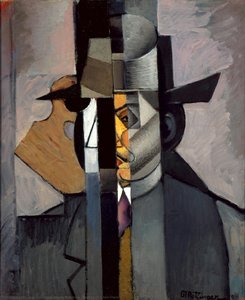
In the fractured, shifting light of a Parisian café, a man sits quietly, holding a pipe. This is Man with a Pipe, a Cubist oil painting by the French artist Jean Metzinger. Created in 1913, the work captures a moment of stillness amidst a complex arrangement of geometric planes. The subject appears to be caught in a state of simultaneous existence, his features viewed from multiple angles at once, as…

5
Circus Equestrienne (1924) autorstwa Jean Metzinger

Circus Equestrienne

1924 · Oil On Canvas

In Circus Equestrienne, Jean Metzinger captures a singular moment of theatrical stillness. The scene focuses on a circus equestrian performance, a quiet pause in the middle of a spectacle. A female performer stands in close proximity to a white horse, their forms anchored together in the center of the frame. They exist within a space that suggests a stable or a performance area, held within a silent, blue void.

6
Woman With A Mandolin autorstwa Jean Metzinger

Woman With A Mandolin

Oil

Jean Metzinger’s 1923 work presents a woman seated in a moment of quiet musical engagement. Draped in a flowing red gown, she is positioned slightly off-center, her expression pensive as she holds a mandolin. The composition balances the human figure against a domestic interior, where a vase of flowers and a glass at the lower right corner anchor the scene. The arrangement creates a sense of stillness, capturing a private…

7
The Blue Bird autorstwa Jean Metzinger

The Blue Bird

Oil On Canvas

The Blue Bird, also known as L'Oiseau bleu, is a Cubist painting by Jean Metzinger. Created between 1912 and 1913, this oil on canvas captures a fractured reality through geometric faceting. The work emerged during a period of intense formal experimentation, marking a significant contribution to the Cubist movement.

8
Landscape autorstwa Jean Metzinger

Landscape

Oil On Canvas

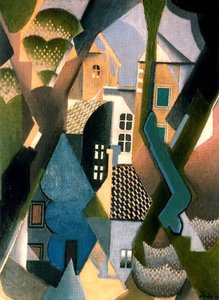
Jean Metzinger presents Landscape as a Cubist rendition of a rural vista. The canvas captures a quiet moment of the countryside through a fractured lens. It is a study of space and form, where the natural world is distilled into its essential geometry. The work was painted about 1912.

Słynne obrazy artysty Jean Metzinger, od 11 do 91

11Embarkation Of Harlequin autorstwa Jean MetzingerEmbarkation Of Harlequin 12Le Bal Masqué, La Comédie Italienne autorstwa Jean MetzingerLe Bal Masqué, La Comédie Italienne 13Le Bal Masqué, Carnaval À Venise autorstwa Jean MetzingerLe Bal Masqué, Carnaval À Venise 14Nu À La Cheminée autorstwa Jean MetzingerNu À La Cheminée 15Woman With A Fan autorstwa Jean MetzingerWoman With A Fan 16Les Arlequins autorstwa Jean MetzingerLes Arlequins 17Femme Assise, En Robe Bleue autorstwa Jean MetzingerFemme Assise, En Robe Bleue 18Femme Debout autorstwa Jean MetzingerFemme Debout 19Clown Au Banjo autorstwa Jean MetzingerClown Au Banjo 20Bacchante autorstwa Jean MetzingerBacchante 21Nude In Front Of A Mirror autorstwa Jean MetzingerNude In Front Of A Mirror 22What Will Catch My Eye autorstwa Jean MetzingerWhat Will Catch My Eye 23Jeune Femme Pensive Aux Roses Rouges autorstwa Jean MetzingerJeune Femme Pensive Aux Roses Rouges 24Clairiere autorstwa Jean MetzingerClairiere 25Salomé autorstwa Jean MetzingerSalomé 26Paysage Aux Deux Cyprés autorstwa Jean MetzingerPaysage Aux Deux Cyprés 27Yachting autorstwa Jean MetzingerYachting 28The Seashore autorstwa Jean MetzingerThe Seashore 29Le Chateau De Clisson autorstwa Jean MetzingerLe Chateau De Clisson 30Nature Morte autorstwa Jean MetzingerNature Morte 31La Baigneuse autorstwa Jean MetzingerLa Baigneuse 32La Tricoteuse autorstwa Jean MetzingerLa Tricoteuse 33Nu (nude) autorstwa Jean MetzingerNu (nude) 34Le Chemin A Travers Les Champs autorstwa Jean MetzingerLe Chemin A Travers Les Champs 35La Violoniste autorstwa Jean MetzingerLa Violoniste 36Nude In The Sun autorstwa Jean MetzingerNude In The Sun 37Globe And Banjo autorstwa Jean MetzingerGlobe And Banjo 38Le Flamant Rose Et Le Voilier autorstwa Jean MetzingerLe Flamant Rose Et Le Voilier 39Nautical Still Life autorstwa Jean MetzingerNautical Still Life 40Paysage Neo-impressionniste autorstwa Jean MetzingerPaysage Neo-impressionniste 41Landscape autorstwa Jean MetzingerLandscape 42La Roulette autorstwa Jean MetzingerLa Roulette 43Dancer In A Café autorstwa Jean MetzingerDancer In A Café 44Young Woman With A Guitar autorstwa Jean MetzingerYoung Woman With A Guitar 45Parc Monceau autorstwa Jean MetzingerParc Monceau 46Les Flamants autorstwa Jean MetzingerLes Flamants 47L'isthme De Corinthe autorstwa Jean MetzingerL'isthme De Corinthe 48Paysage Pointilliste autorstwa Jean MetzingerPaysage Pointilliste 49Paysage Cubiste autorstwa Jean MetzingerPaysage Cubiste 50La Plume Jaune autorstwa Jean MetzingerLa Plume Jaune 51Reclining Figure autorstwa Jean MetzingerReclining Figure 52Jeune Fille À La Partition autorstwa Jean MetzingerJeune Fille À La Partition 53Arbres Et Maisons autorstwa Jean MetzingerArbres Et Maisons 54Still Life autorstwa Jean MetzingerStill Life 55Matin Au Parc Montsouris autorstwa Jean MetzingerMatin Au Parc Montsouris 56Fruit And A Jug On A Table autorstwa Jean MetzingerFruit And A Jug On A Table 57Fleur Rose Dans Un Vase autorstwa Jean MetzingerFleur Rose Dans Un Vase 58Still Life With Black Vase autorstwa Jean MetzingerStill Life With Black Vase 59Landscape autorstwa Jean MetzingerLandscape 60Still Life With Pumpkin And Bottle Of Rum autorstwa Jean MetzingerStill Life With Pumpkin And Bottle Of Rum 61Femme À La Fenêtre, Maternité autorstwa Jean MetzingerFemme À La Fenêtre, Maternité 62Paysage autorstwa Jean MetzingerPaysage 63Summer autorstwa Jean MetzingerSummerStatens Museum for Kunst 64Composition Allégorique autorstwa Jean MetzingerComposition Allégorique 65Les Baigneuses autorstwa Jean MetzingerLes Baigneuses 66Jeune Femme À La Mandoline autorstwa Jean MetzingerJeune Femme À La Mandoline 67Two Nudes In An Exotic Landscape autorstwa Jean MetzingerTwo Nudes In An Exotic Landscape 68The Village autorstwa Jean MetzingerThe Village 69Landscape autorstwa Jean MetzingerLandscape 70Paysage Colore Aux Oiseaux Aquatique autorstwa Jean MetzingerPaysage Colore Aux Oiseaux Aquatique 71Woman With Lace autorstwa Jean MetzingerWoman With Lace 72Paysage Tropical autorstwa Jean MetzingerPaysage Tropical 73Petit Port, Pecheurs Et Bateaux Au Quai autorstwa Jean MetzingerPetit Port, Pecheurs Et Bateaux Au Quai 74Landscape With Fountain autorstwa Jean MetzingerLandscape With Fountain 75A Peacock autorstwa Jean MetzingerA Peacock 76Anachronisme autorstwa Jean MetzingerAnachronisme 77Femme Au Chapeau Rose Et Collier De Perles autorstwa Jean MetzingerFemme Au Chapeau Rose Et Collier De Perles 78Saint-tropez autorstwa Jean MetzingerSaint-tropez 79Portrait Cubiste D'odette, Fille De L'artiste autorstwa Jean MetzingerPortrait Cubiste D'odette, Fille De L'artiste 80Femme À La Dentelle autorstwa Jean MetzingerFemme À La Dentelle 81Nature Morte autorstwa Jean MetzingerNature Morte 82Playing Cards, Coffee Cup And Apples, autorstwa Jean MetzingerPlaying Cards, Coffee Cup And Apples, 83Les Ibis autorstwa Jean MetzingerLes Ibis 84Le Goûter (tea Time) autorstwa Jean MetzingerLe Goûter (tea Time) 85Portrait Of Albert Gleizes autorstwa Jean MetzingerPortrait Of Albert Gleizes 86Landscape With A Round Tree autorstwa Jean MetzingerLandscape With A Round Tree 87Femme Assise Au Bouquet De Feuillage autorstwa Jean MetzingerFemme Assise Au Bouquet De Feuillage 88La Femme Au Cheval autorstwa Jean MetzingerLa Femme Au ChevalStatens Museum for Kunst 89L'Oiseau bleu (1912) autorstwa Jean MetzingerL'Oiseau bleu1912 · Musée d'Art Moderne de la Ville de Paris 90Danseuse au café (1912) autorstwa Jean MetzingerDanseuse au café1912 · Buffalo AKG Art Museum 91La Femme À L'éventail autorstwa Jean MetzingerLa Femme À L'éventailArt Institute of Chicago

Słynne obrazy Jean Metzinger epoka po epoce

Tematy, które przyciągnęły wzrok Jean Metzinger

Cztery motywy najczęściej powracające w tych oryginałach, z których każdy doczekał się swojego najdoskonalszego przykładu.

Muzea przechowujące oryginały Jean Metzinger

5 muzeów, w których znajduje się najwięcej obrazów z tej strony.

Muzea Miasto Dzieła artysty Jean Metzinger Obrazy z tej listy
Statens Museum for Kunst, KopenhagaStatens Museum for Kunst Kopenhaga 2 Summer, La Femme Au Cheval
Carnegie Museum of Art, PittsburghCarnegie Museum of Art Pittsburgh 1 Man with a Pipe
Musée d'Art Moderne de la Ville de Paris, ParyżMusée d'Art Moderne de la Ville de Paris Paryż 1 L'Oiseau bleu
Buffalo AKG Art Museum, BuffaloBuffalo AKG Art Museum Buffalo 1 Danseuse au café
Art Institute of Chicago, ChicagoArt Institute of Chicago Chicago 1 La Femme À L'éventail

Jean Metzinger na przestrzeni dekad: jeden unikatowy oryginał dla każdego

Dzieła według dekad

Wybierz dekadę, aby zobaczyć dzieło, które ją definiuje.

Obrazy artysty Jean Metzinger: pytania do galerii

Jakie jest najsłynniejsze dzieło artysty Jean Metzinger?Odkryj odpowiedź

Table By A Window (1917). Następne są L'oiseau Bleu oraz Women Sitting by a Window (1914).

W jakim wieku Jean Metzinger stworzył/a Table By A Window?Odkryj odpowiedź

34 lat: Table By A Window pochodzi z 1917, a Jean Metzinger urodził(a) się w 1883.

Które dziesięć obrazów Jean Metzinger jest najbardziej znanych?Odkryj odpowiedź

Table By A Window, L'oiseau Bleu, Women Sitting by a Window, Man with a Pipe, Circus Equestrienne, Woman With A Mandolin, The Blue Bird, Landscape, La Marée Basse i Nu Dans un Paysage. Powyższy ranking zawiera rok powstania oraz muzeum dla każdego z nich.

Ile znanych dzieł stworzył Jean Metzinger?Odkryj odpowiedź

Nasz katalog zawiera 96 dzieł artysty Jean Metzinger, datowanych od 1904 do 1924.

Gdzie można zobaczyć najsłynniejsze oryginały Jean Metzinger?Odkryj odpowiedź

W większości znajdują się w Statens Museum for Kunst (Kopenhaga), Carnegie Museum of Art (Pittsburgh) i Musée d'Art Moderne de la Ville de Paris (Paryż). Powyższa tabela muzeów zawiera ich pełną listę.

W jakim okresie Jean Metzinger stworzył/a swoje najsłynniejsze obrazy?Odkryj odpowiedź

W 1910s: 5 z 91 dzieł na tej stronie powstało w tym czasie, w tym Table By A Window.

Który z najsłynniejszych obrazów artysty Jean Metzinger powstał najwcześniej, a który najpóźniej?Odkryj odpowiedź

Na tej stronie najwcześniejszy to La Marée Basse (1904), a najpóźniejszy Circus Equestrienne (1924).

Jakie tematy preferował Jean Metzinger?Odkryj odpowiedź

Woman (10), Landscape (6) i Flowers (4), w ramach 91 dzieł na tej stronie.

Jakich materiałów Jean Metzinger używał najczęściej?Odkryj odpowiedź

Oil On Canvas, dla 7 z 91 dzieł na tej stronie.

Do jakiego nurtu należy twórczość Jean Metzinger?Odkryj odpowiedź

Cubism, sądząc po oryginałach na tej stronie.

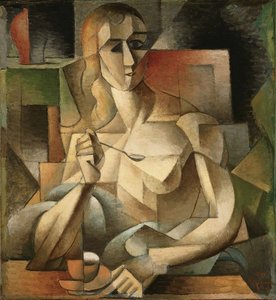
Jakie oryginały Jean Metzinger można zobaczyć w Statens Museum for Kunst?Odkryj odpowiedź

Summer i La Femme Au Cheval: Statens Museum for Kunst, Kopenhaga posiada 2 dzieł widocznych na tej stronie.

Jean Metzinger: portret artysty

Jean Dominique Antony Metzinger: A Revolutionary of Cubism

Jean Dominique Antony Metzinger, a name often intertwined with the genesis and evolution of Cubism, was far more than just a painter; he was a theorist, writer, poet, and a pivotal figure in reshaping our understanding of visual representation. Born in Nantes in 1883 into a family steeped in military tradition – his great-grandfather served under Napoleon Bonaparte – Metzinger’s artistic journey began with a grounding in traditional academic training before swiftly embracing the radical innovations of the early 20th century. His life, marked by intellectual curiosity and a relentless pursuit of new artistic languages, ultimately cemented his place as one of the most influential figures in modern art.

Early Influences and the Seeds of Cubism

Metzinger’s formative years were deeply influenced by the vibrant currents of early 20th-century French painting. Initially drawn to Neo-Impressionism, he found himself captivated by the meticulous pointillist techniques of Georges Seurat and Henri-Edmond Cross – a fascination rooted in their exploration of color theory and optical effects. However, Metzinger’s artistic spirit quickly outgrew these established styles. Between 1904 and 1907, he experimented with Divisionism and Fauvism, absorbing the bold colors and expressive brushstrokes of artists like Paul Gauguin, while simultaneously developing his own unique approach to fragmentation and geometric abstraction. This period witnessed the emergence of some of his earliest proto-Cubist works – paintings characterized by a deliberate dismantling of form and a nascent interest in presenting multiple viewpoints within a single composition. Crucially, Metzinger’s relocation to Paris in 1903, fueled by the sale of three exhibited pieces at the Salon des Indépendants, thrust him into the heart of the Parisian avant-garde – a crucible where artistic ideas were forged and disseminated with unprecedented speed.

The Birth of Cubism: Theory and Collaboration

Metzinger’s most enduring contribution to art history lies in his collaboration with Albert Gleizes on *Du Cubisme* (1912), a seminal theoretical treatise that provided the first comprehensive explanation of this revolutionary movement. Prior to Cubism, artists typically depicted objects from a single, fixed perspective – a convention dictated by centuries of artistic tradition. Metzinger and Gleizes challenged this fundamental assumption, arguing that an object could be truly understood only through its various facets and viewpoints. Their work explored how an observer’s experience of an object is shaped by successive perceptions within space and time. This concept—the idea of “simultaneity”—was groundbreaking and fundamentally altered the way artists approached representation. The publication of *Du Cubisme* wasn't merely a theoretical exercise; it was a catalyst for the widespread adoption of Cubist principles, transforming the movement from a small circle of experimentalists into a dominant force in the international art world. Metzinger’s own paintings during this period reflected these theoretical developments, showcasing his mastery of faceting and fragmentation – techniques that would become hallmarks of Cubism.

Crystal Cubism and Beyond

Following World War I, Metzinger embarked on a new phase of artistic exploration known as “crystal cubism.” This style represented a radical departure from the earlier, more fragmented forms of Cubism, emphasizing geometric clarity and architectural precision. Influenced by Niels Bohr’s work in quantum mechanics – a field exploring the nature of reality at its most fundamental level – Metzinger sought to express underlying symmetries and mathematical relationships within his paintings. He believed that art could reveal hidden structures and patterns inherent in the natural world. This period saw the creation of iconic works such as *La Femme au Cheval*, which, through its meticulous geometric construction, captured a sense of dynamic movement and spatial complexity. Beyond crystal cubism, Metzinger continued to experiment with various styles throughout his career, demonstrating an adaptability and intellectual curiosity that defined his artistic practice.

Legacy and Enduring Influence

Jean Metzinger’s legacy extends far beyond the confines of his own paintings. He was not simply a painter; he was a theorist, a writer, and a key architect of the Cubist movement. His theoretical writings, particularly *Du Cubisme*, provided the intellectual framework for understanding this revolutionary approach to art. His exploration of simultaneity—the idea that an object can be perceived from multiple viewpoints simultaneously—profoundly influenced subsequent generations of artists. Metzinger’s work is now recognized as a cornerstone of modern art, and his contributions continue to inspire artists and scholars alike. His paintings are held in prestigious collections worldwide, including the MoMA in New York, the Metropolitan Museum of Art, and the Tate Gallery in London, ensuring that his revolutionary vision will endure for generations to come.