Portret Jan Sibeckts

47 najsłynniejszych obrazów artysty Jan Sibeckts – wybór z galerii

Aktualizacja: Listopad 2026 · ranking według naszego wskaźnika popularności (liczba wyszukiwań, wizyt i zamówień dla każdego dzieła) · 50 dzieł Jan Sibeckts w naszym katalogu

W skrócie

Spośród wszystkich dzieł oryginalnych, które pozostawił Jan Sibeckts, najsłynniejszym jest Henley on Thames from the Wargrave Road, Oxfordshire (1698), znajdujący się w kolekcji River - Rowing Museum w Thames. Tuż za nimi znajdują się Interior with a Woman Embroidering and Rocking a Child in a Cradle (1671) oraz The Fort (1664). Nasz katalog zawiera 50 dzieł autorstwa Jan Sibeckts; galeria zachowała 47 najbardziej podziwianych na świecie prac, z których każda została przedstawiona wraz z datą powstania, informacją o muzeum oraz jej historią.

1627 – 1703, Antwerpia Baroque Najwięcej dzieł: Królewskie Muzeum Sztuk Pięknych Antwerpia

10 najlepszych obrazów artysty Jan Sibeckts: wybór galerii

1
Henley on Thames from the Wargrave Road, Oxfordshire (1698) autorstwa Jan Sibeckts

Henley on Thames from the Wargrave Road, Oxfordshire

1698 · Oil On Canvas · River - Rowing Museum, Thames

The Thames winds through the landscape, a silver ribbon cutting through the lush greenery of Oxfordshire. From this elevated vantage point on the Wargrave Road, the river feels alive, pulsing with the quiet industry of a bygone era. Boats drift along the waterway, some heavy with cargo, others light and nimble, while the sunlight dances upon the surface of the water. On the banks, the scene is thick with the…

2
Interior with a Woman Embroidering and Rocking a Child in a Cradle (1671) autorstwa Jan Sibeckts

Interior with a Woman Embroidering and Rocking a Child in a Cradle

1671 · Oil On Canvas · Statens Museum for Kunst, Kopenhaga

Soft light spills from a window on the left, washing over a scene of domestic stillness. Inside this richly decorated 17th-century room, a woman sits in a moment of focused labor, her hands busy with embroidery while she gently rocks a cradle. The air feels heavy with the scent of old wood and the rhythmic, muffled sound of a broom sweeping the floor nearby. A small dog rests quietly, adding…

3
The Fort (1664) autorstwa Jan Sibeckts

The Fort

1664 · Oil On Canvas · Kunsthistorisches Museum, Wiedeń

A Quietude in the Flemish Countryside The afternoon sun filters through a soft, diffused light, casting gentle shadows across a tranquil pastoral scene. In this 17th-century landscape, the world feels still, caught in a moment of industrious peace. A shallow body of water ripples softly, reflecting the sky and the figures that move along its banks. Near the water's edge, cattle graze with a slow, rhythmic grace, their warm hides…

4
The Ford (1672) autorstwa Jan Sibeckts

The Ford

1672 · Oil On Canvas · Szépművészeti Múzeum, Budapeszt

In the quietude of Jan Siberechts’ 1672 masterpiece, "The Ford," we are invited to step into a world where time seems to slow to the gentle rhythm of flowing water and grazing livestock. This exquisite oil on canvas is far more than a mere depiction of a rural crossing; it is a carefully constructed tableau of Flemish serenity and understated elegance. As the eye wanders across the rolling hills, one…

5
The Ford (1672) autorstwa Jan Sibeckts

The Ford

1672 · Oil On Canvas · Thyssen-Bornemisza Museum, Madryt

In this oil on canvas, Johannes Siberechts presents The Ford, a work that captures a quiet moment of pastoral imagery. Dated about 1672, the painting offers a glimpse into the rhythms of rural life through a meticulously observed Flemish landscape. It is a scene of steady, unhurried movement, where the landscape itself becomes a central participant in the daily activities of the figures depicted.

6
Shallow Water near a Castle (1661) autorstwa Jan Sibeckts

Shallow Water near a Castle

1661 · Oil On Canvas · Królewskie Muzeum Sztuk Pięknych Antwerpia, Antwerpia

Johannes Siberechts depicts a pastoral scene in Shallow Water near a Castle. The subject matter focuses on rural life, centering on figures and animals navigating a shallow body of water. A person guides a cart through the stream, while a rider sits atop a white horse. Nearby, cattle wade through the water, their forms partially submerged. These figures move through a landscape that transitions from a dense, dark woodland on…

7
The Farm Cart (1671) autorstwa Jan Sibeckts

The Farm Cart

1671 · Oil On Canvas · National Gallery of Ireland, Dublin

The Farm Cart is a painting by Johannes Siberechts, dating to 1671. This work presents a serene and detailed 17th-century landscape, capturing a quiet moment of rural existence. Through his brush, Siberechts offers a view of the Flemish countryside that feels lived-in and functional, focusing on the intersection of nature and human necessity.

8
Crossing the Ford (1665) autorstwa Jan Sibeckts

Crossing the Ford

1665 · Oil On Canvas · Detroit Institute of Arts, Detroit

The water ripples in shallow, translucent layers, catching the pale light of a late afternoon. A white horse moves through the ford, its weight displacing the stream in gentle, rhythmic circles. Around this central movement, the landscape unfolds in a series of organic lines. To the left, a dark mass of ancient trees anchors the composition, their twisting branches reaching into a hazy, golden sky. To the right, the world…

9
Peasants Crossing a Stream (1670) autorstwa Jan Sibeckts

Peasants Crossing a Stream

1670 · Oil On Canvas · Cleveland Museum of Art, Cleveland

In this 1670 oil painting, we find ourselves standing at the edge of a shallow stream, observing a moment of rural transit. The scene is populated by peasants and livestock navigating the water, their movements dictated by the gentle topography of the land. A group of figures and animals occupies the foreground, framed by the heavy, dark presence of trees on the left and a gnarled, textured trunk on the…

10
Going to Market (1662) autorstwa Jan Sibeckts

Going to Market

1662 · Oil On Canvas · Melford Hall

We are looking at Going to Market, a work executed by Johannes Siberechts in 1662. This piece originates from a period when the artist was establishing his presence within the Flemish tradition. Siberechts, who was born in Antwerp in 1627, brought a specific sensibility to his landscapes that would eventually lead him from his native Belgium to the English countryside.

Kontynuacja zestawienia Jan Sibeckts, od 11 do 47

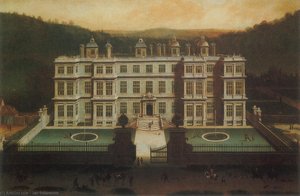
11Milkmaid and Vegetable Seller (1667) autorstwa Jan SibecktsMilkmaid and Vegetable Seller1667 · Szépművészeti Múzeum 12Two shepherds with cows and sheep at a watering place (1670) autorstwa Jan SibecktsTwo shepherds with cows and sheep at a watering place1670 13The Afternoon or Landscape with farm carts in a stream (1662) autorstwa Jan SibecktsThe Afternoon or Landscape with farm carts in a stream1662 · Museum Boijmans Van Beuningen 14The Curious Cow (1665) autorstwa Jan SibecktsThe Curious Cow1665 · Królewskie Muzeum Sztuk Pięknych Antwerpia 15A Ford (1665) autorstwa Jan SibecktsA Ford1665 · Królewskie Muzeum Sztuk Pięknych Antwerpia 16Saint Francis of Assisi Preaching to the Animals (1666) autorstwa Jan SibecktsSaint Francis of Assisi Preaching to the Animals1666 · Królewskie Muzeum Sztuk Pięknych Antwerpia 17Landscape with Peasant Girls at a Stream (1671) autorstwa Jan SibecktsLandscape with Peasant Girls at a Stream1671 · Statens Museum for Kunst 18The Ford (1686) autorstwa Jan SibecktsThe Ford1686 · Szépművészeti Múzeum 19The ford (1685) autorstwa Jan SibecktsThe ford1685 · Staatliche Kunsthalle Karlsruhe 20Landscape with a flooded road (1694) autorstwa Jan SibecktsLandscape with a flooded road1694 21Crossing a Creek (1669) autorstwa Jan SibecktsCrossing a Creek1669 · Państwowe Muzeum Sztuki Dawnej im. A.S. Puškina 22Wollaton Hall and Park, Nottinghamshire (1697) autorstwa Jan SibecktsWollaton Hall and Park, Nottinghamshire1697 · Yale Center for British Art 23The Ford (1670) autorstwa Jan SibecktsThe Ford1670 · Berlińskie Muzea Państwowe 24The Ford (1660) autorstwa Jan SibecktsThe Ford1660 · Koninklijk Museum voor Schone Kunsten 25Landscape (1660) autorstwa Jan SibecktsLandscape1660 · Rhode Island School of Design Museum of Art 26Pasture with two sleeping shepherdesses (1650) autorstwa Jan SibecktsPasture with two sleeping shepherdesses1650 · Bawarskie Państwowe Zbiory Malarstwa 27Pastoral Scene (1670) autorstwa Jan SibecktsPastoral Scene1670 · North Carolina Museum of Art 28A View of Bayhall, Pembury, Kent (1675) autorstwa Jan SibecktsA View of Bayhall, Pembury, Kent1675 · Yale Center for British Art 29Crossing the ford (1675) autorstwa Jan SibecktsCrossing the ford1675 30View of Longleat (1678) autorstwa Jan SibecktsView of Longleat1678 · Government Art Collection 31The wager (1679) autorstwa Jan SibecktsThe wager1679 · Narodowe Muzeum Sztuki Dawnej 32Farmer's cart in a ford (1700) autorstwa Jan SibecktsFarmer's cart in a ford1700 33Shepherdess (1660) autorstwa Jan SibecktsShepherdess1660 · Ermitaż 34The Market Garden (1664) autorstwa Jan SibecktsThe Market Garden1664 · Musées Royaux des Beaux-Arts 35LA TOILETTE AU BORD DE L'EAU autorstwa Jan SibecktsLA TOILETTE AU BORD DE L'EAULuwr 36Pasture land autorstwa Jan SibecktsPasture landMuzeum Narodowe w Warszawie 37CHARRETTE DE FOIN autorstwa Jan SibecktsCHARRETTE DE FOINPalais des Beaux-Arts de Lille 38PAYSAGE AVEC FIGURES OU LES DEUX FILLETTES autorstwa Jan SibecktsPAYSAGE AVEC FIGURES OU LES DEUX FILLETTES 39CAVALIER ET AMAZONE autorstwa Jan SibecktsCAVALIER ET AMAZONEPalais des Beaux-Arts de Lille 40River landscape with bridge and ford autorstwa Jan SibecktsRiver landscape with bridge and fordGemäldegalerie 41An extensive river landscape probably derbyshire autorstwa Jan SibecktsAn extensive river landscape probably derbyshire 42A Cowherd passing a Horse and Cart in a Stream autorstwa Jan SibecktsA Cowherd passing a Horse and Cart in a StreamNational Gallery 43Pasture with two sleeping Shepherdesses autorstwa Jan SibecktsPasture with two sleeping Shepherdesses 44Figures With A Cart And Horses Fording A Stream autorstwa Jan SibecktsFigures With A Cart And Horses Fording A Stream 45View of a House and its Estate in Belsize, Middlesex autorstwa Jan SibecktsView of a House and its Estate in Belsize, MiddlesexTate Britain 46A View of Longleat (1675) autorstwa Jan SibecktsA View of Longleat1675 47Landscape with Rainbow, Henley-on-Thames (1690) autorstwa Jan SibecktsLandscape with Rainbow, Henley-on-Thames1690 · Tate Gallery

Słynne obrazy Jan Sibeckts epoka po epoce

Tematy, które przyciągnęły wzrok Jan Sibeckts

Cztery motywy najczęściej powracające w tych oryginałach, z których każdy doczekał się swojego najdoskonalszego przykładu.

Muzea przechowujące oryginały Jan Sibeckts

8 muzeów, w których znajduje się najwięcej obrazów z tej strony.

Muzea Miasto Dzieła artysty Jan Sibeckts Obrazy z tej listy
Królewskie Muzeum Sztuk Pięknych Antwerpia, AntwerpiaKrólewskie Muzeum Sztuk Pięknych Antwerpia Antwerpia 4 Shallow Water near a Castle, The Curious Cow, A Ford
Szépművészeti Múzeum, BudapesztSzépművészeti Múzeum Budapeszt 3 The Ford, Milkmaid and Vegetable Seller, The Ford
Statens Museum for Kunst, KopenhagaStatens Museum for Kunst Kopenhaga 2 Interior with a Woman Embroidering and Rocking a Child in a Cradle, Landscape with Peasant Girls at a Stream
Yale Center for British Art, New HavenYale Center for British Art New Haven 2 Wollaton Hall and Park, Nottinghamshire, A View of Bayhall, Pembury, Kent
Palais des Beaux-Arts de Lille, LillePalais des Beaux-Arts de Lille Lille 2 CHARRETTE DE FOIN, CAVALIER ET AMAZONE
River - Rowing Museum, ThamesRiver - Rowing Museum Thames 1 Henley on Thames from the Wargrave Road, Oxfordshire
Kunsthistorisches Museum, WiedeńKunsthistorisches Museum Wiedeń 1 The Fort
Thyssen-Bornemisza Museum, MadrytThyssen-Bornemisza Museum Madryt 1 The Ford

Jan Sibeckts dekada po dekadzie: oryginały definiujące każdy okres

Dzieła według dekad

Wybierz dekadę, aby zobaczyć dzieło, które ją definiuje.

Pytania kolekcjonerów o obrazy Jan Sibeckts

Z jakiego dzieła najbardziej znany jest Jan Sibeckts?Odkryj odpowiedź

Henley on Thames from the Wargrave Road, Oxfordshire (1698), River - Rowing Museum, Thames. Następne są Interior with a Woman Embroidering and Rocking a Child in a Cradle (1671) oraz The Fort (1664).

W jakim wieku był Jan Sibeckts, gdy powstało Henley on Thames from the Wargrave Road, Oxfordshire?Odkryj odpowiedź

71 lat: Henley on Thames from the Wargrave Road, Oxfordshire pochodzi z 1698, a Jan Sibeckts urodził(a) się w 1627.

Jakie są dziesięć najsłynniejszych obrazów, których autorem jest Jan Sibeckts?Odkryj odpowiedź

Henley on Thames from the Wargrave Road, Oxfordshire, Interior with a Woman Embroidering and Rocking a Child in a Cradle, The Fort, The Ford, The Ford, Shallow Water near a Castle, The Farm Cart, Crossing the Ford, Peasants Crossing a Stream i Going to Market. Powyższy ranking zawiera rok powstania oraz muzeum dla każdego z nich.

Ile obrazów pozostawił po sobie Jan Sibeckts?Odkryj odpowiedź

Nasz katalog zawiera 50 dzieł artysty Jan Sibeckts, datowanych od 1650 do 1700.

W których muzeach znajdują się arcydzieła Jan Sibeckts?Odkryj odpowiedź

W większości znajdują się w Królewskie Muzeum Sztuk Pięknych Antwerpia (Antwerpia), Szépművészeti Múzeum (Budapeszt) i Statens Museum for Kunst (Kopenhaga). Powyższa tabela muzeów zawiera ich pełną listę.

W których latach Jan Sibeckts namalował swoje najsłynniejsze dzieła?Odkryj odpowiedź

W 1660s: 14 z 47 dzieł na tej stronie powstało w tym czasie, w tym The Fort.

Jakie są pierwsze i ostatnie słynne oryginały Jan Sibeckts?Odkryj odpowiedź

Na tej stronie najwcześniejszy to Pasture with two sleeping shepherdesses (1650), a najpóźniejszy Farmer's cart in a ford (1700).

Jakie tematy Jan Sibeckts wybierał najczęściej?Odkryj odpowiedź

Landscape (22), River (17) i Horse (15), w ramach 47 dzieł na tej stronie.

Której techniki Jan Sibeckts używał najczęściej?Odkryj odpowiedź

Oil On Canvas, dla 32 z 47 dzieł na tej stronie.

Do jakiego nurtu artystycznego należy Jan Sibeckts?Odkryj odpowiedź

Baroque, sądząc po oryginałach na tej stronie.

Które dzieła Jan Sibeckts znajdują się w Królewskie Muzeum Sztuk Pięknych Antwerpia?Odkryj odpowiedź

Shallow Water near a Castle, The Curious Cow i A Ford: Królewskie Muzeum Sztuk Pięknych Antwerpia, Antwerpia posiada 4 dzieł widocznych na tej stronie.

Jan Sibeckts: życie i twórczość

A Flemish Vision in England: The Life and Art of Jan Siberechts

Jan Siberechts, born in Antwerp in 1627, occupies a fascinating position in the history of European art—a bridge between the vibrant traditions of Flemish painting and the burgeoning landscape tradition of England. His story is one of artistic development, fortunate patronage, and ultimately, pioneering influence. The son of a sculptor also named Jan Siberechts, he received his initial training within the family workshop, absorbing the skills and aesthetic sensibilities that would form the foundation of his career. By 1648, he had achieved master status in the prestigious Guild of Saint Luke in Antwerp, signaling his recognition as a skilled craftsman. While concrete evidence remains elusive, art historians speculate about a possible sojourn to Italy during the late 1640s or early 1650s. Though unconfirmed, this potential exposure to Italianate landscape painting—with its emphasis on classical compositions and atmospheric perspective—undoubtedly left an imprint on his evolving style, visible in the early works that showcase a delicate balance between Flemish realism and Italianate ideals. His marriage to Maria-Anna Croes in 1652 marked a period of stability as he honed his craft, initially drawing inspiration from Dutch masters like Nicolaes Berchem and Karel Dujardin, whose pastoral scenes and nuanced light effects resonated with his artistic inclinations.

Early Training and Flemish Roots

Siberechts’ formative years were steeped in the traditions of Antwerp’s artistic milieu. His father, also a sculptor, instilled in him a deep appreciation for craftsmanship and sculptural form—influences that would permeate Siberechts’ own artistic endeavors. Becoming a master in Saint Luke’s Guild by 1648 demonstrated not only his technical prowess but also his acceptance within the established artistic hierarchy of Antwerp. This recognition afforded him access to resources and opportunities crucial for furthering his artistic pursuits. Although biographical details about Siberechts remain sparse, scholarly research suggests he may have traveled to Italy sometime around 1650 or 1651—a journey that would expose him to the stylistic innovations emerging from Rome during this period. The Italian landscape tradition, characterized by its embrace of classical ideals and meticulous attention to atmospheric effects, profoundly impacted Siberechts’ artistic sensibilities. This influence is particularly evident in his early paintings, where a subtle fusion of Flemish realism and Italianate aesthetics creates a distinctive visual language.

The Influence of Dutch Masters

Siberechts’ artistic trajectory was significantly shaped by the works of prominent Dutch painters who dominated the art scene during his formative years. Nicolaes Berchem and Karel Dujardin—masters of pastoral landscapes and luminous chiaroscuro—served as pivotal models for Siberechts, inspiring him to emulate their techniques and stylistic choices. These artists skillfully captured the beauty of rural life through delicate brushstrokes and masterful use of light, establishing a precedent for Siberechts’ own artistic explorations. Berchem's paintings, renowned for their ethereal quality and symbolic richness, conveyed profound emotional depth—a characteristic that Siberechts would later adopt in his compositions. Similarly, Dujardin’s landscapes celebrated the tranquility of the countryside while simultaneously conveying an awareness of humanist ideals. These influences undoubtedly contributed to Siberechts’ ability to create evocative scenes imbued with both visual splendor and intellectual contemplation.

From Flemish Countryside to English Estates

The 1660s marked a decisive turning point in Siberechts’ artistic journey—a period during which he decisively embraced the landscape tradition of Flanders and began to forge his own distinctive style. Departing from the conventions of earlier Flemish painters, Siberechts focused on depicting scenes of rural life with unprecedented vibrancy and detail. Unlike many of his contemporaries who favored idealized depictions of nature, Siberechts presented a realistic portrayal of the Flemish countryside populated by robust figures—often women engaged in everyday tasks—dressed in brilliantly colored clothing that punctuated the verdant landscapes. He skillfully manipulated water reflections, creating visual echoes and adding depth to his compositions. These paintings weren’t merely topographical representations; they were immersive explorations of human experience within the natural world. Siberechts' meticulous attention to detail—particularly in capturing the textures of foliage and the subtleties of light—established him as a leader among Flemish landscape painters.

A Pioneer of English Landscape Painting

Siberechts’ artistic reputation extended beyond Flanders when he accepted an invitation from George Villiers, the Second Duke of Buckingham, to decorate Cliveden House in England around 1672. This commission represented a significant step forward in Siberechts’ career—providing him with both financial stability and invaluable experience working on grand architectural projects. However, it was his subsequent travels throughout England that cemented his legacy as a pioneer of the English landscape tradition. He undertook numerous commissions to document the estates of aristocratic clients—a practice that would establish him as one of the foremost artists of his time. Siberechts’ landscapes captured not only the physical beauty of these estates but also their social and cultural significance, reflecting the prevailing ethos of the era. His innovative approach to composition—employing a bird's-eye perspective and utilizing misty atmospheric haze—influenced generations of English landscape painters who followed. Siberechts’ contribution lies not merely in his technical mastery but also in his ability to convey a sense of place and belonging—a quality that continues to resonate with viewers today. His paintings stand as enduring monuments to the artistic spirit of the seventeenth century, embodying both Flemish tradition and the burgeoning dynamism of English culture.