Portret Jan Mabuse

Obrazy: 100 najsłynniejszych dzieł artysty Jan Mabuse – spojrzenie galerii

Aktualizacja: Październik 2026 · ranking według naszego wskaźnika popularności (liczba wyszukiwań, wizyt i zamówień dla każdego dzieła) · 241 dzieł Jan Mabuse w naszym katalogu

W skrócie

Według opinii kuratorów galerii, najsłynniejszym obrazem Jan Mabuse jest Adam and Eve (1525), którego oryginał znajduje się w Rhode Island School of Design Museum of Art w Providence. Portrait of a man (1528) i Man of Sorrow (1525) dopełniają trio, które zna każde oko. Z 241 dzieł Jan Mabuse w naszym katalogu, galeria prezentuje poniżej 100 najsłynniejszych prac – każda z nich jest oryginałem z podaniem roku powstania, muzeum oraz cech wyróżniających ją na tle innych.

1478 – 1532, Maubeuge Renesans północny Najwięcej dzieł: Statens Museum for Kunst

10 najlepszych obrazów artysty Jan Mabuse w galerii

1
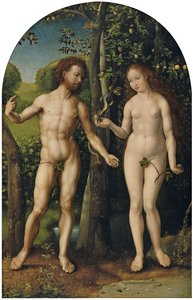
Adam and Eve (1525) autorstwa Jan Mabuse

Adam and Eve

In the profound stillness of Jan Gossaert’s 1525 masterpiece, Adam and Eve, we are invited into a moment of primordial intimacy that transcends the boundaries of time. This breathtaking oil painting serves as a cornerstone of Northern Renaissance artistry, capturing the very dawn of humanity with a level of anatomical precision and dramatic flair that was revolutionary for its era. The composition centers on the tender, almost vulnerable embrace of…

2
Portrait of a man (1528) autorstwa Jan Mabuse

Portrait of a man

1528 · Oil On Panel · Królewskie Muzea Sztuk Pięknych w Belgii, Bruksela

The gaze of the subject in Portrait of a man by Jan Gossaert meets the viewer with a steady, unwavering presence. Created about 1530, this work captures a man seated within a space that feels both cramped and cozy, a private nook where the tools of a specific life reside. The artist, Jan Gossaert, who is also known by the moniker Mabuse, renders the figure with a profound sense of…

3
Man of Sorrow (1525) autorstwa Jan Mabuse

Man of Sorrow

1525 · Oil On Panel · Muzeum Narodowe w Krakowie, Kraków

The body of Christ hangs heavy, a pale anchor in a sea of deep reds and shadows. Every muscle is rendered with a sharp, anatomical clarity that feels almost tactile, as if the skin might still hold warmth despite the stillness of death. Light strikes the torso from a single direction, carving out the hollows of the ribs and the tension in the limbs. Around this central suffering, figures gather…

4
Portrait of a Man (1525) autorstwa Jan Mabuse

Portrait of a Man

1525 · Oil On Panel · Królewskie Muzeum Sztuk Pięknych Antwerpia, Antwerpia

Step closer and observe the stillness of this young man. He is presented in a bust-length view, framed within a gentle oval that focuses our attention entirely on his psychological state. There is a certain gravity in his gaze, a stoic and thoughtful expression that suggests a life of intellectual depth and high social standing. He does not perform for us; he simply exists in a moment of quiet contemplation.…

5
Two Wings from a Triptych (exterior) (1521) autorstwa Jan Mabuse

Two Wings from a Triptych (exterior)

1521 · Oil On Panel

The heavy wooden panels of the triptych stand partially open, revealing a world caught in a moment of sacred stillness. These two exterior wings, crafted in 1521, act as a threshold between the mundane and the divine. On one side, a woman holds a book, her gaze steady and quiet; on the other, an angel appears, bringing a celestial presence to the earthly realm. They exist within a framework of…

6
Virgin and child enthroned (1527) autorstwa Jan Mabuse

Virgin and child enthroned

1527 · Oil On Canvas · Kunsthistorisches Museum, Wiedeń

To gaze upon Jan Gossaert’s Virgin and Child Enthroned is to step directly into the luminous, deeply spiritual atmosphere of the Northern Renaissance. This masterpiece, painted in 1527, transcends mere portraiture; it is a profound theological statement rendered with breathtaking technical skill. At its heart sits the Virgin Mary, regal and serene, enthroned as she cradles the infant Jesus. The immediate visual impact is drawn to the vibrant sweep of…

7
Portrait of a man (1527) autorstwa Jan Mabuse

Portrait of a man

1527 · Oil On Panel · Kunsthistorisches Museum, Wiedeń

A middle-aged man is captured in a bust-length composition, his gaze directed toward the left of the frame. He wears a dark, beret-style hat and a black doublet over a white undershirt, with a single gold ring featuring a gemstone visible on his hand. The lighting is directional, descending from the upper left to cast soft shadows across the right side of his face and neck. This chiaroscuro effect provides…

8
The Holy Family (1507) autorstwa Jan Mabuse

The Holy Family

1507 · Oil On Panel · Muzeum J. Paula Getty'ego, Los Angeles

The Holy Family is a painting by Jan Gossaert, executed in 1507. This oil on panel work captures a quiet, domestic moment within a grander architectural framework. The Virgin Mary occupies the center of the scene, her hands cradling the Christ Child. Their presence forms the heart of the composition, anchored by the weight of their figures against the stone and sky.

9
Hercules and Deianeira (1517) autorstwa Jan Mabuse

Hercules and Deianeira

1517 · Oil On Panel · The Barber Institute of Fine Arts, Birmingham

Two figures sit locked in a quiet, muscular embrace. Hercules and Deianeira occupy a marble-paneled niche, their limbs entwined in a way that feels both heavy and strangely delicate. The man’s skin carries the sculptural weight of antiquity, his form defined by the tension of bone and muscle. Beside him, Deianeira rests, her pose a study in soft curves and sudden stillness. They do not look at the viewer; they…

10
Triptych of the Holy Family (1501) autorstwa Jan Mabuse

Triptych of the Holy Family

1501 · Oil On Panel · Narodowe Muzeum Sztuki Dawnej, Lizbona

The Triptych of the Holy Family is a religious oil on panel painting dating to 1501. This work is presented in a classic triptych format, housed within an ornate, carved wooden frame featuring scalloped tops. The central panel is the largest and most complex, depicting the Holy Family—the Virgin Mary, Saint Joseph, and the Christ Child—arranged in a pyramidal composition and surrounded by an angelic host within a lush landscape.…

Obrazy artysty Jan Mabuse, uszeregowane od 11 do 100 miejsca

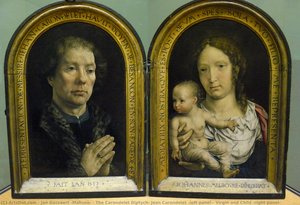
11The Virgin preparing the bath of the Child (1500) autorstwa Jan MabuseThe Virgin preparing the bath of the Child1500 · Bob Jones University Museum and Gallery 12Madonna with the Child (1500) autorstwa Jan MabuseMadonna with the Child1500 · Hämeenlinna Art Museum 13Virgin and child in the veil (1500) autorstwa Jan MabuseVirgin and child in the veil1500 · Królewskie Muzea Sztuk Pięknych w Belgii 14Madonna with child (1495) autorstwa Jan MabuseMadonna with child1495 15Portrait of Isabella of Austria (1514) autorstwa Jan MabusePortrait of Isabella of Austria1514 16Floris van Egmond, Count of Buren (1510) autorstwa Jan MabuseFloris van Egmond, Count of Buren1510 · Brighton Museum & Art Gallery 17Saint Jerome (1512) autorstwa Jan MabuseSaint Jerome1512 · Statens Museum for Kunst 18Christ on the Mount of Olives (1507) autorstwa Jan MabuseChrist on the Mount of Olives1507 · Gemäldegalerie 19Portrait of a Man (1515) autorstwa Jan MabusePortrait of a Man1515 · Państwowe Muzeum Sztuki Dawnej im. A.S. Puškina 20The Beheading of St John the Baptist (1510) autorstwa Jan MabuseThe Beheading of St John the Baptist1510 · École Nationale Supérieure des Beaux-Arts 21Saint Jerome Penitent [right panel] (1512) autorstwa Jan MabuseSaint Jerome Penitent [right panel]1512 · National Gallery of Art 22Saint Jerome Penitent [left panel] (1512) autorstwa Jan MabuseSaint Jerome Penitent [left panel]1512 · National Gallery of Art 23The Malvagna Altarpiece (centre panel, detail) (1513) autorstwa Jan MabuseThe Malvagna Altarpiece (centre panel, detail)1513 24Agony in the Garden (1510) autorstwa Jan MabuseAgony in the Garden1510 25Holy Family with Coats of Arms of Charles... (1528) autorstwa Jan MabuseHoly Family with Coats of Arms of Charles...1528 · Saint Louis Art Museum 26Virgin and Child in a Landscape (1531) autorstwa Jan MabuseVirgin and Child in a Landscape1531 · Cleveland Museum of Art 27Self-portrait (1525) autorstwa Jan MabuseSelf-portrait1525 · Currier Gallery of Art 28Madonna and Child (1529) autorstwa Jan MabuseMadonna and Child1529 · Rijksmuseum Twenthe 29Christ on Mount Olive (1525) autorstwa Jan MabuseChrist on Mount Olive1525 · Bawarskie Państwowe Zbiory Malarstwa 30The Holy Family (1520) autorstwa Jan MabuseThe Holy Family1520 · Museum of Fine Arts 31Portrait of Henry III, Count of Nassau (1530) autorstwa Jan MabusePortrait of Henry III, Count of Nassau1530 · Museu Nacional d'Art de Catalunya 32Christ sitting on the Cold Stone (1531) autorstwa Jan MabuseChrist sitting on the Cold Stone1531 · Królewskie Muzeum Sztuk Pięknych Antwerpia 33Virgin and Child with a Patron (1530) autorstwa Jan MabuseVirgin and Child with a Patron1530 · Statens Museum for Kunst 34Portrait of Anna de Bergh, Marquise de Veere (1530) autorstwa Jan MabusePortrait of Anna de Bergh, Marquise de Veere1530 · McNay Art Museum 35Saint Luke painting the Virgin (1520) autorstwa Jan MabuseSaint Luke painting the Virgin1520 · National Gallery Prague 36Portrait of a Man (1524) autorstwa Jan MabusePortrait of a Man1524 37Madonna with Child Jesus (1531) autorstwa Jan MabuseMadonna with Child Jesus1531 · Muzeum Narodowe w Warszawie 38Christus rust na de geseling (1527) autorstwa Jan MabuseChristus rust na de geseling1527 · Staatliche Kunsthalle Karlsruhe 39Madonna and Child (1532) autorstwa Jan MabuseMadonna and Child1532 40Madonna and Child playing with the veil (1530) autorstwa Jan MabuseMadonna and Child playing with the veil1530 41Cain Killing Abel (1525) autorstwa Jan MabuseCain Killing Abel1525 42Portrait of a Man (1524) autorstwa Jan MabusePortrait of a Man1524 43Scenes from the Life of St Giles (1520) autorstwa Jan MabuseScenes from the Life of St Giles1520 · Statens Museum for Kunst 44The Martyrdom of St Cyriacus and His Companions (1520) autorstwa Jan MabuseThe Martyrdom of St Cyriacus and His Companions1520 · Statens Museum for Kunst 45Virgin Mary, Christ Blessing, and St John the Baptist (Deesis) (1525) autorstwa Jan MabuseVirgin Mary, Christ Blessing, and St John the Baptist (Deesis)1525 46Abbot Johann Ingenray (1535) autorstwa Jan MabuseAbbot Johann Ingenray1535 · Detroit Institute of Arts 47The Adoration of the Kings (1510) autorstwa Jan MabuseThe Adoration of the Kings1510 · National Gallery 48Wings of the Norfolk Triptych (1525) autorstwa Jan MabuseWings of the Norfolk Triptych1525 · Musées Royaux des Beaux-Arts 49Virgin and Child (1525) autorstwa Jan MabuseVirgin and Child1525 · Art Institute of Chicago 50Adam and Eve (1510) autorstwa Jan MabuseAdam and Eve1510 · Thyssen-Bornemisza Museum 51Danaë (detail) (1527) autorstwa Jan MabuseDanaë (detail)1527 · Alte Pinakothek 52The Carondelet Diptych: Jean Carondelet (left panel), Virgin and Child (right panel) (1517) autorstwa Jan MabuseThe Carondelet Diptych: Jean Carondelet (left panel), Virgin and Child (right panel)1517 · Luwr 53Danaë (1527) autorstwa Jan MabuseDanaë1527 · Alte Pinakothek 54Two Kings and a Woman Leaving a Palace (1510) autorstwa Jan MabuseTwo Kings and a Woman Leaving a Palace1510 55Madonna and Child (1527) autorstwa Jan MabuseMadonna and Child1527 · Museo del Prado 56The Adoration of the Kings (detail) (1500) autorstwa Jan MabuseThe Adoration of the Kings (detail)1500 57Holy Family with St. Catherine and St. Barbara (1515) autorstwa Jan MabuseHoly Family with St. Catherine and St. Barbara1515 58St Jerome Penitent (1510) autorstwa Jan MabuseSt Jerome Penitent1510 59Hercules and Deianira (1517) autorstwa Jan MabuseHercules and Deianira1517 · Barber Institute of Fine Arts 60Hercules of the Forum Boarium (1509) autorstwa Jan MabuseHercules of the Forum Boarium1509 61Neptune and Amphitrite (1516) autorstwa Jan MabuseNeptune and Amphitrite1516 62Virgin and Child with Musical Angels (1510) autorstwa Jan MabuseVirgin and Child with Musical Angels1510 63A Reliquary (1510) autorstwa Jan MabuseA Reliquary1510 · Biblioteka i Muzeum Pierpont Morgana 64The Agony in the Garden (1510) autorstwa Jan MabuseThe Agony in the Garden1510 65Standing Warrior in Fantastic Armour (1509) autorstwa Jan MabuseStanding Warrior in Fantastic Armour1509 66The Carondelet Diptych left wing, Jean Carondelet (1517) autorstwa Jan MabuseThe Carondelet Diptych left wing, Jean Carondelet1517 67St John the Evangelist on Patmos (1515) autorstwa Jan MabuseSt John the Evangelist on Patmos1515 68The Holy Family Seated at the Foot of a Tree (1510) autorstwa Jan MabuseThe Holy Family Seated at the Foot of a Tree1510 69Apollo Citharoedus of the Casa Sassi (1509) autorstwa Jan MabuseApollo Citharoedus of the Casa Sassi1509 70Neptune and Amphitrite (detail) (1516) autorstwa Jan MabuseNeptune and Amphitrite (detail)1516 71The Malvagna Altarpiece (right wing, detail) (1513) autorstwa Jan MabuseThe Malvagna Altarpiece (right wing, detail)1513 72Jean Carondelet (1503) autorstwa Jan MabuseJean Carondelet1503 · Toledo Museum of Art 73The Adoration of the Magi (1515) autorstwa Jan MabuseThe Adoration of the Magi1515 74Agony in the Garden (detail) (1510) autorstwa Jan MabuseAgony in the Garden (detail)1510 75Bust of a Warrior in Fantastic Armour (1509) autorstwa Jan MabuseBust of a Warrior in Fantastic Armour1509 76Study after the Spinario (detail) (1509) autorstwa Jan MabuseStudy after the Spinario (detail)1509 · Universiteitsbibliotheek 77The Doria Pamphilj Diptych (right wing) (1510) autorstwa Jan MabuseThe Doria Pamphilj Diptych (right wing)1510 · Galleria Doria Pamphilj 78Carondelet Diptych (left wing) (1517) autorstwa Jan MabuseCarondelet Diptych (left wing)1517 79Study after the Spinario (recto) (1509) autorstwa Jan MabuseStudy after the Spinario (recto)1509 · Universiteitsbibliotheek 80The Malvagna Altarpiece (exterior wings) (1513) autorstwa Jan MabuseThe Malvagna Altarpiece (exterior wings)1513 81The Mystic Marriage of St Catherine (1503) autorstwa Jan MabuseThe Mystic Marriage of St Catherine1503 · Statens Museum for Kunst 82Carondelet Diptych (right wing) (1517) autorstwa Jan MabuseCarondelet Diptych (right wing)1517 83Emperor Augustus and the Tiburtine Sibyl (1503) autorstwa Jan MabuseEmperor Augustus and the Tiburtine Sibyl1503 84Carondelet Diptych (1517) autorstwa Jan MabuseCarondelet Diptych1517 85The Malvagna Altarpiece (side wings) (1513) autorstwa Jan MabuseThe Malvagna Altarpiece (side wings)1513 86View of the Colosseum Seen from the West (1509) autorstwa Jan MabuseView of the Colosseum Seen from the West1509 87Carondelet Diptych (verso) (1517) autorstwa Jan MabuseCarondelet Diptych (verso)1517 88The Malvagna Altarpiece (centre panel) (1513) autorstwa Jan MabuseThe Malvagna Altarpiece (centre panel)1513 89Portrait of a Man, possibly Jan Snoeck (1530) autorstwa Jan MabusePortrait of a Man, possibly Jan Snoeck1530 · National Gallery of Art 90The Mocking of Christ or the Man of Sorrows (1525) autorstwa Jan MabuseThe Mocking of Christ or the Man of Sorrows1525 91King Christian II of Denmark (1525) autorstwa Jan MabuseKing Christian II of Denmark1525 92Virgin and Child Seated at the Foot of a Tree (1522) autorstwa Jan MabuseVirgin and Child Seated at the Foot of a Tree1522 93The children of King Christian II of Denmark, Norway and Sweden (1526) autorstwa Jan MabuseThe children of King Christian II of Denmark, Norway and Sweden1526 94Portrait of a Merchant, National (1530) autorstwa Jan MabusePortrait of a Merchant, National1530 95Adam and Eve in Paradise (1525) autorstwa Jan MabuseAdam and Eve in Paradise1525 96The Adoration of the Shepherds (1520) autorstwa Jan MabuseThe Adoration of the Shepherds1520 97Portrait of a Man (1520) autorstwa Jan MabusePortrait of a Man1520 · Metropolitan Museum of Art 98The Presentation in the Temple (1520) autorstwa Jan MabuseThe Presentation in the Temple1520 99Christ Carrying the Cross (1520) autorstwa Jan MabuseChrist Carrying the Cross1520 · Metropolitan Museum of Art 100The Norfolk Triptych (left wing) (1525) autorstwa Jan MabuseThe Norfolk Triptych (left wing)1525 · Musées Royaux des Beaux-Arts

Słynne obrazy Jan Mabuse epoka po epoce

Tematy, które przyciągnęły wzrok Jan Mabuse

Cztery motywy najczęściej powracające w tych oryginałach, z których każdy doczekał się swojego najdoskonalszego przykładu.

Muzea przechowujące oryginały Jan Mabuse

8 muzeów, w których znajduje się najwięcej obrazów z tej strony.

Muzea Miasto Dzieła artysty Jan Mabuse Obrazy z tej listy
Statens Museum for Kunst, KopenhagaStatens Museum for Kunst Kopenhaga 5 Saint Jerome, Virgin and Child with a Patron, Scenes from the Life of St Giles
National Gallery of Art, WaszyngtonNational Gallery of Art Waszyngton 4 Saint Jerome Penitent [right panel], Saint Jerome Penitent [left panel], Portrait of a Man, possibly Jan Snoeck
Musées Royaux des Beaux-Arts, BrukselaMusées Royaux des Beaux-Arts Bruksela 7 Wings of the Norfolk Triptych, The Norfolk Triptych (left wing)
Królewskie Muzeum Sztuk Pięknych Antwerpia, AntwerpiaKrólewskie Muzeum Sztuk Pięknych Antwerpia Antwerpia 4 Portrait of a Man, Christ sitting on the Cold Stone
Królewskie Muzea Sztuk Pięknych w Belgii, BrukselaKrólewskie Muzea Sztuk Pięknych w Belgii Bruksela 3 Portrait of a man, Virgin and child in the veil
Kunsthistorisches Museum, WiedeńKunsthistorisches Museum Wiedeń 3 Virgin and child enthroned, Portrait of a man
Alte Pinakothek, MonachiumAlte Pinakothek Monachium 2 Danaë (detail), Danaë
Universiteitsbibliotheek, LeidenUniversiteitsbibliotheek Leiden 2 Study after the Spinario (detail), Study after the Spinario (recto)

Jan Mabuse, jedno kultowe dzieło na dekadę

Dzieła według dekad

Wybierz dekadę, aby zobaczyć dzieło, które ją definiuje.

Obrazy artysty Jan Mabuse: odpowiedzi galerii

Który obraz Jan Mabuse jest najsłynniejszy ze wszystkich?Odkryj odpowiedź

Adam and Eve (1525), Rhode Island School of Design Museum of Art, Providence. Następne są Portrait of a man (1528) oraz Man of Sorrow (1525).

Ile lat miał Jan Mabuse, gdy ukończył Adam and Eve?Odkryj odpowiedź

47 lat: Adam and Eve pochodzi z 1525, a Jan Mabuse urodził(a) się w 1478.

Które to 10 najlepszych obrazów Jan Mabuse?Odkryj odpowiedź

Adam and Eve, Portrait of a man, Man of Sorrow, Portrait of a Man, Two Wings from a Triptych (exterior), Virgin and child enthroned, Portrait of a man, The Holy Family, Hercules and Deianeira i Triptych of the Holy Family. Powyższy ranking zawiera rok powstania oraz muzeum dla każdego z nich.

Ile dzieł stworzył/a Jan Mabuse?Odkryj odpowiedź

Nasz katalog zawiera 241 dzieł artysty Jan Mabuse, datowanych od 1495 do 1532.

Gdzie można znaleźć najsłynniejsze oryginały autorstwa Jan Mabuse?Odkryj odpowiedź

W większości znajdują się w Statens Museum for Kunst (Kopenhaga), National Gallery of Art (Waszyngton) i Musées Royaux des Beaux-Arts (Bruksela). Powyższa tabela muzeów zawiera ich pełną listę.

Kiedy Jan Mabuse stworzył swoje najsłynniejsze obrazy?Odkryj odpowiedź

W 1510s: 36 z 100 dzieł na tej stronie powstało w tym czasie, w tym Hercules and Deianeira.

Które z najsłynniejszych dzieł Jan Mabuse należą do jego najwcześniejszych i najpóźniejszych prac?Odkryj odpowiedź

Na tej stronie najwcześniejszy to Madonna with child (1495), a najpóźniejszy Madonna and Child (1532).

Do jakich tematów Jan Mabuse powracał najczęściej?Odkryj odpowiedź

Woman (25), Man (24) i Child (15), w ramach 100 dzieł na tej stronie.

W jakiej technice najczęściej tworzył Jan Mabuse?Odkryj odpowiedź

Oil On Panel, dla 38 z 100 dzieł na tej stronie.

Z jakim nurtem związany jest Jan Mabuse?Odkryj odpowiedź

Renesans północny, sądząc po oryginałach na tej stronie.

Które oryginały artysty Jan Mabuse znajdują się w zbiorach Statens Museum for Kunst?Odkryj odpowiedź

Saint Jerome, Virgin and Child with a Patron i Scenes from the Life of St Giles: Statens Museum for Kunst, Kopenhaga posiada 5 dzieł widocznych na tej stronie.

Jan Mabuse: artysta

Pionier Renesansu: Życie i Dziedzictwo Jana Gossaerta

W zmieniającym się krajobrazie wczesnego szesnastego wieku, niewielu artystów z taką biegłością jak Jan Gossaert potrafiło połączyć skrupulatne tradycje Północy z rozkwitającym humanizmem Południa. Znany historii pod sugestywnym przydomkiem Mabuse, ten wizjonerski malarz wyłonił się z Maubeuge we Francji, by stać się fundamentem ruchu romanistycznego. Jego dorobek życia stanowi głęboką metamorfozę sztuki niderlandzkiej, w której ostry, dotykowy realizm flamandzkich mistrzów spotkał się z monumentalną, rzeźbiarską elegancją włoskiego renesansu. Studiowanie dzieł Gossaerta to bycie świadkiem samej chwili, w której średniowieczna dusza zaczęła przyjmować klasyczne światło antyku.

Choć precyzyjne szczegóły jego wczesnej edukacji pozostają spowite mgłą czasu, artystyczne DNA Gossaerta było głęboko zakorzenione w tradycjach Niderlandów. Powszechnie uważa się, że lata formacyjne spędził na chłonięciu technicznej rygorystyczności takich mistrzów jak Rogier van der Weyden czy Hugo van der Goes. Od tych poprzedników odziedziczył niezrównane oddanie detalom – sposób przedstawiania tekstur, tkanin i światła, który wydawał się widzowi niemal namacalny. Gossaert był jednak daleki od bycia jedynie naśladowcą przeszłości; posiadał nienasyconą ciekawość tego, co nowe, zwracając wzrok ku południu, aby zintegrować anatomiczną precyzję i architektoniczny przepych włoskiego renesansu ze swoim rodzimym stylem.

Synteza Północy i Południa

Prawdziwy geniusz Mabuse tkwi w jego zdolności do harmonizowania dwóch pozornie odległych światów. Jego rozwój jako malarza romanistycznego stanowił odejście od czysto gotyckiej wrażliwości, która przez długi czas dominowała w Europie Północnej. Tam, gdzie wcześniejsi artyści skupiali się na symbolicznej głębi i duchowej ikonografii, Gossaert wprowadził poczucie fizycznej masy i klasycznych proporcji. Studiował ludzką formę z nową, naukową energią, pozwalając swoim postaciom zajmować przestrzeń z rzeźbiarską obecnością, która w jego epoce wydawała się rewolucyjna.

Ta stylistyczna ewolucja jest najbardziej widoczna w jego traktowaniu światła i atmosfery. W jego rękach światło nie tylko oświetla scenę; ono ją rzeźbi. Wykorzystywał perspektywę powietrzną, by tworzyć rozległe, immersyjne krajobrazy, które zdają się nieskończenie wycofywać w dal, stanowiąc dramatyczną scenę dla jego bohaterów. Jego kompozycje często cechuje złożona gra cieni i blasku, technika nadająca scenom religijnym i mitologicznym niemal teatralną intensywność. Ta biegłość pozwoliła mu poruszać się po delikatnej granicy między głęboką kontemplacją duchową, wymaganą przez zlecenia religijne, a intelektualnym przepychem, którego domagali się humaniści jego czasów.

Arcydzieła i Znaczenie Historyczne

Prężna kariera Gossaerta była wspierana przez prestiżową sieć mecenasów, od bogatych kupców po wysokich rangą duchownych i arystokrację. Jego twórczość była niezwykle różnorodna, obejmując zarówno monumentalne ołtarze stanowiące serce katedr, jak i intymne portrety, które chwytały psychologiczną esencję modelowanych osób. Do jego najbardziej trwałych dokonań należą:

  • Ikonografia religijna: Dzieła takie jak Deesis demonstrują jego zdolność do wykorzystania światła i koloru w celu wywołania głębokiej czci duchowej, przedstawiając Chrystusa z majestatem, który jest jednocześnie ludzki i boski.
  • Narracje mitologiczne: W dziełach takich jak Herkuł i Dejanira, Gossaert zaprezentował swoją biegłość w tematach klasycznych, wykorzystując muskulaturę antycznego mitu do przesuwania granic północnego malarstwa anatomicznego.
  • Portret: Jego portrety stanowią żywe dokumenty historyczne, charakteryzujące się skrupulatnym oddaniem kostiumu i godnym, stałym spojrzeniem, które odzwierciedla rosnący status jednostki w społeczeństwie renesansowym.

Znaczenia historycznego Jana Gossaerta nie można przecenić. Pełnił on rolę kluczowego łącznika, transportując klasyczne ideały Włoch przez Alpy i osadzając je mocno w żyznej glebie Niderlandów. Łącząc skrupulatne rzemiosło tradycji flamandzkiej z strukturalnymi innowacjami rzymskiego renesansu, utorował drogę przyszłym pokoleniom artystów Północy. Jego dziedzictwo pozostaje wyryte w samej tkance historii sztuki, reprezentując triumfujący okres kulturowej syntezy i artystycznego odrodzenia.