


1


Aktualizacja: Listopad 2026 · ranking według naszego wskaźnika popularności (liczba wyszukiwań, wizyt i zamówień dla każdego dzieła) · 247 dzieł John Wilson Carmichael w naszym katalogu
W skrócie
The Construction Of The Royal Dock, Grimsby, Lincolnshire to obraz autorstwa John Wilson Carmichael, który przyciąga najwięcej spojrzeń. Następnie wzrok kieruje się na A british frigate and mediterranean xebecs off sidon, lebanon i Sunderland Harbour. Spośród 247 dzieł John Wilson Carmichael w naszym katalogu, tych 100 jest najbardziej znanych – każde z nich to unikatowy oryginał, przedstawiony wraz z rokiem powstania, muzeum oraz powodem, dla którego przetrwało próbę czasu.


 Ferrying Across The Harbour Mouth At Portsmouth
12
 Shipping In The Bay Of Naples
13
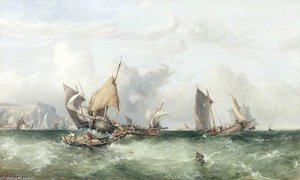 Fishing Boats Off Scarborough
14
 Seventy-four Off Gibraltar
15
 The Opening Of Sunderland South Docks
16
 Cullercoats Looking Towards Tynemouth - Flood Tide
17
 Seascape -
18
 Shipping off dover
19
 Margate Harbour, Kent
20
 View Of London With St. Paul's
21
 Sea And Shipping
22
 Seascape -
23
 Grace Darling
24
 Dutch Vessels And A Man-of-war At Sea
25
 Scarborough Castle
26
 The Naval Review, Spithead
27
 An Estuary At Low Tide
28
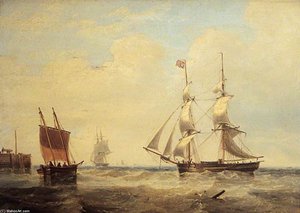 Sea Piece
29
 Off The Mouth Of The Humber
30
 William And Grace Darling Returning With The Ss 'forfarshire' Survivors
31
 The Opening Of Sunderland South Docks -
32
 The High Level Bridge, From Gateshead, Tyne And Wear
33
 A Cutter In Distress To The South Of Dunstanburgh Castle, Northumberland
34
 Rowing To Rescue Shipwrecked Sailors Off The Northumberland Coast
35
 After A Storm
36
 Holme Eden, Near Carlisle
37
 St. Mary's Island From Whitley Rocks
38
 Shipping Offshore In A Stormy Sea
39
 Her Majesty Queen Victoria And Prince Albert, On Board The 'royal George' Yacht, Approaching Granton Pier, Edinburgh, On The Morning
40
 The Entrance To Beaufront Castle
41
 A blustery day on the Brill, near Rotterdam
42
 Flambro Head
43
 Shipping, 19th century
44
 Shipping In A Heavy Swell Off Palermo
45
 On The Thames At Woolwich, With The Buckinghamshire Indiaman Going Down The River
46
 The Battle Of Copenhagen
47
 Shipping In A Squall
48
 Zurich
49
 Shipping off Guernsey
50
 Saltash Creek- Near Plymouth
51
 Roundhay Park, Leeds
52
 Going to the rescue
53
 Wreckage In Robin Hood's Bay
54
 On The Brille
55
 British Men O' War Off Gibraltar
56
 Shipping
57
 Off Redcar
58
 At Anchor
59
 Ramsgate Harbour Mouth At The Top Of The Tide
60
 Coast Scene
61
 Leith and Newcastle Packet
62
 Riding out the gale
63
 Merchantmen in stormy seas
64
 The Vulture landing dispatches at Dantzig
65
 The 'peruvian'
66
 Riding Out A Gale
67
 Prior's Haven, Tynemouth
68
 Seaham Harbour, County Durham
69
 Priory And Castle, Tynemouth
70
 Cullercoats Looking Towards Tynemouth
71
 Fishing Boats On A Choppy SeaAnglesey Abbey
72
 View Of Liverpool
73
 Durham
74
 A Beached Ship
75
 Battersea from cremorne
76
 Whalers Entering The Tyne
77
 Whale Fishing In A Polar Sea
78
 Seascape With Boats And Fishermen
79
 The Bombardment Of Sebastopol
80
 Seascape -
81
 Fishermen Gossiping Before A Beached Vessel
82
 Men-of-war Off Portsmouth Harbour
83
 Citadel, Plymouth
84
 A frigate weaving through small craft off a lofty headland
85
 The Bay Of Naples With Vesuvius Beyond
86
 Drifting Into Harbour Past An Armed Merchantman
87
 A Sailing Boat Off Whitby, North Yorkshire
88
 A German River Scene
89
 A break in the clouds offshore
90
 Shipping Passing In The Roadstead
91
 Old Hartlepool
92
 Off The Yorkshire Coast, Staithes
93
 High Level Bridge, Newcastle upon Tyne
94
 Three-masted Ship Near A Lighthouse
95
 The Coming Storm
96
 Sunderland Pier
97
 South Stack Rock, Holyhead
98
 Sea Piece With Ships
99
 A Lakeside VillageAnglesey Abbey
100
 Shipping In The Open Sea
Cztery motywy najczęściej powracające w tych oryginałach, z których każdy doczekał się swojego najdoskonalszego przykładu.
Muzeum, w którym znajduje się najwięcej obrazów prezentowanych na tej stronie.
| Muzea | Miasto | Dzieła artysty John Wilson Carmichael | Obrazy z tej listy |
|---|---|---|---|
 Anglesey Abbey |
2 | Fishing Boats On A Choppy Sea, A Lakeside Village |
Długa, 17-letnia kariera, od 1836 do 1852: najsłynniejsze oryginały John Wilson Carmichael przedstawione rok po roku.
Wybierz rok, aby zobaczyć oryginały.
The Construction Of The Royal Dock, Grimsby, Lincolnshire. Następne są A british frigate and mediterranean xebecs off sidon, lebanon oraz Sunderland Harbour.
The Construction Of The Royal Dock, Grimsby, Lincolnshire, A british frigate and mediterranean xebecs off sidon, lebanon, Sunderland Harbour, Hms 'victory' Anchored Off The Isle Of Wight, Scarborough From The Sea, West Hartlepool, H.M.S. Conqueror towing H.M.S. Africa off the shoals at Trafalgar, three days after the battle, Shipping Off Sheerness, A British Man of War off the Needles, Isle of Wight i The Battle of the First of June, 1794. Powyższy ranking zawiera rok powstania oraz muzeum dla każdego z nich.
Nasz katalog zawiera 247 dzieł artysty John Wilson Carmichael, datowanych od 1836 do 1852.
W większości znajdują się w Anglesey Abbey. Powyższa tabela muzeów zawiera ich pełną listę.
Na tej stronie najwcześniejszy to H.M.S. Conqueror towing H.M.S. Africa off the shoals at Trafalgar, three days after the battle (1836), a najpóźniejszy Shipping Off Sheerness (1852).
Maritime art (12), Victorian era (11) i Beach (10), w ramach 100 dzieł na tej stronie.
Romanticism, sądząc po oryginałach na tej stronie.
Fishing Boats On A Choppy Sea i A Lakeside Village: Anglesey Abbey posiada 2 dzieł widocznych na tej stronie.
