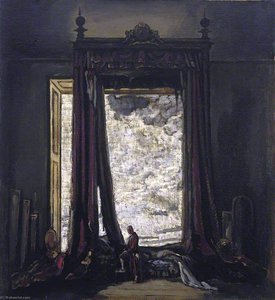
Portret James Ferrier Pryde

Obrazy: 31 najsłynniejszych dzieł artysty James Ferrier Pryde – spojrzenie galerii

Aktualizacja: Listopad 2026 · ranking według naszego wskaźnika popularności (liczba wyszukiwań, wizyt i zamówień dla każdego dzieła) · 37 dzieł James Ferrier Pryde w naszym katalogu

W skrócie

Według galerii najsłynniejszym obrazem James Ferrier Pryde jest Ellen Terry as Nance Oldfield (1906). A Romantic Landscape (1908) i The Slum (1916) dopełniają trio, które zna każde oko. Z 37 dzieł James Ferrier Pryde w naszym katalogu, galeria prezentuje poniżej 31 najsłynniejszych prac – każda z nich jest oryginałem z podaniem roku powstania, muzeum oraz cech wyróżniających ją na tle innych.

1866 – 1941, Edynburg Glasgow school Najwięcej dzieł: Scottish National Gallery of Modern Art

10 najlepszych obrazów artysty James Ferrier Pryde w galerii

1
Ellen Terry as Nance Oldfield (1906) autorstwa James Ferrier Pryde

Ellen Terry as Nance Oldfield

1906 · Oil On Board

The stage is a void of dark tones, a heavy silence captured in oil and varnish. Within this gloom, a single figure emerges, caught in a moment of sudden, sweeping motion. She is Nance Oldfield, her body angled with a theatrical urgency that defies the stillness of the canvas. One arm reaches into the darkness, a gesture of longing or perhaps a command to an unseen audience. The light does…

2
A Romantic Landscape (1908) autorstwa James Ferrier Pryde

A Romantic Landscape

1908 · Acrylic On Canvas · Leeds Art Gallery, Leeds

James Ferrier Pryde's "A Romantic Landscape," painted in 1908, isn’t merely a depiction of a picturesque scene; it’s a carefully constructed invitation into the heart of a bygone era. This oil painting, measuring a substantial 119 x 104 cm, captures a group of figures nestled within a verdant woodland, their presence subtly interwoven with the grandeur and mystery of nature. The composition immediately draws the eye to the central trio…

3
The Slum (1916) autorstwa James Ferrier Pryde

The Slum

1916 · Acrylic On Canvas · Ashmolean Museum of Art and Archaeology, Oksford

James Ferrier Pryde’s “The Slum,” painted in 1916, isn't merely a depiction of a neglected corner of Edinburgh; it’s a profound meditation on poverty, social injustice, and the encroaching shadows of modernity. Born amidst the artistic ferment of Glasgow’s School of Art, Pryde developed a distinctive style—a masterful blend of atmospheric realism and subtle symbolism—that resonated deeply with the anxieties of his time. This painting, now housed in the Ashmolean…

Obrazy artysty James Ferrier Pryde, uszeregowane od 11 do 31 miejsca

Tematy, które przyciągnęły wzrok James Ferrier Pryde

Cztery motywy najczęściej powracające w tych oryginałach, z których każdy doczekał się swojego najdoskonalszego przykładu.

Muzea przechowujące oryginały James Ferrier Pryde

8 muzeów, w których znajduje się najwięcej obrazów z tej strony.

Muzea Miasto Dzieła artysty James Ferrier Pryde Obrazy z tej listy
Scottish National Gallery of Modern Art, EdynburgScottish National Gallery of Modern Art Edynburg 2 Lumber A Silhouette, An Ancient Harbour
Leeds Art Gallery, LeedsLeeds Art Gallery Leeds 1 A Romantic Landscape
Ashmolean Museum of Art and Archaeology, OksfordAshmolean Museum of Art and Archaeology Oksford 1 The Slum
Government Art Collection, LondynGovernment Art Collection Londyn 1 Monument
National Trust, CambridgeNational Trust Cambridge 1 Allegory The 'Victory' Monolith
New Walk Museum - Art Gallery, LeicesterNew Walk Museum - Art Gallery Leicester 1 The Monument
The Fleming Collection, LondonThe Fleming Collection London 1 The Unknown Corner
Swindon Art Gallery, SwindonSwindon Art Gallery Swindon 1 Nieznane

James Ferrier Pryde, jedno kultowe dzieło na dekadę

Dzieła według dekad

Wybierz dekadę, aby zobaczyć dzieło, które ją definiuje.

Obrazy artysty James Ferrier Pryde: odpowiedzi galerii

Który obraz James Ferrier Pryde jest najsłynniejszy ze wszystkich?Odkryj odpowiedź

Ellen Terry as Nance Oldfield (1906). Następne są A Romantic Landscape (1908) oraz The Slum (1916).

Ile lat miał James Ferrier Pryde, gdy ukończył Ellen Terry as Nance Oldfield?Odkryj odpowiedź

40 lat: Ellen Terry as Nance Oldfield pochodzi z 1906, a James Ferrier Pryde urodził(a) się w 1866.

Które to 10 najlepszych obrazów James Ferrier Pryde?Odkryj odpowiedź

Ellen Terry as Nance Oldfield, A Romantic Landscape, The Slum, Moll Cutpurse (The Roaring Girl), John Price, John Price, Cartouche, The Deserted Garden, The Birdcage i The Black Pillar. Powyższy ranking zawiera rok powstania oraz muzeum dla każdego z nich.

Ile dzieł stworzył/a James Ferrier Pryde?Odkryj odpowiedź

Nasz katalog zawiera 37 dzieł artysty James Ferrier Pryde, datowanych od 1902 do 1940.

Gdzie można znaleźć najsłynniejsze oryginały autorstwa James Ferrier Pryde?Odkryj odpowiedź

W większości znajdują się w Scottish National Gallery of Modern Art (Edynburg), Leeds Art Gallery (Leeds) i Ashmolean Museum of Art and Archaeology (Oksford). Powyższa tabela muzeów zawiera ich pełną listę.

Kiedy James Ferrier Pryde stworzył swoje najsłynniejsze obrazy?Odkryj odpowiedź

W 1900s: 9 z 31 dzieł na tej stronie powstało w tym czasie, w tym Ellen Terry as Nance Oldfield.

Które z najsłynniejszych dzieł James Ferrier Pryde należą do jego najwcześniejszych i najpóźniejszych prac?Odkryj odpowiedź

Na tej stronie najwcześniejszy to Moll Cutpurse (The Roaring Girl) (1902), a najpóźniejszy The Untouchables (1940).

Do jakich tematów James Ferrier Pryde powracał najczęściej?Odkryj odpowiedź

Architecture (3), Victorian era (3) i Period clothing (2), w ramach 31 dzieł na tej stronie.

W jakiej technice najczęściej tworzył James Ferrier Pryde?Odkryj odpowiedź

Acrylic On Canvas, dla 3 z 31 dzieł na tej stronie.

Z jakim nurtem związany jest James Ferrier Pryde?Odkryj odpowiedź

Glasgow school i Romanticism, sądząc po oryginałach na tej stronie.

Które oryginały artysty James Ferrier Pryde znajdują się w zbiorach Scottish National Gallery of Modern Art?Odkryj odpowiedź

Lumber A Silhouette i An Ancient Harbour: Scottish National Gallery of Modern Art, Edynburg posiada 2 dzieł widocznych na tej stronie.

James Ferrier Pryde: artysta

A Life Etched in Atmosphere: The World of James Ferrier Pryde

Born in Edinburgh on March 30, 1866, into a family steeped in artistic lineage – related to the renowned Scottish painters Robert Scott Lauder and James Eckford Lauder – James Ferrier Pryde embarked on a journey that would see him leave an indelible mark on both painting and graphic design. His early life was nurtured within a stimulating intellectual environment; his father, David Pryde, served as headmaster of Edinburgh Ladies’ College, fostering a household valuing education and creativity. Young James received his formal artistic training at the Royal Scottish Academy from 1885 to 1888, laying the foundation for a career that would ultimately defy easy categorization. He was encouraged by leading figures of the Glasgow School, notably James Guthrie and Edward Arthur Walton, whose influence helped shape his initial artistic explorations. A brief sojourn in Paris, studying under William-Adolphe Bouguereau at the Académie Julian, proved less formative; Pryde found the atmosphere stifling, quickly returning to Scotland with a clearer sense of his own path.

The Beggarstaffs and a Revolution in Design

Pryde’s most significant collaborative venture began in 1893 with the formation of “The Beggarstaffs,” a partnership with William Nicholson. This union proved remarkably fruitful, pioneering a new aesthetic in poster design that dramatically challenged prevailing conventions. Prior to The Beggarstaffs, posters were often cluttered and illustrative; Pryde and Nicholson stripped away excess detail, embracing bold compositions, striking imagery, and a theatrical sensibility. Their designs weren’t merely advertisements—they were statements, elevating the status of poster art from commercial necessity to legitimate artistic expression. They deliberately eschewed established norms, creating work that was both visually arresting and intellectually stimulating. The partnership dissolved in 1899, but its impact resonated for decades, influencing generations of graphic designers and fundamentally altering the landscape of visual communication. Their innovative approach wasn’t limited to posters; they also produced distinctive signboards and other graphic works, all characterized by a unique blend of artistic vision and commercial practicality. The Beggarstaffs' work is often described as “atmospheric,” capturing a sense of mood and mystery that was entirely new for the advertising world.

Atmospheric Visions: A Painterly Language

While celebrated for his contributions to graphic design, Pryde’s true passion lay in painting. He developed a deeply personal style centered around atmospheric architectural scenes. These weren’t straightforward depictions of buildings; they were evocative explorations of mood and emotion, often imbued with a sense of drama and foreboding. His canvases frequently feature structures dwarfing the human figures within them, emphasizing our fragility against the weight of history and time. Broad brushwork and dramatic lighting effects are hallmarks of his technique, creating an almost palpable atmosphere that draws the viewer into the scene. The influence of Giovanni Battista Piranesi’s etchings is evident in Pryde's monumental compositions and fascination with architectural ruins. He wasn’t interested in precise representation; rather, he sought to capture the *feeling* of a place, its history, and its inherent melancholy. His paintings often feel like fragments of dreams, hauntingly beautiful and subtly unsettling. He frequently depicted Edinburgh landmarks – the British Linen Bank, Melville Monument – transforming them into imposing, almost surreal subjects.

A Multifaceted Artist: Stagecraft and Recognition

Pryde’s artistic pursuits weren't confined to painting and design. He briefly pursued an acting career between 1894 and 1899, a period that undoubtedly informed his theatrical sensibility and understanding of spatial dynamics. This foray into the performing arts also brought him into contact with influential figures like Edward Gordon Craig, who recognized Pryde’s exceptional talent as a painter despite acknowledging his limitations as an actor. He became actively involved in artistic societies, becoming an associate of the International Society of Sculptors, Painters and Gravers in 1901 and later serving as its vice-president in 1921. In 1930, he brought his visual artistry to the stage, designing sets for Paul Robeson’s production of *Othello* at the Savoy Theatre, demonstrating a versatility that extended beyond the canvas. His designs were noted for their dramatic lighting and evocative use of space, creating an immersive theatrical experience. Though he held only two solo exhibitions during his lifetime – one at the Baillie Gallery in 1911 and another at the Leicester Galleries in 1933 – Pryde received recognition from patrons like Viscountess Cowdray and was lauded by critics such as Frank Rutter, who described him as “stupendous.”

A Lasting Legacy

James Ferrier Pryde passed away on February 24, 1941, in London. While he didn’t align himself with any specific artistic movement, his unique style and contributions to early 20th-century art are increasingly recognized. A memorial exhibition held in 1949, touring Edinburgh, Brighton, and London, helped revive interest in his work. Though exhibitions of his paintings remain relatively infrequent, a growing number of his works are held in public collections, ensuring that his atmospheric visions continue to captivate audiences. Pryde’s legacy rests not only on the beauty of his individual artworks but also on the profound impact of The Beggarstaffs' innovative graphic design, which continues to inspire artists and designers today. He remains a compelling figure—a painter who dared to explore the emotional power of architecture and a designer who helped redefine the very language of visual communication.