


1


Aktualizacja: Listopad 2026 · ranking według naszego wskaźnika popularności (liczba wyszukiwań, wizyt i zamówień dla każdego dzieła) · 45 dzieł Gilbert Spencer w naszym katalogu
W skrócie
Boy Holding a Rabbit (1931) to obraz autorstwa Gilbert Spencer, który przyciąga najwięcej spojrzeń. Następnie wzrok kieruje się na A Cotswold Farm (1930) i Portret młodzieńca (1925). Spośród 45 dzieł Gilbert Spencer w naszym katalogu, tych 43 jest najbardziej znanych – każde z nich to unikatowy oryginał, przedstawiony wraz z rokiem powstania, muzeum oraz powodem, dla którego przetrwało próbę czasu.


Gilbert Spencer’s Quiet Portraiture: Capturing Essence in ‘Portrait of a Youth’ Gilbert Spencer (1892–1979) stands as a testament to understated artistic brilliance—a painter who eschewed grand gestures for meticulous observation and profound empathy. His canvases rarely shout; instead, they whisper stories of English landscapes and the human condition, imbued with a sensitivity honed by his upbringing in Cookham and profoundly influenced by his brother’s equally distinctive style. This remarkable portrait,…

In this 1936 oil on canvas, we find ourselves in a room defined by a profound sense of stillness. The subject, Duncan Campbell Macgregor, sits before a fireplace, his hands clasped in a gesture of contemplation. There is a weight to his posture, the quiet dignity of a man accustomed to the rigors of academic thought. He is dressed in a suit and tie, the attire of a professional, yet…

A waterway flows through the center of this 1927 oil on canvas, cutting a path between banks lined with mature trees and dense foliage. The scene depicts the Mill Pond in Durweston, where the water's surface reflects the sky above. Several figures are positioned throughout the composition; some stand near the edge of the water while others are situated further back among the greenery. Two boats are visible on the…

In the quietude of 1925, Gilbert Spencer captured a moment of profound stillness in his masterpiece, Elm Trees at Garsington. This evocative landscape serves as more than just a depiction of the Oxfordshire countryside; it is an invitation into a world where time seems to slow, allowing the viewer to breathe in the pastoral tranquility of rural England. The composition is anchored by a majestic group of elm trees that…


 Gilbert Spencer1919
12
 Oxfordshire Landscape1922 · Herbert Art Gallery - Museum
13
 The Rat Catcher1922
14
 Gwen Harter in a Red Bead Necklace1920 · Ferens Art Gallery
15
 The Terrace1927
16
 Self Portrait1928
17
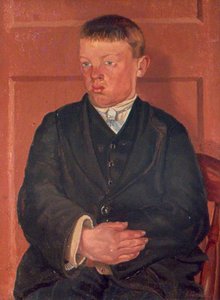 Reading Boy1923 · Reading Museum - Town Hall
18
 Little Milton near Garsington1926
19
 The Farmyard, Garsington, Oxfordshire1925
20
 View of Egdon Heath from the Crest of Clouds Hill, Looking North1925 · National Trust
21
 Blackmoor Vale1931
22
 Chicken Boy1931
23
 Cotswold Meadows1930
24
 Lansdowne Crescent, London1931 · Laing Art Gallery
25
 Wangford1934 · Government Art Collection
26
 Air Raid Warning1940
27
 Blackmore Vale from Compton Abbas1942
28
 Burdens Farm with Melbury Beacon1943
29
 Budden's Lane1939 · Arts Council Collection
30
 Soldiers Relaxing, Hook End Farm, Basildon, Berkshire1940 · Reading Museum - Town Hall
31
 The School on Peggy Hill, Ambleside1952
32
 Bryn og1952 · Reading Museum - Town Hall
33
 Troops in the Countryside
34
 Dorset Downs1919 · Fitzwilliam College
35
 The Cottage Window
36
 Twyford, Dorset
37
 LandscapeAbbot Hall Art Gallery
38
 A Marshy LandscapeReading Museum - Town Hall
39
 Landscape with Cows
40
 The Drayman
41
 Sheep in a FieldTouchstones Rochdale
42
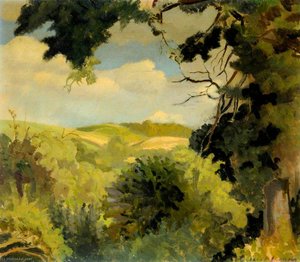 Dorset Landscape No.1
43
 Mountain Landscape with a WindmillNational Trust
Cztery motywy najczęściej powracające w tych oryginałach, z których każdy doczekał się swojego najdoskonalszego przykładu.
8 muzeów, w których znajduje się najwięcej obrazów z tej strony.
| Muzea | Miasto | Dzieła artysty Gilbert Spencer | Obrazy z tej listy |
|---|---|---|---|
 Reading Museum - Town Hall |
Reading | 4 | Reading Boy, Soldiers Relaxing, Hook End Farm, Basildon, Berkshire, Bryn og |
 Ashmolean Museum of Art and Archaeology |
Oksford | 3 | Mill Pond, Durweston, Elm Trees at Garsington, Pegwell Bay, Kent |
 Victoria Art Gallery |
Bath | 1 | Portret młodzieńca |
 Balliol College |
Oxford | 1 | Duncan Campbell Macgregor (1888–1939), Fellow (1919–1939), University Lecturer in Greek History (1929) |
 Royal West of England Academy |
Bristol | 1 | Summer Evening, Durdham Downs |
 Herbert Art Gallery - Museum |
Coventry | 1 | Oxfordshire Landscape |
 Ferens Art Gallery |
Hull | 1 | Gwen Harter in a Red Bead Necklace |
 National Trust |
Wareham | 1 | View of Egdon Heath from the Crest of Clouds Hill, Looking North |
Wybierz dekadę, aby zobaczyć dzieło, które ją definiuje.
Gilbert Spencer’s Quiet Portraiture: Capturing Essence in ‘Portrait of a Youth’ Gilbert Spencer (1892–1979) stands as a testament to understated artistic brilliance—a painter who eschewed grand gestures for meticulous observation and profound empathy. His canvases rarely shout; instead, they whisper stories of English landscapes and the human condition, imbued with a sensitivity honed by his upbringing in Cookham and profoundly influenced by his brother’s equally distinctive style. This remarkable portrait,…


Boy Holding a Rabbit (1931). Następne są A Cotswold Farm (1930) oraz Portret młodzieńca (1925).
39 lat: Boy Holding a Rabbit pochodzi z 1931, a Gilbert Spencer urodził(a) się w 1892.
Boy Holding a Rabbit, A Cotswold Farm, Portret młodzieńca, Duncan Campbell Macgregor (1888–1939), Fellow (1919–1939), University Lecturer in Greek History (1929), Mill Pond, Durweston, Elm Trees at Garsington, Summer Evening, Durdham Downs, Sashes Meadow, Cookham, The Crucifixion i Pegwell Bay, Kent. Powyższy ranking zawiera rok powstania oraz muzeum dla każdego z nich.
Nasz katalog zawiera 45 dzieł artysty Gilbert Spencer, datowanych od 1914 do 1952.
W większości znajdują się w Reading Museum - Town Hall (Reading), Ashmolean Museum of Art and Archaeology (Oksford) i Victoria Art Gallery (Bath). Powyższa tabela muzeów zawiera ich pełną listę.
W 1920s: 13 z 43 dzieł na tej stronie powstało w tym czasie, w tym Portret młodzieńca.
Na tej stronie najwcześniejszy to Sashes Meadow, Cookham (1914), a najpóźniejszy The School on Peggy Hill, Ambleside (1952).
Landscape (5), English countryside (4) i Rural landscape (4), w ramach 43 dzieł na tej stronie.
Oil On Canvas, dla 4 z 43 dzieł na tej stronie.
Contemporary realism i Impressionism, sądząc po oryginałach na tej stronie.
Reading Boy, Soldiers Relaxing, Hook End Farm, Basildon, Berkshire i Bryn og: Reading Museum - Town Hall, Reading posiada 4 dzieł widocznych na tej stronie.

