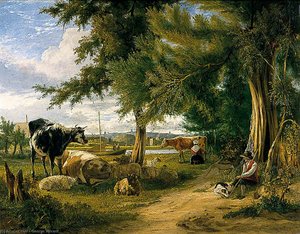
Portret George Vincent

46 najsłynniejszych obrazów artysty George Vincent – wybór z galerii

Aktualizacja: Październik 2026 · ranking według naszego wskaźnika popularności (liczba wyszukiwań, wizyt i zamówień dla każdego dzieła) · 46 dzieł George Vincent w naszym katalogu

W skrócie

Spośród wszystkich dzieł oryginalnych, które pozostawił George Vincent, najsłynniejszym jest A View of Cheddar Gorge (1820), znajdujący się w kolekcji Yale Center for British Art w New Haven. Tuż za nimi znajdują się A Harbor Scene in the Isle of Wight, Looking Towards the Needle (1824) oraz A View of Thames Street, Windsor (1828). Nasz katalog zawiera 46 dzieł autorstwa George Vincent; galeria zachowała 46 najbardziej podziwianych na świecie prac, z których każda została przedstawiona wraz z datą powstania, informacją o muzeum oraz jej historią.

1796 – 1832, Norwich Romanticism Najwięcej dzieł: Yale Center for British Art

10 najlepszych obrazów artysty George Vincent: wybór galerii

Kontynuacja zestawienia George Vincent, od 11 do 46

Słynne obrazy George Vincent epoka po epoce

Tematy, które przyciągnęły wzrok George Vincent

Cztery motywy najczęściej powracające w tych oryginałach, z których każdy doczekał się swojego najdoskonalszego przykładu.

Muzea przechowujące oryginały George Vincent

5 muzeów, w których znajduje się najwięcej obrazów z tej strony.

Muzea Miasto Dzieła artysty George Vincent Obrazy z tej listy
Yale Center for British Art, New HavenYale Center for British Art New Haven 3 A View of Cheddar Gorge, A Harbor Scene in the Isle of Wight, Looking Towards the Needle, A View of Thames Street, Windsor
Fitzwilliam MuseumFitzwilliam Museum 2 Loch etive, argyllshire, View In The Highlands
Felbrigg Hall, NorwichFelbrigg Hall Norwich 1 River Scene with Boats
Birmingham Museum and Art Gallery, BirminghamBirmingham Museum and Art Gallery Birmingham 1 Landscape, Cattle Crossing a Stream
TyntesfieldTyntesfield 1 Fishing Boats in a Harbour

George Vincent rok po roku: oryginały, które definiują każdy z nich

Zaledwie dekada, od 1820 do 1828, dostarczyła światu każdy datowany oryginał George Vincent w tym zestawieniu: oto one, rok po roku.

Dzieła według lat

Wybierz rok, aby zobaczyć oryginały.

Pytania kolekcjonerów o obrazy George Vincent

Z jakiego dzieła najbardziej znany jest George Vincent?Odkryj odpowiedź

A View of Cheddar Gorge (1820), Yale Center for British Art, New Haven. Następne są A Harbor Scene in the Isle of Wight, Looking Towards the Needle (1824) oraz A View of Thames Street, Windsor (1828).

W jakim wieku był George Vincent, gdy powstało A View of Cheddar Gorge?Odkryj odpowiedź

24 lat: A View of Cheddar Gorge pochodzi z 1820, a George Vincent urodził(a) się w 1796.

Jakie są dziesięć najsłynniejszych obrazów, których autorem jest George Vincent?Odkryj odpowiedź

A View of Cheddar Gorge, A Harbor Scene in the Isle of Wight, Looking Towards the Needle, A View of Thames Street, Windsor, A Harbour Scene in the Isle of Wight, Mousehole heath, norfolk, Loch etive, argyllshire, Lane scene, Castle ashby, northamptonshire, View near Norwich i View near Wroxham, Norfolk. Powyższy ranking zawiera rok powstania oraz muzeum dla każdego z nich.

Ile obrazów pozostawił po sobie George Vincent?Odkryj odpowiedź

Nasz katalog zawiera 46 dzieł artysty George Vincent, datowanych od 1820 do 1828.

W których muzeach znajdują się arcydzieła George Vincent?Odkryj odpowiedź

W większości znajdują się w Yale Center for British Art (New Haven), Fitzwilliam Museum i Felbrigg Hall (Norwich). Powyższa tabela muzeów zawiera ich pełną listę.

Jakie są pierwsze i ostatnie słynne oryginały George Vincent?Odkryj odpowiedź

Na tej stronie najwcześniejszy to A View of Cheddar Gorge (1820), a najpóźniejszy A View of Thames Street, Windsor (1828).

Jakie tematy George Vincent wybierał najczęściej?Odkryj odpowiedź

Rural landscape (9), Landscape (9) i Tranquility (5), w ramach 46 dzieł na tej stronie.

Do jakiego nurtu artystycznego należy George Vincent?Odkryj odpowiedź

Romanticism i Dutch golden age, sądząc po oryginałach na tej stronie.

Które dzieła George Vincent znajdują się w Yale Center for British Art?Odkryj odpowiedź

A View of Cheddar Gorge, A Harbor Scene in the Isle of Wight, Looking Towards the Needle i A View of Thames Street, Windsor: Yale Center for British Art, New Haven posiada 3 dzieł widocznych na tej stronie.

George Vincent: życie i twórczość

A Norfolk Son: The Life and Art of George Vincent

George Vincent, born in Norwich in 1796, remains a compelling figure within the constellation of the Norwich School painters. His story is one interwoven with both artistic promise and personal tragedy, a narrative reflective of the challenges faced by many artists navigating the burgeoning art world of 19th-century England. The son of James Vincent, a weaver specializing in shawls, and Mary Freeman, young George experienced early loss with the passing of an older brother in infancy. This formative experience perhaps instilled within him a sensitivity that would later permeate his evocative landscapes. Educated at Norwich School, he quickly found himself immersed in a vibrant artistic milieu, forging close bonds with Frederick and John Berney Crome – sons of the pivotal John Crome, who would become Vincent’s mentor and profoundly shape his artistic trajectory. This apprenticeship was crucial; it wasn't merely technical instruction but an immersion into the very ethos of the Norwich School, alongside fellow pupils like James Stark. The influence of Dutch landscape masters, a hallmark of Crome’s own aesthetic, began to subtly infuse Vincent’s early work, hinting at the unique blend that would define his style.

Early Artistic Development and Influences

Vincent's artistic journey commenced under the watchful eye of John Crome, whose unwavering dedication to portraying Norfolk’s rural beauty served as an undeniable inspiration. This mentorship extended beyond mere instruction in painting techniques; it instilled within Vincent a profound appreciation for capturing the essence of place—the subtle shifts in light and color, the textures of soil and foliage, and the quiet dignity of everyday life. Like Crome himself, Vincent embraced the Dutch landscape tradition, recognizing its emphasis on atmospheric perspective and meticulous detail as invaluable tools for conveying emotion and realism. Artists such as Rembrandt and Jacob van Ruysdael profoundly impacted Vincent’s artistic sensibilities, encouraging him to strive for a similar level of expressive power and technical mastery. The Norwich School's collective spirit—a shared commitment to honest observation and emotional resonance—further nurtured Vincent’s creative vision.

Parisian Exposure and Artistic Refinement

A brief but formative trip to Paris in 1816 with John Berney Crome and Benjamin Steel broadened Vincent’s artistic horizons considerably. This excursion exposed him to the wider European art scene, fostering an awareness of innovative approaches to painting and stimulating his intellectual curiosity. He encountered Impressionist artists experimenting with fleeting moments of light and color—a stylistic departure from the prevailing academic tradition—and absorbed insights into compositional techniques that would inform his later works. Vincent’s Parisian experience solidified his conviction that artistic excellence demanded constant engagement with new ideas and influences, propelling him toward a more sophisticated understanding of visual art.

Norwich School Contributions and Notable Paintings

Vincent quickly established himself as one of the foremost artists associated with the Norwich School, cementing its reputation for authentic depictions of Norfolk’s landscapes. His canvases—such as “A Harbour Scene in the Isle of Wight,” “On the River Yare, Norfolk,” and “Castle Ashby, Northamptonshire”—capture the serene beauty of rural England with remarkable precision and emotional depth. Vincent's meticulous attention to detail—the subtle gradations of color, the careful rendering of textures—mirrors the Dutch landscape tradition he championed, demonstrating his mastery of technique while conveying a palpable sense of atmosphere. His paintings are not merely representations of scenery; they are expressions of feeling, imbued with a quiet dignity and poetic sensibility that resonate powerfully with viewers today.

Later Life and Legacy

Vincent’s life was tragically curtailed by illness in 1831, leaving behind a legacy of accomplished artwork—a testament to his talent and unwavering dedication to his craft. Despite facing considerable hardship during his final years—including imprisonment due to mounting debts—Vincent persevered in pursuing his artistic endeavors, selling paintings to sustain himself and maintaining an unwavering connection to the landscapes that inspired him. His story serves as a poignant reminder of the challenges faced by artists throughout history—the constant struggle for patronage, the vulnerability to financial ruin, and the often-tragic consequences of personal circumstances. Nevertheless, George Vincent’s contribution to British art remains undeniable: he helped define the Norwich School's aesthetic, establishing its reputation for honest observation and emotional resonance, and securing his place as one of England’s most celebrated landscape painters. His incorporation of Dutch landscape painting techniques brought a unique perspective to British art, emphasizing realism and atmospheric detail in a way that distinguished him from many of his contemporaries.