Portret George Elbert Burr

100 najsłynniejszych obrazów artysty George Elbert Burr – wybór z galerii

Aktualizacja: Listopad 2026 · ranking według naszego wskaźnika popularności (liczba wyszukiwań, wizyt i zamówień dla każdego dzieła) · 225 dzieł George Elbert Burr w naszym katalogu

W skrócie

Z wszystkich oryginałów pozostawionych przez George Elbert Burr, najsłynniejszym jest Camelback Mountain, Phoenix (1926). Tuż za nimi znajdują się The Edge of the Desert, Arizona (1924) oraz Untitled (transfer drawing for Florence from Monte Oliveto ) (1931). Nasz katalog zawiera 225 dzieł autorstwa George Elbert Burr; galeria zachowała 100 najbardziej podziwianych na świecie prac, z których każda została przedstawiona wraz z datą powstania, informacją o muzeum oraz jej historią.

1859 – 1939, Cincinnati Contemporary realism Najwięcej dzieł: Smithsonian American Art Museum

10 najlepszych obrazów artysty George Elbert Burr: wybór galerii

1
Camelback Mountain, Phoenix (1926) autorstwa George Elbert Burr

Camelback Mountain, Phoenix

1926 · Etching

A monochromatic study of the Sonoran Desert, this 1926 etching captures the rugged silhouette of Camelback Mountain rising above the Phoenix landscape. The composition relies on a stark interplay of light and shadow to define the geological textures of the mountain range. In the foreground, various cacti are positioned across the sandy terrain, their distinct spines rendered with precise linework. These botanical sentinels provide a sense of scale against the…

3
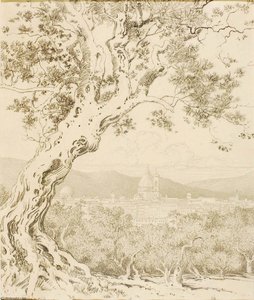
Untitled (transfer drawing for Florence from Monte Oliveto ) (1931) autorstwa George Elbert Burr

Untitled (transfer drawing for Florence from Monte Oliveto )

1931 · Pencil

The air feels still as the eye moves across the paper, tracing the delicate lines of a landscape captured in 1931. A large tree dominates the foreground, its many branches reaching out like skeletal fingers against the sky. This is a moment of observation, a transfer drawing that seeks to pin down the essence of Florence as seen from the vantage of Monte Oliveto. The cityscape rests in the distance,…

4
Zermatt (1897) autorstwa George Elbert Burr

Zermatt

1897 · Ink On Paper

Zermatt is a pen and ink drawing on paper created by George Elbert Burr in 1897. This work depicts a mountain landscape situated in Zermatt, Switzerland, within the Alps. The composition focuses on the geological forms of the mountain range and the surrounding terrain.

5
Untitled Figure Studies from Rear (1899) autorstwa George Elbert Burr

Untitled Figure Studies from Rear

1899 · Pencil

In "Untitled Figure Studies from Rear" by George Elbert Burr, a sense of restless motion fills the frame. The composition is densely packed, with numerous human figures arranged across the space without a single focal point to anchor the eye. These figures, all viewed from behind, overlap and vary in size, creating a rhythmic, crowded energy. One might wonder if we are witnessing a fleeting moment of a gathering or…

6
Old Houses, Lausanne (1899) autorstwa George Elbert Burr

Old Houses, Lausanne

1899 · Drawing

The architecture of Lausanne rises in a quiet, monochromatic climb. Through fine, precise lines, the houses lean into one another, their rooftops forming a jagged silhouette against a pale, overcast sky. There is a stillness here, a moment captured in the soft, diffused light of a Swiss afternoon. A single figure moves in the foreground, a small anchor of human presence amidst the heavy, stone-like geometry of the buildings. The…

7
Foggy Morning, Nevin, North Wales (1899) autorstwa George Elbert Burr

Foggy Morning, Nevin, North Wales

1899 · Graphite Pencil

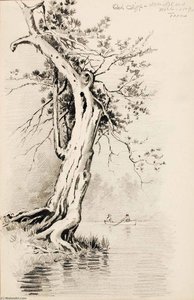
Foggy Morning, Nevin, North Wales is a black and white pencil drawing by George Elbert Burr. Created in 1899, the work captures a maritime scene where a solitary sailboat navigates through dense, foggy waters.

8
Superstition Mountain, Apache Trail, Arizona, Right (1930) autorstwa George Elbert Burr

Superstition Mountain, Apache Trail, Arizona, Right

1930 · Etching

Superstition Mountain, Apache Trail, Arizona, Right is a landscape by George Elbert Burr. Created in 1930, the work captures the rugged terrain of the Arizona desert. The mountain range dominates the view, its jagged peaks reaching toward a heavy, cloud-filled sky. Two small human figures occupy the foreground, their presence offering a sense of scale against the immense geological formations.

9
Thanksgiving Menu (1905) autorstwa George Elbert Burr

Thanksgiving Menu

1905 · Watercolor · Smithsonian American Art Museum, Waszyngton

To gaze upon this depiction of a Thanksgiving Menu is to step directly into the warm, sepia-toned embrace of the early twentieth century. It is more than just an illustration; it is a preserved moment of domestic ritual, rendered with the delicate artistry characteristic of George Elbert Burr. The central focus, the magnificent turkey, dominates the composition, its presence suggesting abundance and the centerpiece of familial gathering. Yet, what elevates…

10
Untitled (transfer drawing for The Home of the Winds [no. 1]) (1917) autorstwa George Elbert Burr

Untitled (transfer drawing for The Home of the Winds [no. 1])

1917 · Drawing · Smithsonian American Art Museum, Waszyngton

This evocative drawing, titled Untitled (transfer drawing for The Home of the Winds [no. 1]), invites the viewer into a moment suspended between stillness and powerful motion. George Elbert Burr masterfully captures the raw energy of nature through the depiction of trees caught in a strong gust. It is not merely a sketch of foliage; it is an atmospheric study, a visual poem about resilience. The way the branches bend…

Kontynuacja zestawienia George Elbert Burr, od 11 do 100

11Untitled (transfer drawing for Florence from Monte Oliveto [No. 2]) (1931) autorstwa George Elbert BurrUntitled (transfer drawing for Florence from Monte Oliveto [No. 2])1931 · Smithsonian American Art Museum 12Untitled (Trees in Snow) (1883) autorstwa George Elbert BurrUntitled (Trees in Snow)1883 13Untitled (Cardinal Flower, Lobelia Cardinalis) (1889) autorstwa George Elbert BurrUntitled (Cardinal Flower, Lobelia Cardinalis)1889 14Untitled (Branches of Apple Tree) (1889) autorstwa George Elbert BurrUntitled (Branches of Apple Tree)1889 15Untitled (Dewberry and Blackberry) (1889) autorstwa George Elbert BurrUntitled (Dewberry and Blackberry)1889 16Untitled (Lily, Daisy, Hibiscus) (1889) autorstwa George Elbert BurrUntitled (Lily, Daisy, Hibiscus)1889 17Untitled (Trumpet Vine) (1889) autorstwa George Elbert BurrUntitled (Trumpet Vine)1889 18Untitled (Trumpet Vine, Campsis Radicans) (1889) autorstwa George Elbert BurrUntitled (Trumpet Vine, Campsis Radicans)1889 19Untitled (Harvest Scene) (1890) autorstwa George Elbert BurrUntitled (Harvest Scene)1890 20Untitled (Sedge Grasses) (1889) autorstwa George Elbert BurrUntitled (Sedge Grasses)1889 21Untitled (Cattails, Clover, and Blackberries) (1889) autorstwa George Elbert BurrUntitled (Cattails, Clover, and Blackberries)1889 22Untitled (Sugar Maple and False Solomon's Seal) (1889) autorstwa George Elbert BurrUntitled (Sugar Maple and False Solomon's Seal)1889 23Untitled (Daisies) (1889) autorstwa George Elbert BurrUntitled (Daisies)1889 24Untitled (Wild Hazelnut, Corylus Americana) (1889) autorstwa George Elbert BurrUntitled (Wild Hazelnut, Corylus Americana)1889 25Untitled (Hollyhock) (1889) autorstwa George Elbert BurrUntitled (Hollyhock)1889 26Untitled (Thistle) (1889) autorstwa George Elbert BurrUntitled (Thistle)1889 27Untitled (Lilies and Ground Ivy) (Glecoma Hederacea) (1889) autorstwa George Elbert BurrUntitled (Lilies and Ground Ivy) (Glecoma Hederacea)1889 28Untitled (Spiderweb and Daisies) (1889) autorstwa George Elbert BurrUntitled (Spiderweb and Daisies)1889 29Untitled (Daisies and Blackberries) (1889) autorstwa George Elbert BurrUntitled (Daisies and Blackberries)1889 30Untitled (Botanical Study) (1889) autorstwa George Elbert BurrUntitled (Botanical Study)1889 31Marblehead, (Massachusetts) (1892) autorstwa George Elbert BurrMarblehead, (Massachusetts)1892 32Untitled (Sedge Grasses) (1889) autorstwa George Elbert BurrUntitled (Sedge Grasses)1889 · Smithsonian American Art Museum 33Untitled (Woodland Stream) (1889) autorstwa George Elbert BurrUntitled (Woodland Stream)1889 34Hickory (1888) autorstwa George Elbert BurrHickory1888 35El Paso, Texas (1890) autorstwa George Elbert BurrEl Paso, Texas1890 36Oak Cliff Dallas (1890) autorstwa George Elbert BurrOak Cliff Dallas1890 37Sketch Made 45 Years Ago (1886) autorstwa George Elbert BurrSketch Made 45 Years Ago1886 38Galveston, Texas (1890) autorstwa George Elbert BurrGalveston, Texas1890 · Smithsonian American Art Museum 39Alto from Reggio, Morning (1896) autorstwa George Elbert BurrAlto from Reggio, Morning1896 · Smithsonian American Art Museum 40Rain, Bellagio (1898) autorstwa George Elbert BurrRain, Bellagio1898 · Smithsonian American Art Museum 41Chimney Pot, Altdorf, Switzerland Felsenthor, Rigi, Switzerland (1898) autorstwa George Elbert BurrChimney Pot, Altdorf, Switzerland Felsenthor, Rigi, Switzerland1898 42Alto from Reggio, Morning (1896) autorstwa George Elbert BurrAlto from Reggio, Morning1896 43Wild Rose, Wassen (1898) autorstwa George Elbert BurrWild Rose, Wassen1898 · Smithsonian American Art Museum 44Near Villeneuve, Suisse (1898) autorstwa George Elbert BurrNear Villeneuve, Suisse1898 · Smithsonian American Art Museum 45Bake Shop and Mills, Pompei (1897) autorstwa George Elbert BurrBake Shop and Mills, Pompei1897 46Pines, Public Garden (1897) autorstwa George Elbert BurrPines, Public Garden1897 47Mills in Bake Shop Pompei (1897) autorstwa George Elbert BurrMills in Bake Shop Pompei1897 48Harbor of Palermo (1896) autorstwa George Elbert BurrHarbor of Palermo1896 49On the Marina, Palermo (1896) autorstwa George Elbert BurrOn the Marina, Palermo1896 50Isola Bella (1897) autorstwa George Elbert BurrIsola Bella1897 51Street Crossing, Pompeii (1897) autorstwa George Elbert BurrStreet Crossing, Pompeii1897 52The Rhone from the Path to Salvari (Switzerland) (1898) autorstwa George Elbert BurrThe Rhone from the Path to Salvari (Switzerland)1898 · Smithsonian American Art Museum 53Capri from Sorrento (1898) autorstwa George Elbert BurrCapri from Sorrento1898 54Venice (1900) autorstwa George Elbert BurrVenice1900 · Smithsonian American Art Museum 55Venice (1900) autorstwa George Elbert BurrVenice1900 · Smithsonian American Art Museum 56Venice (1900) autorstwa George Elbert BurrVenice1900 · Smithsonian American Art Museum 57Venice (1900) autorstwa George Elbert BurrVenice1900 · Smithsonian American Art Museum 58Criccieth, N. Wales (1899) autorstwa George Elbert BurrCriccieth, N. Wales1899 · Smithsonian American Art Museum 59Caernarvon Castle (1899) autorstwa George Elbert BurrCaernarvon Castle1899 · Smithsonian American Art Museum 60Venice (1900) autorstwa George Elbert BurrVenice1900 61Near Evian (1899) autorstwa George Elbert BurrNear Evian1899 62Ventimiglia (1900) autorstwa George Elbert BurrVentimiglia1900 63Giudecca Venice (1900) autorstwa George Elbert BurrGiudecca Venice1900 64Heidelberg (1900) autorstwa George Elbert BurrHeidelberg1900 65Pisa from North (1900) autorstwa George Elbert BurrPisa from North1900 66Temple of the Sibyl, Tivoli (1900) autorstwa George Elbert BurrTemple of the Sibyl, Tivoli1900 67The Rhine at Camp (1900) autorstwa George Elbert BurrThe Rhine at Camp1900 68Olives Fiesole (1900) autorstwa George Elbert BurrOlives Fiesole1900 69Menu for U.S. Dinner, Oxford (1899) autorstwa George Elbert BurrMenu for U.S. Dinner, Oxford1899 70The Rhine below Kestert (1900) autorstwa George Elbert BurrThe Rhine below Kestert1900 71Rhine at St. Goar (1900) autorstwa George Elbert BurrRhine at St. Goar1900 72Cathedral, Fiesole (1900) autorstwa George Elbert BurrCathedral, Fiesole1900 73Rhine at Oberwesel (1900) autorstwa George Elbert BurrRhine at Oberwesel1900 74Rhine below St. Goar (1900) autorstwa George Elbert BurrRhine below St. Goar1900 75Old Bridge at Heidelburg (1900) autorstwa George Elbert BurrOld Bridge at Heidelburg1900 76Up Rhine from Hirzenach (1900) autorstwa George Elbert BurrUp Rhine from Hirzenach1900 77Oberwesel (1900) autorstwa George Elbert BurrOberwesel1900 78San Piero a Grado, near Pisa (1900) autorstwa George Elbert BurrSan Piero a Grado, near Pisa1900 79Venice (1900) autorstwa George Elbert BurrVenice1900 · Smithsonian American Art Museum 80The Rhine below St. Goarshausen (1900) autorstwa George Elbert BurrThe Rhine below St. Goarshausen1900 81Castle Rheinfels, St. Goar (1900) autorstwa George Elbert BurrCastle Rheinfels, St. Goar1900 82From the Boboli Gardens, Florence (1900) autorstwa George Elbert BurrFrom the Boboli Gardens, Florence1900 83Church, Eton (1899) autorstwa George Elbert BurrChurch, Eton1899 84Bad Moos, Sexten Thal, Tyrol (1900) autorstwa George Elbert BurrBad Moos, Sexten Thal, Tyrol1900 85Up River from Bacharach, Rhine (1900) autorstwa George Elbert BurrUp River from Bacharach, Rhine1900 86Roche Vaud (1899) autorstwa George Elbert BurrRoche Vaud1899 87The Rhine below Niederheimbach (1900) autorstwa George Elbert BurrThe Rhine below Niederheimbach1900 88Mouth of the Arno (1900) autorstwa George Elbert BurrMouth of the Arno1900 89Below Bingen Looking down Rhine (1900) autorstwa George Elbert BurrBelow Bingen Looking down Rhine1900 90Rhine, from Caub (1900) autorstwa George Elbert BurrRhine, from Caub1900 91Elms Eton, England (1899) autorstwa George Elbert BurrElms Eton, England1899 92Toblach, Tyrol (1900) autorstwa George Elbert BurrToblach, Tyrol1900 93Near Roche, Vaud (1899) autorstwa George Elbert BurrNear Roche, Vaud1899 94Bordighera, Italy (1900) autorstwa George Elbert BurrBordighera, Italy1900 95From Pincio, Rome (1900) autorstwa George Elbert BurrFrom Pincio, Rome1900 96Sunset, Heidelberg (1900) autorstwa George Elbert BurrSunset, Heidelberg1900 97The Rhine at Bacharach (1900) autorstwa George Elbert BurrThe Rhine at Bacharach1900 98Rhine at the Lurlei (1900) autorstwa George Elbert BurrRhine at the Lurlei1900 99In the Meadows at Windsor (1899) autorstwa George Elbert BurrIn the Meadows at Windsor1899 100Caernarvon Castle (1899) autorstwa George Elbert BurrCaernarvon Castle1899

Słynne obrazy George Elbert Burr epoka po epoce

Tematy, które przyciągnęły wzrok George Elbert Burr

Cztery motywy najczęściej powracające w tych oryginałach, z których każdy doczekał się swojego najdoskonalszego przykładu.

Muzea przechowujące oryginały George Elbert Burr

Muzeum, w którym znajduje się najwięcej obrazów prezentowanych na tej stronie.

Muzea Miasto Dzieła artysty George Elbert Burr Obrazy z tej listy
Smithsonian American Art Museum, WaszyngtonSmithsonian American Art Museum Waszyngton 42 The Edge of the Desert, Arizona, Thanksgiving Menu, Untitled (transfer drawing for The Home of the Winds [no. 1])

George Elbert Burr dekada po dekadzie: oryginały definiujące każdy okres

Dzieła według dekad

Wybierz dekadę, aby zobaczyć dzieło, które ją definiuje.

Pytania kolekcjonerów o obrazy George Elbert Burr

Z jakiego dzieła najbardziej znany jest George Elbert Burr?Odkryj odpowiedź

Camelback Mountain, Phoenix (1926). Następne są The Edge of the Desert, Arizona (1924) oraz Untitled (transfer drawing for Florence from Monte Oliveto ) (1931).

W jakim wieku był George Elbert Burr, gdy powstało Camelback Mountain, Phoenix?Odkryj odpowiedź

67 lat: Camelback Mountain, Phoenix pochodzi z 1926, a George Elbert Burr urodził(a) się w 1859.

Jakie są dziesięć najsłynniejszych obrazów, których autorem jest George Elbert Burr?Odkryj odpowiedź

Camelback Mountain, Phoenix, The Edge of the Desert, Arizona, Untitled (transfer drawing for Florence from Monte Oliveto ), Zermatt, Untitled Figure Studies from Rear, Old Houses, Lausanne, Foggy Morning, Nevin, North Wales, Superstition Mountain, Apache Trail, Arizona, Right, Thanksgiving Menu i Untitled (transfer drawing for The Home of the Winds [no. 1]). Powyższy ranking zawiera rok powstania oraz muzeum dla każdego z nich.

Ile obrazów pozostawił po sobie George Elbert Burr?Odkryj odpowiedź

Nasz katalog zawiera 225 dzieł artysty George Elbert Burr, datowanych od 1883 do 1931.

W których muzeach znajdują się arcydzieła George Elbert Burr?Odkryj odpowiedź

W większości znajdują się w Smithsonian American Art Museum (Waszyngton). Powyższa tabela muzeów zawiera ich pełną listę.

W których latach George Elbert Burr namalował swoje najsłynniejsze dzieła?Odkryj odpowiedź

W 1900s: 38 z 100 dzieł na tej stronie powstało w tym czasie, w tym Thanksgiving Menu.

Jakie są pierwsze i ostatnie słynne oryginały George Elbert Burr?Odkryj odpowiedź

Na tej stronie najwcześniejszy to Untitled (Trees in Snow) (1883), a najpóźniejszy Untitled (transfer drawing for Florence from Monte Oliveto ) (1931).

Jakie tematy George Elbert Burr wybierał najczęściej?Odkryj odpowiedź

Landscape (5), “detailed drawing” (5) i Sky (3), w ramach 100 dzieł na tej stronie.

Której techniki George Elbert Burr używał najczęściej?Odkryj odpowiedź

Etching, dla 3 z 100 dzieł na tej stronie.

Do jakiego nurtu artystycznego należy George Elbert Burr?Odkryj odpowiedź

Contemporary realism i Realism, sądząc po oryginałach na tej stronie.

Które dzieła George Elbert Burr znajdują się w Smithsonian American Art Museum?Odkryj odpowiedź

The Edge of the Desert, Arizona, Thanksgiving Menu i Untitled (transfer drawing for The Home of the Winds [no. 1]): Smithsonian American Art Museum, Waszyngton posiada 18 dzieł widocznych na tej stronie.

George Elbert Burr: życie i twórczość

George Elbert Burr: Wizjoner Pustyni

George Elbert Burr (1859 – 1939) jawi się jako postać niezwykła w historii amerykańskiej grafiki i malarstwa, zapamiętana przede wszystkim dzięki mistrzowskiemu przedstawieniu dramatycznych krajobrazów amerykańskiego Zachodu – ze szczególnym uwzględnieniem jego pustyń i gór. Urodzony w Cincinnati w stanie Ohio, Burr kształcił swój talent artystyczny, początkowo koncentrując się na ilustracji, by z czasem zwrócić się ku technikom akwaforty i akwareli, które zdefiniowały jego unikalny styl. Jego twórczość wykracza poza zwykłą reprezentację rzeczywistości; ucieleśnia ona głęboką wrażliwość na światło, teksturę i atmosferę, chwytając istotę samotności oraz majestatu tych rozległych przestrzeni.
  • Wczesne lata i edukacja: Formacyjne lata Burra naznaczone były zainteresowaniem historią naturalną i obserwacją naukową – wpływami, które przeniknęły jego wizję artystyczną. Studiował w Cincinnati Art Academy, a później podróżował szeroko po Europie, chłonąc techniki i zasady estetyczne ruchu impresjonistycznego.
  • Rozkwit akwaforty: Przełom w karierze Burra nastąpił wraz z akwafortą, medium, które przyjął z całym oddaniem w późnej epoce wiktoriańskiej. Jego skrupulatne podejście do tworzenia grafik obejmowało mozolne przenoszenie obrazów z rysunków na miedziane płyty oraz wykorzystywanie kąpieli kwasowych do żłobienia misternych linii, co ostatecznie pozwalało uzyskać oszałamiająco szczegółowe odbitki. Ten żmudny proces wymagał cierpliwości i precyzji – cech, którymi Burr dysponował w obfitości.
  • Krajobrazy pustynne i ewolucja stylu: Na początku XX wieku artystyczna uwaga Burra zdecydowanie przesunęła się w stronę amerykańskiego Południowego Zachodu. Wyruszył na liczne wyprawy do Arizony, Utah, Nevady i Kalifornii, dokumentując formacje geologiczne regionu oraz jego ulotne piękno za pomocą zapierających dech w piersiach akwareli i suchych igieł. Jego styl ewoluował wraz z czasem, charakteryzując się stopniowym uproszczeniem form i rosnącym naciskiem na harmonię tonalną, co odzwierciedlało jego pogłębiające się zrozumienie interakcji światła z teksturą powierzchni.
  • Wyróżnienia i uznanie: Grafiki Burra zdobyły znaczny uznanie za jego życia, zapewniając mu zlecenia od prestiżowych instytucji, takich jak Smithsonian Institution, oraz przynosząc mu sławę jako czołowego przedstawiciela amerykańskiej sztuki pejzażowej. Jego dzieła znajdują się w kolekcjach na całym kraju i nieustannie inspirują współczesnych artystów.

Kluczowe Dzieła i Styl Artystyczny

Dorobek Burra obejmuje około 350 grafik i rysunków, prezentując jego niezwykłą wszechstronność jako artysty. Wśród jego najsławniejszych dzieł znajduje się „Castle Schönburg, Oberwesel” – pieczołowicie wykonana akwarela, która uchwyciła monumentalną sylwetkę średniowiecznego zamku na tle zmierzchowego nieba, będąc świadectwem jego zdolności do oddania zarówno historycznego detalu, jak i emocjonalnego rezonansu. Podobnie, „Untitled (Transfer Drawing for November)” prezentuje surowo piękną, monochromatyczną szkic, który przekazuje pustynne piękno terenu Nevady. Jego charakterystyczny styl wyróżniają:
    Harmonia tonalna: Malarstwo akwarelowe demonstruje mistrzowską kontrolę Burra nad paletą barw, osiągając harmonijne połączenia, które przywołują nastrój i atmosferę przedstawianych krajobrazów.
  • Nacisk na światło i cień: W całej swojej twórczości Burr po mistrzowsku wykorzystywał chiaroscuro – grę światła i cienia – aby wzmocnić dramat wizualny i nadać dziełom poczucie głębi.

Dziedzictwo i Znaczenie Historyczne

Wkład George'a Elberta Burra w sztukę amerykańską wykracza poza sferę estetyczną; ucieleśnia on ducha eksploracji i obserwacji, który charakteryzował Erę Progresywną. Jego bezkompromisowe przedstawienie Zachodu – często przesycone kontemplacyjnym spokojem – służyło jako inspiracja dla kolejnych pokoleń artystów pragnących uchwycić wzniosły majestat natury. Dziś grafiki Burra pozostają cennymi artefaktami historii sztuki początku XX wieku, oferując widzom wgląd w minioną epokę i potwierdzając nieprzemijającą moc artystycznej wizji.