Geertgen tot Sint Jans: A Whisper of Genius from Haarlem
Geertgen tot Sint Jans, a name that echoes softly through the halls of Early Netherlandish art, remains shrouded in intriguing mystery. Flourishing in Haarlem during the latter half of the 15th century – roughly between 1460 and 1490 – his artistic legacy is pieced together primarily from the insightful observations of Karel van Mander, a Dutch art historian writing over a century after the artist’s untimely death. Van Mander suggests a connection to the Knights Hospitaller of Saint John in Haarlem, lending the artist his distinctive surname, meaning “little Gerard of Saint John.” Whether he was a lay brother within the order or simply affiliated with them remains an open question, yet this association undeniably shaped the character and subject matter of his remarkable creations. The scarcity of definitive documentary evidence surrounding Geertgen’s life contributes to an aura of captivating mystique, allowing us to focus intently on the exceptional quality and profound spiritual depth of the surviving fragments of his oeuvre. It is widely believed that he may have been a student of Albert van Ouwater, a pivotal figure in the development of painting within Haarlem, though conclusive proof remains elusive – a testament to the challenges inherent in reconstructing the life of an artist so deliberately obscured by time.The Fragmented Canvas: Surviving Masterpieces
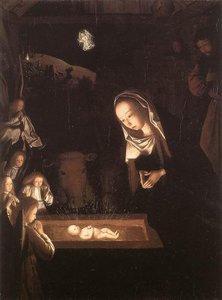
Tragically, much of Geertgen’s artistic output has been lost to the ravages of history and circumstance. The tumultuous period of Haarlem's existence, particularly the devastating siege of 1573 during the Eighty Years’ War, resulted in the destruction of countless artworks – a heartbreaking loss for art lovers and historians alike. What remains offers tantalizing glimpses into an exceptional talent, a testament to his skill and vision. Among the most celebrated surviving pieces are fragments of a large triptych originally created for the altar of the Knights of Saint John. These panels—The Legend of Saint John the Baptist and The Lamentation of Christ—now reside in Vienna’s Kunsthistorisches Museum, their separation from the original structure a poignant reminder of art's vulnerability to historical forces. The *Lamentation*, particularly, is renowned for its deeply moving portrayal of grief, its innovative use of landscape, and its subtle yet powerful evocation of human emotion – foreshadowing developments that would characterize Dutch painting in the centuries to come. Other attributed works include John the Baptist in the Wilderness, a contemplative depiction of spiritual isolation rendered with remarkable sensitivity, and Man of Sorrows, a powerfully moving portrayal of Christ’s suffering that speaks directly to the viewer's heart. Each surviving panel is a testament to Geertgen’s mastery of oil painting techniques, his delicate handling of light, and his ability to imbue religious scenes with profound psychological resonance.Innovation in Landscape and Spirituality
Geertgen tot Sint Jans distinguished himself through several key artistic innovations that set him apart from many of his contemporaries. He possessed an exceptional sensitivity to landscape, integrating it seamlessly into the narrative structure of his paintings – a departure from the more conventional practice of using landscapes merely as decorative backdrops. Unlike many of his peers who treated nature as a static element, Geertgen’s settings are imbued with symbolic meaning and contribute significantly to the overall emotional impact of the work. His landscapes aren't simply realistic depictions; they evoke a sense of spiritual tranquility and reflect the inner state of the figures within them. The use of atmospheric perspective, subtle color variations, and carefully rendered details creates a believable yet dreamlike quality, drawing the viewer into the scene. Furthermore, Geertgen demonstrated a remarkable ability to convey emotion through subtle gestures and facial expressions – his figures are not grand or theatrical but possess an intimate humanity that draws the viewer into their world of faith and sorrow. The incorporation of landscape elements—such as trees, rocks, and streams—is never arbitrary; they serve to amplify the narrative, provide symbolic resonance, and enhance the overall sense of atmosphere.The Influence of Albert van Ouwater and the Haarlem School
While the precise nature of Geertgen’s relationship with Albert van Ouwater remains debated by art historians, it is widely believed that he was a student under the master's tutelage. Van Ouwater’s influence can be seen in Geertgen’s early works, particularly in his use of color and composition. However, Geertgen quickly developed his own distinctive style, characterized by a greater emphasis on emotional expression and landscape integration. He played a key role in establishing the Haarlem school of painting – a movement that would profoundly influence the course of Dutch art. Artists associated with this school shared a common interest in realism, naturalism, and religious themes, but each developed their own unique approach to these subjects. Geertgen’s innovative techniques and his sensitive portrayal of human emotion helped to pave the way for subsequent generations of Haarlem painters, including Frans Hals and Rembrandt.A Lasting Legacy: Symbolism and Mystery
Despite the limited number of securely attributed works, Geertgen tot Sint Jans occupies a significant position within the history of Early Netherlandish painting. His influence can be detected in the work of later Dutch masters, particularly those associated with the Haarlem school. The impact of *The Lamentation* is evident in the engravings and poetic interpretations produced by Jacob Matham, demonstrating the profound effect Geertgen’s work had on his contemporaries. His legacy endures not only through his surviving masterpieces but also through the enduring mystery that surrounds his life – a testament to the power of art to transcend the limitations of historical knowledge. He remains an enigmatic figure, a whisper of genius from Haarlem, whose works continue to captivate and inspire viewers centuries after his untimely death.- Early Netherlandish Painting: Geertgen’s work is firmly rooted in the traditions of Early Netherlandish painting, characterized by meticulous detail, realistic depictions, and a focus on religious themes.
- Haarlem School: He played a key role in establishing the Haarlem school of painting, influencing subsequent generations of artists working in the region.
- Spiritual Depth: His paintings are notable for their profound spiritual depth and emotional resonance, inviting viewers to contemplate themes of faith, suffering, and redemption.
- Landscape Innovation: Geertgen’s innovative use of landscape as an integral part of the narrative structure set him apart from many of his contemporaries.
Pytania i odpowiedzi
Jak popularne są dzieła artysty Geertgen tot Sint Jans?
Dla artysty Geertgen tot Sint Jans istnieje strona Statystyki, która prezentuje statystyki dotyczące dzieł tego artysty w serwisie ta strona.
Czy mogę przeglądać dzieła Geertgen tot Sint Jans według palety kolorystycznej?
Prace artysty Geertgen tot Sint Jans można przeglądać według palety kolorystycznej na stronie Według palet kolorystycznych artysty.
Jakie pseudonimy lub inne nazwy posiada Geertgen tot Sint Jans?
Geertgen tot Sint Jans występuje również pod innymi nazwiskami: Gerrit van Haarlem, Gerrit Gerritsz, Gheertgen, Geerrit.