Portret Frederick Sommer

Obrazy: 37 najsłynniejszych dzieł artysty Frederick Sommer – spojrzenie galerii

Aktualizacja: Październik 2026 · ranking według naszego wskaźnika popularności (liczba wyszukiwań, wizyt i zamówień dla każdego dzieła) · 37 dzieł Frederick Sommer w naszym katalogu

W skrócie

Według opinii kuratorów galerii, najsłynniejszym obrazem Frederick Sommer jest Lee Nevin (1960), którego oryginał znajduje się w MoMA - Museum of Modern Art w Nowy Jork. I Adore You (1947) i Livia (1948) dopełniają trio, które zna każde oko. Z 37 dzieł Frederick Sommer w naszym katalogu, galeria prezentuje poniżej 37 najsłynniejszych prac – każda z nich jest oryginałem z podaniem roku powstania, muzeum oraz cech wyróżniających ją na tle innych.

1905 – 1999 Surrealism Najwięcej dzieł: MoMA - Museum of Modern Art

10 najlepszych obrazów artysty Frederick Sommer w galerii

1
Lee Nevin (1960) autorstwa Frederick Sommer

Lee Nevin

1960 · Acrylic On Canvas · MoMA - Museum of Modern Art, Nowy Jork

Lee Nevin by Frederick Sommer Frederick Sommer’s “Lee Nevin” stands as a poignant testament to the artist's exploration of vulnerability and introspection amidst the stark beauty of the American desert landscape. Executed in 1965, this gelatin silver print captures a moment of quiet contemplation—a woman gazing downwards with her hand resting on her forehead—against an abstracted architectural backdrop that speaks volumes about both form and emotion. Subject Matter: The artwork…

8
Untitled (1962) autorstwa Frederick Sommer

Untitled

1962 · Photography · MoMA - Museum of Modern Art, Nowy Jork

In this evocative 1962 photographic print by Frederick Sommer, the boundaries between the physical body and the ethereal atmosphere dissolve into a singular, haunting vision. The artwork presents an untitled nude female figure, rendered not through the lens of sharp realism, but through a soft-focus abstraction that transforms the human form into a poetic arrangement of light and shadow. As the eye wanders across the composition, the subject appears to…

9
Giant (1947) autorstwa Frederick Sommer

Giant

1947 · Black and White Photography · MoMA - Museum of Modern Art, Nowy Jork

In the hauntingly beautiful realm of Frederick Sommer’s "Giant," created in 1947, viewers are invited into a dreamscape where the boundaries between the organic and the mechanical dissolve. This striking photograph is far more than a mere documentation of a sculpture; it is a carefully orchestrated visual narrative that captures a profound sense of surrealist wonder. At its heart, the composition presents two substantial, rounded forms—reminiscent of stylized heads or…

Obrazy artysty Frederick Sommer, uszeregowane od 11 do 37 miejsca

Tematy, które przyciągnęły wzrok Frederick Sommer

Cztery motywy najczęściej powracające w tych oryginałach, z których każdy doczekał się swojego najdoskonalszego przykładu.

Muzea przechowujące oryginały Frederick Sommer

2 muzeów, w których znajduje się najwięcej obrazów z tej strony.

Muzea Miasto Dzieła artysty Frederick Sommer Obrazy z tej listy
MoMA - Museum of Modern Art, Nowy JorkMoMA - Museum of Modern Art Nowy Jork 3 Lee Nevin, Untitled, Giant
Los Angeles County Museum of Art, Los AngelesLos Angeles County Museum of Art Los Angeles 1 The Thief Greater Than His Loot

Frederick Sommer, jedno kultowe dzieło na dekadę

Dzieła według dekad

Wybierz dekadę, aby zobaczyć dzieło, które ją definiuje.

Obrazy artysty Frederick Sommer: odpowiedzi galerii

Który obraz Frederick Sommer jest najsłynniejszy ze wszystkich?Odkryj odpowiedź

Lee Nevin (1960), MoMA - Museum of Modern Art, Nowy Jork. Następne są I Adore You (1947) oraz Livia (1948).

Ile lat miał Frederick Sommer, gdy ukończył Lee Nevin?Odkryj odpowiedź

55 lat: Lee Nevin pochodzi z 1960, a Frederick Sommer urodził(a) się w 1905.

Które to 10 najlepszych obrazów Frederick Sommer?Odkryj odpowiedź

Lee Nevin, I Adore You, Livia, Valise d'Adam, Untitled (Nude out of focus), Lee Nevin, Lee Nevin, Untitled, Giant i Max Ernst. Powyższy ranking zawiera rok powstania oraz muzeum dla każdego z nich.

Ile dzieł stworzył/a Frederick Sommer?Odkryj odpowiedź

Nasz katalog zawiera 37 dzieł artysty Frederick Sommer, datowanych od 1939 do 1965.

Gdzie można znaleźć najsłynniejsze oryginały autorstwa Frederick Sommer?Odkryj odpowiedź

W większości znajdują się w MoMA - Museum of Modern Art (Nowy Jork) i Los Angeles County Museum of Art (Los Angeles). Powyższa tabela muzeów zawiera ich pełną listę.

Kiedy Frederick Sommer stworzył swoje najsłynniejsze obrazy?Odkryj odpowiedź

W 1940s: 6 z 37 dzieł na tej stronie powstało w tym czasie, w tym I Adore You.

Które z najsłynniejszych dzieł Frederick Sommer należą do jego najwcześniejszych i najpóźniejszych prac?Odkryj odpowiedź

Na tej stronie najwcześniejszy to Untitled (Amputated Foot) (1939), a najpóźniejszy Untitled (Nude out of focus) (1965).

Do jakich tematów Frederick Sommer powracał najczęściej?Odkryj odpowiedź

Desert landscape (3), Anatomy illustration (3) i Black and white (2), w ramach 37 dzieł na tej stronie.

Z jakim nurtem związany jest Frederick Sommer?Odkryj odpowiedź

Surrealism, sądząc po oryginałach na tej stronie.

Które oryginały artysty Frederick Sommer znajdują się w zbiorach MoMA - Museum of Modern Art?Odkryj odpowiedź

Lee Nevin, Untitled i Giant: MoMA - Museum of Modern Art, Nowy Jork posiada 3 dzieł widocznych na tej stronie.

Frederick Sommer: artysta

Frederick Sommer: A Desert Visionary

Frederick Sommer (1905 – 1999) stands as a singular figure in American photography and visual art, recognized for his hauntingly beautiful desert landscapes and his pioneering exploration of photographic techniques. Born in Cornell University where he met Frances Elisabeth Watson—whom he married in 1928—Sommer’s life was marked by intellectual curiosity and artistic dedication, culminating in the establishment of the Center for Creative Photography at Arizona State University alongside Ansel Adams, Harry Callahan, Wynn Bullock, and Aaron Siskind. This collaborative endeavor cemented his legacy as a champion of experimental photography and fostered a vibrant community of artists committed to pushing creative boundaries.
  • Early Life & Tuberculosis Diagnosis:
  • Sommer’s artistic journey began unexpectedly in 1931 when he was diagnosed with tuberculosis. Seeking solace and expression amidst illness, he turned to photography as a medium—a decision that profoundly shaped his artistic vision. This formative experience instilled within him a sensitivity to vulnerability and resilience, themes that would permeate much of his subsequent work.
  • The Advent of Photography & Influences:
  • Photography’s transformative power captivated Sommer, leading him to acquire an 8×10 Century Universal Camera in 1938. Inspired by the monumental landscapes of Ansel Adams—particularly Yosemite Valley’s El Capitan and Half Dome—Sommer embarked on a quest to capture the grandeur and subtle complexities of the American desert. His artistic sensibilities were further enriched by collaborations with luminaries like Max Ernst, Aaron Siskind, Richard Nickel, and Minor White, who shared his fascination for exploring unconventional photographic approaches.

Desert Landscapes & Surreal Composition

Sommer’s photographs are characterized by an arresting stillness—a deliberate rejection of conventional compositional strategies. Rather than striving for dramatic vistas or theatrical lighting effects, he favored horizonless landscapes and jarred subjects—techniques that demanded meticulous observation and a profound understanding of visual perception. As Robert C. Morgan eloquently described, Sommer's images “were sommer’s seemingly infinite desert landscapes, some of which he referred to as 'constellations.'" These compositions weren’t merely representations of the natural world; they functioned as meditations on solitude, contemplation, and the sublime—reflecting a deep engagement with existential themes.
  • Innovative Techniques & Collage Exploration:
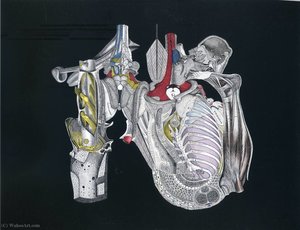
  • Sommer relentlessly pursued new methods of artistic expression, experimenting with cliché-verre negatives and pushing the boundaries of photographic printing. Notably, he transitioned to collage in his final years—creating intricate assemblages based on anatomical illustrations—a stylistic choice that underscored his enduring interest in exploring visual metaphors and conveying complex ideas.
  • Institutional Recognition & Legacy:
  • His contribution to photography was formally acknowledged through the founding of the Center for Creative Photography, a testament to his unwavering belief in collaborative artistic endeavors. Sommer’s archive—containing extensive photographic negatives and correspondence—became an invaluable resource for scholars and artists alike, furthering the dissemination of experimental photographic practices.

Musical Score Drawings & Artistic Dialogue

Beyond his monumental desert landscapes, Sommer produced a series of drawings inspired by musical scores—a practice that reveals his artistic sensitivity to rhythm, texture, and visual harmony. These compositions weren’t intended as literal transcriptions of music; instead, they functioned as symbolic representations of emotional states and intellectual concepts—demonstrating Sommer's ability to translate abstract ideas into tangible forms.
  • Notable Collaborations & Artistic Influences:
  • Sommer’s artistic journey intersected with the careers of influential figures such as Ansel Adams, Harry Callahan, Wynn Bullock, and Aaron Siskind, fostering a dynamic exchange of ideas and techniques. His work continues to inspire artists today—serving as a reminder that true innovation arises from embracing unconventional approaches and engaging in meaningful dialogue across disciplines.

Concluding Reflections: A Master’s Enduring Vision

Frederick Sommer passed away in 1999, leaving behind an extraordinary artistic legacy. His photographs—particularly his desert landscapes—remain among the most evocative and intellectually stimulating images of the twentieth century—a testament to his unwavering commitment to artistic exploration and his profound understanding of the human condition. Today’s reproductions of Sommer's work continue to captivate audiences worldwide—affirming his enduring influence on American art history.