


1


Aktualizacja: Listopad 2026 · ranking według naszego wskaźnika popularności (liczba wyszukiwań, wizyt i zamówień dla każdego dzieła) · 24 dzieł Frederick Richard Pickersgill w naszym katalogu
W skrócie
Według opinii kuratorów galerii, najsłynniejszym obrazem Frederick Richard Pickersgill jest Lady in Persian Dress (1845), którego oryginał znajduje się w Benthall Hall. Amoret, Aemylia and Prince Arthur, in the Cottage of Sclaunder (1845) i The Death of Francesco Foscari, Doge of Venice (1854) dopełniają trio, które zna każde oko. Z 24 dzieł Frederick Richard Pickersgill w naszym katalogu, galeria prezentuje poniżej 24 najsłynniejszych prac – każda z nich jest oryginałem z podaniem roku powstania, muzeum oraz cech wyróżniających ją na tle innych.


In this formal and dignified oil portrait, Frederick Richard Pickersgill presents a young man in a moment of quiet contemplation. Created about 1848, the work captures the sitter in a three-quarter length view, a choice that lends a sense of presence and weight to his figure. The subject is positioned slightly off-center, creating a subtle tension within the frame as he directs his gaze toward the right. This orientation suggests…


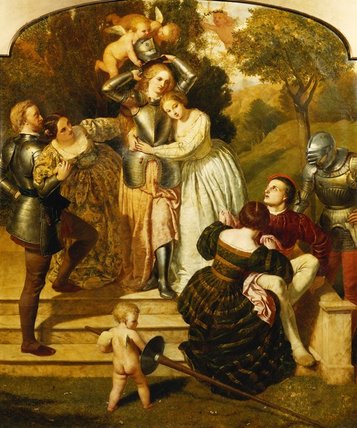
 Flight of the pagan deities
12
 A Honiton Lace Manufactory
13
 The Pearl Boat
14
 Mother And Child With A Poppy
15
 The Knight's Return
16
 The Contest of Beauty for the Girle of Florimel Britomartis Unveiling Amoret
17
 The Artist's Son And Nurse
18
 Washing the Vegetables
19
 He Path Where The Brown Leaves Are Spread
20
 On The Way To The Spring
21
 The betrothal
22
 Orsino and Viola
23
 At The Spring
24
 Viola and the Countess
Cztery motywy najczęściej powracające w tych oryginałach, z których każdy doczekał się swojego najdoskonalszego przykładu.
3 muzeów, w których znajduje się najwięcej obrazów z tej strony.
| Muzea | Miasto | Dzieła artysty Frederick Richard Pickersgill | Obrazy z tej listy |
|---|---|---|---|
 Benthall Hall |
2 | Lady in Persian Dress, Samson Betrayed | |
 Royal Collection |
Londyn | 1 | The Death of Francesco Foscari, Doge of Venice |
 National Portrait Gallery |
Londyn | 1 | Frederick Richard Pickersgill |
Wybierz dekadę, aby zobaczyć dzieło, które ją definiuje.
Lady in Persian Dress (1845), Benthall Hall. Następne są Amoret, Aemylia and Prince Arthur, in the Cottage of Sclaunder (1845) oraz The Death of Francesco Foscari, Doge of Venice (1854).
25 lat: Lady in Persian Dress pochodzi z 1845, a Frederick Richard Pickersgill urodził(a) się w 1820.
Lady in Persian Dress, Amoret, Aemylia and Prince Arthur, in the Cottage of Sclaunder, The Death of Francesco Foscari, Doge of Venice, Othello and Desdemona, Samson Betrayed, Frederick Richard Pickersgill, Portrait Of William Wordsworth, Mercury Instructing The Nymphs In Dance, Crowned By Cupid i Britomart Unarming. Powyższy ranking zawiera rok powstania oraz muzeum dla każdego z nich.
Nasz katalog zawiera 24 dzieł artysty Frederick Richard Pickersgill, datowanych od 1845 do 1862.
W większości znajdują się w Benthall Hall, Royal Collection (Londyn) i National Portrait Gallery (Londyn). Powyższa tabela muzeów zawiera ich pełną listę.
W 1840s: 3 z 24 dzieł na tej stronie powstało w tym czasie, w tym Lady in Persian Dress.
Na tej stronie najwcześniejszy to Lady in Persian Dress (1845), a najpóźniejszy Samson Betrayed (1862).
Mythological scene (2), Classical beauty (2) i Allegorical art (2), w ramach 24 dzieł na tej stronie.
Romanticism, sądząc po oryginałach na tej stronie.
Lady in Persian Dress i Samson Betrayed: Benthall Hall posiada 2 dzieł widocznych na tej stronie.


