Portret Frederick Lee Bridell

27 najsłynniejszych obrazów artysty Frederick Lee Bridell – wybór z galerii

Aktualizacja: Listopad 2026 · ranking według naszego wskaźnika popularności (liczba wyszukiwań, wizyt i zamówień dla każdego dzieła) · 34 dzieł Frederick Lee Bridell w naszym katalogu

W skrócie

Z wszystkich oryginałów pozostawionych przez Frederick Lee Bridell, najsłynniejszym jest The Coliseum at Rome by Moonlight (1859). Tuż za nimi znajdują się The Temple of Vesta, Tivoli (1859) oraz Koloseum Księżycowe, Rzym, Italia (1858). Nasz katalog zawiera 34 dzieł autorstwa Frederick Lee Bridell; galeria zachowała 27 najbardziej podziwianych na świecie prac, z których każda została przedstawiona wraz z datą powstania, informacją o muzeum oraz jej historią.

1830 – 1863, Southampton Romantic landscape painting Najwięcej dzieł: Reading Museum - Town Hall

10 najlepszych obrazów artysty Frederick Lee Bridell: wybór galerii

1
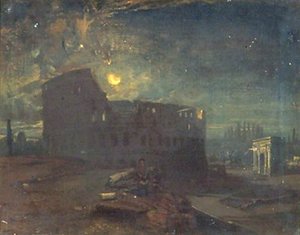
The Coliseum at Rome by Moonlight (1859) autorstwa Frederick Lee Bridell

The Coliseum at Rome by Moonlight

1859 · Oil On Canvas

The Coliseum at Rome by Moonlight is an oil painting by the British artist Frederick Lee Bridell. Completed in 1859, the work captures a Roman Landscape under the silver weight of the night. It presents a nighttime cityscape of Rome, where the ancient stones of the Colosseum and the Arch of Constantine emerge from the dark.

2
The Temple of Vesta, Tivoli (1859) autorstwa Frederick Lee Bridell

The Temple of Vesta, Tivoli

1859 · Oil On Canvas

The Temple of Vesta, Tivoli emerges from the canvas as an oil on canvas work that captures a quiet moment in the Italian landscape. This piece, created by the British artist Frederick Lee Bridell, invites the viewer into a serene scene of mountains and greenery. The painting measures 90 x 129 cm, offering a substantial window into the natural world. It remains part of the collection at the Southampton City…

3
Koloseum Księżycowe, Rzym, Italia (1858) autorstwa Frederick Lee Bridell

Koloseum Księżycowe, Rzym, Italia

1858 · Akryl na płótnie · Reading Museum - Town Hall, Reading

Frederick Lee Bridell, choć jego twórczość nie zdobyła szerokiego uznania w czasach życia, dziś znajduje się wśród cenionych dzieł romantyzmu angielskiego. Jego obraz „Odzieicie Księżycowe Koloseum Rzymskie”, stworzony w roku 1859, stanowi fascynujące świadectwo umiejętności artysty i jego głębokiego zrozumienia piękna krajobrazu oraz wpływu europejskiej sztuki na twórczość angielską.

Kontynuacja zestawienia Frederick Lee Bridell, od 11 do 27

Muzea przechowujące oryginały Frederick Lee Bridell

5 muzeów, w których znajduje się najwięcej obrazów z tej strony.

Muzea Miasto Dzieła artysty Frederick Lee Bridell Obrazy z tej listy
Reading Museum - Town Hall, ReadingReading Museum - Town Hall Reading 2 Koloseum Księżycowe, Rzym, Italia, A Neapolitan Landscape, Italy
Nostell Priory, WakefieldNostell Priory Wakefield 1 View of Brannenburg, Bavaria
Bolton Museum And Art Gallery, BoltonBolton Museum And Art Gallery Bolton 1 Charcoal Burning, Upper Bavaria
Wolverhampton Art Gallery, WolverhamptonWolverhampton Art Gallery Wolverhampton 1 The Vineyards at Meran, Tyrol
Regent's Park College, OxfordRegent's Park College Oxford 1 Dr Alexander McLaren (1826–1910) – Portret młodego mężczyzny

Frederick Lee Bridell dekada po dekadzie: oryginały definiujące każdy okres

Dzieła według dekad

Wybierz dekadę, aby zobaczyć dzieło, które ją definiuje.

Pytania kolekcjonerów o obrazy Frederick Lee Bridell

Z jakiego dzieła najbardziej znany jest Frederick Lee Bridell?Odkryj odpowiedź

The Coliseum at Rome by Moonlight (1859). Następne są The Temple of Vesta, Tivoli (1859) oraz Koloseum Księżycowe, Rzym, Italia (1858).

W jakim wieku był Frederick Lee Bridell, gdy powstało The Coliseum at Rome by Moonlight?Odkryj odpowiedź

29 lat: The Coliseum at Rome by Moonlight pochodzi z 1859, a Frederick Lee Bridell urodził(a) się w 1830.

Jakie są dziesięć najsłynniejszych obrazów, których autorem jest Frederick Lee Bridell?Odkryj odpowiedź

The Coliseum at Rome by Moonlight, The Temple of Vesta, Tivoli, Koloseum Księżycowe, Rzym, Italia, Henry Rose, Georgiana Lacey, Captain Lacey, The Fisherman's House, Autumn Evening, Wooded Landscape (detail) i View of Brannenburg, Bavaria. Powyższy ranking zawiera rok powstania oraz muzeum dla każdego z nich.

Ile obrazów pozostawił po sobie Frederick Lee Bridell?Odkryj odpowiedź

Nasz katalog zawiera 34 dzieł artysty Frederick Lee Bridell, datowanych od 1848 do 1860.

W których muzeach znajdują się arcydzieła Frederick Lee Bridell?Odkryj odpowiedź

W większości znajdują się w Reading Museum - Town Hall (Reading), Nostell Priory (Wakefield) i Bolton Museum And Art Gallery (Bolton). Powyższa tabela muzeów zawiera ich pełną listę.

W których latach Frederick Lee Bridell namalował swoje najsłynniejsze dzieła?Odkryj odpowiedź

W 1850s: 10 z 27 dzieł na tej stronie powstało w tym czasie, w tym The Coliseum at Rome by Moonlight.

Jakie są pierwsze i ostatnie słynne oryginały Frederick Lee Bridell?Odkryj odpowiedź

Na tej stronie najwcześniejszy to Henry Rose (1848), a najpóźniejszy The Woods of Sweet Chestnut above Varenna, Lake Como (1860).

Której techniki Frederick Lee Bridell używał najczęściej?Odkryj odpowiedź

Oil On Canvas, dla 2 z 27 dzieł na tej stronie.

Do jakiego nurtu artystycznego należy Frederick Lee Bridell?Odkryj odpowiedź

Romantic landscape painting, sądząc po oryginałach na tej stronie.

Które dzieła Frederick Lee Bridell znajdują się w Reading Museum - Town Hall?Odkryj odpowiedź

Koloseum Księżycowe, Rzym, Italia i A Neapolitan Landscape, Italy: Reading Museum - Town Hall, Reading posiada 2 dzieł widocznych na tej stronie.

Frederick Lee Bridell: życie i twórczość

Frederick Lee Bridell - A Fleeting Glimpse of Brilliance: The Life and Art of Frederick Lee Bridell

Frederick Lee Bridell, a name perhaps less familiar than those of his celebrated contemporaries like Turner or Constable, nevertheless represents a poignant chapter in 19th-century British landscape painting. Born William Bridle in Southampton in 1830, his brief but intensely productive career was marked by a remarkable sensitivity to light and atmosphere, coupled with an ambition that propelled him from humble beginnings to the attention of prominent artistic circles. His story is one of early talent nurtured against odds, a passionate embrace of European influences, and a tragically premature end that left a legacy ripe for rediscovery. Bridell’s journey began not within the walls of an art academy, but in the practical world of labor – first as a pageboy, then as a house painter. Yet, even amidst these tasks, his innate artistic inclination shone through, encouraged by Henry Rose, a local engraver who recognized and fostered the young man's burgeoning talent. This early grounding instilled in Bridell a dedication to craft and observation that would become hallmarks of his mature style. At eighteen, adopting the more distinguished name Frederick Lee Bridell, he painted a portrait of Rose, an act signifying not merely artistic skill but also a deliberate forging of identity.

Early Influences & Apprenticeship

Bridell’s formative years were shaped by circumstance and serendipitous connections. Growing up in Southampton's St Mary’s area—a region known for its maritime heritage—he benefited from the patronage of Henry Rose, an engraver who recognized his artistic potential and provided invaluable guidance. This mentorship wasn’t merely about mastering technique; it instilled a profound appreciation for meticulous detail and careful observation – qualities that would permeate Bridell's entire oeuvre. His apprenticeship to Edwin Holder, a picture dealer and restorer, proved equally transformative. Holder introduced Bridell to the world of Old Masters, exposing him to the stylistic innovations of Cuyp, Van der Velde, and Berchem. These artists championed dramatic lighting effects and atmospheric perspective—principles that would become foundational to Bridell’s artistic vision. The act of copying these masterpieces wasn't simply an exercise in imitation; it was a deliberate process of absorbing their compositional strategies and mastering the subtleties of color palettes.

European Exploration & Artistic Awakening

Holder’s generosity extended beyond professional mentorship, facilitating Bridell’s travels across Europe—particularly to Germany and the Tyrol. These expeditions were pivotal in shaping his artistic sensibilities. The grandeur of the Austrian Alps—their towering peaks bathed in sunlight—fired Bridell's imagination and instilled a lifelong fascination with expansive vistas and dynamic lighting. He meticulously documented these landscapes, honing his skills in capturing the ephemeral qualities of light and atmosphere – an ambition that would define his artistic output. It was during this period that Bridell began to develop his distinctive style, consciously rejecting the more overtly theatrical tendencies favored by some contemporaries. Instead, he sought harmony between observation and technique—capturing the beauty of nature with a quiet confidence and unwavering attention to detail.

The Roman Years & Artistic Recognition

In 1858, Bridell embarked on another transformative journey – to Rome. Drawn by the allure of ancient ruins and the vibrant artistic community that flourished there, he married Eliza Bridell Fox—a fellow artist who shared his passion for landscape painting—establishing a partnership that enriched their creative lives. This period marked a decisive shift away from portraiture towards a focus on capturing the essence of Italian landscapes—scenes reminiscent of those favored by Turner and Claude Monet. He sought to emulate Turner’s masterful manipulation of light and shadow, striving to convey not just visual accuracy but also emotional resonance. James Wolff, a wealthy shipping magnate with an astute understanding of art, became Bridell's devoted patron, establishing a gallery at his home to showcase his paintings—a gesture that secured considerable exposure for the artist and solidified his reputation within influential circles.

A Legacy Illuminated

Frederick Lee Bridell died prematurely in Kensington, London, in 1863 at the age of thirty-three – a tragic loss that curtailed what promised to be an illustrious artistic career. Despite his brief life span, Bridell left behind a remarkable body of work—a testament to his talent and unwavering dedication to capturing the sublime beauty of the natural world. His paintings—particularly *The Temple of Venus*, *The Coliseum at Rome by Moonlight*, and *In the Austrian Tyrol*—continue to captivate viewers today with their luminous colors, meticulous detail, and masterful rendering of atmospheric effects. Bridell’s influence extends beyond his own artistic output; he embodies the Romantic spirit—a commitment to emotion, imagination, and a profound appreciation for the grandeur of nature—leaving an enduring legacy as one of Britain's most accomplished landscape painters.