Portret Franz Xaver Messerschmidt

Obrazy: 19 najsłynniejszych dzieł artysty Franz Xaver Messerschmidt – spojrzenie galerii

Aktualizacja: Listopad 2026 · ranking według naszego wskaźnika popularności (liczba wyszukiwań, wizyt i zamówień dla każdego dzieła) · 24 dzieł Franz Xaver Messerschmidt w naszym katalogu

W skrócie

Według opinii kuratorów galerii, najsłynniejszym obrazem Franz Xaver Messerschmidt jest Self-Portrait with Wig (1780), którego oryginał znajduje się w Szépművészeti Múzeum w Budapeszt. Self-Portrait: Laughing (1780) i The Yawner (1775) dopełniają trio, które zna każde oko. Z 24 dzieł Franz Xaver Messerschmidt w naszym katalogu, galeria prezentuje poniżej 19 najsłynniejszych prac – każda z nich jest oryginałem z podaniem roku powstania, muzeum oraz cech wyróżniających ją na tle innych.

1736 – 1783, Wiesensteig Neoclassicism Najwięcej dzieł: Szépművészeti Múzeum

10 najlepszych obrazów artysty Franz Xaver Messerschmidt w galerii

1
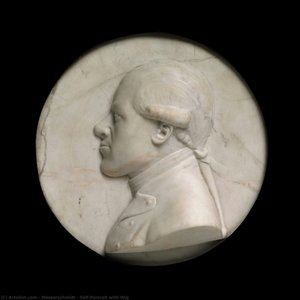
Self-Portrait with Wig (1780) autorstwa Franz Xaver Messerschmidt

Self-Portrait with Wig

1780 · Marble · Szépművészeti Múzeum, Budapeszt

Franz Xaver Messerschmidt, a name often whispered in circles devoted to early Expressionism, remains an artist profoundly intriguing for his singular vision. Born into a lineage steeped in sculpting tradition – his family were renowned carvers in Bavaria – Messerschmidt didn’t simply inherit a craft; he seemed to wrestle with the very essence of human emotion, translating it into powerfully unsettling and intensely personal busts. His “Self-Portrait with Wig,” created…

2
Self-Portrait: Laughing (1780) autorstwa Franz Xaver Messerschmidt

Self-Portrait: Laughing

1780 · Sculpture · Szépművészeti Múzeum, Budapeszt

Franz Xaver Messerschmidt's "Self-Portrait: Laughing," created around 1780, is not merely a depiction of an artist; it’s a profound exploration of the human psyche rendered in the cool, enduring medium of marble. Born into a family steeped in sculpting tradition – his uncle, Johann Baptist Straub, instilled in him the fundamentals of carving – Messerschmidt quickly transcended mere technical skill to become a figure both celebrated and increasingly shadowed by…

3
The Yawner (1775) autorstwa Franz Xaver Messerschmidt

The Yawner

1775 · Marble · Kunstpalast, Düsseldorf

The Yawner is a work by Franz Xaver Messerschmidt, dated 1775. It belongs to the series of character heads that define the artist's most striking output. These studies focus on the expressive power of the human face through extreme physiognomic contortions.

4
Character Head: Childish Weeping (1783) autorstwa Franz Xaver Messerschmidt

Character Head: Childish Weeping

1783 · Bronze · Szépművészeti Múzeum, Budapeszt

In the quiet, somber depths of Franz Xaver Messerschmidt’s “Character Head: Childish Weeping,” one encounters more than a mere sculpture; one meets a profound psychological confrontation. Created in 1783, this bronze bust serves as a haunting window into the human soul, capturing a moment of raw, unadulterated sorrow that transcends the boundaries of its era. While many sculptors of the late eighteenth century sought to immortalize the idealized grace of…

5
Character Head: Quiet, Peaceful Sleep (1783) autorstwa Franz Xaver Messerschmidt

Character Head: Quiet, Peaceful Sleep

1783 · Bronze · Szépművészeti Múzeum, Budapeszt

The bronze bust titled Character Head: Quiet, Peaceful Sleep emerges from the shadows of history, a singular creation by the artist Franz Xaver Messerschmidt. This sculpture, dating to 1783, captures a man's head and upper shoulders in a moment of profound stillness. The metal holds the form of a face surrendered to rest, frozen in a state of deep relaxation. It is a quiet departure from the more turbulent expressions…

6
Portrait of a Woman autorstwa Franz Xaver Messerschmidt

Portrait of a Woman

Sculpture · Bratislava City Gallery, Bratysława

In this portrait, we find ourselves observing a sculpted bust of a woman, captured within the soft, circular confines of a frame. The work presents a study in monochromatic restraint, relying on a palette of grays, whites, and blacks to define the contours of the human form. There is a certain stillness here, a composure that suggests a moment of dignified reflection. The lighting is diffused, washing over the surface…

7
Character Head: The Yawner (1783) autorstwa Franz Xaver Messerschmidt

Character Head: The Yawner

1783 · Bronze · Szépművészeti Múzeum, Budapeszt

Franz Xaver Messerschmidt's "Character Head: The Yawner," created in 1783, isn’t merely a sculpture; it’s an excavation of the human psyche. Born in Bavaria during a period of shifting artistic sensibilities—bridging the Baroque’s grandeur with the nascent Neoclassicism—Messerschmidt carved out a singular path, driven by a profound fascination with capturing raw emotion through his art. This particular piece, rendered in bronze, stands as one of his most arresting “Character Heads,”…

9
Character Head: The Hanged (1770) autorstwa Franz Xaver Messerschmidt

Character Head: The Hanged

1770 · Sculpture · Österreichische Galerie Belvedere, Wiedeń

Franz Xaver Messerschmidt's "Character Head: The Hanged," crafted in 1770-83 from alabaster, stands as a profoundly unsettling and remarkably prescient work of art. More than simply a sculpture, it’s a psychological portrait rendered in stone—a glimpse into the turbulent inner world of an artist grappling with his own anxieties and perhaps, foreshadowing the rise of Expressionism nearly a century before its formal emergence. The piece isn't merely aesthetically pleasing; it…

10
Character Head: The Beaked (1770) autorstwa Franz Xaver Messerschmidt

Character Head: The Beaked

1770 · Sculpture · Austrian Gallery Belvedere, Wiedeń

Franz Xaver Messerschmidt's "Character Head: The Beaked," sculpted in alabaster around 1770, isn’t merely a portrait; it’s an arresting distillation of human emotion rendered with unsettling precision. This small, yet profoundly impactful sculpture offers a rare glimpse into the mind of a man grappling with psychological turmoil and a unique artistic vision—a vision that anticipated elements of Expressionism by nearly a century. The piece immediately commands attention, not through grand…

Obrazy artysty Franz Xaver Messerschmidt, uszeregowane od 11 do 19 miejsca

Słynne obrazy Franz Xaver Messerschmidt epoka po epoce

Tematy, które przyciągnęły wzrok Franz Xaver Messerschmidt

Cztery motywy najczęściej powracające w tych oryginałach, z których każdy doczekał się swojego najdoskonalszego przykładu.

Muzea przechowujące oryginały Franz Xaver Messerschmidt

6 muzeów, w których znajduje się najwięcej obrazów z tej strony.

Muzea Miasto Dzieła artysty Franz Xaver Messerschmidt Obrazy z tej listy
Szépművészeti Múzeum, BudapesztSzépművészeti Múzeum Budapeszt 5 Self-Portrait with Wig, Self-Portrait: Laughing, Character Head: Childish Weeping
Bratislava City Gallery, BratysławaBratislava City Gallery Bratysława 3 Portrait of a Woman, Portrait of a Man, The Capuchin
Österreichische Galerie Belvedere, WiedeńÖsterreichische Galerie Belvedere Wiedeń 2 Character Head: The Lecher, Character Head: The Hanged
Liechtenstein Museum, WiedeńLiechtenstein Museum Wiedeń 2 Elijah Increases the Oil of the Widow, Elijah Increases the Oil of the Widow (detail)
Kunstpalast, DüsseldorfKunstpalast Düsseldorf 1 The Yawner
Austrian Gallery Belvedere, WiedeńAustrian Gallery Belvedere Wiedeń 1 Character Head: The Beaked

Franz Xaver Messerschmidt, flagowe dzieła każdego roku

Kariera Franz Xaver Messerschmidt prezentowana na tej stronie obejmuje 14 lata, od 1770 do 1783: każdy rok został zestawiony z jego najsłynniejszymi oryginalnymi dziełami.

Dzieła według lat

Wybierz rok, aby zobaczyć oryginały.

Obrazy artysty Franz Xaver Messerschmidt: odpowiedzi galerii

Który obraz Franz Xaver Messerschmidt jest najsłynniejszy ze wszystkich?Odkryj odpowiedź

Self-Portrait with Wig (1780), Szépművészeti Múzeum, Budapeszt. Następne są Self-Portrait: Laughing (1780) oraz The Yawner (1775).

Ile lat miał Franz Xaver Messerschmidt, gdy ukończył Self-Portrait with Wig?Odkryj odpowiedź

44 lat: Self-Portrait with Wig pochodzi z 1780, a Franz Xaver Messerschmidt urodził(a) się w 1736.

Które to 10 najlepszych obrazów Franz Xaver Messerschmidt?Odkryj odpowiedź

Self-Portrait with Wig, Self-Portrait: Laughing, The Yawner, Character Head: Childish Weeping, Character Head: Quiet, Peaceful Sleep, Portrait of a Woman, Character Head: The Yawner, Character Head: The Lecher, Character Head: The Hanged i Character Head: The Beaked. Powyższy ranking zawiera rok powstania oraz muzeum dla każdego z nich.

Ile dzieł stworzył/a Franz Xaver Messerschmidt?Odkryj odpowiedź

Nasz katalog zawiera 24 dzieł artysty Franz Xaver Messerschmidt, datowanych od 1770 do 1783.

Gdzie można znaleźć najsłynniejsze oryginały autorstwa Franz Xaver Messerschmidt?Odkryj odpowiedź

W większości znajdują się w Szépművészeti Múzeum (Budapeszt), Bratislava City Gallery (Bratysława) i Österreichische Galerie Belvedere (Wiedeń). Powyższa tabela muzeów zawiera ich pełną listę.

Kiedy Franz Xaver Messerschmidt stworzył swoje najsłynniejsze obrazy?Odkryj odpowiedź

W 1770: 3 z 19 dzieł na tej stronie powstało w tym czasie, w tym Character Head: The Lecher.

Które z najsłynniejszych dzieł Franz Xaver Messerschmidt należą do jego najwcześniejszych i najpóźniejszych prac?Odkryj odpowiedź

Na tej stronie najwcześniejszy to Character Head: The Lecher (1770), a najpóźniejszy Character Head: Childish Weeping (1783).

Do jakich tematów Franz Xaver Messerschmidt powracał najczęściej?Odkryj odpowiedź

Sculpture (7), Baroque (3) i Human emotion (3), w ramach 19 dzieł na tej stronie.

W jakiej technice najczęściej tworzył Franz Xaver Messerschmidt?Odkryj odpowiedź

Marble, dla 4 z 19 dzieł na tej stronie.

Z jakim nurtem związany jest Franz Xaver Messerschmidt?Odkryj odpowiedź

Neoclassicism, sądząc po oryginałach na tej stronie.

Które oryginały artysty Franz Xaver Messerschmidt znajdują się w zbiorach Szépművészeti Múzeum?Odkryj odpowiedź

Self-Portrait with Wig, Self-Portrait: Laughing i Character Head: Childish Weeping: Szépművészeti Múzeum, Budapeszt posiada 5 dzieł widocznych na tej stronie.

Franz Xaver Messerschmidt: artysta

Franz Xaver Messerschmidt (1736-1783): Master sculptor of haunting 'Character Heads' – intensely expressive busts exploring human emotion & psychology. A unique precursor to Expressionism.

Franz Xaver Messerschmidt, born in the Bavarian village of Wiesensteig in 1736, occupies a singular and often unsettling position in the history of sculpture. He wasn’t merely a product of his time—a bridge between the opulent late Baroque and the emerging Neoclassical styles—but an artist who seemed to anticipate the emotional intensity of Expressionism nearly a century before its formal emergence. His life, marked by both artistic promise and increasing psychological turmoil, is inextricably linked to his most enduring legacy: the “Character Heads,” busts that capture human emotion in states of raw, almost unbearable intensity. Messerschmidt’s early training was steeped in family tradition; he first learned the craft under the tutelage of his uncle, Johann Baptist Straub, a sculptor working in Munich. This foundational period instilled in him a mastery of traditional techniques, which he further honed through apprenticeships with another uncle, Philipp Jakob Straub, in Graz, and later at the Academy of Fine Arts Vienna, where Jacob Schletterer guided his development. These early works demonstrate a clear proficiency in the prevailing Baroque style, particularly evident in commissions for Empress Maria Theresa—bronze busts and reliefs that adhered to the conventions of courtly representation favored by artists like Balthasar Ferdinand Moll. He was, initially, a sculptor very much *of* his time, skilled at portraying power and status with appropriate grandeur.

Early Years & Artistic Training

Messerschmidt’s formative years were defined by familial influence and rigorous artistic instruction. His uncle Johann Baptist Straub, established sculptor in Munich, imparted invaluable knowledge of sculptural craftsmanship—a discipline that would shape Messerschmidt's entire oeuvre. This apprenticeship fostered a deep understanding of Baroque aesthetics, emphasizing anatomical accuracy and idealized beauty – principles reflected prominently in his initial commissions for the imperial court. The Academy of Fine Arts Vienna proved equally influential, where Jacob Schletterer championed Messerschmidt’s artistic ambitions and honed his skills through meticulous observation and experimentation. These experiences solidified his technical prowess and established him firmly within the stylistic currents of his era. His early sculptures showcased a dedication to classical ideals, mirroring the prevailing trends in Viennese art during the mid-18th century.

The Genesis of Disquiet: The Character Heads

Around 1769-1770, however, a profound shift began to occur in Messerschmidt’s artistic vision—a transformation that would propel him into uncharted territory and ultimately define his reputation as an artist ahead of his time. While continuing to accept traditional portrait commissions—primarily for the imperial family—he embarked on the creation of what would become his defining work—the Character Heads. These weren't portraits in the conventional sense; they weren’t intended to flatter or commemorate. Instead, they depicted faces contorted in extreme emotional expressions: laughter bordering on hysteria, grief etched into every line, grimaces of anguish and despair. The genesis of this dramatic departure is complex, interwoven with both artistic experimentation and a deepening personal struggle. Accounts from the time, particularly those provided by Friedrich Nicolai following a visit to Messerschmidt in 1781, reveal an artist obsessed with capturing the full spectrum of human emotion—a preoccupation that would become central to his artistic legacy. Nicolai described Messerschmidt’s peculiar method: he would reportedly pinch his own lower ribs, observing the resulting facial contortions in a mirror and then attempting to replicate them in marble or bronze. This self-experimentation suggests a deliberate attempt to access and portray authentic emotional states—a radical departure from the idealized representations favored by Baroque sculptors. Furthermore, Messerschmidt believed he was striving to represent all 64 “canonical grimaces” of the human face—a monumental undertaking that demanded an unprecedented level of anatomical precision and psychological insight. This ambition speaks to a deeper philosophical underpinning—a desire to understand and codify the fundamental expressions of humanity—reflecting influences from Hermetic teachings and mirroring the quest for universal balance championed by Renaissance thinkers.

A Sculptor Like No Other: Technique & Style

Messerschmidt’s artistic technique was characterized by meticulous attention to detail and a masterful command of sculptural materials—primarily alabaster and tin-lead alloy. He employed methods honed through years of apprenticeship that prioritized anatomical accuracy and textural nuance, mirroring the standards upheld by leading sculptors of his era. His approach differed markedly from prevailing stylistic conventions; he rejected the polished surfaces and idealized forms characteristic of Neoclassical sculpture, opting instead for a deliberately rough finish that emphasized the expressive power of the material itself. This stylistic choice—a conscious rejection of academic ideals—was particularly evident in his Character Heads, where he exploited the natural grain of alabaster to simulate wrinkles and contours—creating faces that seemed to pulsate with palpable emotion. The resulting sculptures possessed an unsettling immediacy—capturing fleeting moments of psychological turmoil with breathtaking realism. His oeuvre encompassed a diverse range of commissions—from monumental fountains for Viennese palaces to smaller portraits commissioned by aristocratic patrons—demonstrating his versatility as an artist and cementing his reputation as one of the most innovative sculptors of his generation.

Legacy & Influence

Despite his tragically premature death in 1783, Franz Xaver Messerschmidt’s influence endured beyond his lifetime. His Character Heads captivated audiences and scholars alike—challenging conventional notions of artistic representation and foreshadowing the expressive fervor of Expressionism. Ernst Kris famously interpreted these unsettling sculptures as a reflection of Messerschmidt's paranoid delusions—a provocative reading that underscored the artist’s profound psychological insight. Historians recognized Messerschmidt as a pioneer in exploring the darker recesses of human emotion—a visionary sculptor who dared to confront uncomfortable truths and push the boundaries of artistic convention. Today, Franz Xaver Messerschmidt is remembered not merely for his technical brilliance but also for his enduring contribution to art history—as an artist whose work continues to inspire contemplation and provoke debate about the nature of human experience. His legacy resides in the unsettling beauty of his Character Heads—a testament to the transformative power of artistic innovation and a poignant reminder that true artistry lies in confronting the complexities of the human psyche.