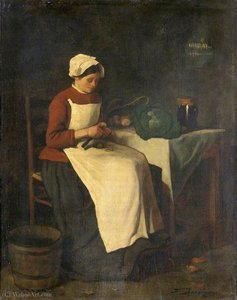
Portret François Bonvin

68 najsłynniejszych obrazów artysty François Bonvin, każdy niepowtarzalny

Aktualizacja: Listopad 2026 · ranking według naszego wskaźnika popularności (liczba wyszukiwań, wizyt i zamówień dla każdego dzieła) · 70 dzieł François Bonvin w naszym katalogu

W skrócie

Woman Ironing (1858) to obraz autorstwa François Bonvin, który przyciąga najwięcej spojrzeń; oryginał znajduje się w Philadelphia Museum of Art, Filadelfia. Następnie wzrok kieruje się na Sophie Unternährer at her easel (1848) i Woman Playing Games (1853). Spośród 70 dzieł François Bonvin w naszym katalogu, tych 68 jest najbardziej znanych – każde z nich to unikatowy oryginał, przedstawiony wraz z rokiem powstania, muzeum oraz powodem, dla którego przetrwało próbę czasu.

1817 – 1887, Paryż Realism Najwięcej dzieł: Burrell Collection

10 najlepszych obrazów autorstwa François Bonvin według oka galerii

1
Woman Ironing (1858) autorstwa François Bonvin

Woman Ironing

1858 · Oil · Philadelphia Museum of Art, Filadelfia

A single woman leans into her labor. The scene is tight, a quiet corner of a room where the air feels heavy with the scent of heated fabric. She is bent over her task, her body forming a soft curve against the stark, bright white of the linens. The light does not flood the room; it strikes only what is necessary. It catches the ridge of her shoulder, the pale…

2
Sophie Unternährer at her easel (1848) autorstwa François Bonvin

Sophie Unternährer at her easel

1848 · Oil

The studio is swallowed by shadow, leaving only a single, concentrated pool of light to illuminate the scene. Within this luminous circle, Sophie Unternährer leans toward her canvas, her entire being pulled into the act of making. She is a figure of intense focus, caught in a private stillness that feels almost sacred. The light, spilling from the upper left, catches the heavy, creamy folds of her voluminous white dress,…

3
Woman Playing Games (1853) autorstwa François Bonvin

Woman Playing Games

1853 · Oil On Panel · Centraal Museum, Utrecht

The oil painting titled Woman Playing Games captures a singular, quiet moment of domesticity. Created by the French artist François Bonvin, the work belongs to the genre art tradition. It focuses on the private, unadorned rhythms of daily life, finding weight in the stillness of a single figure.

5
The Embroideress (La Brodeuse) (1857) autorstwa François Bonvin

The Embroideress (La Brodeuse)

1857 · Oil · Museum Gouda, Gouda

The Embroideress (La Brodeuse) is a realist oil painting from 1857 that captures a solitary woman immersed in the quiet task of embroidery. The composition is centered on the seated figure, creating an atmosphere of domestic devotion and stillness. The scene is characterized by a dark, muted color palette of deep blacks and browns, which serves to highlight the stark white of the woman's collar and the warm, reddish-orange hue…

6
Drawing Water (1858) autorstwa François Bonvin

Drawing Water

1858 · Oil On Canvas · Walters Art Museum, Baltimore

In "Drawing Water" by François Bonvin, a quiet moment of domestic labor unfolds within a vertically oriented space. The scene captures a solitary woman engaged in her daily chore, positioned slightly to the right of center. She leans toward a water dispenser, her form defined by the steady rhythm of her task. In the immediate foreground, a bucket sits waiting, grounding the viewer in this intimate, private sphere. The perspective…

7
Ave Maria : interior of the  Aramont convent (1870) autorstwa François Bonvin

Ave Maria : interior of the Aramont convent

1870 · Oil On Canvas · Musée d'Orsay, Paryż

The scene unfolds within the quietude of Ave Maria : interior of the Aramont convent, a work that captures a moment of stillness through the eyes of François Bonvin. This painting emerges from the year 1870, offering a glimpse into a world of devotion and architectural weight. The atmosphere feels heavy with the presence of the past, as if the very air within the convent holds its breath.

8
Woman in White (1865) autorstwa François Bonvin

Woman in White

1865 · Oil On Canvas · Musée des Beaux-Arts, Reims

In Woman in White, François Bonvin captures a moment of quietude through a vertically oriented composition. The subject is positioned slightly off-center, a profile of a woman seen from the side. She gazes downward, her eyes cast toward an unseen point below. This posture creates a sense of stillness against a dark, indistinct background that offers no distraction from her form. The space around her feels heavy and silent.

10
Interior of a Tavern (1867) autorstwa François Bonvin

Interior of a Tavern

1867 · Oil On Canvas · Walters Art Museum, Baltimore

In Interior of a Tavern by François Bonvin, we find ourselves within a quiet, somber moment of 19th-century life. The scene is anchored by a woman in a red bodice and white apron, who occupies the center of the composition. To her left, a man sits quietly at a wooden table, while to her right, a standing man wearing a red vest and a dark hat directs his gaze toward…

Słynne obrazy artysty François Bonvin, od 11 do 68

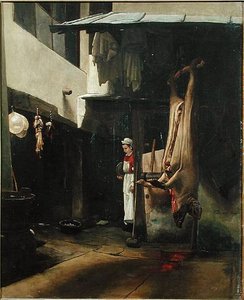
11Young Woman with a Mandolin, Portrait of Louison Köhler (1873) autorstwa François BonvinYoung Woman with a Mandolin, Portrait of Louison Köhler1873 · Cleveland Museum of Art 12The Scrubber (1887) autorstwa François BonvinThe Scrubber1887 · Musée des Beaux-Arts 13La Servante indiscrete (1871) autorstwa François BonvinLa Servante indiscrete1871 · Art Gallery of Hamilton 14Still Life with Oyster (1860) autorstwa François BonvinStill Life with Oyster1860 · Yale University Art Gallery 15Still Life with Asparagus (1867) autorstwa François BonvinStill Life with Asparagus1867 · Kröller-Müller Museum 16Attributes of Music (1863) autorstwa François BonvinAttributes of Music1863 · Cleveland Museum of Art 17Still Life (1858) autorstwa François BonvinStill Life1858 · Museum of Fine Arts 18Landscape with Barn (1869) autorstwa François BonvinLandscape with Barn1869 · Museum Gouda 19Still Life with Oysters (1865) autorstwa François BonvinStill Life with Oysters1865 · National Gallery of Ireland 20Still life with cherries. (1865) autorstwa François BonvinStill life with cherries.1865 · Muzeum Kolekcji im. Jana Pawła II 21The Candlestick (Still Life with Candle) (1878) autorstwa François BonvinThe Candlestick (Still Life with Candle)1878 · Museum Gouda 22Still Life with Grapes (1877) autorstwa François BonvinStill Life with Grapes1877 · Museum Gouda 23Still Life with Clogs (1875) autorstwa François BonvinStill Life with Clogs1875 · Museum Gouda 24Port-Marly (1872) autorstwa François BonvinPort-Marly1872 · Musée d'Orsay 25The Trio (1880) autorstwa François BonvinThe Trio1880 · Centraal Museum 26Still Life with Vegetables (1880) autorstwa François BonvinStill Life with Vegetables1880 · Museum Gouda 27Still Life With Brass Kettle (1883) autorstwa François BonvinStill Life With Brass Kettle1883 · Museum Boijmans Van Beuningen 28Still life, two glazed earthenware pots. (1887) autorstwa François BonvinStill life, two glazed earthenware pots.1887 · Musée des Beaux-Arts de Rouen 29Femme lisant autorstwa François BonvinFemme lisantMusée Fabre 30'Miss' autorstwa François Bonvin'Miss'Burrell Collection 31The Butcher autorstwa François BonvinThe Butcher 32A woman ironing autorstwa François BonvinA woman ironingNational Museum Cardiff 33Two countrywomen autorstwa François BonvinTwo countrywomenBowes Museum 34The winder autorstwa François BonvinThe winder 35The Blacksmiths, Memory of Treport autorstwa François BonvinThe Blacksmiths, Memory of Treport 36Still life, François Bonvin, 1871 (1871) autorstwa François BonvinStill life, François Bonvin, 18711871 · Rijksmuseum 37Stilleven met vier vruchten, glas en aardewerk, François Bonvin, 1827 - 1887 (1887) autorstwa François BonvinStilleven met vier vruchten, glas en aardewerk, François Bonvin, 1827 - 18871887 · Rijksmuseum 38Still Life autorstwa François BonvinStill LifeMusée des Beaux-Arts 39Still life autorstwa François BonvinStill lifeYork Art Gallery 40Still Life with Jar of Cherries autorstwa François BonvinStill Life with Jar of Cherries 41Woman at a Spinet autorstwa François BonvinWoman at a SpinetBurrell Collection 42The crow autorstwa François BonvinThe crowBurrell Collection 43Interior of a Tavern autorstwa François BonvinInterior of a Tavern 44Grandmamma's breakfast autorstwa François BonvinGrandmamma's breakfastBowes Museum 45Still Life with a Copper Pot autorstwa François BonvinStill Life with a Copper PotBurrell Collection 46The violin autorstwa François BonvinThe violinBurrell Collection 47The meadow autorstwa François BonvinThe meadowNational Gallery 48The young housewife autorstwa François BonvinThe young housewifeNational Museum Cardiff 49The Letter of Recommendation autorstwa François BonvinThe Letter of Recommendation 50Housemaid At The Wasserholen autorstwa François BonvinHousemaid At The WasserholenMusée d'Orsay 51Oysters autorstwa François BonvinOystersBurrell Collection 52Interior autorstwa François BonvinInteriorFitzwilliam Museum 53Charity autorstwa François BonvinCharity 54Still Life with Game autorstwa François BonvinStill Life with GameBurrell Collection 55Still Life with Oysters, a Wine Bottle and a Glass of Wine autorstwa François BonvinStill Life with Oysters, a Wine Bottle and a Glass of WineBurrell Collection 56Peasant knitting autorstwa François BonvinPeasant knitting 57Still Life with Book, Papers and Inkwell autorstwa François BonvinStill Life with Book, Papers and InkwellNational Gallery 58Still Life with Apples and a Silver Goblet autorstwa François BonvinStill Life with Apples and a Silver GobletKelvingrove Art Gallery and Museum 59Interior with an Old Woman Kneeling autorstwa François BonvinInterior with an Old Woman Kneeling 60The Attributes of Painting autorstwa François BonvinThe Attributes of PaintingBarber Institute of Fine Arts 61Nature morte autorstwa François BonvinNature morteBerwick Museum and Art Gallery 62Still Life with a Tobacco Pot and a Pipe autorstwa François BonvinStill Life with a Tobacco Pot and a PipeBurrell Collection 63Still Life with a Jug, Cheese, Onions, Fish and a Knife autorstwa François BonvinStill Life with a Jug, Cheese, Onions, Fish and a KnifeBurrell Collection 64Still Life with a Glass, Pears and a Knife autorstwa François BonvinStill Life with a Glass, Pears and a KnifeBurrell Collection 65Still Life with Asparagus autorstwa François BonvinStill Life with AsparagusScottish National Gallery 66Still Life with a Book and an Ink Well autorstwa François BonvinStill Life with a Book and an Ink WellBurrell Collection 67Still Life with Vegetables and Cooking Utensils autorstwa François BonvinStill Life with Vegetables and Cooking UtensilsBurrell Collection 68Self portrait autorstwa François BonvinSelf portraitBowes Museum

Tematy, które przyciągnęły wzrok François Bonvin

Cztery motywy najczęściej powracające w tych oryginałach, z których każdy doczekał się swojego najdoskonalszego przykładu.

Muzea przechowujące oryginały François Bonvin

8 muzeów, w których znajduje się najwięcej obrazów z tej strony.

Muzea Miasto Dzieła artysty François Bonvin Obrazy z tej listy
Burrell Collection, GlasgowBurrell Collection Glasgow 13 'Miss', Woman at a Spinet, The crow
Museum Gouda, GoudaMuseum Gouda Gouda 6 The Embroideress (La Brodeuse), Landscape with Barn, The Candlestick (Still Life with Candle)
Musée d'Orsay, ParyżMusée d'Orsay Paryż 3 Ave Maria : interior of the Aramont convent, Port-Marly, Housemaid At The Wasserholen
Bowes Museum, Barnard CastleBowes Museum Barnard Castle 3 Two countrywomen, Grandmamma's breakfast, Self portrait
Centraal Museum, UtrechtCentraal Museum Utrecht 2 Woman Playing Games, The Trio
Walters Art Museum, BaltimoreWalters Art Museum Baltimore 2 Drawing Water, Interior of a Tavern
Musée des Beaux-Arts, ReimsMusée des Beaux-Arts Reims 2 Woman in White, The Scrubber
Cleveland Museum of Art, ClevelandCleveland Museum of Art Cleveland 2 Young Woman with a Mandolin, Portrait of Louison Köhler, Attributes of Music

François Bonvin na przestrzeni dekad: jeden unikatowy oryginał dla każdego

Dzieła według dekad

Wybierz dekadę, aby zobaczyć dzieło, które ją definiuje.

Obrazy artysty François Bonvin: pytania do galerii

Jakie jest najsłynniejsze dzieło artysty François Bonvin?Odkryj odpowiedź

Woman Ironing (1858), Philadelphia Museum of Art, Filadelfia. Następne są Sophie Unternährer at her easel (1848) oraz Woman Playing Games (1853).

W jakim wieku François Bonvin stworzył/a Woman Ironing?Odkryj odpowiedź

41 lat: Woman Ironing pochodzi z 1858, a François Bonvin urodził(a) się w 1817.

Które dziesięć obrazów François Bonvin jest najbardziej znanych?Odkryj odpowiedź

Woman Ironing, Sophie Unternährer at her easel, Woman Playing Games, The Guitar Player, The Embroideress (La Brodeuse), Drawing Water, Ave Maria : interior of the Aramont convent, Woman in White, Portrait of a Seated Woman i Interior of a Tavern. Powyższy ranking zawiera rok powstania oraz muzeum dla każdego z nich.

Ile znanych dzieł stworzył François Bonvin?Odkryj odpowiedź

Nasz katalog zawiera 70 dzieł artysty François Bonvin, datowanych od 1848 do 1887.

Gdzie można zobaczyć najsłynniejsze oryginały François Bonvin?Odkryj odpowiedź

W większości znajdują się w Burrell Collection (Glasgow), Museum Gouda (Gouda) i Musée d'Orsay (Paryż). Powyższa tabela muzeów zawiera ich pełną listę.

W jakim okresie François Bonvin stworzył/a swoje najsłynniejsze obrazy?Odkryj odpowiedź

W 1870s: 9 z 68 dzieł na tej stronie powstało w tym czasie, w tym Ave Maria : interior of the Aramont convent.

Który z najsłynniejszych obrazów artysty François Bonvin powstał najwcześniej, a który najpóźniej?Odkryj odpowiedź

Na tej stronie najwcześniejszy to Sophie Unternährer at her easel (1848), a najpóźniejszy The Scrubber (1887).

Jakie tematy preferował François Bonvin?Odkryj odpowiedź

Woman (12), Life (12) i Table (5), w ramach 68 dzieł na tej stronie.

Jakich materiałów François Bonvin używał najczęściej?Odkryj odpowiedź

Oil On Canvas, dla 10 z 68 dzieł na tej stronie.

Do jakiego nurtu należy twórczość François Bonvin?Odkryj odpowiedź

Realism i Contemporary realism, sądząc po oryginałach na tej stronie.

Jakie oryginały François Bonvin można zobaczyć w Burrell Collection?Odkryj odpowiedź

'Miss', Woman at a Spinet i The crow: Burrell Collection, Glasgow posiada 13 dzieł widocznych na tej stronie.

François Bonvin: portret artysty

Cichy Obserwator: Życie i Dziedzictwo François Bonvin

W tętniącym życiem, przeobrażającym się krajobrazie dziewiętnastowiecznego Paryża, gdzie cienie rewolucji przemysłowej zaczęły kłaść się długim pasmem na brukowanych ulicach miasta, istniał malarz, który odnajdywał głębokie piękno w najbardziej niepozornych zakątkach egzystencji. François Bonvin (1817–1887) nie był kronikarzem wielkich bitew historycznych ani mitologicznych eposów; był raczej mistrzem intymności, realistą, którego pędzel chwytał cichą godność codzienności. Jego życie, naznaczone wczesnym trudem i niezłomnym duchem, odzwierciedlało same tematy, które malował – nieozdobne, szczere i głęboko ludzkie.

Urodzony w skromnych warunkach jako syn policjanta i szwaczki, dzieciństwo Bonvina było dalekie od romantycznej wizji paryskiego życia, często przedstawianej w literaturze. Strata matki na gruźlicę, gdy miał zaledwie cztery lata, pozostawiła go bezbronnym wobec świata niedostatku i zaniedbania. Wychowany w zatłoczonym domu, wśród licznego rodzeństwa, mierząc się z surową rzeczywistością niedożywionego dzieciństwa, te wczesne zmagania zaszczepiły w nim głęboką empatię dla osób zmarginalizowanych. To właśnie ta wrażliwość zdefiniowała później jego wizję artystyczną, pozwalając mu dostrzec poetycki ciężar w prostym koszu owoców czy w cichej pracy służby domowej.

Podróż przez Światło i Cień

Droga Bonvina do artyzmu była w równym stopniu owocem determinacji, co talentu. Choć jego formalna edukacja rozpoczęła się w École de dessin, wspierana szczodrością przyjaciela rodziny, większość prawdziwego rozwoju dokonała się poprzez samotne oddanie i samodzielną naukę. Czas spędzony na praktyce u drukarza wykształcił w nim zdyscyplinowane oko do detalu, lecz to częste pielgrzymki do Luwru prawdziwie ukształtowały jego duszę. Tam, pośród arcydzieł przeszłości, odnalazł swoich duchowych przodków. Zafascynował się holenderskimi mistrzami, a w szczególności dramatycznym chiaroscuro Rembrandta oraz pełnym energii pociągnięciami pędzla Fransa Halsa.

Ta fascynacja północnoeuropejskimi tradycjami pozwoliła Bonvinowi wypracować technikę, która była wyłącznie jego własna – połączenie francuskiej precyzji z holenderską głębią tonalną. Opanował sztukę chwytania światła tak, jak pada ono na różnorodne tekstury: zimny połysk metalowego kubka, miękkość dojrzałej truskawki czy ciężar organicznej muszli ostrygi. Jego prace często charakteryzują się stonowaną, ziemistą paletą barw, która unika krzykliwości współczesnych trendów, wybierając zamiast tego subtelne przejścia tonalne, tworzące poczucie namacalnej atmosfery i spokoju.

Sztuka Codzienności

Znaczenie dzieł Bonvina tkwi w ich zdolności do wynoszenia tego, co przyziemne, do rangi monumentalnej. Jego obrazy często służą jako okna do prywatnych, domowych sfer dziewiętnastowiecznej Francji. Bez względu na to, czy przedstawiają martwą naturę z czterema owocami, czy przejmującą scenę, jaką jest A Kobieta prasująca, bije z nich nieodparty zmysł obecności i szacunku dla tematu. Nie dążył on do upiększania rzeczywistości, lecz do oddania jej czci.

Jego wkład w ruch realistyczny można streścić poprzez kilka kluczowych cech artystycznych:

  • Mistrzostwo Tekstury: Wyjątkowa zdolność do oddawania dotykowych jakości jedzenia, ceramiki i tkanin.
  • Wpływ Chiaroscuro: Wykorzystanie dramatycznego gry światła i cienia do tworzenia głębi i emocjonalnego rezonansu.
  • Empatyczny Realizm: Skupienie na godności zwykłego życia i pięknie odnalezionym w domowości.
  • Niuanse Tonalne: Wyrafinowane podejście do koloru, faworyzujące subtelne, atmosferyczne przejścia nad jaskrawe pigmenty.

Choć mógł nie osiągnąć tak szerokiej sławy jak jego współcześni, tacy jak Courbet, François Bonvin pozostaje postacią kluczową dla tych, którzy szukają duszy w tym, co zwyczajne. Jego dziedzictwo odnajdujemy w każdym pociągnięciu pędzla, które celebruje ciszę, to, co przeoczone, oraz nieprzemijające piękno naszego wspólnego ludzkiego doświadczenia.