Portret Francisco De Arruda

Obrazy: 27 najsłynniejszych dzieł artysty Francisco De Arruda – spojrzenie galerii

Aktualizacja: Listopad 2026 · ranking według naszego wskaźnika popularności (liczba wyszukiwań, wizyt i zamówień dla każdego dzieła) · 27 dzieł Francisco De Arruda w naszym katalogu

W skrócie

Według opinii kuratorów galerii, najsłynniejszym obrazem Francisco De Arruda jest Belém Tower - northern wall (1500), którego oryginał znajduje się w Wieża Belém w Lizbona. Belém Tower - eastern and western entrances (1500) i Belém Tower - aerial view (1500) dopełniają trio, które zna każde oko. Z 27 dzieł Francisco De Arruda w naszym katalogu, galeria prezentuje poniżej 27 najsłynniejszych prac – każda z nich jest oryginałem z podaniem roku powstania, muzeum oraz cech wyróżniających ją na tle innych.

Manueline Najwięcej dzieł: Wieża Belém

10 najlepszych obrazów artysty Francisco De Arruda w galerii

1
Belém Tower - northern wall (1500) autorstwa Francisco De Arruda

Belém Tower - northern wall

1500 · Painting · Wieża Belém, Lizbona

Standing as a limestone sentinel at the mouth of the Tagus River, the Belém Tower is far more than a mere fortification; it is a poetic testament to Portugal’s golden age of maritime discovery. In this evocative painting of the tower's northern wall, the artist captures the architectural soul of a monument that once welcomed the world's most intrepid explorers. The work breathes life into the 16th-century Manueline style, where…

2
Belém Tower - eastern and western entrances (1500) autorstwa Francisco De Arruda

Belém Tower - eastern and western entrances

1500 · Painting · Wieża Belém, Lizbona

In the heart of Lisbon, where the Tagus River meets the Atlantic, stands a testament to Portugal’s maritime soul. The painting "Belém Tower - eastern and western entrances" by the master architect and artist Francisco de Arruda captures more than just a fortification; it captures an era of discovery. Through his brush, we are transported to the year 1500, witnessing the Manueline grandeur that defined the Portuguese Golden Age. The…

3
Belém Tower - aerial view (1500) autorstwa Francisco De Arruda

Belém Tower - aerial view

1500 · Digital Photography · Wieża Belém, Lizbona

The Belém Tower - aerial view emerges from the perspective of the sky, looking down upon the stone sentinel of the Tagus. This work, titled Belém Tower - aerial view, carries the hand of the artist Francisco De Arruda. It captures a moment of stillness over the Portuguese landscape, frozen in a view that looks directly down upon the architecture and the surrounding waters. The scene is dated about 1500,…

4
Pplatform of upper terrace/bulwark (1500) autorstwa Francisco De Arruda

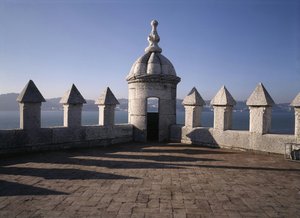
Pplatform of upper terrace/bulwark

1500 · Painting · Wieża Belém, Lizbona

The upper terrace of the bulwark presents a detailed view of the defensive and decorative structures of the Belém Tower in Lisbon, Portugal. This composition focuses on the stone architecture of the fortification, specifically the elevated platform designed for military observation and defense. Two prominent towers with domed tops anchor the scene, their surfaces rendered with the weight and texture of Lioz limestone. Figures are positioned within the space, providing…

5
Stairs leading to the basement/storage room (1500) autorstwa Francisco De Arruda

Stairs leading to the basement/storage room

1500 · Painting · Wieża Belém, Lizbona

In the quiet, shadowed corners of architectural history, few images evoke as much profound mystery as the stone staircase leading toward the depths of the Tower of Belém. This evocative depiction captures a moment frozen in time, where the cold, weathered limestone steps serve as a threshold between the light of the world and the heavy silence of the subterranean. The composition draws the eye downward, inviting the viewer to…

Obrazy artysty Francisco De Arruda, uszeregowane od 11 do 27 miejsca

Tematy, które przyciągnęły wzrok Francisco De Arruda

Cztery motywy najczęściej powracające w tych oryginałach, z których każdy doczekał się swojego najdoskonalszego przykładu.

Muzea przechowujące oryginały Francisco De Arruda

Muzeum, w którym znajduje się najwięcej obrazów prezentowanych na tej stronie.

Muzea Miasto Dzieła artysty Francisco De Arruda Obrazy z tej listy
Wieża Belém, LizbonaWieża Belém Lizbona 27 Belém Tower - northern wall, Belém Tower - eastern and western entrances, Belém Tower - aerial view

Francisco De Arruda, flagowe dzieła każdego roku

Każde oryginalne dzieło Francisco De Arruda z datą powstania 1500 znajduje się na tej stronie: oto one, zaczynając od najsłynniejszych.

Dzieła według lat

Wybierz rok, aby zobaczyć oryginały.

Obrazy artysty Francisco De Arruda: odpowiedzi galerii

Który obraz Francisco De Arruda jest najsłynniejszy ze wszystkich?Odkryj odpowiedź

Belém Tower - northern wall (1500), Wieża Belém, Lizbona. Następne są Belém Tower - eastern and western entrances (1500) oraz Belém Tower - aerial view (1500).

Które to 10 najlepszych obrazów Francisco De Arruda?Odkryj odpowiedź

Belém Tower - northern wall, Belém Tower - eastern and western entrances, Belém Tower - aerial view, Pplatform of upper terrace/bulwark, Stairs leading to the basement/storage room, Bulwark (interior), Belém Tower - detail from balcony, Belém Tower - detail from balcony, Belém Tower - detail from drawbridge i Belém Tower - detail from south facing balcony. Powyższy ranking zawiera rok powstania oraz muzeum dla każdego z nich.

Ile dzieł stworzył/a Francisco De Arruda?Odkryj odpowiedź

Nasz katalog zawiera 27 dzieł autorstwa Francisco De Arruda.

Gdzie można znaleźć najsłynniejsze oryginały autorstwa Francisco De Arruda?Odkryj odpowiedź

W większości znajdują się w Wieża Belém (Lizbona). Powyższa tabela muzeów zawiera ich pełną listę.

Kiedy Francisco De Arruda stworzył swoje najsłynniejsze obrazy?Odkryj odpowiedź

W 1500: 26 z 27 dzieł na tej stronie powstało w tym czasie, w tym Belém Tower - northern wall.

Do jakich tematów Francisco De Arruda powracał najczęściej?Odkryj odpowiedź

Architecture (5), Fortress (3) i Belém tower (2), w ramach 27 dzieł na tej stronie.

W jakiej technice najczęściej tworzył Francisco De Arruda?Odkryj odpowiedź

Painting, dla 4 z 27 dzieł na tej stronie.

Z jakim nurtem związany jest Francisco De Arruda?Odkryj odpowiedź

Manueline, sądząc po oryginałach na tej stronie.

Które oryginały artysty Francisco De Arruda znajdują się w zbiorach Wieża Belém?Odkryj odpowiedź

Belém Tower - northern wall, Belém Tower - eastern and western entrances i Belém Tower - aerial view: Wieża Belém, Lizbona posiada 27 dzieł widocznych na tej stronie.

Francisco De Arruda: artysta

The Architect of Portugal’s Golden Age

Francisco de Arruda stands as a pivotal figure in the grand tapestry of Portuguese architectural history, a master builder whose hands helped shape the very identity of a nation at the height of its maritime dominion. Emerging during the sixteenth century, Arruda became one of the most influential proponents of the Manueline style—a uniquely opulent and exuberant fusion of Gothic grandeur and Renaissance humanism. This aesthetic, characterized by intricate ornamentation and naturalistic motifs, served as a visual language for Portugal’s Age of Discovery, reflecting the wealth, power, and global reach of the Portuguese crown under King Manuel I.

Born into a noble family steeped in architectural tradition, Francisco was not an isolated talent but part of a formidable lineage of creators. He was the younger brother of the celebrated architect Diogo de Arruda, and together with their father, Miguel de Arruda, they formed a familial nucleus of craftsmanship. This shared heritage ensured that the brothers would become instrumental in transforming the Portuguese landscape. While much of his early life remains shrouded in the mists of history, it is believed he hailed from the Alentejo region, a territory where many of his most enduring structural legacies still stand as silent witnesses to his genius.

A Legacy Carved in Stone and Sea

The true brilliance of Francisco de Arruda lies in his ability to synthesize disparate cultural influences into a cohesive, breathtaking whole. His work was deeply informed by the soaring arches of the Gothic tradition, yet it breathed with the new, humanist ideals emerging from Italy. Furthermore, his travels to North Africa to construct fortifications in Morocco introduced a subtle Moorish influence to his repertoire, adding a layer of complexity and exoticism to his designs. This ability to blend local traditions with international currents allowed him to create structures that were both profoundly Portuguese and cosmopolitically aware.

His most enduring achievement, and perhaps the most iconic symbol of Portugal’s maritime soul, is the Belém Tower in Lisbon. Constructed between 1514 and 1519, this UNESCO World Heritage Site is a masterpiece of military architecture and decorative art. In the tower's stone carvings, one can observe the quintessential elements of the Manueline style: maritime symbols, ropes, and organic forms that evoke the spirit of the great explorers who departed from these very shores. Beyond this monumental fortification, his hand can be seen in several other vital structures:

  • The Belém Tower: A breathtaking sentinel of the Tagus River, embodying the strength and elegance of the Portuguese maritime empire.
  • Aqueduto da Água de Prata: An impressive feat of engineering in Évora that demonstrates his mastery over large-scale hydraulic architecture.
  • Fortifications of the Alentejo: His early work repairing the forts at Moura, Mourao, and Portel, which laid the foundation for his reputation as a premier military architect.
  • Church of Nossa Senhora da Assunção: A significant religious structure in Elvas that showcases his ability to blend sacred space with architectural grandeur.

The Enduring Echo of a Master

Though Francisco de Arruda passed away on November 30, 1547, his influence did not vanish with his death. His architectural language paved the way for future generations, including his son Miguel de Arruda, who carried the family's tradition of building into the colonies of Brazil and Mozambique. The structural innovations introduced by Francisco helped cement Portugal's reputation as a beacon of artistic innovation in Europe, creating a lasting aesthetic that remains inseparable from the nation's historical identity.

To study the works of Arruda is to walk through the very heart of the Portuguese Renaissance. His buildings are more than mere stone and mortar; they are poetic expressions of an era defined by curiosity, courage, and conquest. Through his mastery of the Manueline style, he captured the ephemeral glory of the Age of Discovery and rendered it permanent, ensuring that the spirit of Portugal's golden age would endure long after the great caravels had returned to port.