Portret Elliott Daingerfield

49 najsłynniejszych obrazów artysty Elliott Daingerfield, każdy niepowtarzalny

Aktualizacja: Listopad 2026 · ranking według naszego wskaźnika popularności (liczba wyszukiwań, wizyt i zamówień dla każdego dzieła) · 57 dzieł Elliott Daingerfield w naszym katalogu

W skrócie

Grand Canyon, Moonlight (1913) to obraz autorstwa Elliott Daingerfield, który przyciąga najwięcej spojrzeń. Następnie wzrok kieruje się na Monk Smelling a Bottle of Wine (1880) i Sunset Hour (1893). Spośród 57 dzieł Elliott Daingerfield w naszym katalogu, tych 49 jest najbardziej znanych – każde z nich to unikatowy oryginał, przedstawiony wraz z rokiem powstania, muzeum oraz powodem, dla którego przetrwało próbę czasu.

1859 – 1932, Harpers Ferry Najwięcej dzieł: The Johnson Collection

10 najlepszych obrazów autorstwa Elliott Daingerfield według oka galerii

1
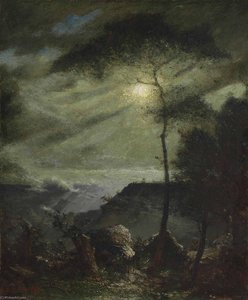
Grand Canyon, Moonlight (1913) autorstwa Elliott Daingerfield

Grand Canyon, Moonlight

1913 · Oil On Canvas

Grand Canyon, Moonlight is a work by Elliott Daingerfield. Created in 1913, the painting emerged during a period of significant travel for the artist, who explored the American West in 1911 and 1913. This specific piece is one of seven paintings the artist produced of the Grand Canyon.

2
Monk Smelling a Bottle of Wine (1880) autorstwa Elliott Daingerfield

Monk Smelling a Bottle of Wine

1880 · Oil On Canvas

In "Monk Smelling a Bottle of Wine" by Elliott Daingerfield, a young man dressed in the robes of a monk or friar occupies the center of the frame. He is positioned within a dark, shadowy setting that obscures the background. The figure holds several bottles, appearing to drink from one as he engages in a solitary activity. The composition remains relatively simple, focusing the viewer's attention on the man and…

3
Sunset Hour (1893) autorstwa Elliott Daingerfield

Sunset Hour

1893 · Oil On Canvas · The Johnson Collection, Spartanburg County

A seated woman and a small child occupy the foreground of this 1893 oil on canvas, sheltered beneath the heavy, spreading canopy of a dark tree. The composition centers on their stillness, a moment of rest amidst a rural landscape. Earthy tones dominate the scene, from the deep greens of the meadow to the muted browns and greys of the figures' clothing. On the horizon, a striking red sun provides…

Słynne obrazy artysty Elliott Daingerfield, od 11 do 49

Tematy, które przyciągnęły wzrok Elliott Daingerfield

Cztery motywy najczęściej powracające w tych oryginałach, z których każdy doczekał się swojego najdoskonalszego przykładu.

Muzea przechowujące oryginały Elliott Daingerfield

8 muzeów, w których znajduje się najwięcej obrazów z tej strony.

Muzea Miasto Dzieła artysty Elliott Daingerfield Obrazy z tej listy
The Johnson Collection Spartanburg County 3 Sunset Hour, Springtime, Troubled Waters
The Mint Museum, CharlotteThe Mint Museum Charlotte 3 Call of the Winds, Moonlight, Cornelia Vanderbilt
Smithsonian American Art Museum, WaszyngtonSmithsonian American Art Museum Waszyngton 2 Bringing home the new born lamb, Return from the Farm
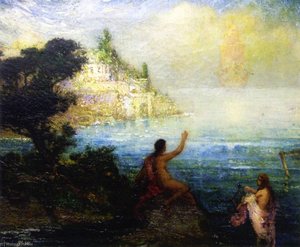
Morris Museum of Art Location, AugustaMorris Museum of Art Location Augusta 2 The Genius of the Canyon, A Fantasy
High Museum of Art, AtlantaHigh Museum of Art Atlanta 1 Tanagra
Metropolitan Museum of Art, Nowy JorkMetropolitan Museum of Art Nowy Jork 1 Slumbering Fog
Mint Museums, CharlotteMint Museums Charlotte 1 Landscape with Green Mountain
Reading Public Museum, ReadingReading Public Museum Reading 1 Mountain Country

Elliott Daingerfield na przestrzeni dekad: jeden unikatowy oryginał dla każdego

Dzieła według dekad

Wybierz dekadę, aby zobaczyć dzieło, które ją definiuje.

Obrazy artysty Elliott Daingerfield: pytania do galerii

Jakie jest najsłynniejsze dzieło artysty Elliott Daingerfield?Odkryj odpowiedź

Grand Canyon, Moonlight (1913). Następne są Monk Smelling a Bottle of Wine (1880) oraz Sunset Hour (1893).

W jakim wieku Elliott Daingerfield stworzył/a Grand Canyon, Moonlight?Odkryj odpowiedź

54 lat: Grand Canyon, Moonlight pochodzi z 1913, a Elliott Daingerfield urodził(a) się w 1859.

Które dziesięć obrazów Elliott Daingerfield jest najbardziej znanych?Odkryj odpowiedź

Grand Canyon, Moonlight, Monk Smelling a Bottle of Wine, Sunset Hour, Shepherdess, Flowers, Bringing home the new born lamb, The Drover, Home and Harvest, My Lady Rhododendron i Tanagra. Powyższy ranking zawiera rok powstania oraz muzeum dla każdego z nich.

Ile znanych dzieł stworzył Elliott Daingerfield?Odkryj odpowiedź

Nasz katalog zawiera 57 dzieł artysty Elliott Daingerfield, datowanych od 1880 do 1927.

Gdzie można zobaczyć najsłynniejsze oryginały Elliott Daingerfield?Odkryj odpowiedź

W większości znajdują się w The Johnson Collection (Spartanburg County), The Mint Museum (Charlotte) i Smithsonian American Art Museum (Waszyngton). Powyższa tabela muzeów zawiera ich pełną listę.

W jakim okresie Elliott Daingerfield stworzył/a swoje najsłynniejsze obrazy?Odkryj odpowiedź

W 1910s: 13 z 49 dzieł na tej stronie powstało w tym czasie, w tym Grand Canyon, Moonlight.

Który z najsłynniejszych obrazów artysty Elliott Daingerfield powstał najwcześniej, a który najpóźniej?Odkryj odpowiedź

Na tej stronie najwcześniejszy to Monk Smelling a Bottle of Wine (1880), a najpóźniejszy Springtime (1927).

Jakich materiałów Elliott Daingerfield używał najczęściej?Odkryj odpowiedź

Oil On Canvas, dla 3 z 49 dzieł na tej stronie.

Jakie oryginały Elliott Daingerfield można zobaczyć w The Johnson Collection?Odkryj odpowiedź

Sunset Hour, Springtime i Troubled Waters: The Johnson Collection, Spartanburg County posiada 3 dzieł widocznych na tej stronie.

Elliott Daingerfield: portret artysty

The Visionary Spirit of Elliott Daingerfield

Elliott Daingerfield stands as one of North Carolina’s most celebrated and evocative artists, a painter whose work bridged the gap between the tangible beauty of the American landscape and the profound depths of spiritual symbolism. Born in 1859 in Harpers Ferry, West Virginia, to a Confederate officer, Daingerfield’s early life was shaped by the rugged landscapes of his youth in Fayetteville, North Carolina. This deep-seated connection to the natural world would later become the foundation of his artistic language, providing him with an endless reservoir of inspiration for his sweeping vistas and luminous compositions.

His journey into the heart of the American art establishment began at the age of twenty-one when he moved to New York City. It was here that Daingerfield’s formal training took root under the guidance of Walter Satterlee, an apprenticeship that not only introduced him to the delicate nuances of still life painting but also placed him within a vibrant circle of influential masters. The shadows and light of his early studies were profoundly transformed by his encounters with titans such as George Inness and Albert Pinkham Ryder. These luminaries, along with the burgeoning influence of European Symbolism which he encountered during his travels abroad around 1897, guided him toward a visionary style. His work began to transcend mere representation, moving toward an expressive mode where color palettes became more luminous and brushwork more meticulous, designed to convey unseen spiritual truths.

A Legacy of Light and Devotion

As his career matured, Daingerfield achieved significant recognition within the prestigious National Academy of Design, ascending from an associate member in 1902 to full membership by 1906. This era marked his emergence as a master of religious and monumental art. His ability to weave narrative and emotion into large-scale works was perhaps most brilliantly demonstrated in his impactful commissions for sacred spaces, most notably the monumental mural adorning Saint Mary the Virgin Church in New York City. In these works, Daingerfield utilized a dramatic interplay of light and shadow to tell stories of faith, much like his more intimate pieces such as Monk Smelling a Bottle of Wine, which explores the delicate tension between indulgence and devotion.

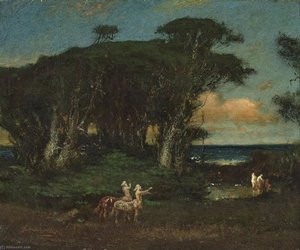
Beyond the confines of religious iconography, Daingerfield’s fascination with the grandeur of the American wilderness led him to remarkable heights. His travels to the American West in 1911 and 1913 resulted in a series of breathtaking paintings of the Grand Canyon, where he captured the geological majesty of the landscape through a Romantic lens. Whether depicting a moonlit forest in A Fantasy or the melancholic beauty of a young girl in Shepherdess, his oeuvre is characterized by an impasto texture and an evocative mood that invites the viewer into a dreamlike state.

Daingerfield’s contribution to American art extends beyond the canvas; he was also a dedicated scholar and biographer, documenting the lives of his contemporaries like George Inness and Ralph Albert Blakelock. His life, marked by both personal tragedy and immense professional triumph, concluded in Manhattan in 1932. Today, his legacy remains etched in the landscapes of North Carolina and the halls of museums worldwide, reminding us of a time when art served as a profound window into the soul of nature.