Portret Elihu Vedder

Obrazy: 100 najsłynniejszych dzieł artysty Elihu Vedder – spojrzenie galerii

Aktualizacja: Listopad 2026 · ranking według naszego wskaźnika popularności (liczba wyszukiwań, wizyt i zamówień dla każdego dzieła) · 119 dzieł Elihu Vedder w naszym katalogu

W skrócie

Według opinii kuratorów galerii, najsłynniejszym obrazem Elihu Vedder jest (Illustration for Rubáiyát of Omar Khayyám) The Cup of Death (1884), którego oryginał znajduje się w Smithsonian American Art Museum w Waszyngton. (Illustration for Rubáiyát of Omar Khayyám) The Bitter Cup (1884) i A Glimpse into Hell, or Fear (1893) dopełniają trio, które zna każde oko. Z 119 dzieł Elihu Vedder w naszym katalogu, galeria prezentuje poniżej 100 najsłynniejszych prac – każda z nich jest oryginałem z podaniem roku powstania, muzeum oraz cech wyróżniających ją na tle innych.

1836 – 1923, Nowy Jork Symbolism Najwięcej dzieł: Metropolitan Museum of Art

10 najlepszych obrazów artysty Elihu Vedder w galerii

1
(Illustration for Rubáiyát of Omar Khayyám) The Cup of Death (1884) autorstwa Elihu Vedder

(Illustration for Rubáiyát of Omar Khayyám) The Cup of Death

1884 · Acrylic On Canvas · Smithsonian American Art Museum, Waszyngton

Elihu Vedder’s Illustration for Rubáiyát of Omar Khayyám, subtitled "The Cup of Death," captures a scene so tender, it feels lifted directly from a whispered secret. This painting is not merely a depiction of two figures; it is an exquisite meditation on connection, devotion, and the quiet moments that define a life shared. The composition centers on a man bending with profound tenderness to kiss the forehead of a woman…

2
(Illustration for Rubáiyát of Omar Khayyám) The Bitter Cup (1884) autorstwa Elihu Vedder

(Illustration for Rubáiyát of Omar Khayyám) The Bitter Cup

1884 · Acrylic On Canvas · Smithsonian American Art Museum, Waszyngton

Elihu Vedder’s “The Bitter Cup,” a watercolor illustration accompanying Edward FitzGerald’s translation of Omar Khayyam’s *Rubaiyat*, is more than just a depiction of a simple vessel; it’s a profound meditation on mortality, beauty, and the ephemeral nature of existence. Created in 1884, this piece captures a pivotal moment within the collection – a contemplative pause amidst the verses that grapple with life's fleeting pleasures and inevitable sorrows. The artwork resides…

3
A Glimpse into Hell, or Fear (1893) autorstwa Elihu Vedder

A Glimpse into Hell, or Fear

1893 · Oil On Canvas · Art Institute of Chicago, Chicago

A tight arc of faces presses against the viewer, trapped within a lunette shape that denies any escape. Five female figures crowd the foreground, their skin pale against a backdrop of heavy, dark shadows. Their eyes are wide, fixed on something unseen below the frame, reflecting a profound psychological anguish. The light is directional, catching the sharp lines of furrowed brows and the frantic stillness of wide-eyed gazes. It is…

4
The Keeper of the Threshold (1897) autorstwa Elihu Vedder

The Keeper of the Threshold

1897 · Oil On Canvas · Carnegie Museum of Art, Pittsburgh

The Keeper of the Threshold is an oil on canvas painting by Elihu Vedder. The artist, who lived from 1836 to 1923, produced this work between 1897 and 1898. The composition centers on a man seated within a circle.

5
The Lost Mind (1864) autorstwa Elihu Vedder

The Lost Mind

1864 · Oil On Canvas · Metropolitan Museum of Art, Nowy Jork

A lone woman stands amidst a desolate, rocky landscape, her figure centered against a vast, pale blue sky. She is wrapped in a dark cloak and a white cloth that catches the diffused light, creating a stark contrast against the rugged, jagged edges of the cliffs. The earth beneath her feet is a collection of ochre, tan, and brown tones, rendered with visible brushstrokes that give the stones a rough,…

6
Soul in Bondage (1891) autorstwa Elihu Vedder

Soul in Bondage

1891 · Oil On Canvas · Brooklyn Museum, Brooklyn

Soul in Bondage is an oil on canvas painting by the American artist Elihu Vedder. Created between 1891 and 1892, the work reflects the artist's established presence in the international art scene during the late nineteenth century. Vedder, born in 1836, utilized this period to refine a visual language centered on the internal complexities of the human condition.

7
Memory (1870) autorstwa Elihu Vedder

Memory

1870 · Oil On Board · Los Angeles County Museum of Art, Los Angeles

In this 1870 work, titled Memory, Elihu Vedder explores a landscape that feels pulled from the quietest corners of the subconscious. The painting presents a scene where the natural world meets the surreal, featuring a turbulent sky and a dark sea that meet at a sandy shoreline. Within the heavy, dark blue and grey storm clouds, a translucent human face emerges from the mist, appearing to drift through the atmosphere.…

8
The Questioner of the Sphinx (1863) autorstwa Elihu Vedder

The Questioner of the Sphinx

1863 · Oil On Canvas · Museum of Fine Arts, Boston

The shadows of antiquity settle upon The Questioner of the Sphinx, a work that emerges from the hand of Elihu Vedder. Painted about 1863, this piece captures a moment of profound stillness. The artist, an American symbolist painter, book illustrator, and poet, brings a visionary depth to the canvas. His gaze often turned toward the mystical and the unseen, seeking to give form to the intangible through his brush and…

9
Fisherman and the Genie (Sketch) (1863) autorstwa Elihu Vedder

Fisherman and the Genie (Sketch)

1863 · Oil · Museum of Fine Arts, Boston

Elihu Vedder’s Fisherman and the Genie (Sketch) presents an asymmetrical landscape defined by narrative tension. On the left, a dense cluster of dark, gnarled trees anchors the composition, their twisted trunks rendered with expressive, gestural lines. This heavy massing contrasts with the right side of the frame, where a large, rising plume of dark smoke or a mountain-like shape creates a sense of upward movement and depth. The perspective is…

10
Fisherman and the Genie (1863) autorstwa Elihu Vedder

Fisherman and the Genie

1863 · Oil On Canvas · Museum of Fine Arts, Boston

In Fisherman and the Genie, Elihu Vedder explores a moment drawn from the depths of folklore. Created about 1863, this work captures a singular, transformative encounter. The scene focuses on a small, seated fisherman who finds himself dwarfed by the supernatural. He looks upward, his expression caught between awe and fear, as he confronts a presence far beyond the natural order.

Obrazy artysty Elihu Vedder, uszeregowane od 11 do 100 miejsca

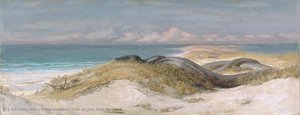
11Study for Prayer for Death in the Desert (1867) autorstwa Elihu VedderStudy for Prayer for Death in the Desert1867 · Brooklyn Museum 12Head of Medusa (1878) autorstwa Elihu VedderHead of Medusa1878 · Detroit Institute of Arts 13Italian Scene: Pompeo, Monte Colognola Landscape (1878) autorstwa Elihu VedderItalian Scene: Pompeo, Monte Colognola Landscape1878 · Rhode Island School of Design Museum of Art 14Young Marsyas (Marsyas Enchanting the Hares) (1878) autorstwa Elihu VedderYoung Marsyas (Marsyas Enchanting the Hares)1878 · Crystal Bridges Museum of American Art 15The Water Nymph (1878) autorstwa Elihu VedderThe Water Nymph1878 16Eugenia: Head of a Roman Girl (1879) autorstwa Elihu VedderEugenia: Head of a Roman Girl1879 · Museum of Fine Arts 17Delilah (1886) autorstwa Elihu VedderDelilah1886 · Detroit Institute of Arts 18Ideal Head — Dawn (1886) autorstwa Elihu VedderIdeal Head — Dawn1886 · Museum of Fine Arts 19Nude (1890) autorstwa Elihu VedderNude1890 · Museum of Fine Arts 20Frivolity (1893) autorstwa Elihu VedderFrivolity1893 · Yale University Art Gallery 21Victory (1893) autorstwa Elihu VedderVictory1893 · Yale University Art Gallery 22Goddess of Fortune Stay With U (1893) autorstwa Elihu VedderGoddess of Fortune Stay With U1893 · Yale University Art Gallery 23Abundance of The Days of the Week (1893) autorstwa Elihu VedderAbundance of The Days of the Week1893 · Yale University Art Gallery 24Music (1893) autorstwa Elihu VedderMusic1893 · Yale University Art Gallery 25Fame (1893) autorstwa Elihu VedderFame1893 · Yale University Art Gallery 26Drama (1893) autorstwa Elihu VedderDrama1893 · Yale University Art Gallery 27Wealth (1893) autorstwa Elihu VedderWealth1893 · Yale University Art Gallery 28Bounty (1893) autorstwa Elihu VedderBounty1893 · Yale University Art Gallery 29Poetry (1893) autorstwa Elihu VedderPoetry1893 · Yale University Art Gallery 30Rome Representative of the Arts (1894) autorstwa Elihu VedderRome Representative of the Arts1894 · Brooklyn Museum 31Head of Minerva (1896) autorstwa Elihu VedderHead of Minerva1896 32Lazarus Rising from the Tomb (1899) autorstwa Elihu VedderLazarus Rising from the Tomb1899 · Museum of Fine Arts 33Music (1910) autorstwa Elihu VedderMusic1910 · New Britain Museum of American Art 34Girl with Poppies (1877) autorstwa Elihu VedderGirl with Poppies1877 · High Museum of Art 35The Fable of the Miller, His Son, and the Donkey No. 1 (1867) autorstwa Elihu VedderThe Fable of the Miller, His Son, and the Donkey No. 11867 · Metropolitan Museum of Art 36Pansies and Spirea (1882) autorstwa Elihu VedderPansies and Spirea1882 · Yale University Art Gallery 37The Fable of the Miller, His Son, and the Donkey No. 4 (1867) autorstwa Elihu VedderThe Fable of the Miller, His Son, and the Donkey No. 41867 · Metropolitan Museum of Art 38The Fable of the Miller, His Son, and the Donkey No. 6 (1867) autorstwa Elihu VedderThe Fable of the Miller, His Son, and the Donkey No. 61867 · Metropolitan Museum of Art 39The Last Man (1886) autorstwa Elihu VedderThe Last Man1886 40The Sun God (1882) autorstwa Elihu VedderThe Sun God1882 · Smithsonian American Art Museum 41The Cup of Death autorstwa Elihu VedderThe Cup of DeathSmithsonian American Art Museum 42The Lair of the Sea Serpent (1864) autorstwa Elihu VedderThe Lair of the Sea Serpent1864 · Museum of Fine Arts 43The Fable of the Miller, His Son, and the Donkey No. 3 (1867) autorstwa Elihu VedderThe Fable of the Miller, His Son, and the Donkey No. 31867 · Metropolitan Museum of Art 44The Venetian Model (1878) autorstwa Elihu VedderThe Venetian Model1878 · Columbus Museum of Art 45Cypress and Poppies (1880) autorstwa Elihu VedderCypress and Poppies1880 · Metropolitan Museum of Art 46Landscape with Sheep and Old Well (1857) autorstwa Elihu VedderLandscape with Sheep and Old Well1857 · Museum of Fine Arts 47Volterra (1860) autorstwa Elihu VedderVolterra1860 · Smithsonian American Art Museum 48Three Trees: Italy (1871) autorstwa Elihu VedderThree Trees: Italy1871 · Cleveland Museum of Art 49Monks on the Appian Way (1865) autorstwa Elihu VedderMonks on the Appian Way1865 · Smithsonian American Art Museum 50Outside Porta San Lorenzo, Rome (1867) autorstwa Elihu VedderOutside Porta San Lorenzo, Rome1867 · New Britain Museum of American Art 51Old White Houses, Vitré, France (1866) autorstwa Elihu VedderOld White Houses, Vitré, France1866 · New York Historical Society 52Roman Campagna, Lago Di Bracciano (1866) autorstwa Elihu VedderRoman Campagna, Lago Di Bracciano1866 · New York Historical Society 53Near Perugia (1870) autorstwa Elihu VedderNear Perugia1870 54The Fable of the Miller, His Son, and the Donkey No. 5 (1867) autorstwa Elihu VedderThe Fable of the Miller, His Son, and the Donkey No. 51867 · Metropolitan Museum of Art 55The Fable of the Miller, His Son, and the Donkey No. 9 (1867) autorstwa Elihu VedderThe Fable of the Miller, His Son, and the Donkey No. 91867 · Metropolitan Museum of Art 56Etruscan Girl (1868) autorstwa Elihu VedderEtruscan Girl1868 57Girl with a Lute (1866) autorstwa Elihu VedderGirl with a Lute1866 58Etruscan Girl with Turtle (1867) autorstwa Elihu VedderEtruscan Girl with Turtle1867 59The Music Party (1871) autorstwa Elihu VedderThe Music Party1871 60The Lonely Spring (1865) autorstwa Elihu VedderThe Lonely Spring1865 61The Roc's Egg (1868) autorstwa Elihu VedderThe Roc's Egg1868 62Hillside Between Perugia and Gubbio, Italy (1867) autorstwa Elihu VedderHillside Between Perugia and Gubbio, Italy1867 63Landscape - Torgiano, Autumn Scene (1877) autorstwa Elihu VedderLandscape - Torgiano, Autumn Scene1877 · Rhode Island School of Design Museum of Art 64The Music Party (1875) autorstwa Elihu VedderThe Music Party1875 · Cleveland Museum of Art 65Storm in Umbria (1875) autorstwa Elihu VedderStorm in Umbria1875 · Art Institute of Chicago 66Waves at Palo (1874) autorstwa Elihu VedderWaves at Palo1874 67The Cumean Sibyl (1876) autorstwa Elihu VedderThe Cumean Sibyl1876 · Detroit Institute of Arts 68Feisole (1859) autorstwa Elihu VedderFeisole1859 · Detroit Institute of Arts 69San Gimignano (1879) autorstwa Elihu VedderSan Gimignano1879 · Metropolitan Museum of Art 70The Cloud, Florence, Sull'Arno, Italy (1885) autorstwa Elihu VedderThe Cloud, Florence, Sull'Arno, Italy1885 · New York Historical Society 71Roman Model Posing (1881) autorstwa Elihu VedderRoman Model Posing1881 72The Cup of Death (1885) autorstwa Elihu VedderThe Cup of Death1885 73Japanese Still Life (1879) autorstwa Elihu VedderJapanese Still Life1879 · Los Angeles County Museum of Art 74Sphinx, Egypt (1890) autorstwa Elihu VedderSphinx, Egypt1890 · Pennsylvania Academy of Fine Arts 75Egyptian Nile (1890) autorstwa Elihu VedderEgyptian Nile1890 76The Etruscan Sorceress (1886) autorstwa Elihu VedderThe Etruscan Sorceress1886 77Fisherman and Mermaid (1888) autorstwa Elihu VedderFisherman and Mermaid1888 · Fogg Art Museum 78The Poet Bears the Sorrows of the World (1890) autorstwa Elihu VedderThe Poet Bears the Sorrows of the World1890 · Georgia Museum of Art 79Soul in Bondage (1891) autorstwa Elihu VedderSoul in Bondage1891 · Museum of Fine Arts 80Sibilia Cumaea (1898) autorstwa Elihu VedderSibilia Cumaea1898 81The Morning Glory (1899) autorstwa Elihu VedderThe Morning Glory1899 · Museum of Fine Arts 82The Fable of the Miller, His Son, and the Donkey No. 8 (1867) autorstwa Elihu VedderThe Fable of the Miller, His Son, and the Donkey No. 81867 · Metropolitan Museum of Art 83Sea Breeze (1899) autorstwa Elihu VedderSea Breeze1899 84Marsyas Enchanting the Hares (1899) autorstwa Elihu VedderMarsyas Enchanting the Hares1899 85Head of a Young Woman (1900) autorstwa Elihu VedderHead of a Young Woman1900 86The Old Well, Bordighera (1899) autorstwa Elihu VedderThe Old Well, Bordighera1899 87Color Sketch for Crown of Thorns autorstwa Elihu VedderColor Sketch for Crown of ThornsReading Public Museum 88Sketch for End of Story of the Fisherman's Mermaid autorstwa Elihu VedderSketch for End of Story of the Fisherman's MermaidReading Public Museum 89The lost mind autorstwa Elihu VedderThe lost mind 90The pleiades autorstwa Elihu VedderThe pleiadesMetropolitan Museum of Art 91The african sentinel autorstwa Elihu VedderThe african sentinelMetropolitan Museum of Art 92The cup of love autorstwa Elihu VedderThe cup of loveMetropolitan Museum of Art 93Study for the question of the sphinx autorstwa Elihu VedderStudy for the question of the sphinx 94The fable of the miller his son and the donkey no autorstwa Elihu VedderThe fable of the miller his son and the donkey no 95Little Shrine, Subiaco, Italy autorstwa Elihu VedderLittle Shrine, Subiaco, Italy 96Study of Jane Jackson autorstwa Elihu VedderStudy of Jane Jackson 97Elements Gazing on the First Man (1913) autorstwa Elihu VedderElements Gazing on the First Man1913 98The Fates Gathering in the Stars (1887) autorstwa Elihu VedderThe Fates Gathering in the Stars1887 · Art Institute of Chicago 99Lair of the Sea Serpent (1899) autorstwa Elihu VedderLair of the Sea Serpent1899 · Metropolitan Museum of Art 100The Fable of the Miller, His Son, and the Donkey No. 2 (1867) autorstwa Elihu VedderThe Fable of the Miller, His Son, and the Donkey No. 21867 · Metropolitan Museum of Art

Słynne obrazy Elihu Vedder epoka po epoce

Tematy, które przyciągnęły wzrok Elihu Vedder

Cztery motywy najczęściej powracające w tych oryginałach, z których każdy doczekał się swojego najdoskonalszego przykładu.

Muzea przechowujące oryginały Elihu Vedder

8 muzeów, w których znajduje się najwięcej obrazów z tej strony.

Muzea Miasto Dzieła artysty Elihu Vedder Obrazy z tej listy
Metropolitan Museum of Art, Nowy JorkMetropolitan Museum of Art Nowy Jork 18 The Lost Mind, The Fable of the Miller, His Son, and the Donkey No. 1, The Fable of the Miller, His Son, and the Donkey No. 4
Yale University Art Gallery, Nowe HavaneYale University Art Gallery Nowe Havane 11 Frivolity, Victory, Goddess of Fortune Stay With U
Museum of Fine Arts, BostonMuseum of Fine Arts Boston 10 The Questioner of the Sphinx, Fisherman and the Genie (Sketch), Fisherman and the Genie
Smithsonian American Art Museum, WaszyngtonSmithsonian American Art Museum Waszyngton 7 (Illustration for Rubáiyát of Omar Khayyám) The Cup of Death, (Illustration for Rubáiyát of Omar Khayyám) The Bitter Cup, The Sun God
Detroit Institute of Arts, DetroitDetroit Institute of Arts Detroit 4 Head of Medusa, Delilah, The Cumean Sibyl
Art Institute of Chicago, ChicagoArt Institute of Chicago Chicago 3 A Glimpse into Hell, or Fear, Storm in Umbria, The Fates Gathering in the Stars
Brooklyn Museum, BrooklynBrooklyn Museum Brooklyn 3 Soul in Bondage, Study for Prayer for Death in the Desert, Rome Representative of the Arts
New York Historical Society, Nowy JorkNew York Historical Society Nowy Jork 3 Old White Houses, Vitré, France, Roman Campagna, Lago Di Bracciano, The Cloud, Florence, Sull'Arno, Italy

Elihu Vedder, jedno kultowe dzieło na dekadę

Dzieła według dekad

Wybierz dekadę, aby zobaczyć dzieło, które ją definiuje.

Obrazy artysty Elihu Vedder: odpowiedzi galerii

Który obraz Elihu Vedder jest najsłynniejszy ze wszystkich?Odkryj odpowiedź

(Illustration for Rubáiyát of Omar Khayyám) The Cup of Death (1884), Smithsonian American Art Museum, Waszyngton. Następne są (Illustration for Rubáiyát of Omar Khayyám) The Bitter Cup (1884) oraz A Glimpse into Hell, or Fear (1893).

Ile lat miał Elihu Vedder, gdy ukończył (Illustration for Rubáiyát of Omar Khayyám) The Cup of Death?Odkryj odpowiedź

48 lat: (Illustration for Rubáiyát of Omar Khayyám) The Cup of Death pochodzi z 1884, a Elihu Vedder urodził(a) się w 1836.

Które to 10 najlepszych obrazów Elihu Vedder?Odkryj odpowiedź

(Illustration for Rubáiyát of Omar Khayyám) The Cup of Death, (Illustration for Rubáiyát of Omar Khayyám) The Bitter Cup, A Glimpse into Hell, or Fear, The Keeper of the Threshold, The Lost Mind, Soul in Bondage, Memory, The Questioner of the Sphinx, Fisherman and the Genie (Sketch) i Fisherman and the Genie. Powyższy ranking zawiera rok powstania oraz muzeum dla każdego z nich.

Ile dzieł stworzył/a Elihu Vedder?Odkryj odpowiedź

Nasz katalog zawiera 119 dzieł artysty Elihu Vedder, datowanych od 1857 do 1913.

Gdzie można znaleźć najsłynniejsze oryginały autorstwa Elihu Vedder?Odkryj odpowiedź

W większości znajdują się w Metropolitan Museum of Art (Nowy Jork), Yale University Art Gallery (Nowe Havane) i Museum of Fine Arts (Boston). Powyższa tabela muzeów zawiera ich pełną listę.

Kiedy Elihu Vedder stworzył swoje najsłynniejsze obrazy?Odkryj odpowiedź

W 1890s: 27 z 100 dzieł na tej stronie powstało w tym czasie, w tym A Glimpse into Hell, or Fear.

Które z najsłynniejszych dzieł Elihu Vedder należą do jego najwcześniejszych i najpóźniejszych prac?Odkryj odpowiedź

Na tej stronie najwcześniejszy to Landscape with Sheep and Old Well (1857), a najpóźniejszy Elements Gazing on the First Man (1913).

Do jakich tematów Elihu Vedder powracał najczęściej?Odkryj odpowiedź

Woman (19), Ribbons (10) i Drapery (9), w ramach 100 dzieł na tej stronie.

W jakiej technice najczęściej tworzył Elihu Vedder?Odkryj odpowiedź

Oil On Canvas, dla 28 z 100 dzieł na tej stronie.

Z jakim nurtem związany jest Elihu Vedder?Odkryj odpowiedź

Symbolism, sądząc po oryginałach na tej stronie.

Które oryginały artysty Elihu Vedder znajdują się w zbiorach Metropolitan Museum of Art?Odkryj odpowiedź

The Lost Mind, The Fable of the Miller, His Son, and the Donkey No. 1 i The Fable of the Miller, His Son, and the Donkey No. 4: Metropolitan Museum of Art, Nowy Jork posiada 15 dzieł widocznych na tej stronie.

Elihu Vedder: artysta

Wczesne lata i artystyczne kształcenie

  • Urodzony: 26 lutego 1836, Nowy Jork, Stany Zjednoczone
  • Zmarł: 2bul 29 stycznia 1923, Rzym, Włochy

Elijah Vedder przyszedł na świat w rodzinie o niezwykłych okolicznościach – jego rodzice byli kuzynami. Jego wczesne lata zostały ukształtowane przez różnorodne doświadczenia, w tym czas spędzony na Kubie w związku z przeprowadzką ojca, oraz okresy spędzane między domem dziadka ze strony matki w Schenectady a szkołą z internatem. Mimo początkowych zastrzeżeń ojca, artystyczne ambicje Veddera znajdowały wsparcie w miłości jego matki.

  • Wczesna edukacja: Vedder rozpoczął formalne kształcenie w Nowym Jorku pod okiem Tompkinsa H. Mattesona.
  • Studia europejskie: Kontynuował naukę w Paryżu u François-Édouarda Picot, a później we Włoszech, gdzie doznał głębokiego wpływu włoskiego renesansu oraz malarzy z kręgu Macchiaioli.
  • Włoskie inspiracje: Pobyt we Włoszech zaowocował głęboką więzią emocjonalną z malarzem Giovanni Costą, co prowadziło do wspólnych podróży, zanim ograniczenia finansowe zmusiły artystę do powrotu do Ameryki.

Najważniejsze momenty w karierze i wybitne dzieła

Kariera Veddera obejmowała różnorodne dyscyplynę artystyczne, od malarstwa i ilustracji, po projektowanie fresków i poezję. Artysta pielęgnował przyjaźnie z tak znamienitymi postaciami jak Walt Whitman czy Herman Melville.

  • Ilustracje do Rubaiyat: Vedder jest najbardziej znany ze swoich pięćdziesięciu pięciu ilustracji towarzyszących tłumaczeniu Rubaiyat Omara Khayyama autorstwa Edwarda FitzGeralda (w wydaniu deluxe). Te grafiki uznawane są za arcydzieła sztuki symbolistycznej.
  • Wizjonerskie malarstwo: Do jego najbardziej znaczących płócien należą „Jajo Roka”, „Rybak i Genii” oraz „Legowisko morskiego potwora”, które ukazują jego wizjonerski styl i niezwykle bogatą wyobraźnię.
  • Prace muralowe: Artysta zdobił malowidłami ściennymi korytarz w Czytelni Biblioteki Kongresu w Waszyngtonie.
  • Współpraca z Tiffany: Vedder współpracował z Louisem Comfortem Tiffanyem, projektując szkło, mozaiki oraz figurki dla słynnej firmy Tiffany.

Styl artystyczny i inspiracje

Styl artystyczny Vedder charakteryzuje się wizjonerską naturą, romantyczną obrazowością oraz częstym wprowadzaniem wpływów orientalnych.

  • Symbolizm: Vedder był kluczową postacią ruchu symbolistycznego, kładąc nacisk na emocje i indywidualizm ponad surowy realizm.
  • Prerafaelici: Pobyt w Anglii zetknął go z Bractwem Przedrafaelitów, co wpłynęło na jego styl w stronę większej klarowności i dbałości o detal.
  • Angielscy i irlandzcy mistycy: Czerpał inspirację z dzieł Williama Blake'a oraz Williama Butlera Yeatsa, co odzwierciedlało jego fascynację mistycyzmem i duchowością.
  • Włoski renesans i Macchiaioli: Jego studia we Włoszech ukształtowały jego rozumienie formy, koloru oraz kompozycji.

Dziedzictwo i późniejsze lata życia

Wkład Vedder w sztukę amerykańską wykraczał poza malarstwo. Pomógł założyć grupę In Arte Libertas we Włoszech i pozostawił po sobie bogaty dorobek literacki, obejmujący refleksje autobiograficzne oraz poezję.

  • Przynależność: Vedder był członkiem American Academy of Arts and Letters.
  • Działalność literacka: Publikował dzieła takie jak The Digressions of V (1910), Miscellaneous Moods in Verse (1914) oraz Doubt and Other Things (1922).
  • Późne lata: Swoje późniejsze lata spędzał głównie we Włoszech, nieustannie tworząc sztukę i pisząc aż do śmierci w Rzymie w 1923 roku. Jego dziedzictwo trwa dzięki poruszającym obrazom i ilustracjom, które do dziś zachwycają odbiorców.