Portret Edward Sheriff Curtis

87 najsłynniejszych obrazów artysty Edward Sheriff Curtis – wybór z galerii

Aktualizacja: Listopad 2026 · ranking według naszego wskaźnika popularności (liczba wyszukiwań, wizyt i zamówień dla każdego dzieła) · 87 dzieł Edward Sheriff Curtis w naszym katalogu

W skrócie

Z wszystkich oryginałów pozostawionych przez Edward Sheriff Curtis, najsłynniejszym jest A Corner of Zuni (1903). Tuż za nimi znajdują się Untitled (AQU46T) (1926) oraz Untitled (AQU445) (1926). Nasz katalog zawiera 87 dzieł autorstwa Edward Sheriff Curtis; galeria zachowała 87 najbardziej podziwianych na świecie prac, z których każda została przedstawiona wraz z datą powstania, informacją o muzeum oraz jej historią.

1868 – 1952, Whitewater Documentary photography Najwięcej dzieł: Los Angeles County Museum of Art

10 najlepszych obrazów artysty Edward Sheriff Curtis: wybór galerii

1
A Corner of Zuni (1903) autorstwa Edward Sheriff Curtis

A Corner of Zuni

1903 · Photogravure

A Corner of Zuni is a photographic work by the artist Edward Sheriff Curtis. Created in 1903, this image captures a specific architectural subject within a Southwestern landscape. The composition focuses on the structural details of an adobe dwelling and the immediate terrain surrounding the building.

2
Untitled (AQU46T) (1926) autorstwa Edward Sheriff Curtis

Untitled (AQU46T)

1926 · Photography

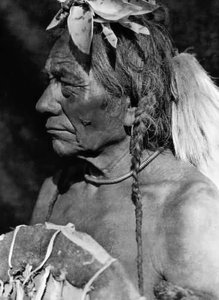
Untitled (AQU46T) is a portrait photograph by Edward Sheriff Curtis, dating to 1926. The work captures an Indigenous man in a formal, documentary style. It is a monochromatic silver gelatin print that focuses on the subject's face and upper torso.

3
Untitled (AQU445) (1926) autorstwa Edward Sheriff Curtis

Untitled (AQU445)

1926 · Black and White Photography

Untitled (AQU445) is a portrait by Edward Sheriff Curtis. The image captures an Indigenous man in a moment of quietude. It was produced in 1926. The man’s face is the center of this study, a landscape of skin and shadow. He exists within the frame as a singular presence, his gaze turned downward toward an unseen point.

4
Untitled (AQU44H) (1923) autorstwa Edward Sheriff Curtis

Untitled (AQU44H)

1923 · Black and White Photography

Untitled (AQU44H) by Edward Sheriff Curtis is a black and white photograph from about 1923. The image depicts a Native American man positioned in the middle ground of the frame. He stands upon a rock within a river, holding a spear. The man's vertical posture and the spear create a strong central axis that anchors the composition. This arrangement results in a roughly symmetrical structure. The river flows horizontally across…

5
Untitled (AQU45Z) (1928) autorstwa Edward Sheriff Curtis

Untitled (AQU45Z)

1928 · Black and White Photography

Untitled (AQU45Z) is a photographic work by Edward Sheriff Curtis. The image was captured in 1928. It exists as a silver gelatin print, a quiet fragment of a life spent documenting the American West.

6
Untitled (AQU47D) (1927) autorstwa Edward Sheriff Curtis

Untitled (AQU47D)

1927 · Gelatin Silver Print

The photographic portrait titled Untitled (AQU47D) was produced by the artist Edward Sheriff Curtis in 1927. This work is a black and white image that captures a Native American woman in a medium close-up view. She is positioned facing forward, cradling an infant within her arms. The child is wrapped in a woven carrier or blanket.

7
Untitled (AQU467) (1926) autorstwa Edward Sheriff Curtis

Untitled (AQU467)

1926 · Photography

Untitled (AQU467) is a photographic portrait by Edward Sheriff Curtis. Created in 1926, the work captures a single Native American man, likely from the Plains tribes. The subject is presented in a formal studio setting, his presence defined by a direct and steady gaze.

8
Untitled (AQU469) (1926) autorstwa Edward Sheriff Curtis

Untitled (AQU469)

1926 · Black and White Photography

Untitled (AQU469) is a vintage black and white portrait by Edward Sheriff Curtis, dated 1926. The work presents a formal studio photograph of a young woman, captured during the height of the artist's documentation of Indigenous cultures in the American West.

9
Untitled (AQU44X) (1924) autorstwa Edward Sheriff Curtis

Untitled (AQU44X)

1924 · Black and White Photography

Untitled (AQU44X) is a photographic work by Edward Sheriff Curtis. Created in 1924, this image was part of the monumental publication The North American Indian, a series released between 1907 and 1930. The work emerged from Curtis's extensive documentation of Indigenous cultures and traditions across the American West.

10
Untitled (AQU45T) (1926) autorstwa Edward Sheriff Curtis

Untitled (AQU45T)

1926 · Photography

This work is titled Untitled (AQU45T) and was created by the artist Edward Sheriff Curtis. The piece is dated 1926. It is a photographic work that captures a specific moment in the American West, documented during the early 20th century.

Kontynuacja zestawienia Edward Sheriff Curtis, od 11 do 87

11Untitled (AQU47F) (1926) autorstwa Edward Sheriff CurtisUntitled (AQU47F)1926 12Zuni Street Scene (1925) autorstwa Edward Sheriff CurtisZuni Street Scene1925 13Untitled (AQU447) (1930) autorstwa Edward Sheriff CurtisUntitled (AQU447)1930 14Untitled (AQU459) (1930) autorstwa Edward Sheriff CurtisUntitled (AQU459)1930 15Untitled (AQU457) (1930) autorstwa Edward Sheriff CurtisUntitled (AQU457)1930 16Untitled (AQU46B) (1926) autorstwa Edward Sheriff CurtisUntitled (AQU46B)1926 17Hollywood Portrait (1920) autorstwa Edward Sheriff CurtisHollywood Portrait1920 · Los Angeles County Museum of Art 18The Three Chiefs - Piegan (1900) autorstwa Edward Sheriff CurtisThe Three Chiefs - Piegan1900 · Los Angeles County Museum of Art 19Untitled (AQU45D) (1905) autorstwa Edward Sheriff CurtisUntitled (AQU45D)1905 20Martinez, Ambrosio San Juan (1905) autorstwa Edward Sheriff CurtisMartinez, Ambrosio San Juan1905 21Gossiping San Juan (1905) autorstwa Edward Sheriff CurtisGossiping San Juan1905 22Washing Wheat San Juan (1905) autorstwa Edward Sheriff CurtisWashing Wheat San Juan1905 23Girl and Jar San Ildefonso (1905) autorstwa Edward Sheriff CurtisGirl and Jar San Ildefonso1905 24Standing Two Oto (1927) autorstwa Edward Sheriff CurtisStanding Two Oto1927 25Untitled (AQU47M) (1908) autorstwa Edward Sheriff CurtisUntitled (AQU47M)1908 26Untitled (AQU46P) (1906) autorstwa Edward Sheriff CurtisUntitled (AQU46P)1906 27Untitled (AQU453) (1928) autorstwa Edward Sheriff CurtisUntitled (AQU453)1928 28Untitled (AQU46M) (1926) autorstwa Edward Sheriff CurtisUntitled (AQU46M)1926 29Untitled (AQU44K) (1924) autorstwa Edward Sheriff CurtisUntitled (AQU44K)1924 30Untitled (AQU479) (1923) autorstwa Edward Sheriff CurtisUntitled (AQU479)1923 31Untitled (AQU43Z) (1923) autorstwa Edward Sheriff CurtisUntitled (AQU43Z)1923 32Untitled (AQU465) (1926) autorstwa Edward Sheriff CurtisUntitled (AQU465)1926 33Untitled (AQU45R) (1924) autorstwa Edward Sheriff CurtisUntitled (AQU45R)1924 34Untitled (AQU45F) (1924) autorstwa Edward Sheriff CurtisUntitled (AQU45F)1924 35Untitled (AQU463) (1924) autorstwa Edward Sheriff CurtisUntitled (AQU463)1924 36Untitled (AQU45B) (1928) autorstwa Edward Sheriff CurtisUntitled (AQU45B)1928 37Untitled (AQU45V) (1928) autorstwa Edward Sheriff CurtisUntitled (AQU45V)1928 38Untitled (AQU44R) (1924) autorstwa Edward Sheriff CurtisUntitled (AQU44R)1924 39Untitled (AQU44T) (1924) autorstwa Edward Sheriff CurtisUntitled (AQU44T)1924 40Untitled (AQU477) (1926) autorstwa Edward Sheriff CurtisUntitled (AQU477)1926 41Untitled (AQU46F) (1924) autorstwa Edward Sheriff CurtisUntitled (AQU46F)1924 42Untitled (AQU46V) (1928) autorstwa Edward Sheriff CurtisUntitled (AQU46V)1928 43Untitled (AQU443) (1926) autorstwa Edward Sheriff CurtisUntitled (AQU443)1926 44Untitled (AQU455) (1928) autorstwa Edward Sheriff CurtisUntitled (AQU455)1928 45Untitled (AQU44V) (1926) autorstwa Edward Sheriff CurtisUntitled (AQU44V)1926 46Untitled (AQU44P) (1928) autorstwa Edward Sheriff CurtisUntitled (AQU44P)1928 47Untitled (AQU47P) (1923) autorstwa Edward Sheriff CurtisUntitled (AQU47P)1923 48Untitled (AQU45H) (1926) autorstwa Edward Sheriff CurtisUntitled (AQU45H)1926 49Untitled (AQU46H) (1926) autorstwa Edward Sheriff CurtisUntitled (AQU46H)1926 50Untitled (AQU473) (1926) autorstwa Edward Sheriff CurtisUntitled (AQU473)1926 51Untitled (AQU44D) (1924) autorstwa Edward Sheriff CurtisUntitled (AQU44D)1924 52Untitled (AQU46K) (1926) autorstwa Edward Sheriff CurtisUntitled (AQU46K)1926 53Untitled (AQU44Z) (1926) autorstwa Edward Sheriff CurtisUntitled (AQU44Z)1926 54Untitled (AQU46Z) (1926) autorstwa Edward Sheriff CurtisUntitled (AQU46Z)1926 55Untitled (AQU47K) (1926) autorstwa Edward Sheriff CurtisUntitled (AQU47K)1926 56The Sentinel San Ildefonso (1925) autorstwa Edward Sheriff CurtisThe Sentinel San Ildefonso1925 57Lutakawi, Zuni Governor (1925) autorstwa Edward Sheriff CurtisLutakawi, Zuni Governor1925 58Inscription Rock (1925) autorstwa Edward Sheriff CurtisInscription Rock1925 59From the Threshing Floor San Juan (1926) autorstwa Edward Sheriff CurtisFrom the Threshing Floor San Juan1926 60Dog Woman Cheyenne (1927) autorstwa Edward Sheriff CurtisDog Woman Cheyenne1927 61Old Eagle Oto (1927) autorstwa Edward Sheriff CurtisOld Eagle Oto1927 62The Kiva Stairs San Ildefonso (1925) autorstwa Edward Sheriff CurtisThe Kiva Stairs San Ildefonso1925 63In San Ildefonso (1925) autorstwa Edward Sheriff CurtisIn San Ildefonso1925 64San Ildefonso Pottery (1925) autorstwa Edward Sheriff CurtisSan Ildefonso Pottery1925 65Untitled (AQU45X) (1930) autorstwa Edward Sheriff CurtisUntitled (AQU45X)1930 66Untitled (AQU45K) (1930) autorstwa Edward Sheriff CurtisUntitled (AQU45K)1930 67Untitled (AQU45P) (1930) autorstwa Edward Sheriff CurtisUntitled (AQU45P)1930 68Untitled (AQU44M) (1930) autorstwa Edward Sheriff CurtisUntitled (AQU44M)1930 69English Woman and child Nunivak (1930) autorstwa Edward Sheriff CurtisEnglish Woman and child Nunivak1930 70Wakonda Oto (1927) autorstwa Edward Sheriff CurtisWakonda Oto1927 71Untitled (AQU449) (2011) autorstwa Edward Sheriff CurtisUntitled (AQU449)2011 72Untitled (AQU44F) (2013) autorstwa Edward Sheriff CurtisUntitled (AQU44F)2013 73San Juan Pottery (1905) autorstwa Edward Sheriff CurtisSan Juan Pottery1905 74Untitled (AQU47H) autorstwa Edward Sheriff CurtisUntitled (AQU47H) 75Untitled (AQU46R) autorstwa Edward Sheriff CurtisUntitled (AQU46R) 76Untitled (AQU475) autorstwa Edward Sheriff CurtisUntitled (AQU475) 77Untitled (AQU47B) autorstwa Edward Sheriff CurtisUntitled (AQU47B) 78Untitled (AQU45M) autorstwa Edward Sheriff CurtisUntitled (AQU45M) 79Untitled (AQU46X) autorstwa Edward Sheriff CurtisUntitled (AQU46X) 80SELECTED IMAGES autorstwa Edward Sheriff CurtisSELECTED IMAGES 81The Lone Chief Cheyenne (1927) autorstwa Edward Sheriff CurtisThe Lone Chief Cheyenne1927 82A Zuni Girl (1903) autorstwa Edward Sheriff CurtisA Zuni Girl1903 83Pipe Stem Oto (1927) autorstwa Edward Sheriff CurtisPipe Stem Oto1927 84Black Man Arapaho (1927) autorstwa Edward Sheriff CurtisBlack Man Arapaho1927 85Walter Ross Wichita (1927) autorstwa Edward Sheriff CurtisWalter Ross Wichita1927 86A Cheyenne Chief (1927) autorstwa Edward Sheriff CurtisA Cheyenne Chief1927 87Tablita Dancers and Singers San Ildefonso (1905) autorstwa Edward Sheriff CurtisTablita Dancers and Singers San Ildefonso1905

Słynne obrazy Edward Sheriff Curtis epoka po epoce

Early 20th Century

1926 – 1927 · 3 dzieł na tej liście

Tematy, które przyciągnęły wzrok Edward Sheriff Curtis

Cztery motywy najczęściej powracające w tych oryginałach, z których każdy doczekał się swojego najdoskonalszego przykładu.

Muzea przechowujące oryginały Edward Sheriff Curtis

Muzeum, w którym znajduje się najwięcej obrazów prezentowanych na tej stronie.

Muzea Miasto Dzieła artysty Edward Sheriff Curtis Obrazy z tej listy
Los Angeles County Museum of Art, Los AngelesLos Angeles County Museum of Art Los Angeles 2 Hollywood Portrait, The Three Chiefs - Piegan

Edward Sheriff Curtis dekada po dekadzie: oryginały definiujące każdy okres

Dzieła według dekad

Wybierz dekadę, aby zobaczyć dzieło, które ją definiuje.

Pytania kolekcjonerów o obrazy Edward Sheriff Curtis

Z jakiego dzieła najbardziej znany jest Edward Sheriff Curtis?Odkryj odpowiedź

A Corner of Zuni (1903). Następne są Untitled (AQU46T) (1926) oraz Untitled (AQU445) (1926).

W jakim wieku był Edward Sheriff Curtis, gdy powstało A Corner of Zuni?Odkryj odpowiedź

35 lat: A Corner of Zuni pochodzi z 1903, a Edward Sheriff Curtis urodził(a) się w 1868.

Jakie są dziesięć najsłynniejszych obrazów, których autorem jest Edward Sheriff Curtis?Odkryj odpowiedź

A Corner of Zuni, Untitled (AQU46T), Untitled (AQU445), Untitled (AQU44H), Untitled (AQU45Z), Untitled (AQU47D), Untitled (AQU467), Untitled (AQU469), Untitled (AQU44X) i Untitled (AQU45T). Powyższy ranking zawiera rok powstania oraz muzeum dla każdego z nich.

Ile obrazów pozostawił po sobie Edward Sheriff Curtis?Odkryj odpowiedź

Nasz katalog zawiera 87 dzieł artysty Edward Sheriff Curtis, datowanych od 1900 do 1930.

W których muzeach znajdują się arcydzieła Edward Sheriff Curtis?Odkryj odpowiedź

W większości znajdują się w Los Angeles County Museum of Art (Los Angeles). Powyższa tabela muzeów zawiera ich pełną listę.

W których latach Edward Sheriff Curtis namalował swoje najsłynniejsze dzieła?Odkryj odpowiedź

W 1920s: 58 z 87 dzieł na tej stronie powstało w tym czasie, w tym Untitled (AQU46T).

Jakie są pierwsze i ostatnie słynne oryginały Edward Sheriff Curtis?Odkryj odpowiedź

Na tej stronie najwcześniejszy to The Three Chiefs - Piegan (1900), a najpóźniejszy Untitled (AQU447) (1930).

Jakie tematy Edward Sheriff Curtis wybierał najczęściej?Odkryj odpowiedź

Native american (6), Portraiture (5) i Man (4), w ramach 87 dzieł na tej stronie.

Której techniki Edward Sheriff Curtis używał najczęściej?Odkryj odpowiedź

Black and White Photography, dla 8 z 87 dzieł na tej stronie.

Do jakiego nurtu artystycznego należy Edward Sheriff Curtis?Odkryj odpowiedź

Documentary photography, sądząc po oryginałach na tej stronie.

Które dzieła Edward Sheriff Curtis znajdują się w Los Angeles County Museum of Art?Odkryj odpowiedź

Hollywood Portrait i The Three Chiefs - Piegan: Los Angeles County Museum of Art, Los Angeles posiada 2 dzieł widocznych na tej stronie.

Edward Sheriff Curtis: życie i twórczość

Wczesne lata i fotograficzne początki

  • Urodzony: 16 lutego 1868 r., Whitewater, Wisconsin
  • Rodzice: Asahel „Johnson” Curtis (pastor, rolnik, weteran wojny secesyjnej) oraz Ellen Sheriff.
  •  
  • Rodzeństwo: Raphael, Edward, Eva i Asahel Curtis.
  • Wczesne trudności życiowe wynikające z problemów ojca zmusiły rodzinę do przeprowadzki do Minnesoty.
  • Przerwał naukę w szóstej klasie, lecz już wtedy wykazywał wczesne zainteresowanie fotografią, samodzielnie konstruując własny aparat.
  • W 1885 roku odbył praktykę fotograficzną w St. Paul w stanie Minnesota.
  • W 1887 roku przeniósł się do Seattle w stanie Waszyngton, gdzie założył studia fotograficzne, początkowo współpracując z Rasmusem Rothim, a później z Thomasem Guptillem.

Projekt „The North American Indian”

  • Geneza: Zainspirowany wczesnymi portretami rdzennych Amerykanów, takimi jak Księżniczka Angeline (Kickisomlo), Curtis podjął monumentalny wysiłek dokumentowania kultur i tradycji ludów tubylczych amerykańskiego Zachodu.
  • Finansowanie: W 1906 roku pozyskał od J.P. Morgana 75 000 dolarów na stworzenie dwudziestotomowej serii zawierającej około 1500 fotografii. W zamian za wsparcie, Morganowi obiecano przekazanie 25 kompletnych zestawów oraz 500 oryginalnych odbitek.
  • Zakres: Projekt miał na celu uchwycenie nie tylko portretów, ale także etnograficznych detali życia plemiennego – tradycyjnego ubioru, domostw, ceremonii, pożywienia, rekreacji oraz historii ustnych. Curtis zarejestrował ponad 1 000 nagrań na cylindry woskowe zawierających języki i muzykę Indian oraz wykonał ponad 40 000 zdjęć przedstawiających ponad 80 plemion.
  • Zespół: W prace zaangażowany był zespół, w skład którego wchodzili m.in. William E. Myers (pisarz), Bill Phillips (logistyka) oraz Frederick Webb Hodge (antropolog i redaktor).
  • Publikacja: Choć pierwotnie planowano pięcioletni proces, projekt trwał ponad dwie dekady i zaowocował publikacją 222 kompletnych zestawów.

Styl fotograficzny i techniki Curtisa

    Soft Focus: Curtis stosował estetykę miękkiego rysunku (soft-focus), popularną w tamtym czasie, aby nadać obrazom oniryczny, marzycielski charakter. Styl ten był jednocześnie wychwalany za piękno artystyczne i krytykowany za potencjalne romantyzowanie lub zacieranie surowej rzeczywistości życia Indian.
  • Fotografia wielkoformatowa: Używał aparatów wielkoformatowych, aby uzyskać wysokiej jakości negatywy, idealne do druku techniką fotograwiury.
  • Druk fotograwiurowy: Wykorzystywał tę wyrafinowaną technikę drukarską, która pozwalała na niezwykle szczegółową reprodukcję fotografii, oddając subtelne różnice tonalne i tekstury.
  • Inscenizacja i współpraca: Choć Curtis dążył do dokumentowania autentycznego życia plemiennego, niektórzy krytycy twierdzą, że jego obrazy były inscenizowane lub ukształtowane przez zachodnie konwencje artystyczne. Współpracował jednak ze społecznościami rdzennych Amerykanów, często polegając na ich wiedzy i pomocy przy odtwarzaniu tradycyjnych scen.

Dziedzictwo i znaczenie historyczne

  • Ocalenie kultur tubylczych: Praca Curtisa jest bezcennym zapisem historycznym kultur Indian w czasach, gdy wiele tradycji gwałtownie zanikało pod wpływem polityki asymilacji i ekspansji na zachód.
  • Złożony odbiór: Jego dziedzictwo jest przedmiotem nieustających debat; jedni chwalą jego wysiłki w dokumentowaniu ludów tubylczych, podczasni inni krytykują „kolonialne spojrzenie” obecne w projekcie oraz ryzyko błędnej interpretacji lub nadmiernej romantyzacji.
  • Wpływ na fotografię etnograficzną: Ambitny zakres i skrupulatność dokumentacji Curtisa wpłynęły na kolejne pokolenia fotografów etnograficznych.
  • Wystawy i uznanie: Jego twórczość była prezentowana na całym świecie, w tym na festiwalu Rencontres d’Arles we Francji w 1973 roku.
  • Śmierć: Zmarł 19 października 1952 roku.

Poza fotografią: Film i późniejsze lata

  • Wczesne kino: Curtis eksperymentował z filmem ruchomym już w 1906 roku.
  • In the Land of the Head Hunters (1914): Pełnometrażowy film przedstawiający życie ludu Kwakiutl, godny uwagi jako jeden z pierwszych filmów z obsadą złożoną wyłącznie z rdzennych Amerykanów.
  • Późniejsza kariera: Po ukończeniu projektu „The North American Indian”, Curtis pracował w Hollywood jako fotograf portretowy oraz fotograf kadrów filmowych.
