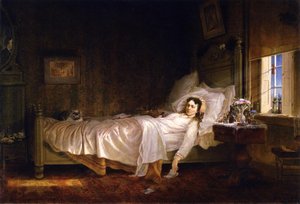
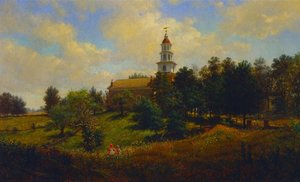
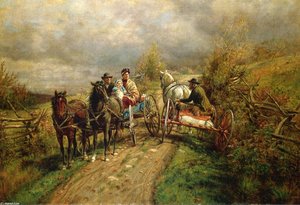
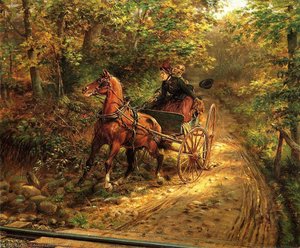
Portret Edward Lamson Henry

100 najsłynniejszych obrazów artysty Edward Lamson Henry – wybór z galerii

Aktualizacja: Listopad 2026 · ranking według naszego wskaźnika popularności (liczba wyszukiwań, wizyt i zamówień dla każdego dzieła) · 106 dzieł Edward Lamson Henry w naszym katalogu

W skrócie

Z wszystkich oryginałów pozostawionych przez Edward Lamson Henry, najsłynniejszym jest Sir William Johnson Presenting Medals to the Indian Chiefs of the Six Nations at Johnstown, N.Y. (1903). Tuż za nimi znajdują się The Camden and Amboy Railroad with the Engine Planet'' in 1834'' (1904) oraz Saint George's Church, New York (1875). Nasz katalog zawiera 106 dzieł autorstwa Edward Lamson Henry; galeria zachowała 100 najbardziej podziwianych na świecie prac, z których każda została przedstawiona wraz z datą powstania, informacją o muzeum oraz jej historią.

1841 – 1919, Charleston Realism Najwięcej dzieł: Metropolitan Museum of Art

10 najlepszych obrazów artysty Edward Lamson Henry: wybór galerii

1
Sir William Johnson Presenting Medals to the Indian Chiefs of the Six Nations at Johnstown, N.Y. (1903) autorstwa Edward Lamson Henry

Sir William Johnson Presenting Medals to the Indian Chiefs of the Six Nations at Johnstown, N.Y.

1903 · Oil On Canvas

In this 1903 oil on canvas, Edward Lamson Henry captures a specific intersection of colonial diplomacy and indigenous leadership. The work, titled Sir William Johnson Presenting Medals to the Indian Chiefs of the Six Nations at Johnstown, N.Y., reconstructs a gathering from 1772. The scene focuses on a conference held at Johnson Hall, where Sir William Johnson meets with the Iroquois. It is a moment of formal recognition, frozen in…

2
The Camden and Amboy Railroad with the Engine Planet'' in 1834'' (1904) autorstwa Edward Lamson Henry

The Camden and Amboy Railroad with the Engine Planet'' in 1834''

1904 · Oil On Canvas

The steam and iron of a transformative era emerge through the brush of Edward Lamson Henry in his work, The Camden and Amboy Railroad with the Engine Planet'' in 1834''. Created in 1904, this piece looks back across the decades to capture a specific, bustling moment in American transit. The scene centers on the Camden and Amboy Railroad, frozen in the year 1834, as the engine known as the "Planet"…

3
Saint George's Church, New York (1875) autorstwa Edward Lamson Henry

Saint George's Church, New York

1875 · Lithograph · Metropolitan Museum of Art, Nowy Jork

To stand before this evocative print is to step directly into the vibrant, yet sepia-toned, heart of New York City circa 1875. Edward Lamson Henry, through his masterful rendering, has gifted us more than just a depiction of architecture; he has captured the very breath of a bygone era. The composition centers unwaveringly on Saint George's Church, its spire piercing the hazy expanse as a beacon against the dense tapestry…

4
Westover, Virginia (1865) autorstwa Edward Lamson Henry

Westover, Virginia

1865 · Oil

The composition centers on a large red brick mansion characterized by white trim and a prominent steeple, which lends the structure the appearance of a church. A layer of white snow covers the ground, establishing a cold, wintry atmosphere across the landscape. In the foreground and middle ground, several horses are positioned near the house; some stand in close proximity to one another, while others are scattered across the snowy…

5
A Summer Day (1890) autorstwa Edward Lamson Henry

A Summer Day

1890 · Oil

In this 1890 composition, we find ourselves transported to a tranquil rural landscape, where the pace of life is dictated by the steady rhythm of hoofbeats on a dirt path. The scene captures a group of riders on horseback, moving leisurely through a sun-drenched country setting. There is a certain stillness here, despite the movement of the animals. A wagon rests in the distance, and a solitary chair sits near…

6
The Departure (1901) autorstwa Edward Lamson Henry

The Departure

1901 · Oil

The painting depicts a small town street populated by several figures on horseback. In the foreground, horses and riders move through the thoroughfare, some positioned closer to the viewer while others recede into the background. To the right, a carriage is parked or moving along the edge of the scene. A wooden bench sits in the middle of the composition, offering a stationary point amidst the movement. The architecture and…

7
Waiting for the Ferry (1906) autorstwa Edward Lamson Henry

Waiting for the Ferry

1906 · Watercolor

Waiting for the Ferry is a work by Edward Lamson Henry. Created about 1906, the piece reflects the artist's established interest in capturing specific moments of American life. Henry was born in 1841 and lived until May 9, 1919.

8
St. Mark's in the Bowery in the Early Forties (1917) autorstwa Edward Lamson Henry

St. Mark's in the Bowery in the Early Forties

1917

The scene captures a moment of urban movement near St. Mark's in the Bowery in New York City. Pedestrians navigate the grounds of the church, their figures scattered across the foreground and middle distance. The composition is anchored by the church's architecture, specifically a prominent clock tower that rises above the street-level activity. Horses and carriages, typical of the era, populate the thoroughfare, suggesting the rhythmic, animal-powered pulse of a…

9
A Philadelphia Doorway (1882) autorstwa Edward Lamson Henry

A Philadelphia Doorway

1882 · Obraz olejny na płótnie · Yale University Art Gallery, Hartford

Edward Lamson Henry – A Philadelphia Doorway: Nostalgia for an Idealized Past Edward Lamson Henry (1841–1919) remains one of America’s most beloved genre painters, a figure inextricably linked to the Victorian era's fascination with capturing fleeting moments of rural life and historical narrative. His canvases aren’t merely depictions; they are carefully constructed evocations designed to transport viewers back to a bygone age—a time perceived as simpler, more virtuous, and imbued…

10
Interior (1870) autorstwa Edward Lamson Henry

Interior

1870 · Oil · Smithsonian American Art Museum, Waszyngton

In Interior, Edward Lamson Henry invites us into a quiet, historical setting that feels deeply lived-in. The scene captures a subtle moment of interaction between two figures within an ornate room. To the left, a woman sits at a table near a large leaded-glass window, her form catching the bright, directional light that pours into the space. Opposite her, a man stands before a fireplace, his presence grounding the domestic…

Kontynuacja zestawienia Edward Lamson Henry, od 11 do 100

11A Carriage Ride (1885) autorstwa Edward Lamson HenryA Carriage Ride1885 · Metropolitan Museum of Art 12Country Breakfast (1884) autorstwa Edward Lamson HenryCountry Breakfast1884 · New Britain Museum of American Art 13Capital and Labor (1881) autorstwa Edward Lamson HenryCapital and Labor1881 · New York Historical Society 14Forty Winks (1880) autorstwa Edward Lamson HenryForty Winks1880 15East Hampton Beach (1880) autorstwa Edward Lamson HenryEast Hampton Beach1880 16Teatime (1890) autorstwa Edward Lamson HenryTeatime1890 · New Britain Museum of American Art 17Carriage Ride (1886) autorstwa Edward Lamson HenryCarriage Ride1886 18Stopping for a Chat (1889) autorstwa Edward Lamson HenryStopping for a Chat1889 19In The Shenandoah Valley (Off the Main Road) (1897) autorstwa Edward Lamson HenryIn The Shenandoah Valley (Off the Main Road)1897 · New Britain Museum of American Art 20The Ferry Crossing at Von Steuben Tavern (1909) autorstwa Edward Lamson HenryThe Ferry Crossing at Von Steuben Tavern1909 21Changing Horses (1880) autorstwa Edward Lamson HenryChanging Horses1880 22The North Dutch Church, Fulton and William Streets, New York (1869) autorstwa Edward Lamson HenryThe North Dutch Church, Fulton and William Streets, New York1869 · Metropolitan Museum of Art 23Village Squire Entertaining the New Minister autorstwa Edward Lamson HenryVillage Squire Entertaining the New Minister 24In the Roaring Forties (1884) autorstwa Edward Lamson HenryIn the Roaring Forties1884 25Parlor on Brooklyn Heights of Mr. and Mrs. John Ballard (1872) autorstwa Edward Lamson HenryParlor on Brooklyn Heights of Mr. and Mrs. John Ballard1872 26Moonlight Landscape with House (1860) autorstwa Edward Lamson HenryMoonlight Landscape with House1860 27A Chat after Meeting (1871) autorstwa Edward Lamson HenryA Chat after Meeting1871 28Descending the Stairs (1870) autorstwa Edward Lamson HenryDescending the Stairs1870 29On the James River, Virginia (1864) autorstwa Edward Lamson HenryOn the James River, Virginia1864 30The John Hancock House (1865) autorstwa Edward Lamson HenryThe John Hancock House1865 · Yale University Art Gallery 31The Invalid (1868) autorstwa Edward Lamson HenryThe Invalid1868 · Fogg Art Museum 32The Old Westover House (1869) autorstwa Edward Lamson HenryThe Old Westover House1869 · National Gallery of Art 33Drafting the Letter (1871) autorstwa Edward Lamson HenryDrafting the Letter1871 34Station on the Morris and Essex Railroad (1864) autorstwa Edward Lamson HenryStation on the Morris and Essex Railroad1864 35The Old Clock on the Stairs (1868) autorstwa Edward Lamson HenryThe Old Clock on the Stairs1868 36The Attack on Chew's House during the Battle of Germantown, 1777 (1878) autorstwa Edward Lamson HenryThe Attack on Chew's House during the Battle of Germantown, 17771878 · Art Institute of Chicago 37The Widower (1873) autorstwa Edward Lamson HenryThe Widower1873 · Smithsonian American Art Museum 38Can They Go Too. (1877) autorstwa Edward Lamson HenryCan They Go Too.1877 39Totally Absorbed (1874) autorstwa Edward Lamson HenryTotally Absorbed1874 40The Lafayette Reception (1874) autorstwa Edward Lamson HenryThe Lafayette Reception1874 41Examining Illustrations by the Fire (1872) autorstwa Edward Lamson HenryExamining Illustrations by the Fire1872 42City Point, Virginia, Headquarters of General Grant (1873) autorstwa Edward Lamson HenryCity Point, Virginia, Headquarters of General Grant1873 · Addison Gallery of American Art 43Le Paresseuse (also known as The Idle One) (1876) autorstwa Edward Lamson HenryLe Paresseuse (also known as The Idle One)1876 44The Old Dutch Church, Bruynswick (1878) autorstwa Edward Lamson HenryThe Old Dutch Church, Bruynswick1878 45The Meeting of General Washington and Rochambeau (1873) autorstwa Edward Lamson HenryThe Meeting of General Washington and Rochambeau1873 · Virginia Museum of Fine Arts 46Miss X and Sister (1884) autorstwa Edward Lamson HenryMiss X and Sister1884 47Still LIfe of Rhododendrons (1885) autorstwa Edward Lamson HenryStill LIfe of Rhododendrons1885 48The Little Flower Girl (1880) autorstwa Edward Lamson HenryThe Little Flower Girl1880 49Old Enemies (1885) autorstwa Edward Lamson HenryOld Enemies1885 50The Conversation (1882) autorstwa Edward Lamson HenryThe Conversation1882 51The Latest Village Scandal (1885) autorstwa Edward Lamson HenryThe Latest Village Scandal1885 52The King of the Montauks (1880) autorstwa Edward Lamson HenryThe King of the Montauks1880 · Detroit Institute of Arts 53Stagecoach (1881) autorstwa Edward Lamson HenryStagecoach1881 54The Sunny Hours of Childhood (1879) autorstwa Edward Lamson HenryThe Sunny Hours of Childhood1879 55On the Way to Market (1888) autorstwa Edward Lamson HenryOn the Way to Market1888 56The New Woman (1892) autorstwa Edward Lamson HenryThe New Woman1892 57Interior at Petworth (1886) autorstwa Edward Lamson HenryInterior at Petworth1886 58Horse and Buggy on Main Street (1889) autorstwa Edward Lamson HenryHorse and Buggy on Main Street1889 59A Country School (1890) autorstwa Edward Lamson HenryA Country School1890 · Yale University Art Gallery 60A Lover of Old China (1889) autorstwa Edward Lamson HenryA Lover of Old China1889 61A Virginia Wedding (1890) autorstwa Edward Lamson HenryA Virginia Wedding1890 62A Moment of Peril (1890) autorstwa Edward Lamson HenryA Moment of Peril1890 63Mrs. Lydig and Her Daughter Greeting Their Guest (1891) autorstwa Edward Lamson HenryMrs. Lydig and Her Daughter Greeting Their Guest1891 64Visit to the Plantation (1898) autorstwa Edward Lamson HenryVisit to the Plantation1898 65Return to the Farm (1895) autorstwa Edward Lamson HenryReturn to the Farm1895 66An Informal Call (1895) autorstwa Edward Lamson HenryAn Informal Call1895 67A Country Lawyer (1895) autorstwa Edward Lamson HenryA Country Lawyer1895 68Waiting for the Ferry, Shelter Island, New York (1895) autorstwa Edward Lamson HenryWaiting for the Ferry, Shelter Island, New York1895 69The Pillory and Whipping Post, New Castle, Delaware (1896) autorstwa Edward Lamson HenryThe Pillory and Whipping Post, New Castle, Delaware1896 70The Message (1893) autorstwa Edward Lamson HenryThe Message1893 · Fogg Art Museum 71Vespers (1898) autorstwa Edward Lamson HenryVespers1898 72A Stormy Morning (also known as Leaving in the Early Morn in a Nor’easter) (1899) autorstwa Edward Lamson HenryA Stormy Morning (also known as Leaving in the Early Morn in a Nor’easter)1899 73What's That You Say (1905) autorstwa Edward Lamson HenryWhat's That You Say1905 74One Sunday Afternoon (1902) autorstwa Edward Lamson HenryOne Sunday Afternoon1902 75An October Day (also known as Cragsmoor Post Office) (1903) autorstwa Edward Lamson HenryAn October Day (also known as Cragsmoor Post Office)1903 76Waiting for the Stagecoach (1905) autorstwa Edward Lamson HenryWaiting for the Stagecoach1905 77Passing the Outposts on the Old Kingsbridge Road (1903) autorstwa Edward Lamson HenryPassing the Outposts on the Old Kingsbridge Road1903 78The Homecoming (1899) autorstwa Edward Lamson HenryThe Homecoming1899 79Stopping to Water His Horse (1904) autorstwa Edward Lamson HenryStopping to Water His Horse1904 80Young Girl with a Parrot autorstwa Edward Lamson HenryYoung Girl with a Parrot 81Horse and Buggy autorstwa Edward Lamson HenryHorse and Buggy 82Scene along Delaware and Hudson Canal (1907) autorstwa Edward Lamson HenryScene along Delaware and Hudson Canal1907 83In East Tennessee (1906) autorstwa Edward Lamson HenryIn East Tennessee1906 84What Luck (1910) autorstwa Edward Lamson HenryWhat Luck1910 85What's the News. (also known as Stopping for a Chat) (1909) autorstwa Edward Lamson HenryWhat's the News. (also known as Stopping for a Chat)1909 86Unexpected Visitors (1909) autorstwa Edward Lamson HenryUnexpected Visitors1909 87Colonial Wedding (1911) autorstwa Edward Lamson HenryColonial Wedding1911 88St. John's Church, Varick Street, New York (1914) autorstwa Edward Lamson HenrySt. John's Church, Varick Street, New York1914 · New York Historical Society 89News of the War of 1812 (1913) autorstwa Edward Lamson HenryNews of the War of 18121913 90Gathering Flowers (1913) autorstwa Edward Lamson HenryGathering Flowers1913 91The Sitting Room (1883) autorstwa Edward Lamson HenryThe Sitting Room1883 92Memories (1873) autorstwa Edward Lamson HenryMemories1873 · Yale University Art Gallery 93Later Afternoon on the Old Delaware and Hudson Canal, at Port Ben, Ulster County, New York (1894) autorstwa Edward Lamson HenryLater Afternoon on the Old Delaware and Hudson Canal, at Port Ben, Ulster County, New York1894 94Going to Town autorstwa Edward Lamson HenryGoing to TownThe Phillips Collection 95Country Landscape autorstwa Edward Lamson HenryCountry Landscape 96Leaving Home autorstwa Edward Lamson HenryLeaving Home 97Nearing the Bend autorstwa Edward Lamson HenryNearing the Bend 98Coming Home autorstwa Edward Lamson HenryComing Home 99Early Days of Rapid Transit autorstwa Edward Lamson HenryEarly Days of Rapid Transit 100The Village Street autorstwa Edward Lamson HenryThe Village Street

Słynne obrazy Edward Lamson Henry epoka po epoce

Tematy, które przyciągnęły wzrok Edward Lamson Henry

Cztery motywy najczęściej powracające w tych oryginałach, z których każdy doczekał się swojego najdoskonalszego przykładu.

Muzea przechowujące oryginały Edward Lamson Henry

8 muzeów, w których znajduje się najwięcej obrazów z tej strony.

Muzea Miasto Dzieła artysty Edward Lamson Henry Obrazy z tej listy
Metropolitan Museum of Art, Nowy JorkMetropolitan Museum of Art Nowy Jork 4 Saint George's Church, New York, A Carriage Ride, The North Dutch Church, Fulton and William Streets, New York
New Britain Museum of American Art, New BritainNew Britain Museum of American Art New Britain 3 Country Breakfast, Teatime, In The Shenandoah Valley (Off the Main Road)
Smithsonian American Art Museum, WaszyngtonSmithsonian American Art Museum Waszyngton 4 Interior, The Widower
Yale University Art Gallery, HartfordYale University Art Gallery Hartford 2 A Philadelphia Doorway, Memories
New York Historical Society, Nowy JorkNew York Historical Society Nowy Jork 2 Capital and Labor, St. John's Church, Varick Street, New York
Yale University Art Gallery, Nowe HavaneYale University Art Gallery Nowe Havane 2 The John Hancock House, A Country School
Fogg Art Museum, CambridgeFogg Art Museum Cambridge 2 The Invalid, The Message
National Gallery of Art, WaszyngtonNational Gallery of Art Waszyngton 1 The Old Westover House

Edward Lamson Henry dekada po dekadzie: oryginały definiujące każdy okres

Dzieła według dekad

Wybierz dekadę, aby zobaczyć dzieło, które ją definiuje.

Pytania kolekcjonerów o obrazy Edward Lamson Henry

Z jakiego dzieła najbardziej znany jest Edward Lamson Henry?Odkryj odpowiedź

Sir William Johnson Presenting Medals to the Indian Chiefs of the Six Nations at Johnstown, N.Y. (1903). Następne są The Camden and Amboy Railroad with the Engine Planet'' in 1834'' (1904) oraz Saint George's Church, New York (1875).

W jakim wieku był Edward Lamson Henry, gdy powstało Sir William Johnson Presenting Medals to the Indian Chiefs of the Six Nations at Johnstown, N.Y.?Odkryj odpowiedź

62 lat: Sir William Johnson Presenting Medals to the Indian Chiefs of the Six Nations at Johnstown, N.Y. pochodzi z 1903, a Edward Lamson Henry urodził(a) się w 1841.

Jakie są dziesięć najsłynniejszych obrazów, których autorem jest Edward Lamson Henry?Odkryj odpowiedź

Sir William Johnson Presenting Medals to the Indian Chiefs of the Six Nations at Johnstown, N.Y., The Camden and Amboy Railroad with the Engine Planet'' in 1834'', Saint George's Church, New York, Westover, Virginia, A Summer Day, The Departure, Waiting for the Ferry, St. Mark's in the Bowery in the Early Forties, A Philadelphia Doorway i Interior. Powyższy ranking zawiera rok powstania oraz muzeum dla każdego z nich.

Ile obrazów pozostawił po sobie Edward Lamson Henry?Odkryj odpowiedź

Nasz katalog zawiera 106 dzieł artysty Edward Lamson Henry, datowanych od 1860 do 1917.

W których muzeach znajdują się arcydzieła Edward Lamson Henry?Odkryj odpowiedź

W większości znajdują się w Metropolitan Museum of Art (Nowy Jork), New Britain Museum of American Art (New Britain) i Smithsonian American Art Museum (Waszyngton). Powyższa tabela muzeów zawiera ich pełną listę.

W których latach Edward Lamson Henry namalował swoje najsłynniejsze dzieła?Odkryj odpowiedź

W 1880s: 23 z 100 dzieł na tej stronie powstało w tym czasie, w tym A Philadelphia Doorway.

Jakie są pierwsze i ostatnie słynne oryginały Edward Lamson Henry?Odkryj odpowiedź

Na tej stronie najwcześniejszy to Moonlight Landscape with House (1860), a najpóźniejszy St. Mark's in the Bowery in the Early Forties (1917).

Jakie tematy Edward Lamson Henry wybierał najczęściej?Odkryj odpowiedź

People (13), Horse (11) i Woman (9), w ramach 100 dzieł na tej stronie.

Której techniki Edward Lamson Henry używał najczęściej?Odkryj odpowiedź

Oil On Canvas, dla 18 z 100 dzieł na tej stronie.

Do jakiego nurtu artystycznego należy Edward Lamson Henry?Odkryj odpowiedź

Realism, sądząc po oryginałach na tej stronie.

Które dzieła Edward Lamson Henry znajdują się w Metropolitan Museum of Art?Odkryj odpowiedź

Saint George's Church, New York, A Carriage Ride i The North Dutch Church, Fulton and William Streets, New York: Metropolitan Museum of Art, Nowy Jork posiada 3 dzieł widocznych na tej stronie.

Edward Lamson Henry: życie i twórczość

Nostalgiczna wizja Ameryki: Życie i sztuka Edwarda Lamsona Henry’ego

Edward Lamson Henry, urodzony w 1841 roku w Charleston w Karolinie Południowej, nie był jedynie malarzem scen; był kronikarzem zanikającej amerykańskiej tożsamości. Jego płótna przywołują głębokie poczucie nostalgii, pieczołowicie rekonstruując momenty z przeszłości narodu – od tętniącej energią wczesnej ery podróży kolejowych, przez cichą intymność życia domowego, aż po trwające cienie wojny secesyjnej. Choć jego wczesne lata naznaczone były tragedią – osierocenie w wieku siedmiu lat – być może to właśnie to doświadczenie zaszczepiło w nim pragnienie ocalenia wspomnień, uchwycenia świata, który wymyka się wraz z każdym kolejnym rokiem. Przeprowadził się do Nowego Jorku, by zamieszkać u krewnych, rozpoczynając swoją artystyczną podróż pośród rozkwitającego krajobrazu kulturalnego metropolii, a później formalizując swoje wykształcenie w Pennsylvania Academy of Fine Arts w Filadelfii.

Paryskie wpływy i ziarna realizmu

Przełomowy moment w rozwoju Henry’ego nastąpił w 1860 roku wraz z jego przeprowadzką do Paryża. Był to okres ogromnego fermentu artystycznego, a Henry znalazł się w kręgu pionierskich malarzy, w tym Claude’a Moneta, Pierre-Auguste’a Renoira, Frédéric’a Bazille’a i Alfreda Sisleya – artystów, którzy wkrótkiem mieli przedefiniować granice sztuki. Studiował pod okiem Charlesa Gleyre’a, chłonąc techniki klasyczne, lecz to bezkompromisowy realizm Gustave’a Courbeta najmocniej w nim zarezonował. Oddanie Courbeta w przedstawianiu codziennego życia bez idealizacji głęboko wpłynęło na własny kierunek artystyczny Henry’ego. Choć nie przyjął on w pełni impresjonizmu tak jak jego współcześni, paryskie doświadczenie zaszczepiło w nim oddanie dla chwytania autentycznych momentów oraz przenikliwą obserwację światła i atmosfery. Ten okres był formacyjny, kładąc fundamenty pod jego charakterystyczny styl – połączenie drobiazgowego detalu z ewokatywną narracją.

Służba podczas wojny secesyjnej i rozkwit malarstwa rodzajowego

Wybuch wojny secesyjnej przerwał artystyczne dążenia Henry’ego. Powrócił do Stanów Zjednoczonych i służył jako urzędnik na transporcie Unii, co było doświadczeniem, które głęboko wpłynęło na jego późniejszą twórczość. Skutki wojny stały się paliwem dla serii obrazów inspirowanych jego obserwacjami – scen nie wielkich bitew, lecz codzienności dotkniętej konfliktem. Osiadł w Nowym Jorku, stając się częścią tętniącej życiem społeczności artystycznej skupionej wokół Tenth Street Studio Building, gdzie dzielił przestrzeń z takimi luminarzami jak Winslow Homer. To właśnie w tym czasie Henry w pełni oddał się malarstwu rodzajowemu – przedstawianiu scen z życia zwykłych ludzi i ich codziennych trudów. Szybko zyskał uznanie dzięki zdolności do odtwarzania historycznych momentów z niezwykłą dokładnością i nutą urokliwego humoru. W 1869 roku jego wybór do National Academy of Design ugruntował jego pozycję w amerykańskim świecie sztuki.

Mistrz detalu: Historyczna fikcja na płótnie

Obrazy Henry’ego charakteryzują się nadzwyczajną uwagą do szczegółu – pieczołowitą rekonstrukcją kostiumów epoki, architektury i przedmiotów codziennego użytku. On nie tylko malował sceny; on budował światy. Jego tematyka często oscylowała wokół motywów kolonialnych i wczesnoamerykańskich, podróży kolejowych, przejazdów dorożkami oraz życia na łodziach kanałowych. Stał się sławny dzięki przedstawianiu tych scen w mikroskopijnej skali, zapraszając widzów do zanurzenia się w zawiłościach przeszłości. Należy jednak zaznaczyć, że twórczość Henry’ego nie miała charakteru czysto dokumentalnego. Przy swobodzie artystycznej otwarcie przyznawał, przedkładając atmosferę i narrację nad ścisłą wierność historyczną – tworząc to, co współcześni nazywali „fikcją historyczną”. Ta gotowość do upiększania dla efektu emocjonalnego jest kluczowym elementem jego uroku; nie interesowało go zwykłe rejestrowanie historii, lecz wywoływanie konkretnego nastroju i poczucia nostalgii. Kluczową rolę w tym procesie odegrała jego żona, Frances Livingston Wells, dbając o autentyczność detali poprzez szeroko zakrojone badania z wykorzystaniem antyków, starych fotografii i różnorodnych pamiątek amerykańskich.

Dziedzictwo i znaczenie historyczne

Twórczość Edwarda Lamsona Henry’ego oferuje unikalne okno na kulturę Ameryki XIX wieku – romantyczną wizję prostszej przeszłości. Jego malarstwo rezonowało z publicznością pragnącą objąć poczucie narodowej tożsamości i nostalgię za minioną erą. Jako członek New-York Historical Society, jeszcze bardziej umocnił swoją rolę wizualnego historyka. Jego oddanie szczegółom sprawiało, że współcześni postrzegali jego dzieła jako autentyczne rekonstrukcje, mimo że często przedkładał efekt artystyczny nad ścisłą precyzję. W późniejszych latach życia Henry współzałożył kolonię artystów w Cragsmoor w stanie Nowy Jork, pielęgnując społeczność poświęconą zachowaniu i celebrowaniu amerykańskiego dziedzictwa. Choć dziś może nie być tak szeroko rozpoznawalny jak niektórzy jego impresjonistyczni współcześni, Edward Lamson Henry pozostaje znaczącą postacią w historii sztuki amerykańskiej – mistrzem malarstwa rodzajowego, którego ewokatywne płótna wciąż urzekają widzów swoim czarem, detalem i trwałym poczuciem nostalgii.