

1


Aktualizacja: Listopad 2026 · ranking według naszego wskaźnika popularności (liczba wyszukiwań, wizyt i zamówień dla każdego dzieła) · 11 dzieł DeWitt Clinton Boutelle w naszym katalogu
W skrócie
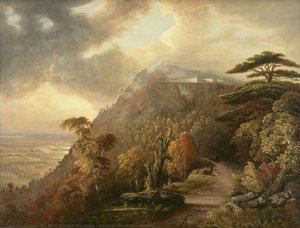
Indian Surveying a Landscape (1855) to obraz autorstwa DeWitt Clinton Boutelle, który przyciąga najwięcej spojrzeń; oryginał znajduje się w Museum of Fine Arts, Boston. Następnie wzrok kieruje się na Untitled (Hudson River Landscape with Indian) (1848) i Catskill Mountain House (1845). Spośród 11 dzieł DeWitt Clinton Boutelle w naszym katalogu, tych 11 jest najbardziej znanych – każde z nich to unikatowy oryginał, przedstawiony wraz z rokiem powstania, muzeum oraz powodem, dla którego przetrwało próbę czasu.


7 muzeów, w których znajduje się najwięcej obrazów z tej strony.
| Muzea | Miasto | Dzieła artysty DeWitt Clinton Boutelle | Obrazy z tej listy |
|---|---|---|---|
 Reading Public Museum |
Reading | 3 | In the Delaware Valley, Landscape Scene Near Bethlehem, Pennsylvania, Landscape, Scene near Bethlehem, Pa |
 Museum of Fine Arts |
Boston | 1 | Indian Surveying a Landscape |
 Chrysler Museum of Art |
Norfolk | 1 | Untitled (Hudson River Landscape with Indian) |
 Albany Institute of History - Art |
Albany | 1 | Catskill Mountain House |
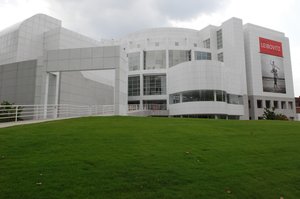 High Museum of Art |
Atlanta | 1 | Trenton Falls near Utica, New York |
 Indianapolis Museum of Art |
Indianapolis | 1 | Niagara Falls |
 Payne Gallery |
Bethlehem, Pennsylvania | 1 | Monacacy Creek with Bethlehem in Background |
Wybierz dekadę, aby zobaczyć dzieło, które ją definiuje.
Indian Surveying a Landscape (1855), Museum of Fine Arts, Boston. Następne są Untitled (Hudson River Landscape with Indian) (1848) oraz Catskill Mountain House (1845).
35 lat: Indian Surveying a Landscape pochodzi z 1855, a DeWitt Clinton Boutelle urodził(a) się w 1820.
Indian Surveying a Landscape, Untitled (Hudson River Landscape with Indian), Catskill Mountain House, Sunset, In the Delaware Valley, Landscape Scene Near Bethlehem, Pennsylvania, Landscape, Scene near Bethlehem, Pa, A View of Manchester, Vermont, Trenton Falls near Utica, New York i Niagara Falls. Powyższy ranking zawiera rok powstania oraz muzeum dla każdego z nich.
Nasz katalog zawiera 11 dzieł artysty DeWitt Clinton Boutelle, datowanych od 1845 do 1873.
W większości znajdują się w Reading Public Museum (Reading), Museum of Fine Arts (Boston) i Chrysler Museum of Art (Norfolk). Powyższa tabela muzeów zawiera ich pełną listę.
W 1850s: 3 z 11 dzieł na tej stronie powstało w tym czasie, w tym Indian Surveying a Landscape.
Na tej stronie najwcześniejszy to Catskill Mountain House (1845), a najpóźniejszy Trenton Falls near Utica, New York (1873).
In the Delaware Valley, Landscape Scene Near Bethlehem, Pennsylvania i Landscape, Scene near Bethlehem, Pa: Reading Public Museum, Reading posiada 3 dzieł widocznych na tej stronie.
Born in the quiet landscapes of Manchester, Vermont, in 1822, DeWitt Clinton Boutelle emerged as a profound voice within the golden age of American landscape painting. His life and artistry were deeply intertwined with the spirit of the Hudson River School, a movement that sought to capture the divine essence of the New World through a lens of romanticism and meticulous naturalism. As an artist, Boutelle did not merely observe the terrain; he sought to translate the very soul of the American wilderness onto canvas, creating windows into a pristine, untouched era of history.
Boutelle’s artistic development was shaped by the sweeping vistas of the Northeast. His works frequently journeyed through the Catskill Mountains, the rugged Adirondacks, and the majestic White Mountains of New Hampshire. Through his brush, these regions were transformed into ethereal realms where light and shadow perform a silent, eternal dance. He possessed a remarkable ability to manipulate color and luminosity, employing techniques that allowed sunlight to filter through dense foliage or shimmer upon the surface of tranquil waterways, thereby imbuing his landscapes with an atmospheric depth that invites the viewer to step directly into the scene.
The essence of Boutelle’s technique lies in his profound reverence for detail and his mastery of light. Influenced by the legendary masters of his era, such as Thomas Cole and Asher Brown Durand, Boutelle embraced the Hudson River School's mission to find the sublime within the natural world. His compositions often feature a delicate balance between the monumental and the intimate—where massive, ancient mountains stand guard over a small, winding stream or a hidden valley.
His notable works serve as testament to his technical prowess and emotional sensitivity:
Though his career flourished during a period of intense national expansion, Boutelle’s work remains anchored in the preservation of a vanishing wilderness. His paintings are more than mere topographical records; they are emotional evocations of a landscape that felt both infinite and sacred. By capturing the serenity of rolling hills and the majesty of granite peaks, he contributed significantly to the American identity, helping to define how a young nation perceived its own vast and beautiful territory.
Today, the legacy of DeWitt Clinton Boutelle lives on through his presence in esteemed collections, such as the Rhode Island School of Design Museum of Art and the USC Fisher Museum of Art. His work continues to resonate with modern audiences, offering a nostalgic and breathtaking glimpse into the romantic heart of the nineteenth-century American landscape.
