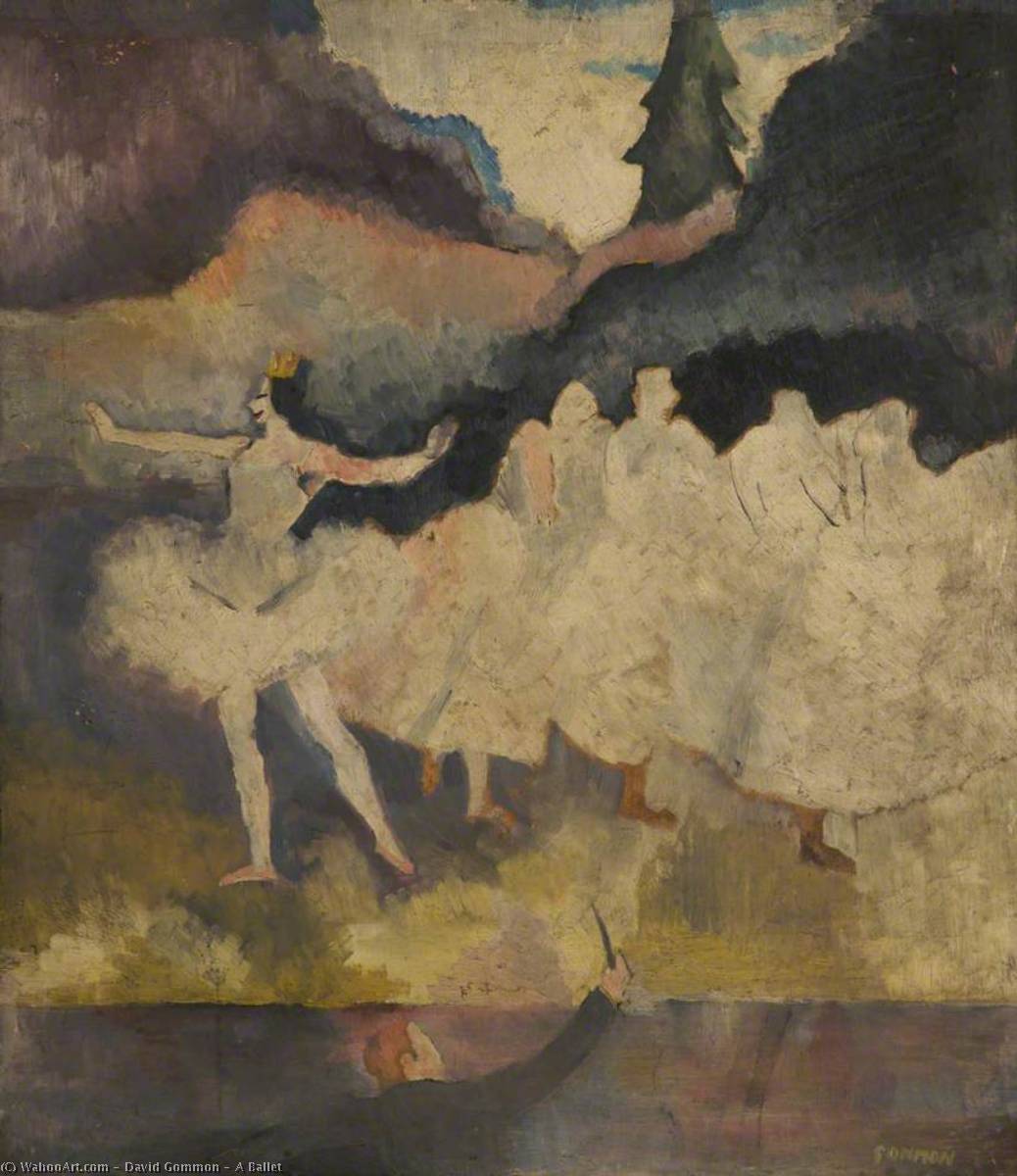
David Gommon: artysta
David Gommon (1913–1987) – A Life Immersed in Landscape and Light
David Gommon, born in Battersea, South London, in 1913, was an artist whose life became deeply interwoven with the landscapes he so passionately depicted. His journey began humbly, with enrollment at Battersea Polytechnic and Clapham School of Art at the age of sixteen – formative steps that laid the groundwork for a career dedicated to capturing the essence of the British countryside. A pivotal moment arrived early in his artistic development when he encountered Lucy Carrington Wertheim, an influential art collector who recognized Gommon’s talent and became his patron. This support, providing a regular stipend of £2 per week, allowed the young artist to fully immerse himself in his craft, a freedom that proved invaluable as he began to forge his unique path. Wertheim's patronage wasn't merely financial; it opened doors to a vibrant artistic circle, introducing Gommon to figures like Margot Fonteyn and Robert Helpmann, both of whom became subjects for his portraits during their time at Sadler’s Wells. This early exposure to the performing arts undoubtedly influenced his sensitivity to form and movement, qualities that would later manifest in his evocative landscapes.
Early Visions and a Developing Style
Gommon’s initial artistic explorations centered on the landscapes of England and Wales, seeking not simply to replicate their visual appearance but to distill their emotional core. He absorbed the techniques, their understanding of light and shadow, and their ability to imbue their works with a sense of timelessness. Inspired by the Old Masters – Rembrandt and Vermeer particularly – Gommon sought to emulate their masterful use of chiaroscuro, creating dramatic contrasts between light and dark that heightened the expressive power of his paintings. His early style blended realism with lyrical abstraction, capturing not just what he *saw* but how it *felt*. The influence of Neo-Romanticism was palpable; artists like Turner and Friedrich championed emotion, imagination, and a profound connection to nature – ideals that resonated deeply within Gommon’s artistic sensibilities. He meticulously studied the works of these masters, analyzing their compositional strategies and color palettes with unwavering dedication.
The Wertheim Patronage and Artistic Collaboration
Lucy Carrington Wertheim played an instrumental role in nurturing Gommon's burgeoning talent. Recognizing his potential early on, Wertheim provided him with a consistent financial backing – £2 per week – allowing him to dedicate himself entirely to his artistic pursuits. More importantly, Wertheim fostered a stimulating environment for creativity, introducing Gommon to prominent figures within the British art world: Margot Fonteyn and Robert Helpmann. These collaborations extended beyond mere portraiture; Wertheim encouraged Gommon to explore theatrical design, resulting in striking sets for Sadler’s Wells productions that showcased his artistic vision and technical prowess. This period solidified Gommon's belief in the transformative power of art – its ability to communicate emotion and inspire contemplation.
A Shift Towards Dorset Landscapes
Around 1936 Gommon experienced a profound epiphany during a cycling trip through Dorset, England. The breathtaking vistas of Chesil Beach captivated him instantly: he was ‘overwhelmed by the revelation of beach, the sea, the sky! It was biblical in its splendor.’ This formative encounter cemented his lifelong fascination with the Dorset landscape – an element that would permeate his subsequent paintings and become a defining characteristic of his artistic style. He returned to Dorset repeatedly throughout his life, meticulously documenting its changing moods and capturing its ethereal beauty. His approach mirrored that of Turner and Friedrich: he sought not merely to depict the scenery but to convey its spirit—its sense of grandeur, mystery, and timelessness.
Later Years and Recognition
Following World War II Gommon continued to teach at Northampton Grammar School, where he instilled in his pupils a love for art and encouraged them to explore their creative potential. He also delivered WEA Lectures on Art for several years, sharing his knowledge and passion with a wider audience. His final major commission – two large murals for St. Crispin’s Hospital in Northampton – reflected Gommon's humanist convictions and underscored his belief in art’s capacity to heal and uplift. These works were conceived as spaces of calm and contemplation—a testament to his profound understanding of the human condition. Ian Mayes writing in 1975 praised Gommon’s paintings for their “sense of joy in life” and “wonderment and delight in nature,” encapsulating the essence of his artistic legacy. David Gommon passed away in 1987, leaving behind a rich body of work that continues to inspire admiration and contemplation.


 Salford Museum - Art Gallery
 Towner