Portret Charles Meryon

10 najsłynniejszych obrazów artysty Charles Meryon, każdy niepowtarzalny

Aktualizacja: Listopad 2026 · ranking według naszego wskaźnika popularności (liczba wyszukiwań, wizyt i zamówień dla każdego dzieła) · 11 dzieł Charles Meryon w naszym katalogu

W skrócie

The Petit Pont (1850) to obraz autorstwa Charles Meryon, który przyciąga najwięcej spojrzeń; oryginał znajduje się w Bibliothèque Nationale de France, Paryż. Następnie wzrok kieruje się na Le Stryge (1853) i Le Petit Pont (1850). Spośród 11 dzieł Charles Meryon w naszym katalogu, tych 10 jest najbardziej znanych – każde z nich to unikatowy oryginał, przedstawiony wraz z rokiem powstania, muzeum oraz powodem, dla którego przetrwało próbę czasu.

1821 – 1868, Paryż Realism Najwięcej dzieł: Metropolitan Museum of Art

10 najlepszych obrazów autorstwa Charles Meryon według oka galerii

1
The Petit Pont (1850) autorstwa Charles Meryon

The Petit Pont

1850 · Etching · Bibliothèque Nationale de France, Paryż

The Petit Pont is an etching by the French artist Charles Meryon. Created about 1850, this print captures a specific slice of the Parisian landscape. The work emerged from the artist's focused study of the city's architecture, rendered through the precise application of ink on paper.

2
Le Stryge (1853) autorstwa Charles Meryon

Le Stryge

1853 · Etching · Harvard Art Museums, Cambridge

Le Stryge, also known as The Vampire, is a print created by the artist Charles Meryon in 1853. This work belongs to a period of the artist's career characterized by his focus on the city of Paris. Meryon was born in Paris, France, in 1821 and remained active in the medium of etching throughout his life until his death in 1868.

3
Le Petit Pont (1850) autorstwa Charles Meryon

Le Petit Pont

1850 · Etching

In 1850, Charles Meryon captured a specific slice of the Parisian urban landscape. His etching, Le Petit Pont, focuses on the bridge itself and the silhouette of Notre Dame Cathedral rising in the background. The scene documents the architecture of 19th-century Paris, freezing a moment in time through the precise rendering of stone and structure. A horse and a few figures move through the cityscape, grounding the heavy masonry in…

4
It Rocks but Does Not Sink (1854) autorstwa Charles Meryon

It Rocks but Does Not Sink

1854 · Etching · Metropolitan Museum of Art, Nowy Jork

This evocative depiction, titled "It Rocks but Does Not Sink," plunges the viewer into the heart of maritime peril. The scene is dominated by a magnificent vessel battling through waters rendered with dramatic ferocity. One can almost feel the spray against the rigging and hear the groan of the timbers under duress. It is more than just a depiction of a storm; it is a profound meditation on human resilience,…

5
St. Étienne-du-Mont (1852) autorstwa Charles Meryon

St. Étienne-du-Mont

1852 · Etching · Charles Allis Art Museum, Milwaukee

St. Étienne-du-Mont, Paris, from Eaux-fortes sur Paris (Etchings of Paris) is an etching by Charles Meryon. Created in 1852, this work captures a specific slice of the Parisian cityscape. It belongs to the movements of Romanticism and Realist etching during the 19th Century.

6
St. Etienne-du-Mont, Paris, from Eaux-fortes sur Paris (Etchings of Paris) (1852) autorstwa Charles Meryon

St. Etienne-du-Mont, Paris, from Eaux-fortes sur Paris (Etchings of Paris)

1852 · Etching · Toledo Museum of Art, Toledo

Charles Meryon's "St. Etienne-du-Mont, Paris, from Eaux-fortes sur Paris" is more than a depiction of a Parisian street; it’s a haunting meditation on the city’s soul, rendered with an almost palpable sense of melancholy and gothic grandeur. Executed in 1852 as part of his seminal series, *Eaux-fortes sur Paris*, this work captures a pivotal moment in the artist's career – a transition from naval exploration to a deeply personal and…

7
Etchings of Paris; Title page to the suite (1852) autorstwa Charles Meryon

Etchings of Paris; Title page to the suite

1852 · Etching · Metropolitan Museum of Art, Nowy Jork

Charles Meryon's "Etchings of Paris," specifically the title page to his celebrated suite, is more than just a depiction of a Parisian street; it’s a meticulously crafted window into the artist’s uniquely melancholic and intensely atmospheric vision of the city. Created in 1852, during a period of rapid industrialization and social upheaval in France, this work captures a fleeting moment of urban twilight – a scene both familiar and subtly…

9
The Morgue, Paris (1854) autorstwa Charles Meryon

The Morgue, Paris

1854 · Te Papa, Wellington

French printmaker Charles Meryon (1821-68) was the illegitimate son of a British doctor and a French dancer. He entered the French Naval Academy at Brest in 1837 and travelled widely with his parents. Meryon took drawing lessons in 1840 from Vincent Courdouan (1810–93), from whom he learned elegant precision of line. He served as midshipman on the corvette Le Rhin during its mission to the French possessions in Oceania (1842–6).…

10
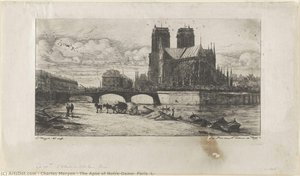
The Apse of Notre-Dame, Paris (L (1854) autorstwa Charles Meryon

The Apse of Notre-Dame, Paris (L

1854 · Te Papa, Wellington

The French printmaker Charles Meryon (1821-68) was the illegitimate son of a British doctor and a French dancer. He entered the French Naval Academy at Brest in 1837 and travelled widely with his parents. Meryon took drawing lessons in 1840 from Vincent Courdouan (1810–93), from whom he learned elegant precision of line. He served as midshipman on the corvette Le Rhin during its mission to the French possessions and settlements…

Tematy, które przyciągnęły wzrok Charles Meryon

Cztery motywy najczęściej powracające w tych oryginałach, z których każdy doczekał się swojego najdoskonalszego przykładu.

Muzea przechowujące oryginały Charles Meryon

6 muzeów, w których znajduje się najwięcej obrazów z tej strony.

Muzea Miasto Dzieła artysty Charles Meryon Obrazy z tej listy
Metropolitan Museum of Art, Nowy JorkMetropolitan Museum of Art Nowy Jork 2 It Rocks but Does Not Sink, Etchings of Paris; Title page to the suite
Te Papa, WellingtonTe Papa Wellington 2 The Morgue, Paris, The Apse of Notre-Dame, Paris (L
Bibliothèque Nationale de France, ParyżBibliothèque Nationale de France Paryż 1 The Petit Pont
Harvard Art Museums, CambridgeHarvard Art Museums Cambridge 1 Le Stryge
Charles Allis Art Museum, MilwaukeeCharles Allis Art Museum Milwaukee 1 St. Étienne-du-Mont
Toledo Museum of Art, ToledoToledo Museum of Art Toledo 1 St. Etienne-du-Mont, Paris, from Eaux-fortes sur Paris (Etchings of Paris)

Twórczość Charles Meryon na przestrzeni lat: unikalne oryginały każdego dzieła

W okresie od 1850 do 1854, co daje łącznie 5 lat, Charles Meryon stworzył każdy z zaprezentowanych tutaj datowanych oryginałów: krótki czas, rok po roku.

Dzieła według lat

Wybierz rok, aby zobaczyć oryginały.

Obrazy artysty Charles Meryon: pytania do galerii

Jakie jest najsłynniejsze dzieło artysty Charles Meryon?Odkryj odpowiedź

The Petit Pont (1850), Bibliothèque Nationale de France, Paryż. Następne są Le Stryge (1853) oraz Le Petit Pont (1850).

W jakim wieku Charles Meryon stworzył/a The Petit Pont?Odkryj odpowiedź

29 lat: The Petit Pont pochodzi z 1850, a Charles Meryon urodził(a) się w 1821.

Które dziesięć obrazów Charles Meryon jest najbardziej znanych?Odkryj odpowiedź

The Petit Pont, Le Stryge, Le Petit Pont, It Rocks but Does Not Sink, St. Étienne-du-Mont, St. Etienne-du-Mont, Paris, from Eaux-fortes sur Paris (Etchings of Paris), Etchings of Paris; Title page to the suite, La Loi Solaire, The Morgue, Paris i The Apse of Notre-Dame, Paris (L. Powyższy ranking zawiera rok powstania oraz muzeum dla każdego z nich.

Ile znanych dzieł stworzył Charles Meryon?Odkryj odpowiedź

Nasz katalog zawiera 11 dzieł artysty Charles Meryon, datowanych od 1850 do 1854.

Gdzie można zobaczyć najsłynniejsze oryginały Charles Meryon?Odkryj odpowiedź

W większości znajdują się w Metropolitan Museum of Art (Nowy Jork), Te Papa (Wellington) i Bibliothèque Nationale de France (Paryż). Powyższa tabela muzeów zawiera ich pełną listę.

W jakim okresie Charles Meryon stworzył/a swoje najsłynniejsze obrazy?Odkryj odpowiedź

W 1852: 3 z 10 dzieł na tej stronie powstało w tym czasie, w tym St. Étienne-du-Mont.

Który z najsłynniejszych obrazów artysty Charles Meryon powstał najwcześniej, a który najpóźniej?Odkryj odpowiedź

Na tej stronie najwcześniejszy to The Petit Pont (1850), a najpóźniejszy It Rocks but Does Not Sink (1854).

Jakie tematy preferował Charles Meryon?Odkryj odpowiedź

Cityscape (4), People (3) i Architecture (3), w ramach 10 dzieł na tej stronie.

Jakich materiałów Charles Meryon używał najczęściej?Odkryj odpowiedź

Etching, dla 7 z 10 dzieł na tej stronie.

Do jakiego nurtu należy twórczość Charles Meryon?Odkryj odpowiedź

Realism, sądząc po oryginałach na tej stronie.

Jakie oryginały Charles Meryon można zobaczyć w Metropolitan Museum of Art?Odkryj odpowiedź

It Rocks but Does Not Sink i Etchings of Paris; Title page to the suite: Metropolitan Museum of Art, Nowy Jork posiada 2 dzieł widocznych na tej stronie.

Charles Meryon: portret artysty

wczesne lata i kariera morska

charles méryon, wybitny francuski artysta, przyszedł na świat 23 listopada 1821 roku w paryskiej scenerii. jego matka, tancerka występująca w operze paryskiej, wywarła ogromny wpływ na jego dzieciństwo i kształtowanie wrażliwości. z powodu daltonizmu, który uniemożliwiał mu operowanie barwą, méryon zdecydował się na karierę w marynarce wojennej. ta ścieżka zaprowadziła go w dalekie rejony świata, w tym na czteroletnią wyprawę dookoła globu, a zgromadzone podczas tych podróży doświadczenia stały się późniejszą inspiracją dla jego niezwykłych, mrocznych przedstawień paryskich uliczek uwiecznionych w technikach graficznych.

artystyczna podróż i wybitne dzieła

po uświadomieniu sobie, że daltonizm wyklucza go z tradycyjnego malarstwa, méryon w 1848 roku odnalazł swoją pasję w akwaforcie. jego najbardziej ikonicznym osiągnięciem jest cykl eaux-fortes sur paris, który w przejmujący sposób oddaje unikalną, gotycką wizję Paryża. ta seria, tworzona w latach 1850–1ata 1854, obejmuje dwadzieścia dwie ryciny, które dziś uznawane są za świadectwo niebywałego kunsztu i artystycznej głębi méryona.

muzea i kolekcje prezentujące twórczość charlesa méryona

the metropolitan museum of art (nowy jork, stany zjednoczone) przechowuje wiele znaczących akwafort méryona, w tym akwaforty paryskie; stronę tytułową cyklu. (zobacz na OriginalUniqueArt) harvard art museums (cambridge, stany zjednoczone) prezentują dzieło le stryge, będące dowodem jego nieprzeciętnego talentu graficznego. (zobacz na OriginalUniqueArt) dowiedz się więcej o życiu i twórczości charlesa méryona na wikipedia: czytaj więcej