
1


Aktualizacja: Listopad 2026 · ranking według naszego wskaźnika popularności (liczba wyszukiwań, wizyt i zamówień dla każdego dzieła) · 1 dzieł Camillo Pacetti w naszym katalogu
W skrócie
Według opinii kuratorów galerii, najsłynniejszym obrazem Camillo Pacetti jest Statue of the New Law, którego oryginał znajduje się w Veneranda Fabbrica del Duomo di Milano w Mediolan. Z 1 dzieł Camillo Pacetti w naszym katalogu, galeria prezentuje poniżej 1 najsłynniejszych prac – każda z nich jest oryginałem z podaniem roku powstania, muzeum oraz cech wyróżniających ją na tle innych.
Muzeum, w którym znajduje się najwięcej obrazów prezentowanych na tej stronie.
| Muzea | Miasto | Dzieła artysty Camillo Pacetti | Obrazy z tej listy |
|---|---|---|---|
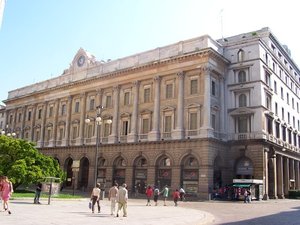 Veneranda Fabbrica del Duomo di Milano |
Mediolan | 1 | Statue of the New Law |
Statue of the New Law
Nasz katalog zawiera 1 dzieł autorstwa Camillo Pacetti.
W większości znajdują się w Veneranda Fabbrica del Duomo di Milano (Mediolan). Powyższa tabela muzeów zawiera ich pełną listę.
In the twilight of the Baroque era and the dawn of Neoclassicism, a period defined by a profound longing for the purity of antiquity, Camillo Pacetti emerged as a master of stone and spirit. Born in Rome in 1758, Pacetti was destined for a life shaped by the marble echoes of the Eternal City. He was not merely an artist working in isolation but a vital part of a prestigious artistic lineage; his brother, Vincenzo Pacetti, was also a celebrated sculptor and restorer. This familial immersion in the classical tradition provided Camillo with a unique vantage point, allowing him to witness firsthand the rebirth of ancient ideals through the meticulous restoration of Roman antiquities.
Pacetti’s formative years were spent within the hallowed halls of the Accademia di San Luca, where he absorbed the rigorous academic standards that would define his career. His early training was a delicate dance between the dramatic, emotive shadows of the Baroque masters—such as Bernini and Caravaggio—and the emerging, disciplined clarity of Neoclassicism. This duality is perhaps the most captivating element of his technique; while he embraced the anatomical precision and idealized beauty championed by Antonio Canova, he never entirely abandoned the expressive dynamism and textured depth that gave his figures a breathing, vital presence.
As his reputation grew, Pacetti’s influence expanded far beyond the borders of Rome. His talent for capturing both the heroic and the intimate led to prestigious commissions that bridged the gap between religious devotion and secular grandeur. In 1804, upon the esteemed recommendation of Canova himself, Pacetti was appointed to the chair of the Accademia di Belle Arti di Brera in Milan. This transition marked a significant chapter in his life, as he became a central figure in the Milanese artistic community, serving not only as a creator but as a mentor to the next generation of sculptors, including notable figures like Abbondio Sangiorgio.
His work in Milan was nothing short of monumental. Tasked with supervising the design and realization of statues for the Milan Cathedral, Pacetti breathed life into sacred narratives. His hands shaped the stone for figures such as the Law of Christ, Moses, and Saint James the Great, contributing to the very facade of the cathedral. Beyond the ecclesiastical, his reach extended to civic pride; he contributed intricate reliefs for the Arco della Pace in Milan, a structure designed to celebrate peace and triumph. Whether working on large-scale architectural elements or delicate portrait busts—such as those of Giuseppe Bossi and Andrea Appiani—Pacetti maintained an unwavering commitment to the dignity of his subjects.
What truly distinguishes Camillo Pacetti is his ability to translate the language of ancient myth into a contemporary aesthetic. His engagement with Josiah Wedgwood in Rome represents a fascinating intersection of fine art and decorative excellence. Under the guidance of John Flaxman, Pacetti modeled six tablets illustrating the life of Achilles, works that brought the epic scale of Greek heroism into the refined spaces of 18th-century collectors. This ability to synthesize classical narrative with modern craftsmanship ensured his relevance in an era of shifting tastes.
Even as he looked backward to the glory of the past, Pacetti was a forward-looking artist. His oeuvre, ranging from mythological reliefs to profound portraiture, reflects a deep understanding of the human condition and the eternal power of classical allegory. Through his mastery of form, texture, and light, he ensured that the grandeur of the ancient world would continue to resonate through the marble of the modern age. His death in Milan in 1826 marked the end of a prolific era, yet his contributions remain etched in the architectural and sculptural heritage of Italy, standing as a testament to a life dedicated to the pursuit of timeless beauty.