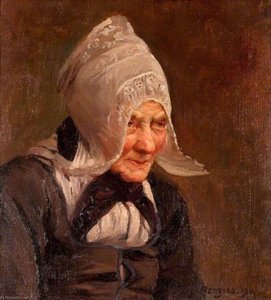
Portret Beryl Fowler

Obrazy: 22 najsłynniejszych dzieł artysty Beryl Fowler – spojrzenie galerii

Aktualizacja: Listopad 2026 · ranking według naszego wskaźnika popularności (liczba wyszukiwań, wizyt i zamówień dla każdego dzieła) · 22 dzieł Beryl Fowler w naszym katalogu

W skrócie

Według opinii kuratorów galerii, najsłynniejszym obrazem Beryl Fowler jest A Maid of Volendam (1911), którego oryginał znajduje się w Laing Art Gallery w Newcastle upon Tyne. Portrait of an Old Man (probably C. Douglas McKenzie) (1905) i Full Length Figure of a Woman in Evening Dress dopełniają trio, które zna każde oko. Z 22 dzieł Beryl Fowler w naszym katalogu, galeria prezentuje poniżej 22 najsłynniejszych prac – każda z nich jest oryginałem z podaniem roku powstania, muzeum oraz cech wyróżniających ją na tle innych.

1881 – 1963 Najwięcej dzieł: The Beacon Museum

10 najlepszych obrazów artysty Beryl Fowler w galerii

1
A Maid of Volendam (1911) autorstwa Beryl Fowler

A Maid of Volendam

1911 · Oil On Canvas · Laing Art Gallery, Newcastle upon Tyne

In this 1911 oil on canvas, we find ourselves looking directly at a young girl dressed in the traditional attire of the Volendam region. She is positioned centrally, her posture marked by a certain quiet confidence as she rests her hands upon her hips. The white of her lace-detailed bonnet draws the eye immediately, creating a sharp contrast against the muted, shadowy tones of the background. There is a stillness…

Obrazy artysty Beryl Fowler, uszeregowane od 11 do 22 miejsca

Tematy, które przyciągnęły wzrok Beryl Fowler

Cztery motywy najczęściej powracające w tych oryginałach, z których każdy doczekał się swojego najdoskonalszego przykładu.

Muzea przechowujące oryginały Beryl Fowler

2 muzeów, w których znajduje się najwięcej obrazów z tej strony.

Muzea Miasto Dzieła artysty Beryl Fowler Obrazy z tej listy
The Beacon Museum, WhitehavenThe Beacon Museum Whitehaven 7 Portrait of a Young Man with Short Dark Hair, Portrait of a Young Woman Wearing a White Shirt with a Blue Scarf, Portrait of a Woman Holding Snowdrops
Laing Art Gallery, Newcastle upon TyneLaing Art Gallery Newcastle upon Tyne 5 A Maid of Volendam, A Volendam Fisherman, Old Woman

Beryl Fowler, jedno kultowe dzieło na dekadę

Dzieła według dekad

Wybierz dekadę, aby zobaczyć dzieło, które ją definiuje.

Obrazy artysty Beryl Fowler: odpowiedzi galerii

Który obraz Beryl Fowler jest najsłynniejszy ze wszystkich?Odkryj odpowiedź

A Maid of Volendam (1911), Laing Art Gallery, Newcastle upon Tyne. Następne są Portrait of an Old Man (probably C. Douglas McKenzie) (1905) oraz Full Length Figure of a Woman in Evening Dress.

Ile lat miał Beryl Fowler, gdy ukończył A Maid of Volendam?Odkryj odpowiedź

30 lat: A Maid of Volendam pochodzi z 1911, a Beryl Fowler urodził(a) się w 1881.

Które to 10 najlepszych obrazów Beryl Fowler?Odkryj odpowiedź

A Maid of Volendam, Portrait of an Old Man (probably C. Douglas McKenzie), Full Length Figure of a Woman in Evening Dress, Wheatfield with the Wheat Stacked, Portrait of a Young Man with Short Dark Hair, A Young Man Sitting on a Settle Leaning over a Chess Table, Portrait of a Young Woman Wearing a White Shirt with a Blue Scarf, Portrait of a Woman Holding Snowdrops, Study of a Semi Nude Male i Portrait of an Old Man (probably C. Douglas McKenzie). Powyższy ranking zawiera rok powstania oraz muzeum dla każdego z nich.

Ile dzieł stworzył/a Beryl Fowler?Odkryj odpowiedź

Nasz katalog zawiera 22 dzieł artysty Beryl Fowler, datowanych od 1904 do 1925.

Gdzie można znaleźć najsłynniejsze oryginały autorstwa Beryl Fowler?Odkryj odpowiedź

W większości znajdują się w The Beacon Museum (Whitehaven) i Laing Art Gallery (Newcastle upon Tyne). Powyższa tabela muzeów zawiera ich pełną listę.

Kiedy Beryl Fowler stworzył swoje najsłynniejsze obrazy?Odkryj odpowiedź

W 1900s: 7 z 22 dzieł na tej stronie powstało w tym czasie, w tym Portrait of an Old Man (probably C. Douglas McKenzie).

Które z najsłynniejszych dzieł Beryl Fowler należą do jego najwcześniejszych i najpóźniejszych prac?Odkryj odpowiedź

Na tej stronie najwcześniejszy to Portrait of a Young Man with Short Dark Hair (1904), a najpóźniejszy The White Shawl (1925).

Do jakich tematów Beryl Fowler powracał najczęściej?Odkryj odpowiedź

Portrait (3) i Woman (2), w ramach 22 dzieł na tej stronie.

Które oryginały artysty Beryl Fowler znajdują się w zbiorach The Beacon Museum?Odkryj odpowiedź

Portrait of a Young Man with Short Dark Hair, Portrait of a Young Woman Wearing a White Shirt with a Blue Scarf i Portrait of a Woman Holding Snowdrops: The Beacon Museum, Whitehaven posiada 7 dzieł widocznych na tej stronie.

Beryl Fowler: artysta

Beryl Fowler: A Cumbrian Visionary of Rural Life

Beryl Fowler (1881-1963), born Mary Beryl Menzies in Newcastle upon Tyne, was more than simply an English painter; she was a keen observer and devoted chronicler of the rugged beauty and enduring traditions of rural Cumbria. Her legacy resides not just in the canvases that bear her name – predominantly evocative landscapes and intimate portraits – but also in her ability to capture the very soul of a vanishing way of life, a testament to the power of observation and a deep connection with the land.

Fowler’s artistic journey began under the tutelage of Hubert von Herkomer at his prestigious Art School in Bushey, Hertfordshire. This formative period instilled within her a classical approach to painting, emphasizing anatomical accuracy and meticulous detail – qualities that would later inform her masterful depictions of figures and their surroundings. However, it was her relocation to Cumbria, coupled with her marriage to the fellow artist Francis “Frank” Hugh Fowler, that truly ignited her artistic passion. The couple settled in Eskdale, a remote valley nestled within the fells, providing them with unparalleled access to the subject matter that would define her career.

The Landscape of Memory

Fowler’s paintings are overwhelmingly dominated by scenes from Cumbrian life – the rolling hills, the dramatic fells, the winding valleys, and the humble dwellings scattered across the landscape. She wasn't interested in grand vistas or romanticized depictions; instead, she focused on the everyday rhythms of rural existence: shepherds tending their flocks, farmers working the land, villagers engaged in their daily routines. Her palette was deliberately muted – earthy browns, greens, greys, and ochres – reflecting the natural tones of her surroundings and lending a sense of timelessness to her work. The light, often diffused by the ever-present mist, played a crucial role, creating an atmosphere of quiet contemplation and reinforcing the connection between humanity and nature.

Her technique was characterized by a remarkable sensitivity to texture and form. She employed loose, expressive brushstrokes that captured the rough surfaces of stone walls, the tangled growth of hedgerows, and the weathered faces of her subjects. There’s a palpable sense of immediacy in her paintings – as if she were capturing a fleeting moment, a transient impression of the landscape or its inhabitants.

Portraits of Character

Alongside her landscapes, Fowler produced a series of compelling portraits that offered intimate glimpses into the lives of Cumbrian villagers. These weren’t idealized representations; they were honest and unvarnished studies of character, capturing the wrinkles etched by time, the shrewdness in their eyes, and the quiet dignity of those who had spent their lives working the land. She skillfully used light and shadow to sculpt her subjects' faces, revealing both their physical features and their inner personalities. The portraits are imbued with a profound sense of empathy and respect for the individuals she depicted.

Influences and Legacy

While influenced by the classical traditions of Herkomer’s school, Fowler developed a distinctly individual style – one that was deeply rooted in her experience of Cumbria. Her work can be seen as part of a broader movement to document and celebrate rural life in Britain during the late 19th and early 20th centuries. The Laing Art Gallery in Newcastle, the Armitt Museum and Library, and the Beacon Museum in Whitehaven all proudly display her paintings, ensuring that her evocative visions of Cumbrian life continue to resonate with audiences today.

Beryl Fowler’s legacy extends beyond the individual artworks she created. She served as a vital link between the past and present, preserving a record of a disappearing world and offering us a poignant reminder of the enduring beauty and resilience of rural England. Her paintings are not merely representations of landscapes and people; they are windows into a way of life that is increasingly rare – a testament to the power of observation, empathy, and artistic vision.