Portret Bernard Van Orley

Obrazy: 15 najsłynniejszych dzieł artysty Bernard Van Orley – spojrzenie galerii

Aktualizacja: Listopad 2026 · ranking według naszego wskaźnika popularności (liczba wyszukiwań, wizyt i zamówień dla każdego dzieła) · 17 dzieł Bernard Van Orley w naszym katalogu

W skrócie

Według opinii kuratorów galerii, najsłynniejszym obrazem Bernard Van Orley jest Portrait of Margaret of Austria, Duchess of Savoy (1520), którego oryginał znajduje się w Królewskie Muzeum Sztuk Pięknych Antwerpia w Antwerpia. Marie Haneton (1519) i Portrait of a Young Man (1520) dopełniają trio, które zna każde oko. Z 17 dzieł Bernard Van Orley w naszym katalogu, galeria prezentuje poniżej 15 najsłynniejszych prac – każda z nich jest oryginałem z podaniem roku powstania, muzeum oraz cech wyróżniających ją na tle innych.

Northern renaissance Najwięcej dzieł: Kunsthistorisches Museum

10 najlepszych obrazów artysty Bernard Van Orley w galerii

1
Portrait of Margaret of Austria, Duchess of Savoy (1520) autorstwa Bernard Van Orley

Portrait of Margaret of Austria, Duchess of Savoy

1520 · Oil On Panel · Królewskie Muzeum Sztuk Pięknych Antwerpia, Antwerpia

In the quiet, dignified presence of “Portrait of Margaret of Austria, Duchess of Savoy,” we encounter more than just a likeness; we enter the refined atmosphere of the early sixteenth century. Painted around 1520 by the Flemish master Barend or Barent van Orley, this half-length portrait serves as a breathtaking window into the Northern Renaissance. The subject, Margaret of Austria, stands captured in a moment of serene composure, her gaze…

2
Marie Haneton (1519) autorstwa Bernard Van Orley

Marie Haneton

1519 · Oil On Panel

The portrait of Marie Haneton, painted by Bernard Van Orley, captures a noblewoman in a moment of quietude. This work dates to about 1519. The subject sits against a dark, neutral background that pushes her presence forward. She is a woman of status, marked by the fine details of her station.

3
Portrait of a Young Man (1520) autorstwa Bernard Van Orley

Portrait of a Young Man

1520 · Oil On Panel · Kunsthistorisches Museum, Wiedeń

The portrait, titled Portrait of a Young Man, was executed by the Brussels-born artist Bernard Van Orley. Created around 1520, the work captures a single figure in a moment of stillness. This formal representation seeks to preserve the specific identity of the sitter through a direct and steady gaze.

4
The Adoration of The magi (1533) autorstwa Bernard Van Orley

The Adoration of The magi

1533 · Oil On Panel · Yale University Art Gallery, Nowe Havane

The Adoration of The magi is a religious work by the Netherlandish painter Bernard Van Orley. Created about 1533, the painting captures a moment of profound reverence from the Christian tradition. The scene focuses on the presentation of gifts to the infant Jesus by the Magi. This central act of devotion unfolds within a structured space, where the figures gather to honor the child.

5
Last Judgement and the Seven Acts of Mercy (1525) autorstwa Bernard Van Orley

Last Judgement and the Seven Acts of Mercy

1525 · Oil On Panel

The Last Judgement and the Seven Acts of Mercy is a work by Bernard Van Orley. Created in 1525, the piece emerged from the workshop of the artist during a period of profound stylistic transition. It was commissioned by the almoners of the Cathedral of Our Lady, Antwerp, to serve a specific devotional purpose within the sacred space of the church.

7
Presentation of Christ (1530) autorstwa Bernard Van Orley

Presentation of Christ

1530 · Oil On Panel · Kunsthistorisches Museum, Wiedeń

In this oil painting from 1530, titled Presentation of Christ, the artist Bernard Van Orley explores a profound moment of biblical narrative. The scene depicts the Presentation of Christ in the Temple, a significant religious event that centers on the infant Jesus being brought before the religious authorities. Through this specific subject matter, the work represents Christ’s acceptance within the Jewish community, capturing a moment of divine recognition within a…

8
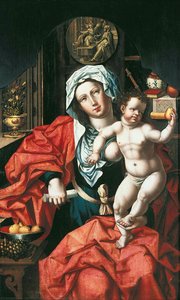
The Virgin and Child (1520) autorstwa Bernard Van Orley

The Virgin and Child

1520 · Oil · Narodowa Galeria Kanady, Ottawa

In the quiet intimacy of The Virgin and Child, we are invited into a moment of profound tenderness that transcends the centuries. This exquisite work by the Brussels master Barend van Orley captures the essence of maternal devotion through the delicate interaction between the Virgin Mary and her infant son. As the child nurses, there is a palpable sense of warmth and vulnerability, a humanizing touch that anchors the divine…

Obrazy artysty Bernard Van Orley, uszeregowane od 11 do 15 miejsca

Tematy, które przyciągnęły wzrok Bernard Van Orley

Cztery motywy najczęściej powracające w tych oryginałach, z których każdy doczekał się swojego najdoskonalszego przykładu.

Muzea przechowujące oryginały Bernard Van Orley

8 muzeów, w których znajduje się najwięcej obrazów z tej strony.

Muzea Miasto Dzieła artysty Bernard Van Orley Obrazy z tej listy
Kunsthistorisches Museum, WiedeńKunsthistorisches Museum Wiedeń 3 Portrait of a Young Man, Presentation of Christ, Thomas Und Matthias Altar
Królewskie Muzeum Sztuk Pięknych Antwerpia, AntwerpiaKrólewskie Muzeum Sztuk Pięknych Antwerpia Antwerpia 1 Portrait of Margaret of Austria, Duchess of Savoy
Yale University Art Gallery, Nowe HavaneYale University Art Gallery Nowe Havane 1 The Adoration of The magi
Kelvingrove Art Gallery and Museum, GlasgowKelvingrove Art Gallery and Museum Glasgow 1 Virgin and Child near a Fountain
Narodowa Galeria Kanady, OttawaNarodowa Galeria Kanady Ottawa 1 The Virgin and Child
Oriel College, OxfordOriel College Oxford 1 Triptych (middle panel) Christ Falls, with the Cross, Before a City Gate
Musée municipal de Bourg-en-Bresse, Bourg-en-BresseMusée municipal de Bourg-en-Bresse Bourg-en-Bresse 1 Portrait of Margaret of Austria
Muzeum w Kadyksu, KadyksMuzeum w Kadyksu Kadyks 1 San Jerónimo penitent

Bernard Van Orley, jedno kultowe dzieło na dekadę

Dzieła według dekad

Wybierz dekadę, aby zobaczyć dzieło, które ją definiuje.

Obrazy artysty Bernard Van Orley: odpowiedzi galerii

Który obraz Bernard Van Orley jest najsłynniejszy ze wszystkich?Odkryj odpowiedź

Portrait of Margaret of Austria, Duchess of Savoy (1520), Królewskie Muzeum Sztuk Pięknych Antwerpia, Antwerpia. Następne są Marie Haneton (1519) oraz Portrait of a Young Man (1520).

Które to 10 najlepszych obrazów Bernard Van Orley?Odkryj odpowiedź

Portrait of Margaret of Austria, Duchess of Savoy, Marie Haneton, Portrait of a Young Man, The Adoration of The magi, Last Judgement and the Seven Acts of Mercy, Virgin and Child near a Fountain, Presentation of Christ, The Virgin and Child, Triptych (middle panel) Christ Falls, with the Cross, Before a City Gate i Portrait of Margaret of Austria. Powyższy ranking zawiera rok powstania oraz muzeum dla każdego z nich.

Ile dzieł stworzył/a Bernard Van Orley?Odkryj odpowiedź

Nasz katalog zawiera 17 dzieł artysty Bernard Van Orley, datowanych od 1519 do 1533.

Gdzie można znaleźć najsłynniejsze oryginały autorstwa Bernard Van Orley?Odkryj odpowiedź

W większości znajdują się w Kunsthistorisches Museum (Wiedeń), Królewskie Muzeum Sztuk Pięknych Antwerpia (Antwerpia) i Yale University Art Gallery (Nowe Havane). Powyższa tabela muzeów zawiera ich pełną listę.

Kiedy Bernard Van Orley stworzył swoje najsłynniejsze obrazy?Odkryj odpowiedź

W 1520s: 6 z 15 dzieł na tej stronie powstało w tym czasie, w tym Portrait of Margaret of Austria, Duchess of Savoy.

Które z najsłynniejszych dzieł Bernard Van Orley należą do jego najwcześniejszych i najpóźniejszych prac?Odkryj odpowiedź

Na tej stronie najwcześniejszy to Marie Haneton (1519), a najpóźniejszy The Adoration of The magi (1533).

Do jakich tematów Bernard Van Orley powracał najczęściej?Odkryj odpowiedź

Woman (3), Man (3) i Child (2), w ramach 15 dzieł na tej stronie.

W jakiej technice najczęściej tworzył Bernard Van Orley?Odkryj odpowiedź

Oil On Panel, dla 7 z 15 dzieł na tej stronie.

Z jakim nurtem związany jest Bernard Van Orley?Odkryj odpowiedź

Northern renaissance, sądząc po oryginałach na tej stronie.

Które oryginały artysty Bernard Van Orley znajdują się w zbiorach Kunsthistorisches Museum?Odkryj odpowiedź

Portrait of a Young Man, Presentation of Christ i Thomas Und Matthias Altar: Kunsthistorisches Museum, Wiedeń posiada 3 dzieł widocznych na tej stronie.

Bernard Van Orley: artysta

The Renaissance Soul of Brussels


In the heart of a burgeoning Brussels, where the scent of damp wool and the rhythmic clatter of looms defined the urban landscape, Barend van Orley emerged as a titan of the Flemish Renaissance. Born into an era of profound artistic transition, his very lineage was woven into the fabric of the arts; as the son of the esteemed tapestry designer Valentin van Orley, his childhood was likely an immersive education in the intricate textures and grand narratives required for the great tapestries of Europe. This early exposure to the meticulous craftsmanship of the Brussels workshops provided a foundation that would eventually allow him to transcend the boundaries of mere decoration, elevating the medium of tapestry to a level of painterly sophistication previously unseen in the Low Countries.

A Synthesis of Northern Realism and Italian Grace


While many of his contemporaries embarked on arduous pilgrimages to the sun-drenched studios of Italy, van Orley achieved a remarkable feat of artistic osmosis, absorbing the revolutionary aesthetics of Raphael’s Rome from afar. He became a leading figure of the Romanist movement, a stylistic bridge that married the unflinching, microscopic realism characteristic of the Netherlandish tradition with the idealized proportions and classical grandeur of the Italian Renaissance. In his hands, the heavy, tactile world of Flemish painting—where every fold of velvet and glint of gold could be felt through the gaze—met the harmonious compositions and balanced grace of the South. This synthesis created a visual language that was both intimately familiar to Northern patrons and breathlessly modern, characterized by a profound command over light, shadow, and the human form.

A Legacy Woven in Paint and Thread


Van Orley’s genius lay in his extraordinary versatility, an ability to command the brush, the loom, and the stained-glass window with equal mastery. His oeuvre is a testament to a creator who saw no distinction between the monumental scale of a tapestry design and the delicate intimacy of a religious oil painting. Whether depicting the profound gravity of the Last Judgement or the tender grace of a Virgin and Child, his work consistently radiated a sense of divine order and earthly beauty. Beyond his individual masterpieces, his historical significance is cemented by his role as a pivotal link in the evolution of Northern art, ensuring that the traditions of his ancestors were not merely preserved but transformed for a new age. Through his prolific output and the continuation of his family’s artistic lineage, Barend van Orley left an indelible mark on the cultural identity of the Flemish Renaissance, leaving behind a legacy as enduring as the very tapestries he helped to define.