Bernard Finnigan Gribble (1872–1962): A Master of Maritime Impressionism
Bernard Finnigan Gribble (1872–1962) occupies a unique position within British marine art, revered for his dramatic portrayals of naval history and captivating illustrations that breathed life into the spirit of seafaring adventure. Born amidst the burgeoning Victorian era—a period defined by exploration, industrial progress, and an unwavering fascination with the ocean’s formidable beauty—Gribble’s artistic journey unfolded against a backdrop of transformative change. Though biographical details remain somewhat elusive—a reflection of the era in which he lived—the sheer volume of his output testifies to his unwavering dedication to capturing maritime scenes with unparalleled precision and profound emotional resonance.Early Life & Artistic Foundations
Precise information concerning Gribble’s formative years is scarce, suggesting that he cultivated his artistic skills largely independently. However, anecdotal evidence indicates a grounding in traditional watercolor techniques—a stylistic choice that would become the cornerstone of his oeuvre. This preference for watercolor speaks to an aesthetic sensibility rooted in capturing subtle tonal variations and luminous effects—characteristics central to the Impressionist movement’s rejection of academic realism. While specifics about his formal training remain elusive, Gribble's exposure to influential artists like Albert Toft at South Kensington Art School undoubtedly shaped his artistic vision.Embracing Impressionism: A Revolutionary Shift
Like many artists of his generation, Bernard Finnigan Gribble wholeheartedly embraced the revolutionary ideas circulating within the Impressionist movement. This embrace is palpably evident in his later works—a deliberate departure from the meticulous conventions of academic painting—where he prioritized looser brushstrokes and vibrant color palettes. Rejecting the pursuit of photographic accuracy, Gribble sought instead to convey the subjective experience of observing a seascape—capturing fleeting moments of light and atmosphere with breathtaking immediacy. This stylistic transformation aligns perfectly with the broader artistic currents of his time, establishing him as a pioneer of Impressionistic marine painting.Notable Commissions & Artistic Subjects
Gribble gained considerable renown through commissions from naval authorities and publishers alike—a testament to his ability to translate complex narratives into visually compelling images. He undertook ambitious projects documenting pivotal maritime events—battleships engaged in combat, expeditions charting unexplored territories—demonstrating meticulous attention to detail concerning rigging, hull construction, and atmospheric conditions. His paintings frequently depicted burning ships—a motif that simultaneously conveyed the destructive force of naval warfare and the sublime beauty inherent in a fiery spectacle—reflecting his masterful synthesis of contrasting elements into harmonious compositions. Critics noted similarities between Gribble’s work and Henry Moore's seascape depictions, recognizing his commitment to capturing the grandeur and drama of maritime history.Technique & Artistic Legacy
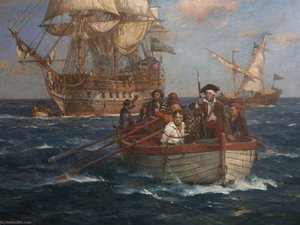
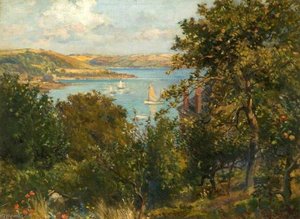
Gribble’s artistic technique involved layering watercolor washes with glazing techniques—a masterful approach that resulted in luminous surfaces retaining remarkable depth and subtlety. He favored a panoramic perspective, immersing viewers within the scene—a stylistic hallmark of Impressionism prioritizing capturing fleeting moments of visual experience. His dedication to meticulous observation combined with his expressive brushwork ensured that Gribble’s paintings would endure as enduring symbols of British maritime art—a legacy cemented by masterpieces such as “Lifeboat,” “The Purbecks from Poole Harbour, Dorset” and “Morgan's Prize.” These works exemplify Impressionistic principles while upholding the highest standards of nautical accuracy. ### Historical Significance & Recognition Bernard Finnigan Gribble’s contribution to capturing the grandeur and drama of naval history secures his place among the foremost marine artists of the 20th century. His unwavering commitment to artistic innovation—coupled with his profound understanding of maritime subjects—continues to inspire admiration for his enduring legacy as a champion of Impressionistic art and a significant figure in British cultural heritage.Pytania i odpowiedzi
Gdzie można znaleźć dzieła Bernard Finnigan Gribble pogrupowane według słów kluczowych?
Strona Według słów kluczowych artysty Bernard Finnigan Gribble grupuje jego dzieła według słów kluczowych.
Czy mogę przeglądać dzieła Bernard Finnigan Gribble według nurtów artystycznych?
Nurty, w których tworzył/a Bernard Finnigan Gribble, można zobaczyć na stronie Wszystkie nurty artystyczne artysty, gdzie dzieła są pogrupowane według nurtów.
Czy mogę przeglądać dzieła Bernard Finnigan Gribble według techniki wykonania?
Strona Wszystkie techniki grupuje dzieła Bernard Finnigan Gribble według techniki wykonania.