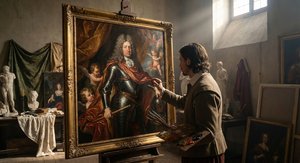
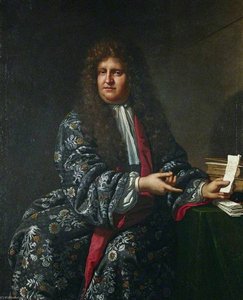
Benedetto Gennari II - A Legacy Forged in Baroque Splendor
Benedetto Gennari II (1633-1715) stands as a pivotal figure within the artistic panorama of the Baroque period, embodying both the grandeur of Italian aristocratic patronage and the burgeoning influence of Northern European aesthetics. Born in Cento, near Ferrara, he descended from a family deeply invested in artistic pursuits—his grandfather, Benedetto Gennari I, established a tradition of excellence that would continue through his son, Ercole Gennari, shaping Benedict’s formative years and instilling within him an unwavering dedication to mastering the art of painting. This lineage wasn't merely genealogical; it represented a profound understanding of how artistic heritage could propel creative innovation—a lesson meticulously absorbed from his uncle, Giovanni Francesco Barbieri, universally recognized as Guercino.Early Apprenticeship & Influences: The Crucible of Style
Guercino’s impact on Gennari’s artistic development was transformative. Recognizing the maestro's unparalleled ability to convey emotion and dramatic tension through masterful use of light and shadow—a technique that would become synonymous with Baroque painting—Gennari embarked upon an apprenticeship under Guercino’s tutelage, immersing himself in the principles of composition and execution that defined the Bolognese school. This formative experience instilled in him a meticulous attention to detail and a profound sensitivity to capturing not merely physical likeness but also the inner character of his subjects—qualities that would serve as bedrock for Gennari's subsequent artistic endeavors. Guercino’s dramatic chiaroscuro, coupled with his dynamic brushstrokes and expressive rendering of human emotion, profoundly influenced Gennari’s stylistic choices, establishing a visual vocabulary that would permeate his oeuvre throughout his life.From Bologna to Royal Courts: A Cosmopolitan Career
Following Guercino’s passing in 1666, Benedetto and Cesare jointly inherited the studio—a decision that ensured the continuation of Guercino's artistic legacy while simultaneously affording them space to cultivate their individual creative voices. However, Gennari possessed an irrepressible spirit and a boundless ambition that transcended the confines of Bologna’s artistic circles. Driven by a fervent admiration for Louis XIV and fueled by a desire to engage with the most influential court in Europe, he secured passage to Paris in March 1672—a pivotal moment marking the commencement of his cosmopolitan journey. Within the Parisian milieu, Gennari swiftly garnered recognition among the nobility, securing commissions that propelled him into the orbit of royal patronage and broadened his artistic horizons. This exposure to the refined tastes of the French court fostered a synthesis of Baroque grandeur with Northern European stylistic nuances—a fusion evident in his later works.A Flourishing Patronage & Artistic Output
The autumn of 1674 witnessed Gennari’s arrival in London, where he established himself as a sought-after portraitist for King Charles II and his successor, James II—a period characterized by prolific artistic production and marked by collaborations with prominent figures of the era. His portraits distinguished themselves through their psychological depth and masterful rendering of facial expressions—capturing not merely physical likeness but also conveying nuanced emotions and inner states. Gennari’s commissions extended beyond portraiture to encompass mythological paintings intended for royal residences, demonstrating his versatility as an artist and cementing his reputation as a champion of Baroque idealism. Notably, he undertook the monumental task of decorating Whitehall Chapel with allegorical imagery reflecting Catholic piety—a project that underscored his commitment to artistic excellence and served as a testament to the cultural tensions simmering beneath the surface of 17th-century England.A Lasting Legacy: Artistic Innovation & Institutional Recognition
In 1689, Gennari’s trajectory shifted once more as he accompanied James II into exile—a period marked by continued artistic activity and culminating in his return to Bologna in 1692. During this time, he established himself as a respected teacher at the Bolognese Accademia Clementina—an institution dedicated to nurturing artistic talent and promoting innovation—further solidifying his contribution to the intellectual and cultural landscape of his era. Gennari’s artistic style evolved beyond the initial influence of Guercino, incorporating elements from Northern European painting techniques—a stylistic hallmark that distinguishes him from many of his contemporaries. His oeuvre comprises over 160 paintings—ranging from portraits to mythological scenes—representing a remarkable testament to his unwavering dedication to mastering the art form and leaving an indelible mark on Baroque artistic history. Benedetto Gennari II’s legacy persists as a beacon of artistic brilliance—a figure whose work continues to inspire admiration for its technical virtuosity, expressive power, and enduring relevance.Pytania i odpowiedzi
Do jakiej epoki należał/a Benedetto Gennari Młodszy?
Benedetto Gennari Młodszy tworzył w okresie – Wczesna nowożytność. Epoka ta osadza twórczość artysty w kontekście historycznym.
Gdzie mogę zobaczyć wszystkie dzieła autorstwa Benedetto Gennari Młodszy?
Wszystkie dzieła Benedetto Gennari Młodszy dostępne w niniejsza strona można przeglądać na stronie Wszystkie dzieła artysty.
Jak mogę znaleźć dzieła artysty Benedetto Gennari Młodszy w konkretnej palecie barw?
Prace artysty Benedetto Gennari Młodszy można przeglądać według palety kolorystycznej na stronie Według palet kolorystycznych artysty.