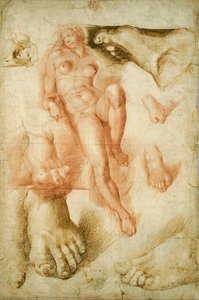
Portret Bartolomeo Passarotti

56 najsłynniejszych obrazów artysty Bartolomeo Passarotti – wybór z galerii

Aktualizacja: Listopad 2026 · ranking według naszego wskaźnika popularności (liczba wyszukiwań, wizyt i zamówień dla każdego dzieła) · 59 dzieł Bartolomeo Passarotti w naszym katalogu

W skrócie

Spośród wszystkich dzieł oryginalnych, które pozostawił Bartolomeo Passarotti, najsłynniejszym jest Portrait of an old woman (1582), znajdujący się w kolekcji Kunsthistorisches Museum w Wiedeń. Tuż za nimi znajdują się The Anatomy Lesson (1550) oraz Family Portrait (1585). Nasz katalog zawiera 59 dzieł autorstwa Bartolomeo Passarotti; galeria zachowała 56 najbardziej podziwianych na świecie prac, z których każda została przedstawiona wraz z datą powstania, informacją o muzeum oraz jej historią.

1529 – 1592, Bolonia Mannerism Najwięcej dzieł: Museo del Prado

10 najlepszych obrazów artysty Bartolomeo Passarotti: wybór galerii

1
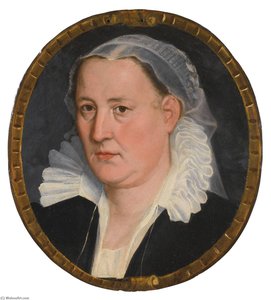
Portrait of an old woman (1582) autorstwa Bartolomeo Passarotti

Portrait of an old woman

1582 · Oil On Canvas · Kunsthistorisches Museum, Wiedeń

The Portrait of an old woman is a work by Bartolomeo Passarotti. Created around 1582, this oil on canvas belongs to the portrait genre. It captures a single subject, an elderly woman, in a moment of quiet presence. The sitter faces the viewer with a steady, unadorned gaze.

2
The Anatomy Lesson (1550) autorstwa Bartolomeo Passarotti

The Anatomy Lesson

1550 · Oil · Galleria Borghese, Rzym

The oil painting titled The Anatomy Lesson brings us into a crowded, intense moment of scholarly inquiry. Created by Bartolomeo Passarotti, this work captures a dramatic academic demonstration. The scene centers on an open human body, laid out for study. A professor, dressed in ecclesiastical attire, leads the lesson. He directs the attention of a group of listeners who gather closely to witness the unfolding dissection. The body rests above…

3
Family Portrait (1585) autorstwa Bartolomeo Passarotti

Family Portrait

1585 · Oil On Canvas · Kunsthistorisches Museum, Wiedeń

In this vertical composition from around 1585, we find ourselves in the presence of three generations, brought together in a quiet, somber arrangement. The painting depicts an older widow seated with a grown son standing behind her, while a small child stands before them. There is a certain stillness to the grouping, a sense of social hierarchy expressed through their physical placement and stoic expressions. The figures are tightly clustered…

6
Saint Jerome (1550) autorstwa Bartolomeo Passarotti

Saint Jerome

1550 · Oil On Canvas · National Gallery of Ireland, Dublin

A muscular, semi-nude ascetic occupies the center of a rugged landscape. His skin, a stark white against the warm ochre and tan of the earth, catches a sharp light that carves out the heavy anatomy of his torso. He is a figure of monumental presence, positioned vertically to command the space. Deep shadows cling to the contours of his muscles, creating a sense of three-dimensional volume that feels heavy and…

7
The Fishmongers (1550) autorstwa Bartolomeo Passarotti

The Fishmongers

1550 · Oil On Canvas

The air in the scene feels heavy with the scent of salt and wet scales. A dense crowd gathers around a bounty of seafood, their bodies pressed close in a crowded, intimate space. An older man with a grey beard anchors the composition, his presence steady amidst the movement. Beside him, a younger man opens his mouth in a wide, theatrical expression, while a child looks upward, eyes searching the…

8
Self-portrait (1560) autorstwa Bartolomeo Passarotti

Self-portrait

1560 · Oil On Panel

The oil painting on panel presents a tightly framed view of Bartolomeo Passerotti, focusing on his face and upper torso. The subject is positioned in a one-point perspective, directing the viewer's gaze toward his features. A dark color palette dominates the work, utilizing shades of brown, black, and muted green. Light enters the scene to create strong contrasts, sculpting the musculature of the face and the folds of the garment.…

9
Portrait of a Scribe (1560) autorstwa Bartolomeo Passarotti

Portrait of a Scribe

1560 · Oil On Canvas

In this 1560 oil on canvas, we find ourselves in the private, silent world of a scholar. The subject, a man engaged in the act of writing, is seated at a desk, his presence defined by a sense of focused intellectualism. There is a certain stillness here, a moment captured where the only sound is the scratching of a quill against parchment. The composition is centered and formal, drawing the…

10
Three Men with Two Dogs (1550) autorstwa Bartolomeo Passarotti

Three Men with Two Dogs

1550 · Oil On Canvas

The composition centers on three men positioned in a tight, intimate arrangement. A central figure holds a glass containing a reddish liquid, acting as the focal point of the group. To his side, another man appears to play a flute, while the third man engages with the others in a shared social moment. Two dogs are integrated into the lower portion of the frame, their forms resting near their human…

Kontynuacja zestawienia Bartolomeo Passarotti, od 11 do 56

11Portrait of the Physician Carlo Fontana (1570) autorstwa Bartolomeo PassarottiPortrait of the Physician Carlo Fontana1570 · Museum of Fine Arts Ghent (MSK) 12Portrait of Pope Pius V (1579) autorstwa Bartolomeo PassarottiPortrait of Pope Pius V1579 13Portrait of a Young General (1575) autorstwa Bartolomeo PassarottiPortrait of a Young General1575 14Pope Gregory XIII (1580) autorstwa Bartolomeo PassarottiPope Gregory XIII1580 · Gemäldegalerie 15Portrait of a Man (1580) autorstwa Bartolomeo PassarottiPortrait of a Man1580 · Harvard Art Museums 16Poultry dealer (1580) autorstwa Bartolomeo PassarottiPoultry dealer1580 · Fondazione di Studi di Storia dell'Arte Roberto Longhi 17Blood of the Redeemer autorstwa Bartolomeo PassarottiBlood of the RedeemerMuseum of Fine Arts 18Portrait of Ignazio Danti (1597) autorstwa Bartolomeo PassarottiPortrait of Ignazio Danti1597 · Musée des Beaux-Arts de Brest 19Portrait of a Man Playing a Lute (1576) autorstwa Bartolomeo PassarottiPortrait of a Man Playing a Lute1576 · Museum of Fine Arts 20Copy after Michelangelo (1550) autorstwa Bartolomeo PassarottiCopy after Michelangelo1550 · Nelson-Atkins Museum of Art 21DIANE CHASSERESSE autorstwa Bartolomeo PassarottiDIANE CHASSERESSELuwr 22The Holy Family with St Elizabeth and the Infant St John the Baptist (1572) autorstwa Bartolomeo PassarottiThe Holy Family with St Elizabeth and the Infant St John the Baptist1572 23Portrait of a Young Man Holding a Statuette (1575) autorstwa Bartolomeo PassarottiPortrait of a Young Man Holding a Statuette1575 24Portrait of a Man with a Dog (detail) (1585) autorstwa Bartolomeo PassarottiPortrait of a Man with a Dog (detail)1585 · Pinacoteca Capitolina 25The Fishmonger's Shop (1580) autorstwa Bartolomeo PassarottiThe Fishmonger's Shop1580 · Galleria Nazionale d'Arte Antica 26Portrait of a Man with a Dog (1585) autorstwa Bartolomeo PassarottiPortrait of a Man with a Dog1585 · Pinacoteca Capitolina 27Study of Male Nudes Fighting (1572) autorstwa Bartolomeo PassarottiStudy of Male Nudes Fighting1572 28Perseus frees Andromeda (1575) autorstwa Bartolomeo PassarottiPerseus frees Andromeda1575 29Family portrait autorstwa Bartolomeo PassarottiFamily portraitGemäldegalerie Alte Meister 30Saint John Baptist, Saint Jerome and Saint Francis of Assisi autorstwa Bartolomeo PassarottiSaint John Baptist, Saint Jerome and Saint Francis of AssisiMusée Des Beaux 31Lute palyer autorstwa Bartolomeo PassarottiLute palyer 32Portrait d'homme en armure autorstwa Bartolomeo PassarottiPortrait d'homme en armure 33A Butchery (1575) autorstwa Bartolomeo PassarottiA Butchery1575 · Galleria Nazionale d'Arte Antica 34Male Nude (1550) autorstwa Bartolomeo PassarottiMale Nude1550 · Museo del Prado 35Copy of a Statue with A Female Nude From Back (1550) autorstwa Bartolomeo PassarottiCopy of a Statue with A Female Nude From Back1550 · Museo del Prado 36Lucretia's Suicide (1550) autorstwa Bartolomeo PassarottiLucretia's Suicide1550 37Portrait of a Botanist (Ulisse Aldrovandi.) (1570) autorstwa Bartolomeo PassarottiPortrait of a Botanist (Ulisse Aldrovandi.)1570 · Galleria Spada 38Portrait of Pope Pius V (1566) autorstwa Bartolomeo PassarottiPortrait of Pope Pius V1566 · Walters Art Museum 39Portrait of a Lady with a Dog (1569) autorstwa Bartolomeo PassarottiPortrait of a Lady with a Dog1569 40Double Portrait of Musicians (1579) autorstwa Bartolomeo PassarottiDouble Portrait of Musicians1579 · Muzea Kapitolińskie 41Double Dressed Portrait of Circe and Ulysses (1575) autorstwa Bartolomeo PassarottiDouble Dressed Portrait of Circe and Ulysses1575 42Copy of the Good Thief, From the Last Judgement of Michelangelo (1570) autorstwa Bartolomeo PassarottiCopy of the Good Thief, From the Last Judgement of Michelangelo1570 · Museo del Prado 43The Holy Family Accompained by an Angel and two Saints (1565) autorstwa Bartolomeo PassarottiThe Holy Family Accompained by an Angel and two Saints1565 · Museo del Prado 44Portrait of a Gentleman (1580) autorstwa Bartolomeo PassarottiPortrait of a Gentleman1580 45Nude Studies (1580) autorstwa Bartolomeo PassarottiNude Studies1580 46Portrait of a Cavalier with his Hunting Dogs (1580) autorstwa Bartolomeo PassarottiPortrait of a Cavalier with his Hunting Dogs1580 · Rhode Island School of Design Museum of Art 47The Coronation of the Virgin with Saints Luke, Dominic, and John the Evangelist (1580) autorstwa Bartolomeo PassarottiThe Coronation of the Virgin with Saints Luke, Dominic, and John the Evangelist1580 · Art Gallery of South Australia 48St. Dominicus and the Albigensians (1580) autorstwa Bartolomeo PassarottiSt. Dominicus and the Albigensians1580 · Pinacoteca Nazionale di Bologna 49Domenico Giuliani and His Servant autorstwa Bartolomeo PassarottiDomenico Giuliani and His Servant 50Portrait of an Old Woman autorstwa Bartolomeo PassarottiPortrait of an Old Woman 51A Group of Six Men, Including a Self Portrait autorstwa Bartolomeo PassarottiA Group of Six Men, Including a Self Portrait 52Portrait of a lady, head and shoulders autorstwa Bartolomeo PassarottiPortrait of a lady, head and shouldersBawarskie Państwowe Zbiory Malarstwa 53Portrait of an Unknown Soldier in Armour autorstwa Bartolomeo PassarottiPortrait of an Unknown Soldier in ArmourNational Trust 54Holy Family with the Infant St John the Baptist and St Catherine of Alexandria autorstwa Bartolomeo PassarottiHoly Family with the Infant St John the Baptist and St Catherine of AlexandriaChristian Museum 55Two market women and a boy with chicken and vegetables autorstwa Bartolomeo PassarottiTwo market women and a boy with chicken and vegetablesGemäldegalerie 56The Butcher's Shop (1580) autorstwa Bartolomeo PassarottiThe Butcher's Shop1580 · Galleria Nazionale d'Arte Antica

Słynne obrazy Bartolomeo Passarotti epoka po epoce

Tematy, które przyciągnęły wzrok Bartolomeo Passarotti

Cztery motywy najczęściej powracające w tych oryginałach, z których każdy doczekał się swojego najdoskonalszego przykładu.

Muzea przechowujące oryginały Bartolomeo Passarotti

8 muzeów, w których znajduje się najwięcej obrazów z tej strony.

Muzea Miasto Dzieła artysty Bartolomeo Passarotti Obrazy z tej listy
Museo del Prado, MadrytMuseo del Prado Madryt 4 Male Nude, Copy of a Statue with A Female Nude From Back, Copy of the Good Thief, From the Last Judgement of Michelangelo
Kunsthistorisches Museum, WiedeńKunsthistorisches Museum Wiedeń 3 Portrait of an old woman, Family Portrait, Portrait of the physician Carlo Fontana
Galleria Nazionale d'Arte Antica, RzymGalleria Nazionale d'Arte Antica Rzym 3 The Fishmonger's Shop, A Butchery, The Butcher's Shop
Bawarskie Państwowe Zbiory Malarstwa, MonachiumBawarskie Państwowe Zbiory Malarstwa Monachium 2 Portrait of a Man, Portrait of a lady, head and shoulders
Museum of Fine Arts, BostonMuseum of Fine Arts Boston 2 Blood of the Redeemer, Portrait of a Man Playing a Lute
Pinacoteca Capitolina, RzymPinacoteca Capitolina Rzym 2 Portrait of a Man with a Dog (detail), Portrait of a Man with a Dog
Galleria Borghese, RzymGalleria Borghese Rzym 1 The Anatomy Lesson
National Gallery of Ireland, DublinNational Gallery of Ireland Dublin 1 Saint Jerome

Bartolomeo Passarotti dekada po dekadzie: oryginały definiujące każdy okres

Dzieła według dekad

Wybierz dekadę, aby zobaczyć dzieło, które ją definiuje.

Pytania kolekcjonerów o obrazy Bartolomeo Passarotti

Z jakiego dzieła najbardziej znany jest Bartolomeo Passarotti?Odkryj odpowiedź

Portrait of an old woman (1582), Kunsthistorisches Museum, Wiedeń. Następne są The Anatomy Lesson (1550) oraz Family Portrait (1585).

W jakim wieku był Bartolomeo Passarotti, gdy powstało Portrait of an old woman?Odkryj odpowiedź

53 lat: Portrait of an old woman pochodzi z 1582, a Bartolomeo Passarotti urodził(a) się w 1529.

Jakie są dziesięć najsłynniejszych obrazów, których autorem jest Bartolomeo Passarotti?Odkryj odpowiedź

Portrait of an old woman, The Anatomy Lesson, Family Portrait, Portrait of the physician Carlo Fontana, Portrait of a Man, Saint Jerome, The Fishmongers, Self-portrait, Portrait of a Scribe i Three Men with Two Dogs. Powyższy ranking zawiera rok powstania oraz muzeum dla każdego z nich.

Ile obrazów pozostawił po sobie Bartolomeo Passarotti?Odkryj odpowiedź

Nasz katalog zawiera 59 dzieł artysty Bartolomeo Passarotti, datowanych od 1550 do 1585.

W których muzeach znajdują się arcydzieła Bartolomeo Passarotti?Odkryj odpowiedź

W większości znajdują się w Museo del Prado (Madryt), Kunsthistorisches Museum (Wiedeń) i Galleria Nazionale d'Arte Antica (Rzym). Powyższa tabela muzeów zawiera ich pełną listę.

W których latach Bartolomeo Passarotti namalował swoje najsłynniejsze dzieła?Odkryj odpowiedź

W 1580s: 15 z 56 dzieł na tej stronie powstało w tym czasie, w tym Portrait of an old woman.

Jakie są pierwsze i ostatnie słynne oryginały Bartolomeo Passarotti?Odkryj odpowiedź

Na tej stronie najwcześniejszy to The Anatomy Lesson (1550), a najpóźniejszy Family Portrait (1585).

Jakie tematy Bartolomeo Passarotti wybierał najczęściej?Odkryj odpowiedź

Man (19), Beard (8) i Book (6), w ramach 56 dzieł na tej stronie.

Której techniki Bartolomeo Passarotti używał najczęściej?Odkryj odpowiedź

Oil On Canvas, dla 18 z 56 dzieł na tej stronie.

Do jakiego nurtu artystycznego należy Bartolomeo Passarotti?Odkryj odpowiedź

Mannerism i Renaissance, sądząc po oryginałach na tej stronie.

Które dzieła Bartolomeo Passarotti znajdują się w Museo del Prado?Odkryj odpowiedź

Male Nude, Copy of a Statue with A Female Nude From Back i Copy of the Good Thief, From the Last Judgement of Michelangelo: Museo del Prado, Madryt posiada 4 dzieł widocznych na tej stronie.

Bartolomeo Passarotti: życie i twórczość

Bologneński mistrz manierystycznego przepychu

W tętniącym życiem, nieustannie zmieniającym się krajobrazie późnego szesnastego wieku, niewielu artystów potrafiło tak mistrzowsko uchwycić przejście od ustrukturyzowanej elegancji dojrzałego renesansu do dramatycznej intensywności baroku jak Bartolomeo Passarotti. Urodzony w Bolonii w 1529 roku, Passarotti wyłonił się nie tylko jako malarz, ale jako kluczowy pomost między epokami. Jego wczesne lata definiowało głębokie zanurzenie w rzymskiej scenie artystycznej, gdzie między 1550 a 1555 rokiem szukał przewodnictwa u mistrzów takich jak Giacomo Barozzi da Vignola i Taddeo Zuccari. Ten okres rzymskiego szkolenia był przełomowy; zaszczepił w nim głęboki szacunek do antyku oraz humanistyczne zasady anatomicznej precyzji i zrównoważonej kompozycji, nawet gdy zaczął eksperymentować z bardziej wydłużonymi i złożonymi formami, które miały zdefiniować nurt manierystyczny.

Po powrocie do rodzinnej Bolonii, Passarotti nie ograniczył się jedynie do lokalnej praktyki; stał się twórcą potężnego ośrodka artystycznego. Jego pracownia stała się tyglem innowacji, przyciągającym pokolenie talentów, które ostatecznie przekształciło sztukę europejską. Wśród jego najbardziej znamienitych uczniów znaleźli się Agostino Carracci, Lucio Massari oraz Francesco Brizzi—artyści, którzy nieśli ziarna jego stylistycznych eksperymentów w nadchodzącą erę baroku. To dziedzictwo mentorskich nauk sprawiło, że wpływ Passarottiego wykraczał daleko poza mury jego własnej pracowni, a jego podejście do światła, tekstury i tematyki przeniknęło samą tkankę szkoły bolońskiej.

Tkanina gatunku i dramatu

Dzieło Passarottiego słynie z niezwykłej wszechstronności, rozciągającej się od sfery sacrum po głęboko ziemskie tematy. Posiadał on unikalną zdolność poruszania się między monumentalnymi ołtarzami religijnymi a intymnymi, często surowymi scenami rodzajowymi. W jego pracach często pojawia się uderzające wykorzystanie chiaroscuro, operujące ostrymi kontrastami między światłem a cieniem, aby nadać podmiotom poczucie psychologicznej głębi i fizycznej obecności. Ta technika, która zapowiadała dramatyczne oświetlenie później dopracowane przez Caravaggia, pozwalała mu tchnąć życie zarówno w postacie mitologiczne, jak i w codziennych robotników.

W swoich obrazach rodzajowych Passarotti wykazywał się nadzwyczajnym okiem do detali i fascynacją teksturami codziennego bytowania. Dzieła takie jak Sklep rzeźnika (1580) służą jako urzekające okna na świat późnego renesansu, prezentując mistrzowską kontrolę nad ciepłymi tonami i realistyczny opis życia wspólnotowego. Podobnie, jego zdolność do przedstawiania boskości jest widoczna w takich dziełach jak Diana Łowczyni, gdzie rzymska bogini łowów została uchwycona z dynamiczną, umięśnioną gracją, ucieleśniającą samą esencję manierystycznej energii. Bez względu na to, czy przedstawiał cichą samotność Gracza na lutni, czy powagę religijnej pobożności, jego pociągnięcia pędzla nieustannie dążyły do uchwycenia ulotnego napięcia między ideałem a rzeczywistością.

Dziedzictwo i znaczenie historyczne

Choć historia czasem spycha Passarottiego na dalszy plan na rzecz bardziej rewolucyjnych postaci, takich jak Michał Anioł, jego znaczenie dla ewolucji sztuki włoskiej jest niezaprzeczalne. Był mistrzem transformacji, artystą, który rozumiał, jak oddać honor klasycznej przeszłości, jednocześnie przygotowując grunt pod emocjonalne turbulencje następnego stulecia. Jego późniejsze prace, inspirowane wzorcami toskańskimi, takimi jak Giorgio Vasari i Prospero Fontana, świadczą o ciągłej ewolucji i niegasnącej ciekawości zmieniających się prądów gustu estetycznego.

Historyczne znaczenie Bartolomeo Passarotti tkwi w jego roli jako fundatora Akademii Carraccich oraz szerszej tradycji bolońskiej. Jego życiowe dzieło — połączenie skrupulatnych studiów anatomicznych, dramatycznego światłocienia i głębokiego zainteresowania kondycją ludzką — pozostaje świadectwem trwałej potęgi manieryzmu. Dzięki swojej pracowni, uczniom i sugestywnym płótnom, Passarotti sprawił, że duch Bolonii pozostał w sercu europejskiego dialogu artystycznego przez kolejne pokolenia.