Portret Arthur Lismer

100 najsłynniejszych obrazów artysty Arthur Lismer, każdy niepowtarzalny

Aktualizacja: Listopad 2026 · ranking według naszego wskaźnika popularności (liczba wyszukiwań, wizyt i zamówień dla każdego dzieła) · 238 dzieł Arthur Lismer w naszym katalogu

W skrócie

Lake Superior Country (1927) to obraz autorstwa Arthur Lismer, który przyciąga najwięcej spojrzeń; oryginał znajduje się w Narodowa Galeria Kanady, Ottawa. Następnie wzrok kieruje się na The Campers (1915) i The Banks of the Don (1912). Spośród 238 dzieł Arthur Lismer w naszym katalogu, tych 100 jest najbardziej znanych – każde z nich to unikatowy oryginał, przedstawiony wraz z rokiem powstania, muzeum oraz powodem, dla którego przetrwało próbę czasu.

1885 – 1969, Sheffield Impressionism Najwięcej dzieł: Narodowa Galeria Kanady

10 najlepszych obrazów autorstwa Arthur Lismer według oka galerii

1
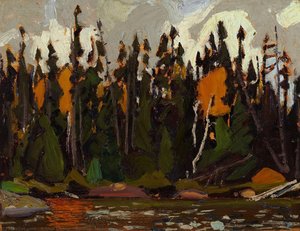
Lake Superior Country (1927) autorstwa Arthur Lismer

Lake Superior Country

1927 · Black and White Photography · Narodowa Galeria Kanady, Ottawa

This work captures a specific, documentary essence of early 20th-century life. It is a visual record of agricultural architecture and the physical effort required to tame a landscape. The handwritten text at the edges of the frame reminds the viewer that this is an archival fragment, a piece of history caught in a still, silent moment. There is a sense of stillness here, as if the workers have only just…

Słynne obrazy artysty Arthur Lismer, od 11 do 100

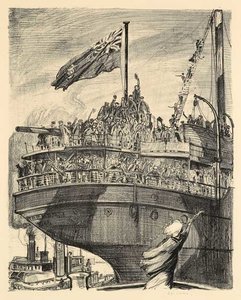
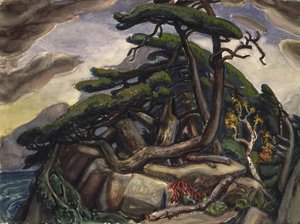
11Fishing Village, New Brunswick (1929) autorstwa Arthur LismerFishing Village, New Brunswick1929 · Narodowa Galeria Kanady 12Mochudi, Bechuana Village (1936) autorstwa Arthur LismerMochudi, Bechuana Village1936 · Narodowa Galeria Kanady 13Sunset (1914) autorstwa Arthur LismerSunset1914 · Narodowa Galeria Kanady 14Landscape Rhythm autorstwa Arthur LismerLandscape Rhythm 15Olympic with Returned Soldiers (1919) autorstwa Arthur LismerOlympic with Returned Soldiers1919 · Canadian War Museum 16Spruce, Algoma (1922) autorstwa Arthur LismerSpruce, Algoma1922 · The Robert McLaughlin Gallery 17Hmcs Grilse On Convoy Duty autorstwa Arthur LismerHmcs Grilse On Convoy Duty 18Portrait Of Horatio Walker autorstwa Arthur LismerPortrait Of Horatio Walker 19Portrait Of Frederick Challener autorstwa Arthur LismerPortrait Of Frederick Challener 20Portrait Of Sir Wyly Grier autorstwa Arthur LismerPortrait Of Sir Wyly Grier 21The Picnic autorstwa Arthur LismerThe Picnic 22Study Of A Head With Hat autorstwa Arthur LismerStudy Of A Head With Hat 23Man Smoking A Pipe autorstwa Arthur LismerMan Smoking A Pipe 24Study Of Two Heads autorstwa Arthur LismerStudy Of Two Heads 25Sketch Of A Boy's Head autorstwa Arthur LismerSketch Of A Boy's Head 26Sirs To You autorstwa Arthur LismerSirs To You 27Harbour Defence autorstwa Arthur LismerHarbour Defence 28Home Again autorstwa Arthur LismerHome Again 29Departure Of A Troopship autorstwa Arthur LismerDeparture Of A Troopship 30Swamp autorstwa Arthur LismerSwamp 31Nova Scotia Fishing Village autorstwa Arthur LismerNova Scotia Fishing Village 32Laocoon autorstwa Arthur LismerLaocoon 33The Picnic (1915) autorstwa Arthur LismerThe Picnic1915 · Narodowa Galeria Kanady 34The "Skinny-Dip" (1915) autorstwa Arthur LismerThe "Skinny-Dip"1915 · Narodowa Galeria Kanady 35The Fishermen (1915) autorstwa Arthur LismerThe Fishermen1915 · Narodowa Galeria Kanady 36The Sea Gulls (1915) autorstwa Arthur LismerThe Sea Gulls1915 · Narodowa Galeria Kanady 37The Ducks (1915) autorstwa Arthur LismerThe Ducks1915 · Narodowa Galeria Kanady 38A Westerly Gale, Georgian Bay (1916) autorstwa Arthur LismerA Westerly Gale, Georgian Bay1916 · Narodowa Galeria Kanady 39Study for "Road through the Bush" (1914) autorstwa Arthur LismerStudy for "Road through the Bush"1914 · Narodowa Galeria Kanady 40Lake (1914) autorstwa Arthur LismerLake1914 · Narodowa Galeria Kanady 41Shore with Birches (1914) autorstwa Arthur LismerShore with Birches1914 · Narodowa Galeria Kanady 42Island with Pine (1914) autorstwa Arthur LismerIsland with Pine1914 · Narodowa Galeria Kanady 43Study for "The Guide's Home, Algonquin" (1914) autorstwa Arthur LismerStudy for "The Guide's Home, Algonquin"1914 · Narodowa Galeria Kanady 44Wood Interior, Algonquin Park (1914) autorstwa Arthur LismerWood Interior, Algonquin Park1914 · Narodowa Galeria Kanady 45Georgian Bay (1913) autorstwa Arthur LismerGeorgian Bay1913 · Narodowa Galeria Kanady 46Georgian Bay (1915) autorstwa Arthur LismerGeorgian Bay1915 · Narodowa Galeria Kanady 47Minesweepers, Halifax (1919) autorstwa Arthur LismerMinesweepers, Halifax1919 · Canadian War Museum 48Convoy in Bedford Basin (1919) autorstwa Arthur LismerConvoy in Bedford Basin1919 · Canadian War Museum 49The Little Pool, Algoma (1921) autorstwa Arthur LismerThe Little Pool, Algoma1921 · Narodowa Galeria Kanady 50Spruce, Sand Lake, Algoma (1922) autorstwa Arthur LismerSpruce, Sand Lake, Algoma1922 · Narodowa Galeria Kanady 51Shoreline, Georgian Bay (1920) autorstwa Arthur LismerShoreline, Georgian Bay1920 · Narodowa Galeria Kanady 52Olympic with Returned Soldiers (1919) autorstwa Arthur LismerOlympic with Returned Soldiers1919 · Canadian War Museum 53Island (1926) autorstwa Arthur LismerIsland1926 · Narodowa Galeria Kanady 54The Mill, Quebec (1925) autorstwa Arthur LismerThe Mill, Quebec1925 · Narodowa Galeria Kanady 55Quebec Uplands (1926) autorstwa Arthur LismerQuebec Uplands1926 · Narodowa Galeria Kanady 56Quebec Village (Saint-Hilarion) (1925) autorstwa Arthur LismerQuebec Village (Saint-Hilarion)1925 · Narodowa Galeria Kanady 57Habitant Farm (1926) autorstwa Arthur LismerHabitant Farm1926 · Narodowa Galeria Kanady 58October on the North Shore, Lake Superior (1927) autorstwa Arthur LismerOctober on the North Shore, Lake Superior1927 · Narodowa Galeria Kanady 59Pic Island, Lake Superior (1927) autorstwa Arthur LismerPic Island, Lake Superior1927 · Narodowa Galeria Kanady 60Lilies and Apples (1931) autorstwa Arthur LismerLilies and Apples1931 · Narodowa Galeria Kanady 61Ash and Pine, Georgian Bay (1933) autorstwa Arthur LismerAsh and Pine, Georgian Bay1933 · Narodowa Galeria Kanady 62Pine Wrack (1933) autorstwa Arthur LismerPine Wrack1933 · Narodowa Galeria Kanady 63Nova Scotia Fishing Village (1930) autorstwa Arthur LismerNova Scotia Fishing Village1930 · Narodowa Galeria Kanady 64Quiet Cove, McGregor Bay (1935) autorstwa Arthur LismerQuiet Cove, McGregor Bay1935 · Narodowa Galeria Kanady 65Evening Silhouette (1926) autorstwa Arthur LismerEvening Silhouette1926 · McMichael Canadian Art Collection 66Undergrowth (1946) autorstwa Arthur LismerUndergrowth1946 · Narodowa Galeria Kanady 67Rock (1947) autorstwa Arthur LismerRock1947 · Narodowa Galeria Kanady 68Floats and Buoys, Neil's Harbour (1946) autorstwa Arthur LismerFloats and Buoys, Neil's Harbour1946 · Narodowa Galeria Kanady 69Docks at Ingonish (1945) autorstwa Arthur LismerDocks at Ingonish1945 · Narodowa Galeria Kanady 70Nature morte (1956) autorstwa Arthur LismerNature morte1956 · Musée national des beaux-arts du Québec 71Sketch for Minesweepers and Seaplanes (1919) autorstwa Arthur LismerSketch for Minesweepers and Seaplanes1919 · Canadian War Museum 72Pine Wrack (1939) autorstwa Arthur LismerPine Wrack1939 · McMichael Canadian Art Collection 73Canadian Jungle (1946) autorstwa Arthur LismerCanadian Jungle1946 · McMichael Canadian Art Collection 74Stormy weather, georgian bay autorstwa Arthur LismerStormy weather, georgian bay 75Georgian Bay Shoreline autorstwa Arthur LismerGeorgian Bay ShorelineNarodowa Galeria Kanady 76Hillside autorstwa Arthur LismerHillsideNarodowa Galeria Kanady 77Little Lake (II) autorstwa Arthur LismerLittle Lake (II)Narodowa Galeria Kanady 78Little Lake (I) autorstwa Arthur LismerLittle Lake (I)Narodowa Galeria Kanady 79The Little Drifter And The Big Freighter autorstwa Arthur LismerThe Little Drifter And The Big Freighter 80The Sea Gulls autorstwa Arthur LismerThe Sea Gulls 81The Ducks autorstwa Arthur LismerThe Ducks 82The Campers autorstwa Arthur LismerThe Campers 83The Fishermen autorstwa Arthur LismerThe Fishermen 84Young Boy autorstwa Arthur LismerYoung Boy 85Tree Stump autorstwa Arthur LismerTree Stump 86Tree Study autorstwa Arthur LismerTree Study 87Seagull autorstwa Arthur LismerSeagull 88Sketchbook autorstwa Arthur LismerSketchbook 89Seated Man autorstwa Arthur LismerSeated Man 90Robert Hubbard And Kathleen Fenwick autorstwa Arthur LismerRobert Hubbard And Kathleen Fenwick 91Indian Summer autorstwa Arthur LismerIndian Summer 92The Transport, Halifax autorstwa Arthur LismerThe Transport, Halifax 93Standing Woman autorstwa Arthur LismerStanding Woman 94Shack autorstwa Arthur LismerShack 95Merrill Denison Interviews E.W.G autorstwa Arthur LismerMerrill Denison Interviews E.W.G 96Island Of Spruce autorstwa Arthur LismerIsland Of Spruce 97Dead Spruce autorstwa Arthur LismerDead Spruce 98Woman With A Bonnet autorstwa Arthur LismerWoman With A Bonnet 99The Banks Of The Don autorstwa Arthur LismerThe Banks Of The Don 100Skinny-dip autorstwa Arthur LismerSkinny-dip

Słynne obrazy Arthur Lismer epoka po epoce

Early 20th Century

3 dzieł na tej liście

Tematy, które przyciągnęły wzrok Arthur Lismer

Cztery motywy najczęściej powracające w tych oryginałach, z których każdy doczekał się swojego najdoskonalszego przykładu.

Muzea przechowujące oryginały Arthur Lismer

5 muzeów, w których znajduje się najwięcej obrazów z tej strony.

Muzea Miasto Dzieła artysty Arthur Lismer Obrazy z tej listy
Narodowa Galeria Kanady, OttawaNarodowa Galeria Kanady Ottawa 50 Lake Superior Country, The Campers, The Banks of the Don
Canadian War Museum, OttawaCanadian War Museum Ottawa 5 Olympic with Returned Soldiers, Minesweepers, Halifax, Convoy in Bedford Basin
McMichael Canadian Art Collection, VaughanMcMichael Canadian Art Collection Vaughan 3 Evening Silhouette, Pine Wrack, Canadian Jungle
The Robert McLaughlin Gallery, OshawaThe Robert McLaughlin Gallery Oshawa 1 Spruce, Algoma
Musée national des beaux-arts du Québec, Quebec CityMusée national des beaux-arts du Québec Quebec City 1 Nature morte

Arthur Lismer na przestrzeni dekad: jeden unikatowy oryginał dla każdego

Dzieła według dekad

Wybierz dekadę, aby zobaczyć dzieło, które ją definiuje.

Obrazy artysty Arthur Lismer: pytania do galerii

Jakie jest najsłynniejsze dzieło artysty Arthur Lismer?Odkryj odpowiedź

Lake Superior Country (1927), Narodowa Galeria Kanady, Ottawa. Następne są The Campers (1915) oraz The Banks of the Don (1912).

W jakim wieku Arthur Lismer stworzył/a Lake Superior Country?Odkryj odpowiedź

42 lat: Lake Superior Country pochodzi z 1927, a Arthur Lismer urodził(a) się w 1885.

Które dziesięć obrazów Arthur Lismer jest najbardziej znanych?Odkryj odpowiedź

Lake Superior Country, The Campers, The Banks of the Don, Swamp, Georgian Bay, Spring, A September Gale, Georgian Bay, Bon Echo, Algoma, A September Gale, Georgian Bay i Rain in the North Country. Powyższy ranking zawiera rok powstania oraz muzeum dla każdego z nich.

Ile znanych dzieł stworzył Arthur Lismer?Odkryj odpowiedź

Nasz katalog zawiera 238 dzieł artysty Arthur Lismer, datowanych od 1912 do 1956.

Gdzie można zobaczyć najsłynniejsze oryginały Arthur Lismer?Odkryj odpowiedź

W większości znajdują się w Narodowa Galeria Kanady (Ottawa), Canadian War Museum (Ottawa) i McMichael Canadian Art Collection (Vaughan). Powyższa tabela muzeów zawiera ich pełną listę.

W jakim okresie Arthur Lismer stworzył/a swoje najsłynniejsze obrazy?Odkryj odpowiedź

W 1910s: 24 z 100 dzieł na tej stronie powstało w tym czasie, w tym The Campers.

Który z najsłynniejszych obrazów artysty Arthur Lismer powstał najwcześniej, a który najpóźniej?Odkryj odpowiedź

Na tej stronie najwcześniejszy to The Banks of the Don (1912), a najpóźniejszy Nature morte (1956).

Jakie tematy preferował Arthur Lismer?Odkryj odpowiedź

Landscape (6), Canadian art (5) i Trees (4), w ramach 100 dzieł na tej stronie.

Jakich materiałów Arthur Lismer używał najczęściej?Odkryj odpowiedź

Oil, dla 3 z 100 dzieł na tej stronie.

Do jakiego nurtu należy twórczość Arthur Lismer?Odkryj odpowiedź

Impressionism, sądząc po oryginałach na tej stronie.

Jakie oryginały Arthur Lismer można zobaczyć w Narodowa Galeria Kanady?Odkryj odpowiedź

Lake Superior Country, The Campers i The Banks of the Don: Narodowa Galeria Kanady, Ottawa posiada 50 dzieł widocznych na tej stronie.

Arthur Lismer: portret artysty

A Life Forged in Steel and Painted in Light

Arthur Lismer’s story is one of remarkable transformation, a journey from the grimy industrial heartland of Sheffield, England, to becoming a pivotal figure in defining a distinctly Canadian artistic identity. Born in 1885, his early life was steeped in the realities of working-class existence, a world of factories and smoke that perhaps unknowingly fueled within him a lifelong yearning for the unspoiled beauty of nature. His apprenticeship at age thirteen with a photo-engraving company wasn’t merely a trade; it was an immersion into visual language, honing skills that would later serve as the foundation for his artistic explorations. Evening classes at the Sheffield School of Art provided formal training, nurturing a talent already blossoming through sketches and observations of his surroundings – even discreetly during Unitarian church services, much to his mother’s gentle disapproval. This early exposure wasn't just about technique; it was about seeing, truly *seeing*, the world around him, a skill that would define his entire career. The move to Antwerp’s Academie Royale further broadened his horizons, exposing him to European artistic currents like Barbizon and Post-Impressionism – influences that subtly shaped his evolving style.

From Halifax Harbor to the Group of Seven

The pivotal decision to immigrate to Canada in 1911 marked a turning point. Settling in Toronto, Lismer found employment at Grip Ltd., a commercial art firm where fatefully, he encountered Tom Thomson, another artist destined for legendary status in Canadian art history. However, it was his appointment as principal of the Victoria School of Art and Design in Halifax in 1916 that revealed his commitment to education. He didn’t simply administer; he revitalized the school, expanding its curriculum and student body, believing passionately in fostering artistic talent. World War I dramatically altered his path, though. Assigned as an official war artist, Lismer found himself captivated by the bustling Halifax harbor, a strategic port teeming with ships. It was here that he developed a unique series of paintings depicting vessels adorned with *dazzle camouflage* – a revolutionary technique designed to confuse enemy submarines through bold patterns and disruptive coloration. These weren’t merely technical exercises; they were striking visual statements, demonstrating his ability to adapt artistic principles to practical wartime needs and earning him recognition from Lord Beaverbrook. Upon returning to Toronto in 1919, Lismer became vice-principal of the Ontario College of Art and actively collaborated with a group of artists who shared a vision: to create an art that was uniquely Canadian. This collective would become known as the Group of Seven.

A Distinctly Canadian Vision

Lismer’s artistic development wasn't static; it was a continuous evolution, influenced by his European training and profoundly shaped by the vastness and raw beauty of the Canadian landscape. Initially embracing Post-Impressionist techniques, he gradually moved towards a more expressive and personal style. His landscapes weren’t simply representations of scenery; they were attempts to capture the *essence* of Canada – its emotional resonance, its untamed spirit. Vibrant colors, dynamic compositions, and bold brushstrokes became hallmarks of his work. He sought not just to depict what he saw but to convey how it felt to be immersed in the wilderness, to experience the power and majesty of nature firsthand. His paintings often featured flattened perspectives and expressive textures, reflecting a desire to move beyond mere imitation and towards a more subjective interpretation of reality. The Group of Seven’s collective goal was ambitious: to forge an artistic identity independent from European traditions, one rooted in the unique character of the Canadian environment. Lismer played a crucial role in this endeavor, contributing not only his artistic talent but also his unwavering dedication to their shared vision.

Key Characteristics of His Work

  • Vibrant Color Palettes: Employing bold, expressive colors to capture the emotional impact of landscapes.
  • Dynamic Compositions: Utilizing strong compositional elements to create a sense of movement and energy.
  • Expressive Brushwork: Characterized by visible brushstrokes that convey texture and emotion.
  • Dazzle Camouflage Paintings: Unique depictions of ships during WWI, showcasing innovative use of pattern and color.
  • Focus on Canadian Wilderness: A deep connection to the landscapes of Canada, particularly Northern Ontario and Nova Scotia.

Legacy and Enduring Influence

Arthur Lismer’s contributions extend far beyond his paintings. As an educator, he profoundly impacted generations of Canadian artists through his leadership at NSCAD University and the Ontario College of Art, instilling in them a passion for creativity and a commitment to artistic excellence. His dazzle camouflage works remain historically significant, offering a unique visual record of World War I and demonstrating his adaptability as an artist. He was made a Companion of the Order of Canada in 1967, a testament to his lasting impact on Canadian culture. Today, Lismer is celebrated as one of Canada’s most important artists, recognized for his vibrant landscapes, innovative techniques, and unwavering dedication to fostering artistic talent. His works are held in major public and private collections across the country and internationally, continuing to inspire and captivate audiences with their beauty and emotional depth. His legacy isn't just about what he painted; it’s about how he inspired others to see the world – and Canada – in a new light.