Portret Antonio Zucchi

87 najsłynniejszych obrazów artysty Antonio Zucchi – wybór z galerii

Aktualizacja: Listopad 2026 · ranking według naszego wskaźnika popularności (liczba wyszukiwań, wizyt i zamówień dla każdego dzieła) · 101 dzieł Antonio Zucchi w naszym katalogu

W skrócie

Spośród wszystkich dzieł oryginalnych, które pozostawił Antonio Zucchi, najsłynniejszym jest A Putto Being Woken from Sleep by Tickling of His Nose (1770), znajdujący się w kolekcji Nostell Priory w Wakefield. Tuż za nimi znajdują się James Adam, 1732 - 1794. Architect and designer (1763) oraz Landscape with a Bridge and Ruins with Peasants Fishing (a set of six decorative wall panels) (1781). Nasz katalog zawiera 101 dzieł autorstwa Antonio Zucchi; galeria zachowała 87 najbardziej podziwianych na świecie prac, z których każda została przedstawiona wraz z datą powstania, informacją o muzeum oraz jej historią.

1726 – 1795, Wenecja Neoclassical style Najwięcej dzieł: Nostell Priory

10 najlepszych obrazów artysty Antonio Zucchi: wybór galerii

1
A Putto Being Woken from Sleep by Tickling of His Nose (1770) autorstwa Antonio Zucchi

A Putto Being Woken from Sleep by Tickling of His Nose

1770 · Oil · Nostell Priory, Wakefield

We find ourselves before A Putto Being Woken from Sleep by Tickling of His Nose, a work by the Venetian painter Antonio Zucchi. This piece dates to about 1770, a period when Zucchi was establishing his presence within the English artistic landscape. The painting is currently held within the Nostell Priory collection, where it has been preserved as part of their significant holdings.

2
James Adam, 1732 - 1794. Architect and designer (1763) autorstwa Antonio Zucchi

James Adam, 1732 - 1794. Architect and designer

1763 · Oil On Canvas · Scottish National Portrait Gallery, Edynburg

In this portrait, James Adam, 1732 - 1794. Architect and designer, meets the viewer through the brush of Antonio Zucchi. The scene unfolds in Rome, captured during the subject's Grand Tour of Italy in 1763. Here, the youngest member of a prominent dynasty of Scottish architects appears not merely as a man, but as a central figure in the unfolding Neoclassical movement. He carries the weight of his profession with…

3
Landscape with a Bridge and Ruins with Peasants Fishing (a set of six decorative wall panels) (1781) autorstwa Antonio Zucchi

Landscape with a Bridge and Ruins with Peasants Fishing (a set of six decorative wall panels)

1781 · Oil On Canvas · National Trust, Plymouth

Antonio Zucchi’s “Landscape with a Bridge and Ruins with Peasants Fishing,” painted in 1781, is more than just a picturesque scene; it’s a poignant meditation on time, memory, and the enduring relationship between humanity and nature. This captivating work, originally conceived as one of a set of decorative wall panels, transports us to an idealized Italian countryside where classical grandeur meets rustic simplicity. The eye is immediately drawn to the…

4
Nymphs garlanding Cupid (1774) autorstwa Antonio Zucchi

Nymphs garlanding Cupid

1774 · Oil · Nostell Priory, Wakefield

This work, titled Nymphs garlanding Cupid, is an oil painting by the Italian painter and printmaker Antonio Zucchi. Created about 1774, the piece presents a mythological scene set within a sun-drenched woodland. The composition focuses on a central group of figures, including several nymphs and a small, nude Cupid, captured in a moment of celebration.

6
Hector and Andromache (1773) autorstwa Antonio Zucchi

Hector and Andromache

1773 · Oil On Canvas · Nostell Priory, Wakefield

In Hector and Andromache, Antonio Zucchi captures a heavy moment of farewell and reunion. A muscular warrior, clad in a helmet, pulls a woman into a tight embrace. She holds a small baby against her, a fragile weight amidst the tension of the scene. They are framed by the skeletal remains of Roman architecture, where weathered stone walls and broken arches rise into the shadows. In the distance, other figures…

7
Three dancing nymphs and a reclining cupid in a landscape (1772) autorstwa Antonio Zucchi

Three dancing nymphs and a reclining cupid in a landscape

1772 · Metropolitan Museum of Art, Nowy Jork

The forest breathes with a quiet, rhythmic energy as three women move through the dappled light. They are caught in a moment of pure, unburdened motion, their bodies swaying in a synchronized grace that defies the stillness of the trees. One woman leads on the left, her pose a delicate curve against the greenery, while the central figure anchors the movement, her form a focal point of light and motion.…

8
Jurisprudence (1769) autorstwa Antonio Zucchi

Jurisprudence

1769 · Oil · English Heritage, Londyn

In the quiet, commanding presence of Antonio Zucchi’s Jurisprudence, we encounter more than a mere portrait; we enter a realm where personified virtue meets classical grandeur. Painted in 1769, this exquisite work serves as a profound meditation on the nature of law, wisdom, and authority. The composition centers upon a regal woman, seated with a poised grace that suggests both accessibility and an impenetrable intellect. As she sits with her…

9
The Four Continents America (1777) autorstwa Antonio Zucchi

The Four Continents America

1777 · Painting · National Trust, Derby

To gaze upon this magnificent piece is to step directly into the vibrant heart of Enlightenment-era global ambition. The Four Continents America, executed in 1777 by Antonio Zucchi, is far more than a mere depiction of people; it is a sweeping, allegorical testament to human connection, exploration, and the perceived organization of the known world at the close of the eighteenth century. The composition immediately draws the eye to the…

10
Mathematics (1769) autorstwa Antonio Zucchi

Mathematics

1769 · Oil On Canvas · English Heritage, Londyn

In "Mathematics," Antonio Zucchi presents a scene where intellect and grace meet in a quiet, suspended moment. Completed in 1769, the painting centers on a woman seated upon an easel-like structure. She exists in a state of profound contemplation, her gaze directed upwards toward an unseen height, as if she is tracing the very logic of the heavens. This upward look suggests a mind reaching beyond the physical realm to…

Kontynuacja zestawienia Antonio Zucchi, od 11 do 87

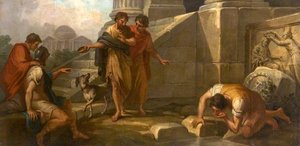
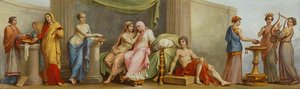
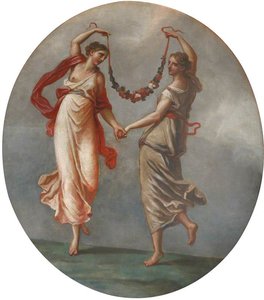
11The Four Continents Europe (1777) autorstwa Antonio ZucchiThe Four Continents Europe1777 · National Trust 12Winter (1769) autorstwa Antonio ZucchiWinter1769 · English Heritage 13Chloe Playing the Lyre to Daphnis (or Sappho and Anacreon) (1776) autorstwa Antonio ZucchiChloe Playing the Lyre to Daphnis (or Sappho and Anacreon)1776 · Nostell Priory 14The Four Continents Asia (1777) autorstwa Antonio ZucchiThe Four Continents Asia1777 · National Trust 15The Four Continents Africa (1777) autorstwa Antonio ZucchiThe Four Continents Africa1777 · National Trust 16Diogenes Casting Away His Wooden Bowl as a Superfluity, on Seeing a Youth Drinking from His Hand (a set of three decorative wall panels) (1768) autorstwa Antonio ZucchiDiogenes Casting Away His Wooden Bowl as a Superfluity, on Seeing a Youth Drinking from His Hand (a set of three decorative wall panels)1768 · National Trust 17Theology (1769) autorstwa Antonio ZucchiTheology1769 · English Heritage 18Ruins of Classical Baths with Nymphs Bathing (a set of six decorative wall panels) (1781) autorstwa Antonio ZucchiRuins of Classical Baths with Nymphs Bathing (a set of six decorative wall panels)1781 · National Trust 19A Bacchanal (1769) autorstwa Antonio ZucchiA Bacchanal1769 · English Heritage 20Minerva among the Arts (1769) autorstwa Antonio ZucchiMinerva among the Arts1769 · English Heritage 21Sappho Giving Anacreon a Feather from Cupid's Wing (1770) autorstwa Antonio ZucchiSappho Giving Anacreon a Feather from Cupid's Wing1770 · Nostell Priory 22Capriccio of Figures Dancing amongst Classical Ruins, with a Statue of the Rape of Proserpine (1775) autorstwa Antonio ZucchiCapriccio of Figures Dancing amongst Classical Ruins, with a Statue of the Rape of Proserpine1775 · Nostell Priory 23Commerce (1769) autorstwa Antonio ZucchiCommerce1769 · English Heritage 24The Rape of Europa (1769) autorstwa Antonio ZucchiThe Rape of Europa1769 · English Heritage 25Apollo and the Muses (1767) autorstwa Antonio ZucchiApollo and the Muses1767 · Nostell Priory 26Capriccio of Figures Dancing amongst Classical Ruins, with a Ruined Arch (1775) autorstwa Antonio ZucchiCapriccio of Figures Dancing amongst Classical Ruins, with a Ruined Arch1775 · Nostell Priory 27The Aldobrandini Marriage (1769) autorstwa Antonio ZucchiThe Aldobrandini Marriage1769 · English Heritage 28Navigation (1769) autorstwa Antonio ZucchiNavigation1769 · English Heritage 29Justice Embracing Peace (1769) autorstwa Antonio ZucchiJustice Embracing Peace1769 · English Heritage 30Bacchantes (5 of 6 ovals) (1773) autorstwa Antonio ZucchiBacchantes (5 of 6 ovals)1773 · English Heritage 31Homer Crowned as Poet Laureate (1767) autorstwa Antonio ZucchiHomer Crowned as Poet Laureate1767 · Nostell Priory 32Agriculture (1769) autorstwa Antonio ZucchiAgriculture1769 · English Heritage 33Bacchantes (2 of 6 ovals) (1773) autorstwa Antonio ZucchiBacchantes (2 of 6 ovals)1773 · English Heritage 34Dido and Aeneas ( ) (1773) autorstwa Antonio ZucchiDido and Aeneas ( )1773 · Nostell Priory 35An Unidentified Classical Subject A Fight (1767) autorstwa Antonio ZucchiAn Unidentified Classical Subject A Fight1767 · Nostell Priory 36Putti Making Music (1770) autorstwa Antonio ZucchiPutti Making Music1770 · Nostell Priory 37The Infant Hercules (1769) autorstwa Antonio ZucchiThe Infant Hercules1769 · English Heritage 38Anacreon Sacrificing to the Three Graces (1770) autorstwa Antonio ZucchiAnacreon Sacrificing to the Three Graces1770 · Nostell Priory 39Bacchantes (4 of 6 ovals) (1773) autorstwa Antonio ZucchiBacchantes (4 of 6 ovals)1773 · English Heritage 40Bacchantes (3 of 6 ovals) (1773) autorstwa Antonio ZucchiBacchantes (3 of 6 ovals)1773 · English Heritage 41Bacchantes (1 of 6 ovals) (1773) autorstwa Antonio ZucchiBacchantes (1 of 6 ovals)1773 · English Heritage 42Putti Fishing (1770) autorstwa Antonio ZucchiPutti Fishing1770 · Nostell Priory 43An Epithalium (1769) autorstwa Antonio ZucchiAn Epithalium1769 · English Heritage 44An Unidentified Classical Subject A Quarrel over a Dead Ass (1767) autorstwa Antonio ZucchiAn Unidentified Classical Subject A Quarrel over a Dead Ass1767 · Nostell Priory 45Putti with a Bird (1770) autorstwa Antonio ZucchiPutti with a Bird1770 · Nostell Priory 46Putti with a Dog (1770) autorstwa Antonio ZucchiPutti with a Dog1770 · Nostell Priory 47Socrates Drinking the Hemlock (1767) autorstwa Antonio ZucchiSocrates Drinking the Hemlock1767 48Wisdom (Prudence) and Temperance (1767) autorstwa Antonio ZucchiWisdom (Prudence) and Temperance1767 · Nostell Priory 49Rinaldo and Armida (1773) autorstwa Antonio ZucchiRinaldo and Armida1773 · Nostell Priory 50A Greek Philosopher and His Disciples (1767) autorstwa Antonio ZucchiA Greek Philosopher and His Disciples1767 · Nostell Priory 51Justice and Strength (Fortitude) (1767) autorstwa Antonio ZucchiJustice and Strength (Fortitude)1767 · Nostell Priory 52Minerva Presenting the Personifications of the Arts of Painting, Gardening, Sculpture and Architecture to Britannia (1767) autorstwa Antonio ZucchiMinerva Presenting the Personifications of the Arts of Painting, Gardening, Sculpture and Architecture to Britannia1767 · Nostell Priory 53Putti with a Garland of Flowers (1770) autorstwa Antonio ZucchiPutti with a Garland of Flowers1770 · Nostell Priory 54The Return of Telemachus (1773) autorstwa Antonio ZucchiThe Return of Telemachus1773 · Nostell Priory 55Virgil Reading the Aeneid to the Emperor Augustus, His Wife Livia and His Fainting Sister, Octavia (1767) autorstwa Antonio ZucchiVirgil Reading the Aeneid to the Emperor Augustus, His Wife Livia and His Fainting Sister, Octavia1767 · Nostell Priory 56Hercules between Glory and the Passions (1769) autorstwa Antonio ZucchiHercules between Glory and the Passions1769 · English Heritage 57Cupid Preparing Venus for an Amorous Encounter with Mars (1773) autorstwa Antonio ZucchiCupid Preparing Venus for an Amorous Encounter with Mars1773 · Nostell Priory 58Mythological Subject with a Couple in an Embrace (1773) autorstwa Antonio ZucchiMythological Subject with a Couple in an Embrace1773 · Nostell Priory 59Bacchus and Ceres (1773) autorstwa Antonio ZucchiBacchus and Ceres1773 · English Heritage 60Aristippus and His Companions after Being Shipwrecked, Seeing Mathematical Diagrams, Realise the Land Was Inhabited (a set of three decorative wall panels) (1768) autorstwa Antonio ZucchiAristippus and His Companions after Being Shipwrecked, Seeing Mathematical Diagrams, Realise the Land Was Inhabited (a set of three decorative wall panels)1768 · National Trust 61Mitellus Ordering a Marble Crow to Be Put on the Tomb of His Former Master, Diodorus Siculus (a set of three decorative wall panels) (1768) autorstwa Antonio ZucchiMitellus Ordering a Marble Crow to Be Put on the Tomb of His Former Master, Diodorus Siculus (a set of three decorative wall panels)1768 · National Trust 62Catullus Comforting Lesbia over the Death of Her Pet Sparrow and Writing an Ode (1773) autorstwa Antonio ZucchiCatullus Comforting Lesbia over the Death of Her Pet Sparrow and Writing an Ode1773 · Nostell Priory 63Angelica and Medoro Medoro Carving the Name of Angelica into the Trunk of a Tree (1773) autorstwa Antonio ZucchiAngelica and Medoro Medoro Carving the Name of Angelica into the Trunk of a Tree1773 · Nostell Priory 64Capriccio with a Pagan Temple and a Sacrifice (1776) autorstwa Antonio ZucchiCapriccio with a Pagan Temple and a Sacrifice1776 · Nostell Priory 65Capriccio with the Ruins of a Triumphal Arch and a Bridge (1776) autorstwa Antonio ZucchiCapriccio with the Ruins of a Triumphal Arch and a Bridge1776 · Nostell Priory 66A Ruined Temple and Fountain with Musicians (a set of six decorative wall panels) (1781) autorstwa Antonio ZucchiA Ruined Temple and Fountain with Musicians (a set of six decorative wall panels)1781 · National Trust 67Fountain with Women Washing Clothes (a set of six decorative wall panels) (1781) autorstwa Antonio ZucchiFountain with Women Washing Clothes (a set of six decorative wall panels)1781 · National Trust 68Daphnis Giving an Apple to Chloe (1776) autorstwa Antonio ZucchiDaphnis Giving an Apple to Chloe1776 · Nostell Priory 69Daphnis Bestowing a Garland of Flowers on Chloe (1776) autorstwa Antonio ZucchiDaphnis Bestowing a Garland of Flowers on Chloe1776 · Nostell Priory 70Philetus Explaining Love to Daphnis and Chloe (1776) autorstwa Antonio ZucchiPhiletus Explaining Love to Daphnis and Chloe1776 · Nostell Priory 71A Procession of Classical Figures with a Donkey and a Tambourine (a set of six decorative wall panels) (1781) autorstwa Antonio ZucchiA Procession of Classical Figures with a Donkey and a Tambourine (a set of six decorative wall panels)1781 · National Trust 72Girls Dancing amid Classical Ruins (a set of six decorative wall panels) (1781) autorstwa Antonio ZucchiGirls Dancing amid Classical Ruins (a set of six decorative wall panels)1781 · National Trust 73Philosophy (1769) autorstwa Antonio ZucchiPhilosophy1769 · English Heritage 74Spring (1769) autorstwa Antonio ZucchiSpring1769 · English Heritage 75Venus and Cupid autorstwa Antonio ZucchiVenus and CupidNostell Priory 76Putto with a Personification of Chemistry autorstwa Antonio ZucchiPutto with a Personification of ChemistryNostell Priory 77Putto with a Personification of Sculpture autorstwa Antonio ZucchiPutto with a Personification of SculptureNostell Priory 78Putto with a Personification of Drawing autorstwa Antonio ZucchiPutto with a Personification of DrawingNostell Priory 79Putto with a Personification of Architecture autorstwa Antonio ZucchiPutto with a Personification of ArchitectureNostell Priory 80Putto with a Personification of Mathematics autorstwa Antonio ZucchiPutto with a Personification of MathematicsNostell Priory 81Putto with a Personification of Painting autorstwa Antonio ZucchiPutto with a Personification of PaintingNostell Priory 82Putto with a Personification of Poetry autorstwa Antonio ZucchiPutto with a Personification of PoetryNostell Priory 83Autumn (1769) autorstwa Antonio ZucchiAutumn1769 · English Heritage 84Summer (1769) autorstwa Antonio ZucchiSummer1769 · English Heritage 85Bacchantes (6 z 6 okrągów) (1773) autorstwa Antonio ZucchiBacchantes (6 z 6 okrągów)1773 · English Heritage 86A Pair of Dancing Women autorstwa Antonio ZucchiA Pair of Dancing WomenNational Trust 87Disarming of Cupid autorstwa Antonio ZucchiDisarming of CupidThe National Trust For Scotland

Słynne obrazy Antonio Zucchi epoka po epoce

Tematy, które przyciągnęły wzrok Antonio Zucchi

Cztery motywy najczęściej powracające w tych oryginałach, z których każdy doczekał się swojego najdoskonalszego przykładu.

Muzea przechowujące oryginały Antonio Zucchi

8 muzeów, w których znajduje się najwięcej obrazów z tej strony.

Muzea Miasto Dzieła artysty Antonio Zucchi Obrazy z tej listy
Nostell Priory, WakefieldNostell Priory Wakefield 43 A Putto Being Woken from Sleep by Tickling of His Nose, Nymphs garlanding Cupid, Putto with Personification of Music
English Heritage, LondynEnglish Heritage Londyn 26 Jurisprudence, Mathematics, Winter
National Trust, PlymouthNational Trust Plymouth 9 Landscape with a Bridge and Ruins with Peasants Fishing (a set of six decorative wall panels), Diogenes Casting Away His Wooden Bowl as a Superfluity, on Seeing a Youth Drinking from His Hand (a set of three decorative wall panels), Ruins of Classical Baths with Nymphs Bathing (a set of six decorative wall panels)
National Trust, DerbyNational Trust Derby 4 The Four Continents America, The Four Continents Europe, The Four Continents Asia
Scottish National Portrait Gallery, EdynburgScottish National Portrait Gallery Edynburg 1 James Adam, 1732 - 1794. Architect and designer
Metropolitan Museum of Art, Nowy JorkMetropolitan Museum of Art Nowy Jork 1 Three dancing nymphs and a reclining cupid in a landscape
National Trust, EjlsberiNational Trust Ejlsberi 1 A Pair of Dancing Women
The National Trust For Scotland, MayboleThe National Trust For Scotland Maybole 1 Disarming of Cupid

Antonio Zucchi dekada po dekadzie: oryginały definiujące każdy okres

Dzieła według dekad

Wybierz dekadę, aby zobaczyć dzieło, które ją definiuje.

Pytania kolekcjonerów o obrazy Antonio Zucchi

Z jakiego dzieła najbardziej znany jest Antonio Zucchi?Odkryj odpowiedź

A Putto Being Woken from Sleep by Tickling of His Nose (1770), Nostell Priory, Wakefield. Następne są James Adam, 1732 - 1794. Architect and designer (1763) oraz Landscape with a Bridge and Ruins with Peasants Fishing (a set of six decorative wall panels) (1781).

W jakim wieku był Antonio Zucchi, gdy powstało A Putto Being Woken from Sleep by Tickling of His Nose?Odkryj odpowiedź

44 lat: A Putto Being Woken from Sleep by Tickling of His Nose pochodzi z 1770, a Antonio Zucchi urodził(a) się w 1726.

Jakie są dziesięć najsłynniejszych obrazów, których autorem jest Antonio Zucchi?Odkryj odpowiedź

A Putto Being Woken from Sleep by Tickling of His Nose, James Adam, 1732 - 1794. Architect and designer, Landscape with a Bridge and Ruins with Peasants Fishing (a set of six decorative wall panels), Nymphs garlanding Cupid, Putto with Personification of Music, Hector and Andromache, Three dancing nymphs and a reclining cupid in a landscape, Jurisprudence, The Four Continents America i Mathematics. Powyższy ranking zawiera rok powstania oraz muzeum dla każdego z nich.

Ile obrazów pozostawił po sobie Antonio Zucchi?Odkryj odpowiedź

Nasz katalog zawiera 101 dzieł artysty Antonio Zucchi, datowanych od 1763 do 1781.

W których muzeach znajdują się arcydzieła Antonio Zucchi?Odkryj odpowiedź

W większości znajdują się w Nostell Priory (Wakefield), English Heritage (Londyn) i National Trust (Plymouth). Powyższa tabela muzeów zawiera ich pełną listę.

W których latach Antonio Zucchi namalował swoje najsłynniejsze dzieła?Odkryj odpowiedź

W 1770s: 38 z 87 dzieł na tej stronie powstało w tym czasie, w tym A Putto Being Woken from Sleep by Tickling of His Nose.

Jakie są pierwsze i ostatnie słynne oryginały Antonio Zucchi?Odkryj odpowiedź

Na tej stronie najwcześniejszy to James Adam, 1732 - 1794. Architect and designer (1763), a najpóźniejszy Landscape with a Bridge and Ruins with Peasants Fishing (a set of six decorative wall panels) (1781).

Jakie tematy Antonio Zucchi wybierał najczęściej?Odkryj odpowiedź

Woman (28), People (20) i Man (13), w ramach 87 dzieł na tej stronie.

Której techniki Antonio Zucchi używał najczęściej?Odkryj odpowiedź

Oil On Canvas, dla 33 z 87 dzieł na tej stronie.

Do jakiego nurtu artystycznego należy Antonio Zucchi?Odkryj odpowiedź

Neoclassical style, sądząc po oryginałach na tej stronie.

Które dzieła Antonio Zucchi znajdują się w Nostell Priory?Odkryj odpowiedź

A Putto Being Woken from Sleep by Tickling of His Nose, Nymphs garlanding Cupid i Putto with Personification of Music: Nostell Priory, Wakefield posiada 43 dzieł widocznych na tej stronie.

Antonio Zucchi: życie i twórczość

Francis Cotes: Pionier angielskiego pastelu

Francis Cotes (1726–1770) jawi się jako postać kluczowa w rozkwitającym świecie angielskiego portretu, szczególnie ceniona za nowatorskie wykorzystanie pastelu oraz niezwykłą zdolność chwytania ulotnych momentów charakteru. Urodzony w Londynie, odbył naukę u Williama Faithorne'a, malarza znanego z teatralnych portretów grupowych – doświadczenie to bez wątpienia ukształtło jego wczesną wrażliwość artystyczną. Jednak Cotes szybko prześcignął swojego mistrza, rozwijając wyraźnie indywidualny styl, charakteryzujący się niezwykłą wrażliwością na światło, teksturę oraz psychologiczne niuanse swoich modeli. W przeciwieństwie do często sztywnej formalności wcześniejszego angielskiego malarstwa portretowego, dzieła Cotesa posiadają wibrującą bezpośredniość, odzwierciedlającą głębokie zaangażowanie w osobowość modela oraz przenikliwą świadomość otaczającego go świata wizualnego. Początki jego kariery naznaczone były zamówieniami od wpływowych rodzin, w tym od Astleyów, dla których stworzył słynne dzieło „Lat siedem, i jej brat Edward, lat pięć i pół” – czułe przedstawienie dziecięcej niewinności, które pozostaje jednym z jego najbardziej ukochanych obrazów. Malarstwo to stanowi doskonały przykład zdolności Cotesa do nadawania nawet pozornie prostym tematom głębokiego rezonansu emocjonalnego. Po mistrzowsku operował pastelami – medium wówczas uważanym w Anglii za stosunkowo nowe – aby osiągnąć zdumiewające efekty koloru i tonu, oddając delikatny rumieniec skóry, połysk tkaniny oraz subtelne przejścia światłocienia. Cotes nie ograniczał się jedynie do kopiowania rzeczywistości; on tłumaczył obserwowany świat na język płótna z malarską gracją, która wyróżniała go na tle współczesnych. Jego użycie swobodnych, ekspresyjnych pociągnięć pędzla tworzyło poczucie ruchu i witalności, nadając jego portretom hipnotyzującą jakość.

Technika i inspiracje

Mistrzostwo techniczne Cotesa wynikało nie tylko z jego wrodzonego talentu, ale także z rzetelnych studiów nad naturą oraz dziełami innych artystów. Głęboki wpływ wywarli na niego mistrzowie niderlandzcy, zwłaszcza Rembrandt, którego sposób operowania światłem i cieniem w celu tworzenia dramatycznych efektów jest wyraźnie widoczny w portretach Cotesa. Podziwiał on również twórczość Anthony'ego van Dycka, starając się naśladować jego eleganckie kompozycje i psychologiczną głębię. Jednakże, w przeciwieństwie do wygładzonego stylu Van Dycka, Cotes przyjął podejście bardziej nieformalne, często przedstawiając swoich modeli w swobodnych pozach i naturalnym otoczeniu. Jego technika pastelowa została jeszcze bardziej dopracowana dzięki eksperymentom z nakładaniem warstw koloru i różnym naciskiem, co pozwoliło mu osiągnąć zdumiewającą rozpiętość wartości tonalnych i tekstur. Powstałe w ten sposób portrety nie są jedynie podobiznami; to intymne studia charakteru, przesycone namacalnym poczuciem życia.

Najważniejsze dzieła i zamówienia

Poza ikonicznym „Lat siedem”, Cotes stworzył znaczący dorobek obejmujący liczne portrety przedstawicieli arystokracji i szlachty. Malował dla tak znamienitych postaci jak Sir Robert Peel, Lord Charles Townshend czy Lady Mary Wortley Montagu. Jego zamówienia często wynikały z pragnienia uchwycenia unikalnej osobowości modela oraz jego statusu społecznego, co odzwierciedlało zmieniające się gusta XVIII-wiecznej Anglii. Jego twórczość wykraczała jednak poza portret; tworzył także pejzaże i sceny rodzajowe, demonstrując wszechstronność jako artysta. Royal Academy, założona w 1769 roku, doceniła wkład Cotesa, wybierając go na jednego ze swoich założycieli, co ugruntowało jego miejsce wśród czołowych artystów epoki.

Dziedzictwo i znaczenie historyczne

Dziedzictwo Francisa Cotesa opiera się przede wszystkim na jego pionierskiej roli w rozwoju angielskiego malarstwa pastelowego. Udowodnił on potencjał tego medium w chwytaniu subtelnych niuansów barwy i tonu, torując drogę przyszłym pokoleniom pastelistów. Jego portrety podziwia się dziś nie tylko za techniczną biegłość, ale także za psychologiczną głębię i emocjonalną siłę przekazu. Twórczość Cotesa reprezentuje odejście od formalnych konwencji dawnego portretu na rzecz bardziej intymnego i ekspresyjnego podejścia, które odzwierciedlało ducha Oświecenia. Zapisał się w historii jako kluczowa postać ustanawiająca angielskie malarstwo jako odrębną i tętniącą życiem tradycję, pozostawiając niezatarty ślad w dziejach sztuki. Jego wpływ można dostrzec w pracach późniejszych artystów, którzy podążali jego śladami, co ostatecznie potwierdza jego pozycję jako prawdziwego innowatora i mistrza rzemiosła.