1


Aktualizacja: Listopad 2026 · ranking według naszego wskaźnika popularności (liczba wyszukiwań, wizyt i zamówień dla każdego dzieła) · 16 dzieł Antoine Piot w naszym katalogu
W skrócie
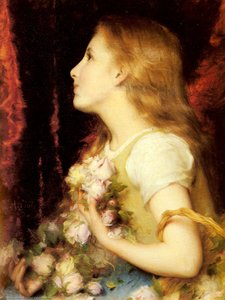
Według galerii najsłynniejszym obrazem Antoine Piot jest A little girl reading. The FLower Seller i The Love Letters dopełniają trio, które zna każde oko. Z 16 dzieł Antoine Piot w naszym katalogu, galeria prezentuje poniżej 16 najsłynniejszych prac – każda z nich jest oryginałem z podaniem roku powstania, muzeum oraz cech wyróżniających ją na tle innych.


Cztery motywy najczęściej powracające w tych oryginałach, z których każdy doczekał się swojego najdoskonalszego przykładu.
A little girl reading. Następne są The FLower Seller oraz The Love Letters.
A little girl reading, The FLower Seller, The Love Letters, Wishful thinking, A young beauty, By the Sea, Sisterly love, A little girl holding a bird, A young girl with holly berries in her hair i An italian beauty. Powyższy ranking zawiera rok powstania oraz muzeum dla każdego z nich.
Nasz katalog zawiera 16 dzieł autorstwa Antoine Piot.
Girls (5), Flowers (3) i Italy (2), w ramach 16 dzieł na tej stronie.
Academic realism, sądząc po oryginałach na tej stronie.
In the vibrant, shifting landscape of nineteenth-century French art, few painters captured the quiet essence of grace as tenderly as Étienne Adolphe Piot. Born in 1831 in the historic city of Digoin, within the Bourgogne region, Piot emerged during an era defined by profound aesthetic transitions. As the emotional intensity of Romanticism began to soften into the structured elegance of Academic Realism, and eventually yielded to the fleeting light of Impressionism, Piot maintained a steadfast devotion to the classical principles of beauty. His work serves as a window into a world of refined serenity, where the subject is not merely depicted, but celebrated through a lens of profound dignity and soft, luminous detail.
Piot’s artistic journey was rooted in a rigorous foundation of form and anatomy. While much of his early life remains shrouded in the gentle mists of history, his training under influential figures like Jean-品Baptiste Camille Bouchardy—a respected sculptor—left an indelible mark on his painterly approach. This sculptural lineage is evident in the way Piot constructed his portraits; even in his most delicate depictions of young women, there is a palpable sense of weight, volume, and structural integrity. He did not merely paint surfaces; he sculpted with light and pigment, ensuring that every curve of a shoulder or tilt of a chin possessed a lifelike, three-dimensional presence.
For over half a century, from 1850 until 1909, Piot was a consistent and respected presence in the prestigious Paris Salons. These exhibitions were the beating heart of the French art world, serving as both a stage for talent and a crucible of public opinion. It was within this competitive arena that Piot honed his signature style—a method characterized by a meticulous attention to detail and a sophisticated, muted palette. He favored the warmth of ochre, the depth of rich browns, and the ethereal quality of ivory, creating compositions that felt timeless rather than trendy.
Unlike the Impressionists who sought to dissolve form into a mosaic of broken color and light, Piot utilized nuanced tonal gradations to evoke psychological depth. His brushwork, while masterful, remained disciplined, serving the subject rather than drawing attention to itself. In works such as “The Flower Seller” or “Sisterly Love,” one finds an atmosphere of quiet intimacy. He possessed a rare ability to capture subtle expressions—a fleeting glance or a soft, contemplative gaze—that conveyed an aura of refinement and a sense of the subject's inner life. This commitment to capturing the soul through the skin made his portraits deeply resonant with audiences seeking beauty that was both idealized and emotionally accessible.
The historical significance of Étienne Adolphe Piot lies in his role as a bridge between eras. He stood at the intersection of tradition and modernity, preserving the technical excellence of the Academy while embracing the more intimate, emotive subject matter that would define much of late nineteenth-century portraiture. His ability to navigate the transition from the grand narratives of Romanticism to the more focused, human-centric realism of his time allowed him to create a body of work that feels remarkably cohesive and enduring.
Today, the legacy of Piot is preserved in esteemed collections such as the Berlin Alte Nationalgalerie and various museums in Saint-Étienne. His paintings remain much more than mere historical artifacts; they are evocative meditations on femininity, youth, and the enduring power of classical grace. To look upon a Piot portrait is to experience a moment of stillness, a reprieve from the chaos of the modern world, inviting the viewer into a realm where beauty is treated with the utmost reverence and every brushstroke is an act of devotion.