Ángel María Cortellini Sánchez: A Pioneer of Spanish Historical Painting
Ángel María Cortellini Sánchez (1820 – 1876) stands as a prominent figure in the landscape of Spanish Romanticism, celebrated for his dramatic depictions of historical events and military confrontations. Born in Sanlucar de Barrameda, Seville, he embarked on an artistic journey marked by rigorous training at the Royal Academy of Fine Arts of San Fernando and subsequent immersion in the intellectual currents of Rome – experiences that profoundly shaped his distinctive style and vision.
Early Life and Artistic Formation
Cortellini’s formative years instilled within him a dedication to academic precision and observation, mirroring the prevailing artistic ethos of his time. His studies at San Fernando honed his technical skills while exposing him to the stylistic innovations championed by artists like Francisco Goya and Diego Velázquez, figures whose legacy served as an undeniable inspiration. This exposure fostered a deep appreciation for realism combined with expressive dynamism—a hallmark that would characterize his oeuvre throughout his career. He began drawing in his native city and later trained under Joaquín Domínguez Bécquer in Seville. At the age of 17, he traveled to Italy, stopping in Turin, Milan, and Genoa, among others. After two years, he returned to Seville to continue his training, which continued at the Real Academia de Bellas Artes de Santa Isabel de Hungría.
A Career Dedicated to Grand Narratives
Cortellini’s artistic trajectory centered around capturing pivotal moments in Spanish history, specifically the tumultuous periods of the Spanish-Moroccan War (1860–1862) and the Third Carlist War (1872–1876). These conflicts fueled his imagination and propelled him to produce monumental canvases brimming with meticulous detail and imbued with palpable emotion. His most celebrated works include “The Battle of Wad-Ras,” commemorating Spain’s naval victory against Morocco, and “The Battle of Alcolea,” portraying the decisive clash between Spanish royalists and Carlist rebels—paintings that exemplify his mastery of composition and color orchestration. He was particularly captivated by the grandeur of military campaigns and sought to convey their scale and intensity with unwavering conviction.
Technique and Artistic Style
Cortellini's artistic technique was rooted in meticulous observation and a masterful command of chiaroscuro – the dramatic interplay of light and shadow – techniques borrowed directly from Caravaggio and Rembrandt. He employed a palette rich in earthy tones, punctuated by vibrant splashes of crimson and gold, to convey the intensity of battle scenes and heighten their emotional impact. His canvases pulsate with energy, capturing not merely visual representations but also the psychological drama inherent in moments of conflict. Like many Romantic artists, Cortellini prioritized conveying emotion over mere representation, striving to evoke a visceral response from the viewer through masterful use of color and light. He meticulously dissected the battlefield, rendering every element—from the uniforms of soldiers to the weaponry employed—with painstaking accuracy.
Museum Collections and Legacy
Cortellini’s paintings are housed in prestigious institutions across Spain, notably the Museo Real Academia de Bellas Artes de San Fernando in Madrid, where his monumental “Combat of the Glorioso against HMS Dartmouth” remains a testament to his artistic prowess. His work continues to resonate with scholars and art enthusiasts alike, recognized for its historical accuracy and its contribution to the development of Spanish Romantic painting. Cortellini’s legacy resides not only in his impressive artistic output but also in his embodiment of the Romantic ideal—a fervent commitment to portraying grand narratives with unflinching realism and profound emotional depth. His influence extended beyond his own time, inspiring subsequent generations of painters to explore similar themes and techniques.
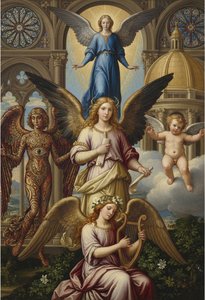
Explore the profound beauty of angelic figures in art history. From Renaissance masterpieces to celestial symbolism, our expert guide offers a sophisticated journey through the divine imagery of the Old Masters for discerning collectors and art enthusiasts.
Explore the captivating history of angels in painting! Discover symbolism, iconic Renaissance & Byzantine masterpieces, and renowned artists. Expert insights for art lovers & collectors at OriginalUniqueArt.
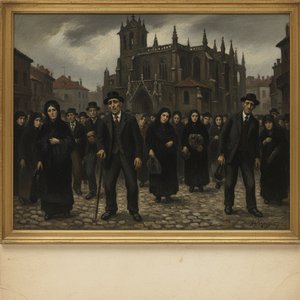
Explore the captivating world of José Gutiérrez Solana, a pivotal Spanish Expressionist painter. Discover his haunting depictions of early 20th-century Spain, influenced by Goya & El Greco. Learn about his key works and lasting legacy.