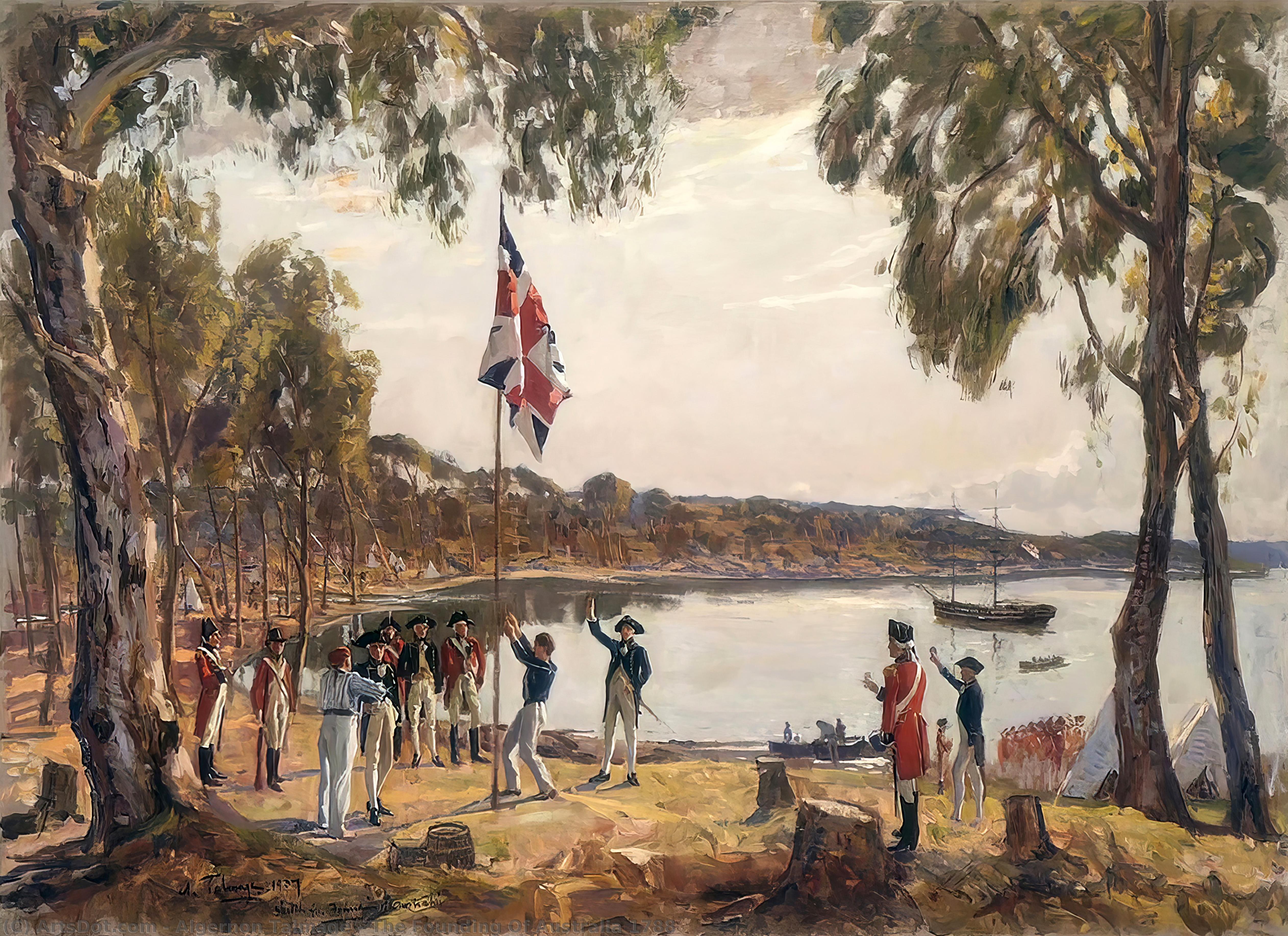
Algernon Talmage: portret artysty
Algernon Talmage (1871–1939): British Impressionist Painter of Landscapes & Animals, and Influential Mentor to Emily Carr
Algernon Mayow Talmage (1871–1939) was a British Impressionist painter who achieved considerable renown for his depictions of landscapes and animals—particularly horses—and whose influence extended beyond his own artistic output through mentorship. His life story is one interwoven with resilience, shaped by early adversity yet illuminated by unwavering dedication to capturing the beauty of the natural world.
Early Life and Artistic Training
Born in Fifield, Oxfordshire, Algernon Talmage’s formative years were marked by a significant physical challenge: an accident involving a firearm resulted in permanent impairment of his right hand. Rather than succumbing to limitations, he embraced painting with his left—a decision that fundamentally altered his artistic approach and instilled within him a heightened sensitivity to light and shadow. This early constraint arguably fostered a profound understanding of how visual perception could be shaped by circumstance, informing his subsequent work. His lineage traced back to Cornish heritage through his mother, fostering a lifelong fascination with the dramatic coastline and ever-shifting light conditions of St Ives—a locale that would become an indispensable element in defining his artistic vision. Recognizing the importance of foundational skills, Talmage enrolled at Hubert von Herkomer’s Bushey Art School in 1892, where he honed techniques rooted in meticulous observation and detailed rendering – skills he skillfully integrated with the burgeoning Impressionist aesthetic. He worked alongside Lucy Kemp-Welch during this period, sharing a mutual passion for portraying animals and landscapes with realism and expressive color.
The Cornish Embrace: Finding Inspiration in St Ives
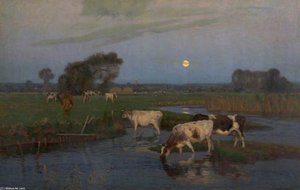
The relocation to St Ives proved transformative for Talmage’s artistic trajectory. Situated amidst a vibrant community of artists captivated by the region's rugged coastline, atmospheric light, and raw natural splendor, he joined forces with fellow luminaries Julius Olsson and Adrian Stokes to establish an Artists’ Club—a collaborative environment where experimentation flourished and artistic ideas circulated freely. It was here that Talmage truly crystallized his distinctive style: a delicate balance of color and atmosphere designed not merely to represent what the eye perceived but to convey the emotional essence of immersion in nature. His paintings from this period predominantly depict rural scenes featuring horses, rendered with remarkable precision and imbued with an ethereal quality—a testament to his ability to capture fleeting moments of beauty and evoke profound feelings of tranquility. Talmage’s approach wasn't simply about replicating visual reality; it was about translating experience into art—a hallmark of the Impressionist movement itself.
A Collaborative Spirit: The Artists’ Club and Shared Techniques
The St Ives School fostered a spirit of camaraderie among its members, encouraging them to share knowledge and challenge conventional artistic conventions. Talmage actively participated in this dynamic exchange, contributing to discussions about color palettes, brushwork techniques, and compositional strategies—all elements crucial to achieving the Impressionist ideal. He recognized that artistic progress stemmed from dialogue and experimentation, prioritizing observation and capturing the subtleties of light as it interacted with surfaces. This collaborative ethos extended beyond the Artists’ Club; Talmage mentored younger artists, imparting invaluable insights into mastering the craft of landscape painting and conveying emotion through visual media—a legacy that continues to inspire admiration for his artistic vision.
Notable Achievements and Legacy
Talmage's commitment to capturing the essence of nature culminated in a prolific output of paintings—many of which now reside in prominent museums across Europe and North America, including the Tate Gallery in London and the Art Gallery of South Australia. His meticulous attention to detail—particularly his depictions of horses—earned him acclaim for their realism and expressive power. Perhaps his most enduring contribution lies in his influence on Emily Carr, a fellow St Ives artist whom he mentored during her formative years. Recognizing Carr’s potential, Talmage encouraged her to embrace color and light with boldness—a simple yet profound instruction that profoundly shaped Carr's distinctive style and ultimately became central to her iconic forest paintings—works that would solidify her place as one of Canada’s foremost Impressionist painters. Beyond his own artistic accomplishments, Algernon Talmage served as a beacon for aspiring artists, demonstrating the transformative power of observation, experimentation, and unwavering dedication to capturing the beauty of the natural world—a legacy that continues to resonate with its quiet grace and enduring inspiration.