Portret Alfred Philippe Roll

49 najsłynniejszych obrazów artysty Alfred Philippe Roll – wybór z galerii

Aktualizacja: Listopad 2026 · ranking według naszego wskaźnika popularności (liczba wyszukiwań, wizyt i zamówień dla każdego dzieła) · 50 dzieł Alfred Philippe Roll w naszym katalogu

W skrócie

Z wszystkich oryginałów pozostawionych przez Alfred Philippe Roll, najsłynniejszym jest Portrait de Mme Roll. Tuż za nimi znajdują się Retour du bal oraz The feast of Silenus (1871). Nasz katalog zawiera 50 dzieł autorstwa Alfred Philippe Roll; galeria zachowała 49 najbardziej podziwianych na świecie prac, z których każda została przedstawiona wraz z datą powstania, informacją o muzeum oraz jej historią.

1845 – 1919, Paryż Najwięcej dzieł: Petit Palais

10 najlepszych obrazów artysty Alfred Philippe Roll: wybór galerii

1
Portrait de Mme Roll autorstwa Alfred Philippe Roll

Portrait de Mme Roll

Oil On Canvas

The portrait depicts a woman, identified as Madame Roll, positioned in a vertical orientation. She is situated slightly off-center within a domestic interior, appearing to stand near a window. The figure is rendered with a muted color palette, primarily composed of blacks, grays, and browns. Subtle ochre and muted red tones appear in the highlights and the background. Her attire is formal, and her expression remains serene with a slight…

2
Retour du bal autorstwa Alfred Philippe Roll

Retour du bal

Oil On Canvas · Musée d'Arts de Nantes, Nantes

The air in the room feels heavy with the scent of perfume and the soft rustle of silk as two women move through an opulent interior. We watch them from behind, catching only the graceful curve of their backs and the sweeping lines of their attire. They are poised, perhaps caught in a moment of transition between the excitement of a social gathering and the quietude of their private quarters.…

3
The feast of Silenus (1871) autorstwa Alfred Philippe Roll

The feast of Silenus

1871 · Oil On Canvas · Museum of Fine Arts Ghent (MSK), Gandawa

The feast of Silenus emerges from the brush of Alfred Philippe Roll, a painter whose life spanned the transformative decades of the late nineteenth century. Born in the former 8th arrondissement of Paris, France, in 1845, Roll carries the weight of a changing era within his lineage. He remains a figure of the French tradition, having departed this world in 1919. This specific work, The feast of Silenus, captures a…

4
Marianne Orfrey, Green Crier (1880) autorstwa Alfred Philippe Roll

Marianne Orfrey, Green Crier

1880 · Oil On Canvas · Musée des Beaux-Arts de Pau, Pau

In this 1880 oil on canvas, we find ourselves standing at eye-level with a solitary woman, a street vendor whose presence commands a quiet, stoic dignity. She is positioned slightly off-center, a choice that lends a sense of naturalism to the vertical composition. There is a certain weight to her figure, anchored by the heavy folds of her skirt and the rounded, organic form of the basket she carries. The…

5
July 14, 1880, Inauguration of the Monument to the République (1882) autorstwa Alfred Philippe Roll

July 14, 1880, Inauguration of the Monument to the République

1882 · Oil · Petit Palais, Paryż

The canvas depicts a dense, wide-angle view of a Parisian square during a large-scale public celebration. In the center of the composition, a monument rises toward a sky filled with fluttering flags. The scene is populated by a vast, diverse crowd of figures that extend from the immediate foreground into the distance. These people are rendered with varied postures, some standing in groups and others moving through the space. The…

6
Henri Rochefort (Victor-Henri, marquis de Rochefort-Luçay, 1831-1913), journalist, politician and writer (1879) autorstwa Alfred Philippe Roll

Henri Rochefort (Victor-Henri, marquis de Rochefort-Luçay, 1831-1913), journalist, politician and writer

1879 · Oil On Canvas · Musée Carnavalet, Paryż

The portrait emerges from a period of transition in French art, moving away from the rigid constraints of academic tradition toward a more grounded, empathetic realism. The visible layering of paint suggests a preoccupation with the authentic human form rather than an idealized version of it. There is a palpable sense of the man's internal life, a quiet intensity that lingers in the way the light interacts with his features.…

7
Woman and bull (1885) autorstwa Alfred Philippe Roll

Woman and bull

1885 · Oil · National Museum of Fine Arts, Buenos Aires

The air feels heavy and still within this shadowed woodland, where the light filters through a dense canopy in soft, dappled patches. A nude woman rests in an intimate, quiet moment, her pale skin glowing against the deep, earthy tones of the surrounding meadow. Beside her, the muscular form of a bull emerges from the darkness, its presence a powerful counterpoint to her vulnerability. There is a profound sense of…

8
Alsatian and Lorrainer (1891) autorstwa Alfred Philippe Roll

Alsatian and Lorrainer

1891 · Oil · Museum of the French Revolution, Vizille

In the work Alsatian and Lorrainer by Alfred Philippe Roll, the composition is structured as a tight, intimate close-up of two female figures. The primary subject is positioned in the foreground, presented in a sharp profile facing toward the left side of the frame. Behind her, a second woman is partially visible, also oriented toward the left. This overlapping arrangement creates a sense of depth within the narrow field of…

9
Portrait of Thaulow and His Wife (1890) autorstwa Alfred Philippe Roll

Portrait of Thaulow and His Wife

1890 · Oil On Canvas · Petit Palais, Paryż

In this intimate oil on canvas, Alfred Philippe Roll presents Portrait of Thaulow and His Wife. Painted about 1890, the work captures a quiet moment between a man and a woman. The subjects are likely the artist's acquaintances, Thaulow and his wife, rendered with a sense of naturalism that suggests a close proximity to the figures. There is a palpable sense of companionship in the way they are positioned together.

10
Portrait of Jane Hading (1890) autorstwa Alfred Philippe Roll

Portrait of Jane Hading

1890 · Oil On Canvas · Petit Palais, Paryż

The portrait presents a woman seated centrally within a luxurious interior. She is positioned in a vertical orientation, wearing a sleeveless black gown that features shimmering, light-colored patterns suggestive of sequins or embroidery. A large, dark, textured element, resembling a fur mantle or heavy drapery, surrounds the upper portion of her chair. Her skin is rendered with smooth, luminous textures, and her reddish-brown hair is styled softly around her face.…

Kontynuacja zestawienia Alfred Philippe Roll, od 11 do 49

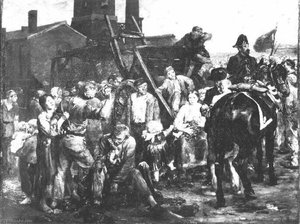
11André Manaut (1890) autorstwa Alfred Philippe RollAndré Manaut1890 · Municipal museum (Saverne) 12Au trot (1888) autorstwa Alfred Philippe RollAu trot1888 · Municipal museum (Saverne) 13Adolphe Alphand (1888) autorstwa Alfred Philippe RollAdolphe Alphand1888 · Petit Palais 14Centenary of the Estates General at the Neptune Basin (May 3, 1889) (1889) autorstwa Alfred Philippe RollCentenary of the Estates General at the Neptune Basin (May 3, 1889)1889 15Exodus (1893) autorstwa Alfred Philippe RollExodus1893 · Petit Palais 16Louise Cattel, wet nurse (1894) autorstwa Alfred Philippe RollLouise Cattel, wet nurse1894 · Palais des Beaux-Arts de Lille 17Alexandre Dumas fils (1895) autorstwa Alfred Philippe RollAlexandre Dumas fils1895 · Musée des Beaux-Arts 18Roll Painting (1900) autorstwa Alfred Philippe RollRoll Painting1900 · Petit Palais 19Portrait de Mme Henriette Roll (1900) autorstwa Alfred Philippe RollPortrait de Mme Henriette Roll1900 · Municipal museum (Saverne) 20Nu couché (1900) autorstwa Alfred Philippe RollNu couché1900 · Musée d'Art Moderne et Contemporain de Strasbourg 21In Summer, Woman with Dog (1909) autorstwa Alfred Philippe RollIn Summer, Woman with Dog1909 · Petit Palais 22Sketch for the Petit Palais, south gallery: Apotheosis (central ceiling) (1909) autorstwa Alfred Philippe RollSketch for the Petit Palais, south gallery: Apotheosis (central ceiling)1909 · Petit Palais 23Sketch for the Petit Palais, south gallery: Poetry - Drama (1910) autorstwa Alfred Philippe RollSketch for the Petit Palais, south gallery: Poetry - Drama1910 · Petit Palais 24Sketch for the Petit Palais, south gallery: Fantastic Music (1911) autorstwa Alfred Philippe RollSketch for the Petit Palais, south gallery: Fantastic Music1911 · Petit Palais 25Sketch for the South Gallery of the Petit Palais: Apotheosis (central ceiling) (1913) autorstwa Alfred Philippe RollSketch for the South Gallery of the Petit Palais: Apotheosis (central ceiling)1913 · Petit Palais 26The Big Bed (1912) autorstwa Alfred Philippe RollThe Big Bed1912 · Municipal museum (Saverne) 27Bourgeoisie (1913) autorstwa Alfred Philippe RollBourgeoisie1913 · Municipal museum (Saverne) 28Portrait of Miss Amélie Diéterle, in 1913. Title : In June, Amélie Diéterle. (1913) autorstwa Alfred Philippe RollPortrait of Miss Amélie Diéterle, in 1913. Title : In June, Amélie Diéterle.1913 · Petit Palais 29The Tea Cup (1918) autorstwa Alfred Philippe RollThe Tea Cup1918 · Municipal museum (Saverne) 30CHEMIN SOUS BOIS autorstwa Alfred Philippe RollCHEMIN SOUS BOIS 31July 14, 1880, Inauguration of the Monument to the Republic (1881) autorstwa Alfred Philippe RollJuly 14, 1880, Inauguration of the Monument to the Republic1881 · Petit Palais 32Esquisse pour La fête nationale du 14 juillet 1880 (1881) autorstwa Alfred Philippe RollEsquisse pour La fête nationale du 14 juillet 18801881 · Municipal museum (Saverne) 33Sketch for the Hôtel de Ville de Paris: Art, Movement, Work, Lights (1897) autorstwa Alfred Philippe RollSketch for the Hôtel de Ville de Paris: Art, Movement, Work, Lights1897 · Petit Palais 34The Vigil under the Arc de Triomphe (1903) autorstwa Alfred Philippe RollThe Vigil under the Arc de Triomphe1903 · Musée Victor Hugo 35The Wave (1911) autorstwa Alfred Philippe RollThe Wave1911 · Petit Palais 36Sketch for the Petit Palais, south gallery: Fantastic Music (1911) autorstwa Alfred Philippe RollSketch for the Petit Palais, south gallery: Fantastic Music1911 · Petit Palais 37Peder Severin Kröyer (1851-1909) autorstwa Alfred Philippe RollPeder Severin Kröyer (1851-1909)Nationalmuseum 38Petite République (1907) autorstwa Alfred Philippe RollPetite République1907 · Municipal museum (Saverne) 39La grève de mineurs autorstwa Alfred Philippe RollLa grève de mineurs 40Portrait de Léon Bourgeois autorstwa Alfred Philippe RollPortrait de Léon Bourgeois 41PORTRAIT DE JEUNE FILLE autorstwa Alfred Philippe RollPORTRAIT DE JEUNE FILLE 42Portrait de jeune femme autorstwa Alfred Philippe RollPortrait de jeune femme 43L'Exécution d'un trompette sous la Commune autorstwa Alfred Philippe RollL'Exécution d'un trompette sous la CommuneMusée Carnavalet 44Les baigneuses Panneau décoratif (Ancien titre) autorstwa Alfred Philippe RollLes baigneuses Panneau décoratif (Ancien titre) 45Bathers autorstwa Alfred Philippe RollBathersMusée des Beaux-Arts de Dijon 46Chevaux à l'écurie autorstwa Alfred Philippe RollChevaux à l'écurie 47Manda Lamétrie, fermière (1887) autorstwa Alfred Philippe RollManda Lamétrie, fermière1887 · Musée d'Orsay 48The Young Republic (1908) autorstwa Alfred Philippe RollThe Young Republic1908 · Musée d'Orsay 49The Striker's Wife autorstwa Alfred Philippe RollThe Striker's WifeMusee Baron Martin

Słynne obrazy Alfred Philippe Roll epoka po epoce

Tematy, które przyciągnęły wzrok Alfred Philippe Roll

Cztery motywy najczęściej powracające w tych oryginałach, z których każdy doczekał się swojego najdoskonalszego przykładu.

Muzea przechowujące oryginały Alfred Philippe Roll

8 muzeów, w których znajduje się najwięcej obrazów z tej strony.

Muzea Miasto Dzieła artysty Alfred Philippe Roll Obrazy z tej listy
Petit Palais, ParyżPetit Palais Paryż 16 July 14, 1880, Inauguration of the Monument to the République, Portrait of Thaulow and His Wife, Portrait of Jane Hading
Municipal museum (Saverne), SaverneMunicipal museum (Saverne) Saverne 8 André Manaut, Au trot, Portrait de Mme Henriette Roll
Musée Carnavalet, ParyżMusée Carnavalet Paryż 2 Henri Rochefort (Victor-Henri, marquis de Rochefort-Luçay, 1831-1913), journalist, politician and writer, L'Exécution d'un trompette sous la Commune
Musée d'Orsay, ParyżMusée d'Orsay Paryż 2 Manda Lamétrie, fermière, The Young Republic
Musée d'Arts de Nantes, NantesMusée d'Arts de Nantes Nantes 1 Retour du bal
Museum of Fine Arts Ghent (MSK), GandawaMuseum of Fine Arts Ghent (MSK) Gandawa 1 The feast of Silenus
Musée des Beaux-Arts de Pau, PauMusée des Beaux-Arts de Pau Pau 1 Marianne Orfrey, Green Crier
National Museum of Fine Arts, Buenos AiresNational Museum of Fine Arts Buenos Aires 1 Woman and bull

Alfred Philippe Roll dekada po dekadzie: oryginały definiujące każdy okres

Dzieła według dekad

Wybierz dekadę, aby zobaczyć dzieło, które ją definiuje.

Pytania kolekcjonerów o obrazy Alfred Philippe Roll

Z jakiego dzieła najbardziej znany jest Alfred Philippe Roll?Odkryj odpowiedź

Portrait de Mme Roll. Następne są Retour du bal oraz The feast of Silenus (1871).

Jakie są dziesięć najsłynniejszych obrazów, których autorem jest Alfred Philippe Roll?Odkryj odpowiedź

Portrait de Mme Roll, Retour du bal, The feast of Silenus, Marianne Orfrey, Green Crier, July 14, 1880, Inauguration of the Monument to the République, Henri Rochefort (Victor-Henri, marquis de Rochefort-Luçay, 1831-1913), journalist, politician and writer, Woman and bull, Alsatian and Lorrainer, Portrait of Thaulow and His Wife i Portrait of Jane Hading. Powyższy ranking zawiera rok powstania oraz muzeum dla każdego z nich.

Ile obrazów pozostawił po sobie Alfred Philippe Roll?Odkryj odpowiedź

Nasz katalog zawiera 50 dzieł artysty Alfred Philippe Roll, datowanych od 1871 do 1918.

W których muzeach znajdują się arcydzieła Alfred Philippe Roll?Odkryj odpowiedź

W większości znajdują się w Petit Palais (Paryż), Municipal museum (Saverne) (Saverne) i Musée Carnavalet (Paryż). Powyższa tabela muzeów zawiera ich pełną listę.

W których latach Alfred Philippe Roll namalował swoje najsłynniejsze dzieła?Odkryj odpowiedź

W 1880s: 9 z 49 dzieł na tej stronie powstało w tym czasie, w tym Marianne Orfrey, Green Crier.

Jakie są pierwsze i ostatnie słynne oryginały Alfred Philippe Roll?Odkryj odpowiedź

Na tej stronie najwcześniejszy to The feast of Silenus (1871), a najpóźniejszy The Tea Cup (1918).

Jakie tematy Alfred Philippe Roll wybierał najczęściej?Odkryj odpowiedź

Woman (19), Man (8) i Skin tones (5), w ramach 49 dzieł na tej stronie.

Której techniki Alfred Philippe Roll używał najczęściej?Odkryj odpowiedź

Oil On Canvas, dla 17 z 49 dzieł na tej stronie.

Które dzieła Alfred Philippe Roll znajdują się w Petit Palais?Odkryj odpowiedź

July 14, 1880, Inauguration of the Monument to the République, Portrait of Thaulow and His Wife i Portrait of Jane Hading: Petit Palais, Paryż posiada 16 dzieł widocznych na tej stronie.

Alfred Philippe Roll: życie i twórczość

Dusza Trzeciej Republiki: Artystyczna Podróż Alfred Philippe Roll

W tętniącym życiem, nieustannie zmieniającym się krajobrazie Francji końca XIX wieku, niewielu artystów potrafiło uchwycić puls zmieniającego się narodu tak przejmująco, jak Alfred Philippe Roll. Urodzony w Paryżu w 1846 roku, Roll kształtował się w prestiżowych murach École des Beaux-Arts, będąc uczniem ukształtowanym przez rygorystyczne tradycje akademickie mistrzów takich jak Jean-Léon Gérôme, Léon Bonnat i Charles-François Daubigny. Jego wczesne lata naznaczone były romantyczną wrażliwością – okresem stylistycznym, w którym jego płótna oddychały wielkością i malowniczym urokiem charakterystycznym dla tamtej epoki. Na tym formacyjnym etapie jego twórczość często oddawała echa rozległej emocjonalności tradycji bolońskiej oraz rodzącego się realizmu Gustave'a Courbeta, tworząc delikatne napięcie między klasycznym pięknem a surową obserwacją.

Trajektoria kariery Rolla została nieodwracalnie zmieniona przez burzliwe wiatry historii. Wojna francusko-pruska, podczas której służył jako porucznik milicji, nasyciła jego perspektywę głębokim zrozumieniem ludzkiej odporności i społecznych niepokojów. Ten okres konfliktów zadziałał jak tygiel, który oczyścił jego spojrzenie, przesuwając je od czystego romantyzmu ku bardziej ugruntowanemu, pełnemu empatii realizmowi. Jego arcydzieło z 1875 roku, Powódź w Tuluzie, stanowi przejmujące świadectwo tej transformacji; poprzez uchwycenie bezpośredniego cierpienia i kruchości życia podczas klęski żywiołu, artysta wyszedł poza ramy czystej dekoracji, by nawiązać dialog z kolektywną psychiką francuskiego ludu. Dzieło to, znajdujące się obecnie w Musée Malraux, oznajmiło jego przybycie jako artysty zdolnego do głębokiej, wizualnej narracji.

Od Romantyzmu do Surowości Realizmu

Wraz z upływem dekad pociągnięcia pędzla Rolla zaczęły tracić swoje romantyczne krawędzie, przyjmując zamiast tego surowość i prawdę nurtu Naturalizmu. Stał się malarzem ludu, kierując swoją uwagę ku socjopolitycznej dynamice Trzeciej Republiki. Ta ewolucja nie miała charakteru jedynie stylistycznego, lecz była głęboko ideologiczna. Dążył do udokumentowania autentycznego ludzkiego doświadczenia, zwłaszcza zmagań i triumfów klasy robotniczej. Jego przełomowy obraz, Strajk górników (1880), pozostaje jednym z jego najważniejszych osiągnięć, wynosząc go do najwyższych kręgów francuskiego świata sztuki. W tym dziele nie tylko przedstawił niepokoje robotnicze; on uduchowiał tę walkę, nadając postaciom godność, która rezonowała daleko poza murami galerii.

To oddanie realizmowi społecznemu pozwoliło Rollowi z niezwykłą biegłością poruszać się w zawiłościach jego epoki. Jego repertuar rozszerzył się o:

  • Pejzaże miejskie: Skrupulatne przedstawienia paryskiego życia i zmieniającego się oblicza miasta.
  • Intymne portrety: Studia odzwierciedlające niuanse tożsamości burżuazji oraz klasy robotniczej.
  • Narracje społeczne: Wielkoformatowe kompozycje podejmujące współczesne problemy polityczne i społeczne.

Jego zdolność do łączenia technicznej precyzji wyniesionej od akademickich mentorów z progresywnym, niemal dokumentalnym podejściem do tematu, uczyniła go kluczowym głosem w sztuce francuskiej. Nie był on jedynie obserwatorem życia, lecz kronikarzem jego najbardziej palących transformacji.

Dziedzictwo i Znaczenie Historyczne

Dziedzictwo Alfred Philippe Roll definiowane jest przez jego rolę jako mostu między starym światem tradycji akademickiej a nowym światem zaangażowania społecznego. Jako współzałożyciel Société Nationale des Beaux-Arts, odegrał kluczową rolę w przekształcaniu instytucjonalnego krajobrazu francuskiej sztuki, opowiadając się za przestrzenią, w której różne style mogą współistnieć. Jego twórczość pozostaje żywym zapisem historycznym, oddającym esencję Francji uwięzionej między echami romantyzmu a surową rzeczywistością industrializacji i reform społecznych.

Dzięki mistrzostwu w operowaniu światłem, teksturą i kompozycją, Roll sprawił, że trudy i piękno codziennego życia zostały nieśmiertelne. Niezależnie od tego, czy poprzez rozległe panoramy regionu Szampanii, czy poprzez ponure tony strajku robotniczego, jego sztuka nieustannie zaprasza widzów do głębokiego dialogu z przeszłością. Pozostaje on istotną postacią dla każdego, kto pragnie zrozumieć tętno XIX-wiecznej Francji — artystą, który patrzył na świat nie tylko takim, jakim się jawił, ale takim, jakim był odczuwany.