


1


Aktualizacja: Listopad 2026 · ranking według naszego wskaźnika popularności (liczba wyszukiwań, wizyt i zamówień dla każdego dzieła) · 25 dzieł Alfred Lawrence w naszym katalogu
W skrócie
Queen Elizabeth I at Tilbury, 1588 (1938) to obraz autorstwa Alfred Lawrence, który przyciąga najwięcej spojrzeń. Następnie wzrok kieruje się na David Emlyn Evans, Royal Flying Corps Officer (1916) i Sir Herbert Baker (1862–1946), Architect. Spośród 25 dzieł Alfred Lawrence w naszym katalogu, tych 25 jest najbardziej znanych – każde z nich to unikatowy oryginał, przedstawiony wraz z rokiem powstania, muzeum oraz powodem, dla którego przetrwało próbę czasu.


 Head of a Girl1925
12
 T. M. Temperley1933 · Queens’ College
13
 Persephone1938
14
 Cherry Trees at Owletts1935 · National Maritime Museum
15
 Squadron Leader O'Neill1941
16
 Squadron Leader Humphrey Trench Gilbert (1919–1942), DFC1941
17
 Flight Lieutenant Mayners, DFC1940
18
 Robert Robinson (1886–1975)1950 · Towarzystwo Królewskie
19
 Sir Robert Robinson1950
20
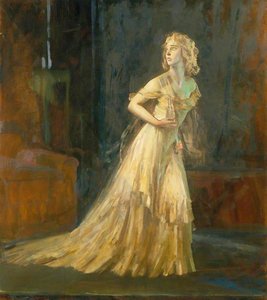 Vivien Leigh (1913–1967), as Blanche Dubois in 'A Streetcar Named Desire' by Tennessee Williams1950
21Evelyn M. Lowe (1870–1956)1940 · Guildhall Art Gallery
22
 The Old Threadneedle Street Courtyard with Guard Arriving at the Bank (sketch)
23
 The Old Threadneedle Street Courtyard with the Guard Arriving at the Bank
24
 Kingsley Fairbridge (Rhodes Scholar, 1908)The Rhodes Trust
25
 The Builders
Cztery motywy najczęściej powracające w tych oryginałach, z których każdy doczekał się swojego najdoskonalszego przykładu.
6 muzeów, w których znajduje się najwięcej obrazów z tej strony.
| Muzea | Miasto | Dzieła artysty Alfred Lawrence | Obrazy z tej listy |
|---|---|---|---|
 Laing Art Gallery |
Newcastle upon Tyne | 2 | The Building of Hadrian's Bridge (Pons Aelii) over the Tyne, c.122 AD, The Building of Hadrian's Bridge (Pons Aelii) over the Tyne, c.122 AD (study for a lunette decoration) |
 Queens’ College |
Cambridge | 1 | T. M. Temperley |
 National Maritime Museum |
Greenwich | 1 | Cherry Trees at Owletts |
 Towarzystwo Królewskie |
Londyn | 1 | Robert Robinson (1886–1975) |
 Guildhall Art Gallery |
Londyn | 1 | Evelyn M. Lowe (1870–1956) |
 The Rhodes Trust |
Oxford | 1 | Kingsley Fairbridge (Rhodes Scholar, 1908) |
Wybierz dekadę, aby zobaczyć dzieło, które ją definiuje.


Queen Elizabeth I at Tilbury, 1588 (1938). Następne są David Emlyn Evans, Royal Flying Corps Officer (1916) oraz Sir Herbert Baker (1862–1946), Architect.
45 lat: Queen Elizabeth I at Tilbury, 1588 pochodzi z 1938, a Alfred Lawrence urodził(a) się w 1893.
Queen Elizabeth I at Tilbury, 1588, David Emlyn Evans, Royal Flying Corps Officer, Sir Herbert Baker (1862–1946), Architect, The Right Honourable Brien Ibrican (1864–1932), Baron Cullen of Ashbourne, KBE, Governor of the Bank of England (1918–1920), Female Nude, Male Nude, The Building of Hadrian's Bridge (Pons Aelii) over the Tyne, c.122 AD, Head of an Italian Girl, The Building of Hadrian's Bridge (Pons Aelii) over the Tyne, c.122 AD (study for a lunette decoration) i Elizabeth I Commissions Raleigh to Sale for America, 1584. Powyższy ranking zawiera rok powstania oraz muzeum dla każdego z nich.
Nasz katalog zawiera 25 dzieł artysty Alfred Lawrence, datowanych od 1916 do 1950.
W większości znajdują się w Laing Art Gallery (Newcastle upon Tyne), Queens’ College (Cambridge) i National Maritime Museum (Greenwich). Powyższa tabela muzeów zawiera ich pełną listę.
W 1920s: 7 z 25 dzieł na tej stronie powstało w tym czasie, w tym Female Nude.
Na tej stronie najwcześniejszy to David Emlyn Evans, Royal Flying Corps Officer (1916), a najpóźniejszy Robert Robinson (1886–1975) (1950).
Portraiture (2), Elderly man (2) i Nude figure (2), w ramach 25 dzieł na tej stronie.
Contemporary realism, sądząc po oryginałach na tej stronie.
The Building of Hadrian's Bridge (Pons Aelii) over the Tyne, c.122 AD i The Building of Hadrian's Bridge (Pons Aelii) over the Tyne, c.122 AD (study for a lunette decoration): Laing Art Gallery, Newcastle upon Tyne posiada 2 dzieł widocznych na tej stronie.
Born in the historic town of Lewes, Sussex, on October 4th, 1893, Alfred Kingsley Lawrence emerged as a profound voice in British art, weaving together the quiet dignity of portraiture with the sweeping, atmospheric beauty of the English countryside. His early life was shaped by a resilience born of necessity; following the untimely death of his father, Lawrence was raised by his mother, Fanny Beatrice Lawrence, whose dedication to his education allowed his innate artistic talents to flourish. This foundational period of discipline and devotion set the stage for a career defined by meticulous observation and an unwavering commitment to capturing the essence of his subjects, whether they were the rugged terrains of Northumberland or the nuanced expressions of the British elite.
Lawrence’s formal training was as prestigious as it was transformative. At the King Edward VII School of Art, Armstrong College, he flourished under the mentorship of Professor Richard Hatton, a period that established him as one of Newcastle’s most promising young talents. His pursuit of excellence led him to the Royal College of Art, where he studied under the renowned William Rothenstein. It was here that Lawrence began to absorb the complex influences of Impressionism and Symbolism, learning to balance the structural integrity of realism with a more emotive, fluid approach to light and atmosphere. The pinnacle of his academic journey arrived in 1923 when he was awarded the prestigious Prix de Rome scholarship, an achievement that transported him to the heart of Italy, allowing him to refine his technique amidst the timeless grandeur of Roman classical art.
The artistry of Alfred Kingsley Lawrence is best understood through his ability to bridge the gap between the physical world and the psychological realm. His landscapes are far more than mere topographical records; they are evocative studies of light, weather, and mood. In his depictions of the Northumbrian landscape, one can sense the dampness of the mist and the heavy, shifting skies that define the region. This mastery of atmosphere was complemented by a remarkable skill in portraiture, where he sought to capture not just a likeness, but the very soul of the sitter. His portraits are celebrated for their psychological depth, utilizing subtle shading and realistic brushwork to convey wisdom, melancholy, or quiet strength.
His diverse repertoire includes several notable achievements that highlight his versatility as a painter:
Throughout his life, Lawrence remained a steadfast observer of the world around him. From the sporting scenes and hunting traditions that earned him recognition in the realm of British sporting art to the intimate, historical portraits like Queen Elizabeth I at Tilbury, his work serves as a vital visual record of a changing Britain. His legacy lives on through the collections of institutions such as the Munnings Art Museum, where his ability to blend the precision of a realist with the heart of an impressionist continues to captivate and inspire new generations of art lovers.

