Portret Aleksander Benois

77 najsłynniejszych obrazów artysty Aleksander Benois, każdy niepowtarzalny

Aktualizacja: Listopad 2026 · ranking według naszego wskaźnika popularności (liczba wyszukiwań, wizyt i zamówień dla każdego dzieła) · 79 dzieł Aleksander Benois w naszym katalogu

W skrócie

Ballerina. Costume design for Tamara Karsavina (1911) to obraz autorstwa Aleksander Benois, który przyciąga najwięcej spojrzeń. Następnie wzrok kieruje się na Self-portrait (1896) i The King walked in any weather…(Saint-Simon ) (1898). Spośród 79 dzieł Aleksander Benois w naszym katalogu, tych 77 jest najbardziej znanych – każde z nich to unikatowy oryginał, przedstawiony wraz z rokiem powstania, muzeum oraz powodem, dla którego przetrwało próbę czasu.

1870 – 1960, Petersburg Art nouveau

10 najlepszych obrazów autorstwa Aleksander Benois według oka galerii

Słynne obrazy artysty Aleksander Benois, od 11 do 77

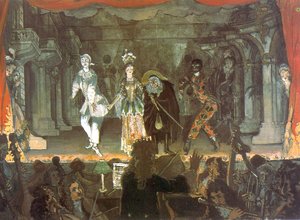
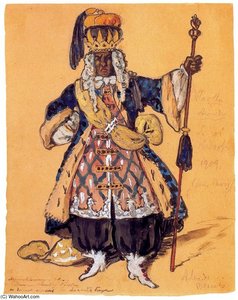
11Petrushka. Costume design for Vatslav Nijinsky (1911) autorstwa Aleksander BenoisPetrushka. Costume design for Vatslav Nijinsky1911 12Hermann at the entrance to the countess (1910) autorstwa Aleksander BenoisHermann at the entrance to the countess1910 13At the gambling house (1910) autorstwa Aleksander BenoisAt the gambling house1910 14Venetian celebration of the XVI century. Fragment. Set Design for an unrealized ballet "The festivities" (1912) autorstwa Aleksander BenoisVenetian celebration of the XVI century. Fragment. Set Design for an unrealized ballet "The festivities"1912 15First barrel organ player. Costume design (1917) autorstwa Aleksander BenoisFirst barrel organ player. Costume design1917 16The scene of the ball. Set Design for Tchaikovsky's opera "Queen of Spades" (1919) autorstwa Aleksander BenoisThe scene of the ball. Set Design for Tchaikovsky's opera "Queen of Spades"1919 17Truffaldino. Costume design for Goldoni's comedy "Servant of two masters" (1920) autorstwa Aleksander BenoisTruffaldino. Costume design for Goldoni's comedy "Servant of two masters"1920 18On the waterfront. Set Design for Shakespeare's drama "The Merchant of Venice" (1920) autorstwa Aleksander BenoisOn the waterfront. Set Design for Shakespeare's drama "The Merchant of Venice"1920 19The third drunkard (1936) autorstwa Aleksander BenoisThe third drunkard1936 20Versailles. King's walk (1897) autorstwa Aleksander BenoisVersailles. King's walk1897 21Versailles. Louis XIV is feeding fish (1897) autorstwa Aleksander BenoisVersailles. Louis XIV is feeding fish1897 22At the pool of Ceres (1897) autorstwa Aleksander BenoisAt the pool of Ceres1897 23Versailles. Fountain of Bacchus in the winter (1905) autorstwa Aleksander BenoisVersailles. Fountain of Bacchus in the winter1905 24Carnival on the Fontanka River (1900) autorstwa Aleksander BenoisCarnival on the Fontanka River1900 25Cover Page (1904) autorstwa Aleksander BenoisCover Page1904 26Italian comedy. ''Love Note'' (1905) autorstwa Aleksander BenoisItalian comedy. ''Love Note''1905 27Peterhof Palace. Lion cascade and colonnade (1900) autorstwa Aleksander BenoisPeterhof Palace. Lion cascade and colonnade1900 28Church of St. Catherine in St. Petersburg (1899) autorstwa Aleksander BenoisChurch of St. Catherine in St. Petersburg1899 29Interieur (1900) autorstwa Aleksander BenoisInterieur1900 30Versailles. Water parterre (1905) autorstwa Aleksander BenoisVersailles. Water parterre1905 31Letter «Zh» (1904) autorstwa Aleksander BenoisLetter «Zh»1904 32Letter «R» (1904) autorstwa Aleksander BenoisLetter «R»1904 33Versailles. ''Mirror'' at Trianon (1905) autorstwa Aleksander BenoisVersailles. ''Mirror'' at Trianon1905 34Letter «U» (1904) autorstwa Aleksander BenoisLetter «U»1904 35Letter «T» (1904) autorstwa Aleksander BenoisLetter «T»1904 36Letter «B» (1904) autorstwa Aleksander BenoisLetter «B»1904 37Letter «S» (1904) autorstwa Aleksander BenoisLetter «S»1904 38Peterhof Palace. Grand Cascade (1901) autorstwa Aleksander BenoisPeterhof Palace. Grand Cascade1901 39Letter «L» (1904) autorstwa Aleksander BenoisLetter «L»1904 40Night at the fairground. Fragment. A sketch for the curtain (1911) autorstwa Aleksander BenoisNight at the fairground. Fragment. A sketch for the curtain1911 41Breton dancing (1906) autorstwa Aleksander BenoisBreton dancing1906 42The King (1906) autorstwa Aleksander BenoisThe King1906 43Versailles (1906) autorstwa Aleksander BenoisVersailles1906 44Crypt of the Borotin Castle. Set Design for Grillparzer's drama "Die Ahnfrau" (1908) autorstwa Aleksander BenoisCrypt of the Borotin Castle. Set Design for Grillparzer's drama "Die Ahnfrau"1908 45Nurse and child. Costume design (1911) autorstwa Aleksander BenoisNurse and child. Costume design1911 46The Evening (1906) autorstwa Aleksander BenoisThe Evening1906 47Peter I on a walk in the Summer Garden (1910) autorstwa Aleksander BenoisPeter I on a walk in the Summer Garden1910 48Versailles (1906) autorstwa Aleksander BenoisVersailles1906 49Rural landscape. Set Design for Adan's ballet "Giselle" (1910) autorstwa Aleksander BenoisRural landscape. Set Design for Adan's ballet "Giselle"1910 50Versailles. Alley (1906) autorstwa Aleksander BenoisVersailles. Alley1906 51Breton Landscape (1906) autorstwa Aleksander BenoisBreton Landscape1906 52Flora Pool in Versailles (1906) autorstwa Aleksander BenoisFlora Pool in Versailles1906 53Blackamoor's Chamber. Fragment. Set Design (1911) autorstwa Aleksander BenoisBlackamoor's Chamber. Fragment. Set Design1911 54Bertha. Costume design for Vera Komissarzhevskaya. (1908) autorstwa Aleksander BenoisBertha. Costume design for Vera Komissarzhevskaya.1908 55Versailles. Greenhouse (1906) autorstwa Aleksander BenoisVersailles. Greenhouse1906 56Chinese Pavilion. Jealous (1906) autorstwa Aleksander BenoisChinese Pavilion. Jealous1906 57At the German Quarter (1911) autorstwa Aleksander BenoisAt the German Quarter1911 58Death of the Countess (1910) autorstwa Aleksander BenoisDeath of the Countess1910 59Pancake Day in St.Petersburg. Fragment. Set Design (1911) autorstwa Aleksander BenoisPancake Day in St.Petersburg. Fragment. Set Design1911 60Dancer in the procession of the Chinese emperor. Costume design for Stravinsky's opera "Nightingale" (1914) autorstwa Aleksander BenoisDancer in the procession of the Chinese emperor. Costume design for Stravinsky's opera "Nightingale"1914 61Ballerina. Costume design (1917) autorstwa Aleksander BenoisBallerina. Costume design1917 62Street Dancer. Costume design (1917) autorstwa Aleksander BenoisStreet Dancer. Costume design1917 63Italian comedy (1916) autorstwa Aleksander BenoisItalian comedy1916 64Blackamoor's Chamber. Fragment. Set Design (1917) autorstwa Aleksander BenoisBlackamoor's Chamber. Fragment. Set Design1917 65Blackamoor. Costume design (1918) autorstwa Aleksander BenoisBlackamoor. Costume design1918 66Peterhof Palace. Vases at the channel (1942) autorstwa Aleksander BenoisPeterhof Palace. Vases at the channel1942 67Peterhof Palace. Mon Plaisir. Medium room. (1942) autorstwa Aleksander BenoisPeterhof Palace. Mon Plaisir. Medium room.1942 68Petrushka. Poster scetch (1948) autorstwa Aleksander BenoisPetrushka. Poster scetch1948 69A coachman and a nurse.Costume design (1957) autorstwa Aleksander BenoisA coachman and a nurse.Costume design1957 70Magician. Costume design (1957) autorstwa Aleksander BenoisMagician. Costume design1957 71Untitled (434) autorstwa Aleksander BenoisUntitled (434) 72Untitled (894) autorstwa Aleksander BenoisUntitled (894) 73Untitled (460) autorstwa Aleksander BenoisUntitled (460) 74Soldiers of Catherine II autorstwa Aleksander BenoisSoldiers of Catherine II 75Untitled (451) autorstwa Aleksander BenoisUntitled (451) 76Untitled (302) autorstwa Aleksander BenoisUntitled (302) 77Untitled (959) autorstwa Aleksander BenoisUntitled (959)

Tematy, które przyciągnęły wzrok Aleksander Benois

Cztery motywy najczęściej powracające w tych oryginałach, z których każdy doczekał się swojego najdoskonalszego przykładu.

Aleksander Benois na przestrzeni dekad: jeden unikatowy oryginał dla każdego

Dzieła według dekad

Wybierz dekadę, aby zobaczyć dzieło, które ją definiuje.

Obrazy artysty Aleksander Benois: pytania do galerii

Jakie jest najsłynniejsze dzieło artysty Aleksander Benois?Odkryj odpowiedź

Ballerina. Costume design for Tamara Karsavina (1911). Następne są Self-portrait (1896) oraz The King walked in any weather…(Saint-Simon ) (1898).

W jakim wieku Aleksander Benois stworzył/a Ballerina. Costume design for Tamara Karsavina?Odkryj odpowiedź

41 lat: Ballerina. Costume design for Tamara Karsavina pochodzi z 1911, a Aleksander Benois urodził(a) się w 1870.

Które dziesięć obrazów Aleksander Benois jest najbardziej znanych?Odkryj odpowiedź

Ballerina. Costume design for Tamara Karsavina, Self-portrait, The King walked in any weather…(Saint-Simon ), Versailles. At Curtius., Ray Embankment in Basel in the rain, Bronze Horseman. Design for a cover to Pushkin's poem., Italian comedy. ''Indiscreet Punchinello'', Apollo and Daphne, Drummer of a Puppetry i Petrushka's Chamber. Set Design. Powyższy ranking zawiera rok powstania oraz muzeum dla każdego z nich.

Ile znanych dzieł stworzył Aleksander Benois?Odkryj odpowiedź

Nasz katalog zawiera 79 dzieł artysty Aleksander Benois, datowanych od 1896 do 1957.

W jakim okresie Aleksander Benois stworzył/a swoje najsłynniejsze obrazy?Odkryj odpowiedź

W 1900s: 31 z 77 dzieł na tej stronie powstało w tym czasie, w tym Bronze Horseman. Design for a cover to Pushkin's poem..

Który z najsłynniejszych obrazów artysty Aleksander Benois powstał najwcześniej, a który najpóźniej?Odkryj odpowiedź

Na tej stronie najwcześniejszy to Self-portrait (1896), a najpóźniejszy A coachman and a nurse.Costume design (1957).

Jakie tematy preferował Aleksander Benois?Odkryj odpowiedź

Gardens and parks (13), Designs and sketches (10) i Famous people (8), w ramach 77 dzieł na tej stronie.

Do jakiego nurtu należy twórczość Aleksander Benois?Odkryj odpowiedź

Art nouveau, sądząc po oryginałach na tej stronie.

Aleksander Benois: portret artysty

Early Life and Artistic Roots

Alexandre Nikolayevich Benois, born on May 4th, 1870, in the vibrant cultural heart of St. Petersburg, Russia, was immersed in an environment brimming with artistic legacy from his very beginnings. His family—the Benoises—represented a significant force within the Russian intelligentsia, a lineage deeply intertwined with architecture, painting, and intellectual discourse. His mother, Camilla (formerly Kavos), carried the influence of her aristocratic background, while his father, Nicholas Benois, was a respected architect known for his elegant designs. Alexandre’s brothers, Albert and Leon, continued this artistic tradition, further enriching the family's creative tapestry. His sister, Maria, married Nikolai Tcherepnin, a prominent composer and conductor—a connection that would later prove invaluable to Benois’s career. Unlike many of his siblings who embraced formal artistic training, Alexandre initially pursued a path in law at Saint Petersburg Imperial University, seemingly destined for a life outside the realm of art. However, fate intervened with a pivotal encounter: while visiting Versailles in 1897, he caught the eye of Sergei Diaghilev and Léon Bakst, two figures who were rapidly reshaping the landscape of Russian art and theatre. This chance meeting ignited a passion that would forever alter the course of his life, leading him away from legal studies and into the world of stage design and artistic innovation.

The Founding of Mir Iskusstva and the Ballets Russes

The meeting between Benois, Diaghilev, and Bakst marked the genesis of *Mir iskusstva* (World of Art), a magazine and artistic movement that would become a cornerstone of early 20th-century Russian culture. Rejecting the prevailing academic traditions and the conservative aesthetic of the Peredvizhniki Society, *Mir iskusstva* championed individualism, innovation, and a synthesis of Western European influences with traditional Russian folk art. Benois’s role within this movement was crucial; he served as editor alongside Diaghilev, shaping its intellectual direction and fostering a spirit of experimentation. The magazine quickly gained notoriety for its bold critiques and its promotion of avant-garde artists, attracting a diverse group of creatives—painters, sculptors, architects, writers, and designers—all united by a desire to break free from established norms. Benois’s meticulous approach to curating *Mir iskusstva* ensured it became a vital platform for challenging artistic conventions and celebrating new forms of expression.

Design Style and Notable Works

Benois's aesthetic was characterized by a distinctive blend of Neo-Classicism, Art Nouveau elegance, and a deep appreciation for Russian history and folklore. His designs were known for their meticulous detail, refined lines, and evocative use of color and texture. He frequently drew inspiration from historical sources—particularly the late Baroque and Rococo periods—incorporating elements of aristocratic grandeur and courtly ritual into his stage settings. However, he never adhered rigidly to traditional styles; instead, he skillfully manipulated classical motifs to create a sense of both familiarity and novelty. This ability to seamlessly blend the old and new was a hallmark of his work, reflecting a profound understanding of artistic history while simultaneously pushing boundaries. His illustrations for Pushkin’s poem *The Bronze Horseman* (1903) demonstrated his ability to capture both historical accuracy and poetic emotion—a skill that would later be reflected in his work with children's books. The “Alphabet in Pictures,” published in 1904, was a remarkable achievement—a beautifully illustrated primer that combined educational content with artistic sophistication. The illustrations from this volume were even featured during the opening ceremony of the 2014 Winter Olympics in Sochi, underscoring Benois’s enduring legacy as a visionary artist and cultural icon. Key productions include *Les Sylphides* (1909), *Giselle* (1910), and *Petrushka* (1911), each a testament to his innovative stage design and collaborative spirit.

Later Years and Legacy

Following the Russian Revolution of 1917, Benois found himself in Paris, where he continued to work as a set designer. He was appointed curator of the gallery of Old Masters in the Hermitage Museum at Leningrad (now St. Petersburg) from 1918 to 1926, securing his brother’s Leonardo da Vinci painting *Madonna* for the museum—a testament to his scholarly pursuits and dedication to preserving Russian cultural heritage. He published his memoirs in two volumes in 1955, offering a fascinating glimpse into his life and artistic journey. Benois's son, Nicola Alexandrovich Benois (Nikolai Benois), followed in his father’s footsteps, becoming a renowned opera designer. His nephew, Nikolai Albertovich Benois, married the celebrated soprano Maria Nikolaevna Kuznetsova. Alexandre Benois died on February 9th, 1960, leaving behind an extraordinary body of work that continues to inspire artists and captivate audiences worldwide. He remains a pivotal figure in the history of ballet design, a champion of artistic innovation, and a testament to the power of collaboration and vision. His influence extends far beyond his immediate creations, shaping the very foundations of modern stagecraft and leaving an indelible mark on Russian art and culture.