La Fête Dieu
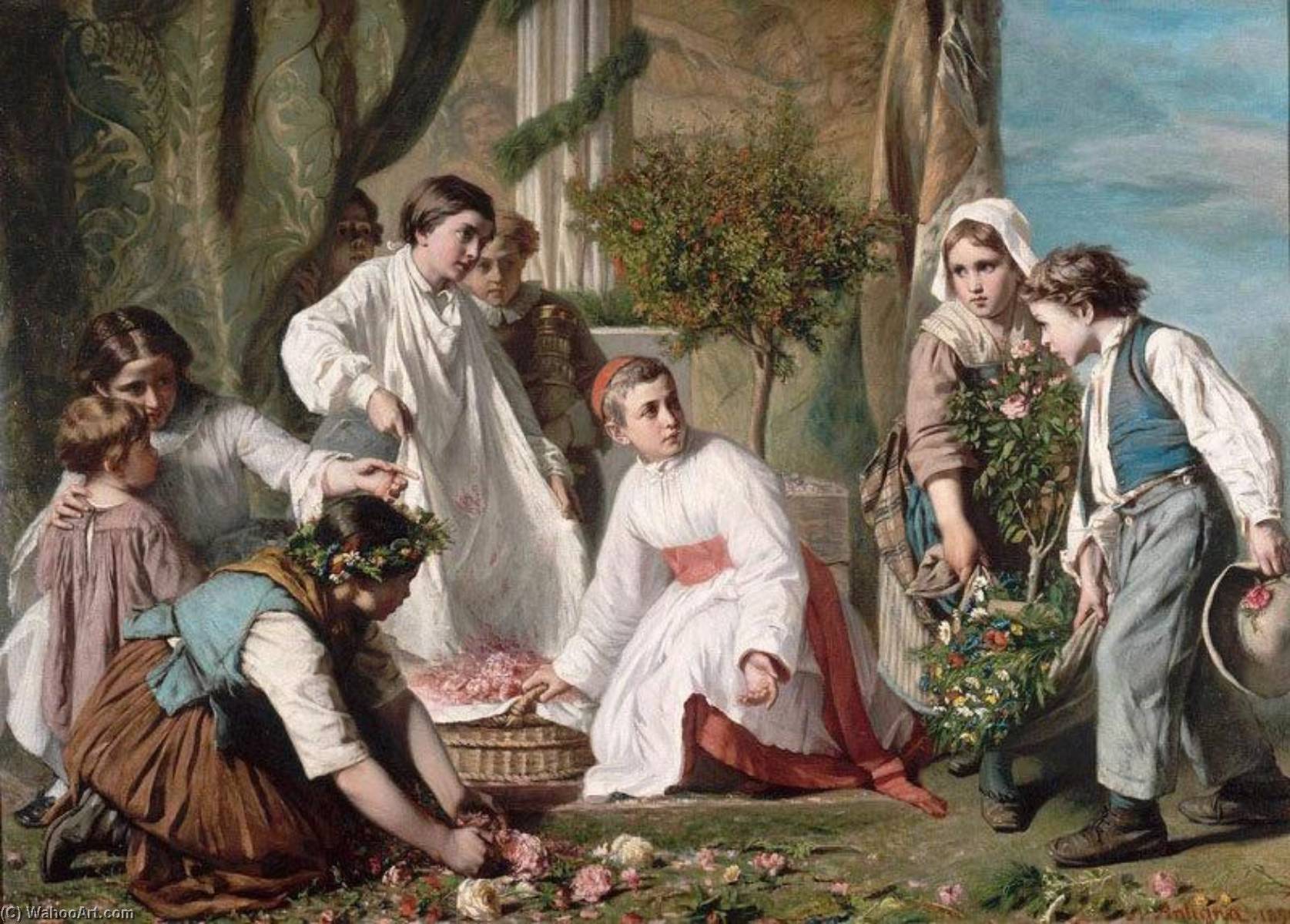
The oil on canvas titled La Fête Dieu was painted by Alexandre Antigna in 1855. This work measures 55 x 76 3/4 inches (140 x 195 cm). It captures a moment of preparation, where the weight of tradition meets the lightness of youth.
W skrócie
Z wszystkich oryginałów pozostawionych przez Alexandre Antigna, najsłynniejszym jest La Fête Dieu. Tuż za nimi znajdują się The Lightning (1848) oraz L'Eclair. Nasz katalog zawiera 21 dzieł autorstwa Alexandre Antigna; galeria zachowała 21 najbardziej podziwianych na świecie prac, z których każda została przedstawiona wraz z datą powstania, informacją o muzeum oraz jej historią.
The oil on canvas titled La Fête Dieu was painted by Alexandre Antigna in 1855. This work measures 55 x 76 3/4 inches (140 x 195 cm). It captures a moment of preparation, where the weight of tradition meets the lightness of youth.
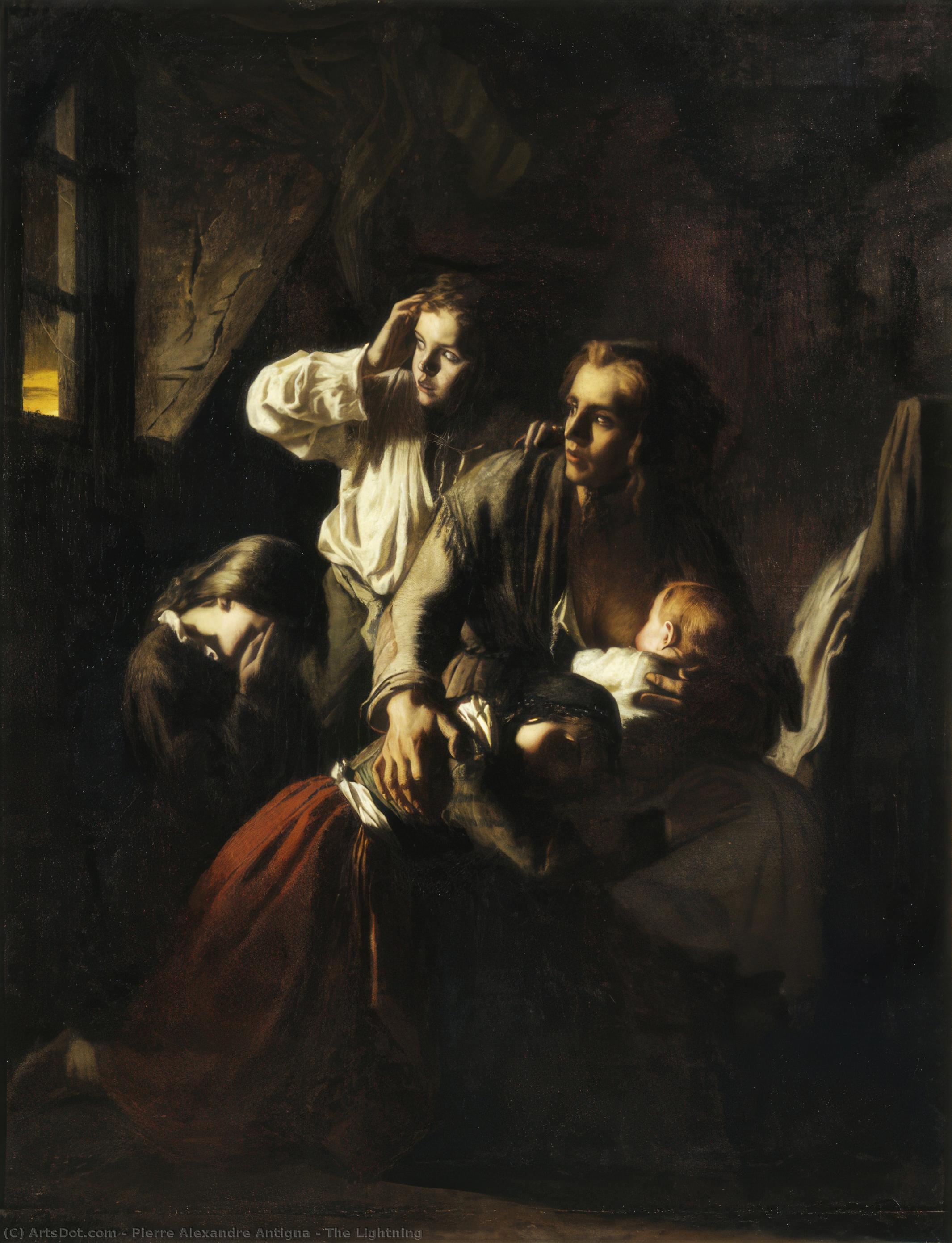
“The Lightning,” painted in 1848 by the French artist Pierre Alexandre Antigna, is more than just a depiction of a family huddled together during an electrical storm; it’s a poignant meditation on vulnerability, familial love, and the raw power of nature. Antigna, a key figure in Parisian Realism, masterfully captures a fleeting moment of intense emotion within a dimly lit interior, drawing the viewer into a scene brimming with both…
The oil on canvas titled L'Eclair was painted in 1848. This tableau captures a singular moment of tension. Alexandre Antigna, born in Orléans, France, in 1817, rendered the scene with a steady hand. The pigment settles into the weave of the fabric, holding a fragment of a storm within its fibers.
The air feels heavy with the scent of dry hay and sun-warmed earth as a group of children whirl in a rhythmic circle. They move through a wide, rural landscape, their small figures caught in a moment of pure, uninhibited joy. The composition pulls the eye into a continuous loop, following the sweep of outstretched arms and the swirling motion of colorful skirts. Reds, blues, and whites flash against the…
The sketch depicts a young girl captured in mid-stride, her body leaning slightly forward into the direction of her movement. She is positioned off-center to the right, creating a sense of momentum as she walks. Her head is tilted downward, eyes fixed upon an open book held in her outstretched hands. The figure is rendered from the mid-thigh upward, focusing the viewer's attention on the interaction between her posture and…
The light falls from the upper left, casting soft shadows across a gathering of Aragonese people. They sit upon weathered stone steps, framed by the deep green of a grapevine. A woman holds an infant, her chemise a bright white against the earthy tones of the scene. Beside them, a young boy cradles a musical instrument, his small hands poised in a moment of stillness. The air feels heavy with…
This oil painting presents a close-up portrait of a young girl, focusing tightly on her head and hands. The subject is positioned in a direct, eye-level view, her chin resting upon her hands in a pensive posture. A headscarf wraps around her face, creating organic folds that frame her features. The lighting originates from the upper left, casting shadows across her face and highlighting the specific expression in her eyes.…
A solitary woman rests in a dimly lit, rustic interior, her form surrendered to sleep. Positioned slightly to the left of center, she is balanced by the large, circular silhouette of a spinning wheel to the right. The composition is vertical, drawing the eye to the heavy, nocturnal atmosphere of the room. Deep, earthy tones of umber and sienna dominate the space, creating a sense of profound stillness. A sharp…
The oil painting titled Gypsy Girl presents a quiet, heavy moment captured on canvas. This work is the creation of Alexandre Antigna, an artist who emerged from the city of Orléans, France. Born in 1817, Antigna brings a specific, focused gaze to the subjects he encounters, often finding the weight of existence in the faces of those living on the margins of society.
is an oil on canvas by the French painter Alexandre Antigna. The work presents a nude female figure wading into a body of water. This central subject is situated within a dense forest setting, where the natural environment forms a dark, enveloping backdrop around the form.
Cztery motywy najczęściej powracające w tych oryginałach, z których każdy doczekał się swojego najdoskonalszego przykładu.
6 muzeów, w których znajduje się najwięcej obrazów z tej strony.
| Muzea | Miasto | Dzieła artysty Alexandre Antigna | Obrazy z tej listy |
|---|---|---|---|
| Paryż | 2 | The Lightning, L'Eclair | |
| Orlean | 2 | Aragonese of Anso, The Fire | |
| Limoux | 1 | Circle of children | |
| Worcester | 1 | Head of a Girl | |
| Saint-Brieuc | 1 | The sleeping spinner | |
| Gandawa | 1 | Gypsy Girl |
Wybierz dekadę, aby zobaczyć dzieło, które ją definiuje.
“The Lightning,” painted in 1848 by the French artist Pierre Alexandre Antigna, is more than just a depiction of a family huddled together during an electrical storm; it’s a poignant meditation on vulnerability, familial love, and the raw power of nature. Antigna, a key figure in Parisian Realism, masterfully captures a fleeting moment of intense emotion within a dimly lit interior, drawing the viewer into a scene brimming with both…
The air feels heavy with the scent of dry hay and sun-warmed earth as a group of children whirl in a rhythmic circle. They move through a wide, rural landscape, their small figures caught in a moment of pure, uninhibited joy. The composition pulls the eye into a continuous loop, following the sweep of outstretched arms and the swirling motion of colorful skirts. Reds, blues, and whites flash against the…
The light falls from the upper left, casting soft shadows across a gathering of Aragonese people. They sit upon weathered stone steps, framed by the deep green of a grapevine. A woman holds an infant, her chemise a bright white against the earthy tones of the scene. Beside them, a young boy cradles a musical instrument, his small hands poised in a moment of stillness. The air feels heavy with…
La Fête Dieu. Następne są The Lightning (1848) oraz L'Eclair.
La Fête Dieu, The Lightning, L'Eclair, Circle of children, Girl striding out reading a book, Aragonese of Anso, Head of a Girl, The sleeping spinner, Gypsy Girl i Miroir des bois. Powyższy ranking zawiera rok powstania oraz muzeum dla każdego z nich.
Nasz katalog zawiera 21 dzieł artysty Alexandre Antigna, datowanych od 1848 do 1872.
W większości znajdują się w Musée d'Orsay (Paryż), Musée des Beaux-Arts (Orlean) i musée Petiet de Limoux (Limoux). Powyższa tabela muzeów zawiera ich pełną listę.
W 1850s: 3 z 21 dzieł na tej stronie powstało w tym czasie, w tym Circle of children.
Na tej stronie najwcześniejszy to The Lightning (1848), a najpóźniejszy Aragonese of Anso (1872).
Woman (8), Children (4) i Girl (4), w ramach 21 dzieł na tej stronie.
Oil On Canvas, dla 15 z 21 dzieł na tej stronie.
Romanticism, sądząc po oryginałach na tej stronie.
The Lightning i L'Eclair: Musée d'Orsay, Paryż posiada 2 dzieł widocznych na tej stronie.
W samym sercu XIX-wiecznej Francji, w epoce zdefiniowanej przez głębokie niepokoje społeczne i zmieniające się paradygmaty artystyczne, Jean Pierre Alexandre Antigna wyłonił się jako malarz o niespotykanej empatii. Urodzony w Orleanach w 1817 roku, jego wczesna artystyczna droga była zakorzeniona w tradycyjnych pejzażach młodości, kształtowanych pod czujnym okiem lokalnego malarza François Salmona. Jednak przyciąganie Paryża okazało się nieodparte. Po wstąpieniu do prestiżowej École Nationale Supérieure des Beaux-Arts w 1837 roku, Antigna zanurzył się w świecie akademickiego rygoru, studiując u mistrzów takich jak Sébastien Norblin de la Gourdaine oraz słynny Paul Delaroche. Te wczesne lata upłynęły pod znakiem skupienia na tematach religijnych i formalnym portrecie, zgodnie ze ustalonymi konwencjami stylistycznymi epoki.
Jednak prawdziwa metamorfoza duszy Antigna dokonała się nie w pozłacanych salach akademii, lecz w zacienionych, wąskich uliczkach Île Saint-Louis. Żyjąc pośród ubogich dzielnic Paryża, artysta stał się świadkiem surowej, nieprzefiltrowanej walki miejskiej biedoty. To głębokie zetknięcie z ludzkim nieszczęściem zadziałało jak katalizator, odciągając go od idealizowanej ikonografii religijnej w stronę surowego, nieustępliwego Realizmu. Gdy rewolucja z 1848 roku przetoczyła się przez Francję, Antigna w pełni przyjął styl, który dążył do udokumentowania ciężaru egzystencji. Jego płótna zaczęły tętnić ciężarem trosk i cichą odpornością tych, którzy znaleźli się na marginesie społeczeństwa, oddanych za pomocą teksturowanego duktu pędzla i głębi emocjonalnej, która przykuwała uwagę paryskiego Salonu.
W miarę rozwoju kariery wizja artystyczna Antigna rozszerzyła się poza miejskie granice Paryża. Napędzany nienasyconą ciekawością dotyczącą kondycji ludzkiej i świata natury, wyruszył w dalekie podróże przez surowe krajobrazy Bretanii i tętniące życiem tereny Hiszpanii. Podróże te pozwoliły mu połączyć świadomość społeczną z rodzącym się Naturalizmem. Około 1860 roku jego prace zaczęły odzwierciedlać skrupulatną obserwację natury, w której atmosferyczne właściwości krajobrazu stawały się równie istotnym tematem, co ludzie zamieszkujący te tereny. Bez względu na to, czy chwytał dramatyczne napięcie burzy, czy cichą godność wiejskiego robotnika, jego technika pozostawała zakotwiczona w poczuciu głębokiego współczucia.
Jego mistrzostwo zostało formalnie uznane przez państwo francuskie, gdy w 1861 roku otrzymał Legion Honoru, co stało się kamieniem milowym umacniającym jego pozycję wśród najważniejszych postaci jego pokolenia. Nawet gdy jego styl ewoluował w stronę bardziej naturalistycznych przedstawień, rdzeniem jego twórczości pozostało badanie kruchości i siły. Wybitne dzieła, takie jak Piorun, demonstrują tę dualność, gdzie rodzina skulona podczas burzy elektrycznej służy jako przejmująca medytacja nad miłością rodzinną w obliczu przerażającej potęgi natury. Poprzez wykorzystanie światła, cienia i tekstur impasto, Antigna robił coś więcej niż tylko malował sceny; on chwytał samą esencję przetrwania.
Historyczne znaczenie Pierre'a Alexandre'a Antigna tkwi w jego zdolności do budowania mostów między romantycznym wzruszeniem a realistyczną prawdą. Nie tylko obserwował biedę; nasycił ją godnością, która rzuciła wyzwanie ówczesnym hierarchiom społecznym. Jego życie, zakończone w Paryżu w 1878 roku, pozostawiło po sobie dorobek, który służy jako żywy wizualny zapis XIX-wiecznego życia we Francji. Jego wpływ można dostrzec w sposobie, w jaki wykorzystywał następujące elementy, aby wynieść swoje tematy:
Dziś Antigna jest wspominany nie tylko jako malarz scen, ale jako pełen współczucia głos swojej epoki, artysta, który spojrzał w mrok miejskiej walki i odnalazł niegasnące światło ludzkiego ducha.