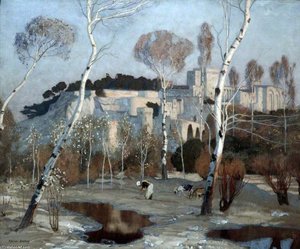
Portret Adrian Scott Stokes

50 najsłynniejszych obrazów artysty Adrian Scott Stokes, każdy niepowtarzalny

Aktualizacja: Listopad 2026 · ranking według naszego wskaźnika popularności (liczba wyszukiwań, wizyt i zamówień dla każdego dzieła) · 50 dzieł Adrian Scott Stokes w naszym katalogu

W skrócie

In the Dunes (1920) to obraz autorstwa Adrian Scott Stokes, który przyciąga najwięcej spojrzeń; oryginał znajduje się w Narodowa Galeria Kanady, Ottawa. Następnie wzrok kieruje się na Hunters on the moor north of Skagen (1886) i Angler Am Bachufer. Spośród 50 dzieł Adrian Scott Stokes w naszym katalogu, tych 50 jest najbardziej znanych – każde z nich to unikatowy oryginał, przedstawiony wraz z rokiem powstania, muzeum oraz powodem, dla którego przetrwało próbę czasu.

1854 – 1935, Southport Impressionism Najwięcej dzieł: Narodowa Galeria Kanady

10 najlepszych obrazów autorstwa Adrian Scott Stokes według oka galerii

1
In the Dunes (1920) autorstwa Adrian Scott Stokes

In the Dunes

1920 · Black and White Photography · Narodowa Galeria Kanady, Ottawa

There is a sense of nostalgia inherent in this image, which functions as a piece of historical documentation. The presence of handwritten annotations on the edges suggests its origin from a glass plate or film negative, grounding the work in a specific era of photographic development. It captures a way of life that feels distant, preserved in the stillness of the grey and black tones. The perspective is direct and…
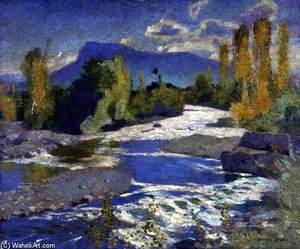
5
Sunset autorstwa Adrian Scott Stokes

Sunset

A Serene Twilight: Capturing Cornish Beauty Adrian Scott Stokes’ "Sunset" is a captivating glimpse into the tranquil beauty of the Cornish coast at twilight. This evocative oil painting exemplifies the Impressionistic style, prioritizing atmosphere and emotional resonance over meticulous detail. The artwork transports viewers to a scene dominated by rolling sand dunes gently sloping towards a vibrant horizon where the sun dips below view. A solitary tree stands sentinel atop…

Słynne obrazy artysty Adrian Scott Stokes, od 11 do 50

Tematy, które przyciągnęły wzrok Adrian Scott Stokes

Cztery motywy najczęściej powracające w tych oryginałach, z których każdy doczekał się swojego najdoskonalszego przykładu.

Muzea przechowujące oryginały Adrian Scott Stokes

2 muzeów, w których znajduje się najwięcej obrazów z tej strony.

Muzea Miasto Dzieła artysty Adrian Scott Stokes Obrazy z tej listy
Narodowa Galeria Kanady, OttawaNarodowa Galeria Kanady Ottawa 1 In the Dunes
Skagens Museum, SkagenSkagens Museum Skagen 1 Hunters on the moor north of Skagen

Twórczość Adrian Scott Stokes na przestrzeni lat: unikalne oryginały każdego dzieła

Długa, 35-letnia kariera, od 1886 do 1920: najsłynniejsze oryginały Adrian Scott Stokes przedstawione rok po roku.

Dzieła według lat

Wybierz rok, aby zobaczyć oryginały.

Obrazy artysty Adrian Scott Stokes: pytania do galerii

Jakie jest najsłynniejsze dzieło artysty Adrian Scott Stokes?Odkryj odpowiedź

In the Dunes (1920), Narodowa Galeria Kanady, Ottawa. Następne są Hunters on the moor north of Skagen (1886) oraz Angler Am Bachufer.

W jakim wieku Adrian Scott Stokes stworzył/a In the Dunes?Odkryj odpowiedź

66 lat: In the Dunes pochodzi z 1920, a Adrian Scott Stokes urodził(a) się w 1854.

Które dziesięć obrazów Adrian Scott Stokes jest najbardziej znanych?Odkryj odpowiedź

In the Dunes, Hunters on the moor north of Skagen, Angler Am Bachufer, Rumanian Cottages In Transylvania, Sunset, An Evening On The Seine, Islands Of The Adriatic, Uplands And Sky, Fishing boats leaving Zuyderzee Port i Sunset In Provence, France. Powyższy ranking zawiera rok powstania oraz muzeum dla każdego z nich.

Ile znanych dzieł stworzył Adrian Scott Stokes?Odkryj odpowiedź

Nasz katalog zawiera 50 dzieł artysty Adrian Scott Stokes, datowanych od 1886 do 1920.

Gdzie można zobaczyć najsłynniejsze oryginały Adrian Scott Stokes?Odkryj odpowiedź

W większości znajdują się w Narodowa Galeria Kanady (Ottawa) i Skagens Museum (Skagen). Powyższa tabela muzeów zawiera ich pełną listę.

Który z najsłynniejszych obrazów artysty Adrian Scott Stokes powstał najwcześniej, a który najpóźniej?Odkryj odpowiedź

Na tej stronie najwcześniejszy to Hunters on the moor north of Skagen (1886), a najpóźniejszy In the Dunes (1920).

Jakie tematy preferował Adrian Scott Stokes?Odkryj odpowiedź

Autumn (5), Sky (3) i Winter (3), w ramach 50 dzieł na tej stronie.

Do jakiego nurtu należy twórczość Adrian Scott Stokes?Odkryj odpowiedź

Impressionism, sądząc po oryginałach na tej stronie.

Adrian Scott Stokes: portret artysty

A Life Captured in Light and Landscape

The story of Charles Adrian Scott Stokes is one of unexpected artistic discovery and a profound connection to the natural world. Born in Southport, Lancashire, his initial path led him toward the commercial world of Liverpool, where he worked as a cotton broker. However, the call of the canvas proved irresistible. His latent talent was brought to light by the discerning eye of John Herbert RA, who recognized the promise in Stokes' drawings and encouraged him to seek formal training. This pivotal moment led him to the Royal Academy Schools in 1872, marking the beginning of a career dedicated to capturing the ephemeral beauty of the earth through paint.

His artistic journey was deeply shaped by his travels across Europe, which allowed him to absorb the essence of various landscape traditions. By venturing to Fontainebleau and Barbizon, Stokes came under the profound influence of French plein air landscape painters, most notably Jules Bastien-Lepage. These experiences instilled in him a commitment to painting directly from nature, seeking to capture the atmosphere and light as they truly appeared in the moment. His vision was further enriched by his time spent in Skagen, Denmark, where he developed close ties with the prominent Skagen Painters, including Michael and Anna Ancher.

Technique and Artistic Vision

Stokes’ work is celebrated for its evocative ability to transport the viewer into serene, atmospheric settings. His style often leaned toward Impressionism, prioritizing emotional resonance and the play of light over rigid, meticulous detail. In masterpieces such as "Sunset," one can observe his mastery of a warm, transitioning palette—moving from pale blues to rich pinks and oranges—to convey the fleeting magic of twilight. His technique utilized visible, expressive brushstrokes that lent a palpable sense of texture and materiality to his canvases, particularly when depicting the rolling sand dunes and coastal vegetation of the Cornish coast.

While landscape painting remained his primary passion, Stokes demonstrated remarkable versatility throughout his career. His repertoire included:

Beyond his individual technical skill, Stokes' life was intertwined with the broader art history of his era through his marriage to the Austrian painter Marianne Stokes. Together, they navigated the vibrant art circles of Europe, sharing a passion for capturing the light and spirit of the landscapes they encountered. His legacy remains etched in the soft light of his seascapes and the quiet dignity of his rural scenes, standing as a testament to the enduring power of the plein air tradition.