what is realism art movement
Realism is an artistic movement that emerged in France during the 1840s, focusing on portraying contemporary life with truth and accuracy. It rejects the use of allegory, myth, or supernatural elements, instead emphasizing the unvarnished depiction of ordinary, mundane existence, including the gritty realities of labor and social inequality.
The movement arose as a reaction to the dominant Romantic style, seeking to strip away the exotic and the idealized. Influenced by the social upheavals of the mid-1800s—including the 1848 uprisings in Europe and the economic shifts caused by the Industrial Revolution—Realists turned their gaze toward the tangible world. They sought to document the world as it truly is, rather than how it might be imagined through a lens of beauty or drama.
Key characteristics of the movement include:
- Accurate Observation: A focus on the physical forms and tangible textures of objects and people.
- Subject Matter: The inclusion of everyday, often unidealized scenes of domesticity and manual labor.
- Naturalism: The use of linear perspective and illusionism to present a non-distorted view of reality.
which artists define the Realist style
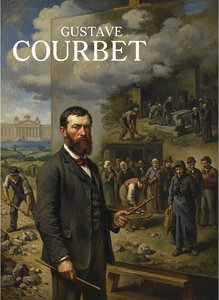
 Gustave Courbet
Gustave Courbet (1819-1877): Pioneer of Realism. Explore paintings depicting everyday life & working class subjects like 'A Burial at Ornans'. Discover his revolutionary impact on 19th-century art.
The Realist style is defined by artists who prioritized direct observation of the contemporary world. Major figures include Gustave Courbet, a pioneer of the movement; Jean-François Millet, known for his depictions of peasant life; and Honoré Daumier, who utilized satire to critique 19th-century society.
Gustave Courbet, working in France, challenged academic traditions by portraying working-class subjects that were previously ignored by high art. His approach was rooted in a desire to represent the truth of the present moment without the interference of artistic convention. Similarly, Jean-François Millet, a member of the Barbizon School, brought a sense of dignity to the rural landscape and the lives of common laborers.
Other significant contributors to the movement include:
- Honoré Daumier: A master of lithography and painting who captured the social tensions of Parisian life.
- Jean-Baptiste-Camille Corot: A key figure in the development of the movement's naturalistic tendencies.
- Jules Bastien-Lepage: An artist closely associated with the later phase of Realism that led toward Naturalism.
how does Realism differ from Romanticism and Impressionism
Realism differs from Romanticism by rejecting exaggerated emotion and idealized subjects in favor of objective truth. Unlike Impressionism, which focuses on the fleeting sensory effects of light and color, Realism is concerned with the social, physical, and unvarnished reality of the contemporary human condition.
The distinction between these movements lies in their fundamental intent and their treatment of the subject. While Romanticism sought to evoke the sublime through dramatic narratives and exotic locales, Realism found its purpose in the mundane. The Realist painter does not look to the heavens or the mythological past, but to the street, the workshop, and the field.
A comparison of their core focuses:
- Romanticism: Emphasized emotion, drama, the exotic, and the idealized beauty of the world.
- Realism: Emphasized accuracy, the contemporary, the working class, and the unvarnished truth.
- Impressionism: Emphasized the perception of light, color, and the immediate sensory experience of a moment.
Frequently asked questions
When did Realism emerge?
Realism emerged in France during the 1840s.
Who was the original proponent of Realism?
Gustave Courbet was the original proponent of Realism.
What influenced the Realism movement?
The movement was influenced by the Industrial and Commercial Revolutions.
Who was a member of the Barbizon School?
Jean-François Millet was a member of the Barbizon School.
Learn more
- 1819 – 1877Gustave Courbet, the pioneer of RealismExplore the works of the man who challenged academic conventions to capture the raw truth of life.
- 1808 – 1879Honoré Daumier and social satireDiscover how Daumier utilized the Realist movement to craft powerful social and political commentary through his art.