The Dawn of Inner Turmoil: Historical Context & Precursors to Expressionism Wikipedia: Expressionism Expressionism is a modernist movement, initially in poetry and painting, originating in Northern Europe around the beginning of the 20th century. Its...
To understand German Expressionism is to accept a fundamental shift in how we perceive the canvas. Unlike the Impressionists, who sought to capture the fleeting effects of light on a surface, the Expressionists turned their gaze inward. They were not interested in documenting the external world with photographic accuracy; instead, they aimed to project the internal psyche onto the physical plane. This movement was a deliberate rejection of academic realism and the detached objectivity of previous eras. It prioritized the artist's inner truth, often manifesting as a landscape of psychological tension.
This inward turn finds a historical echo in the works of Edvard Munch. His haunting piece, The Scream, serves as a precursor to this era, foreshadowing the preoccupation with existential dread and the fragmentation of the self. Just as Munch used swirling lines to represent a wave of anxiety, the German Expressionists would later use even more radical distortions to communicate their experiences. The goal remained the same: to move beyond what is seen to reveal what is felt.
Forging a Connection: The Rise of Die Brücke in Dresden
Die Brücke (German pronunciation: [diː ˈbʁʏkə] , "The Bridge"), also known as Künstlergruppe Brücke or KG Brücke, was a group of German expressionist artists formed in Dresden in 1905. The founding members were Fritz Bleyl, Erich Heckel, Ernst Ludwig...
The year 1905 marked a significant turning point in Dresden, where four architecture students—Fritz Bleyl, Erich Heckel, Ernst Ludwig Kirchner, and Karl Schmidt-Rottluff—formed the collective known as Die Brücke. Their name was not chosen at random; it was intended to symbolize a bridge between the traditional past and an untamed artistic future. These young men, dissatisfied with the rigid constraints of their formal training at the Royal Saxon Polytechnicum, sought a way to wrest freedom for their lives and their work. They established a studio in an empty butcher's shop on Berlinerstrasse, creating a space that functioned as a bohemian sanctuary for spontaneous creation.
This desire for connection through art mirrors the broader philosophical currents of the time, particularly the ideas of Friedrich Nietzsche. His exploration of the Dionysian—the realm of chaos, ecstasy, and the subconscious—provided a theoretical foundation for the group's raw, instinctive approach. By reviving older media like woodcut prints and looking toward the primal energy of non-Western art, Die Briente sought to build that very bridge, connecting modern anxiety with ancient, visceral truths.
Color as Emotion: Breaking the Rules of Naturalism
A Window Into Expressionist Angst In the heart of early 20th-century Europe, a period defined by rapid modernization and simmering social tensions, Ernst Ludwig Kirchner captured a moment that transcends mere spectacle. His 1912 masterpiece, Die Zirk...
In an Expressionist painting, color is liberated from its duty to represent reality. A face need not be flesh-toned; a sky need not be blue. Instead, colors are selected for their emotional impact or to create a specific psychological tension. This use of arbitrary, jarring, and non-naturalistic palettes was a hallmark of the movement. Artists used bold, clashing hues to provoke a response in the viewer, often employing heavy impasto to give the paint a physical, breathing vitality.
We see this technique clearly in Ernst Ludwig Kirchner’s Die Zirkusreiterin (1912). In this work, the use of vibrant reds and yellows against muted tones creates a palpable sense of unease within the circus setting. This approach finds its roots in the earlier experiments of Vincent van Gogh, whose passionate brushwork and emotive use of color demonstrated that art could convey profound feeling through much more than mere likeness. The Expressionists took this lesson to its extreme, using color as a direct conduit for the soul.
Shadows of the Emptiness: Urban Alienation and Modern Anxiety
The Genesis of Die Brücke: Kirchner and the Rejection of Academic Tradition Wikipedia: Die Brücke Die Brücke (German pronunciation: [diː ˈbʁʏkə] , "The Bridge"), also known as Künstlergruppe Brücke or KG Brücke, was a group of German expressionist ar...
As the 20th century progressed, the focus of many artists shifted from the pastoral to the metropolitan. The rapid industrialization and urbanization of Germany created a new kind of human experience: one defined by the frantic pulse of city life and the profound sense of alienation that accompanies it. For artists like Kirchner, the streets of Berlin became a canvas for depicting the fragmentation of modern identity. Their works often captured the psychological weight of urban crowds, where individuals are physically close yet emotionally detached.
This sense of social upheaval finds a parallel in the themes of 19th-century literature, where authors explored the ways in which modernization disrupted the human connection to nature and self. The Expressionists lived this disruption on the streets. In works like Die Amselfüh, even landscapes are transformed by purple hues and jagged peaks to reflect a sense of awe or dread, mirroring the way the modern individual navigates an increasingly complex and often overwhelming world.
Distorted Frames: The Visual Language of Expressionist Cinema
German expressionist cinema was a part of several related creative movements in Germany in the early 20th century that reached a peak in Berlin during the 1920s. These developments were part of a larger Expressionist movement in Northwestern European...
The principles of Expressionism were not confined to the canvas; they found a powerful medium in the burgeoning German film industry. During the 1920s, cinema reached a peak of stylistic intensity in Berlin. Filmmakers rejected cinematic realism in favor of visually distorted sets, using geometrically absurd angles and painted shadows to represent the fractured mental states of their characters. Plots frequently dealt with themes of madness, betrayal, and the psychological trauma left in the wake of World War I.
This cinematic language echoes the earlier movements in architecture and design that sought to break away from classical symmetry. Just as an Expressionist painter might flatten a perspective to create disorientation, films like The Cabinet of Dr. Caligari used tilted walls and impossible shadows to trap the viewer within a nightmare. This era of filmmaking proved that the distortion of reality could be a potent tool for storytelling, creating an atmosphere where the environment itself becomes a character in the drama.
From Berlin to Hollywood: The Global Reach of a Movement
While the movement was initially confined to Germany due to the isolation of World War I, its influence eventually crossed oceans. As anti-German sentiment decreased following the war, international appreciation for these works grew. However, the rise of the Nazi regime brought a dark chapter; many German filmmakers were forced to emigrate to Hollywood to escape persecution. This migration brought the shadows of German Expressionism to the United States, directly influencing the development of genres like horror and film noir.
The legacy of this movement can be seen in the work of directors such as Alfred Hitchcock, who admitted to acquiring a strong German influence through his early work at the UFA studios. The dark, moody lighting and controlled placement of scenery that defined the German era became the blueprint for the Universal monster movies of the 1930s. What began as a localized rebellion in Dresden eventually reshaped the visual language of global popular culture, proving that the raw emotions of a single era could resonate far beyond its original borders.
Explore the visceral world of German Expressionism. Discover how masters like Ernst Ludwig Kirchner used bold colors and distortion to convey raw emotion, through our expert-led deep dive into this transformative era of art history.
Explore the profound impact of Expressionism. From Edvard Munch to Ernst Ludwig Kirchner, discover how raw emotion and bold color redefined modern art through an expert historical lens.
Explore the profound history of Expressionism. From Edvard Munch to Jackson Pollock, discover how artists used distortion and color to convey raw emotion. A definitive guide for art lovers seeking deep historical context and mastery in fine art reproductions.
Immerse yourself in the raw emotion of German Expressionism. Explore 25 iconic masterpieces by Ernst Ludwig Kirchner, from vibrant street scenes to bold woodcuts. Find museum-quality art reproductions and curated decor inspiration. Discover all masterpieces on OriginalUniqueArt.com.
Odkryj głębię ekspresjonizmu niemieckiego! Analiza Die Brücke, Kirchnera, Heckela i Nolde. Poznaj emocjonalną siłę deformacji w sztuce i jej wpływ na współczesny świat. Ekspercka analiza dla miłośników historii sztuki.

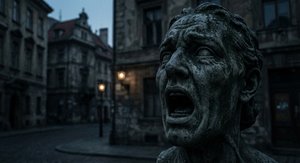 The Visceral Cry of a Nation: Exploring Emotion & Distortion in German Expressionism
 Die Brücke
 Die Zirkusreiterin
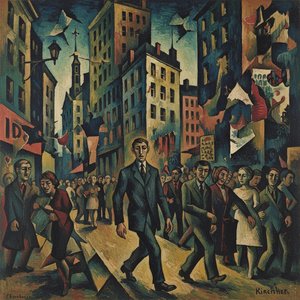 Ernst Ludwig Kirchner: Expressionism's Urban Anxiety & the Fragmentation of Modern Identity
 German expressionist cinema


