Arts and Crafts
Rosa (William Morris)
William Morris (1834–1896) stworzył Rosa. Należy do nurtu Arts and Crafts. Wykonano w technice Tkanina artystyczna. Przechowywane jest w The Baltimore Museum of Art w Baltimore, United States of America.
- Tkanina artystyczna
- The Baltimore Museum of Art

 Ręcznie malowany obraz olejny
 Wyślij jako kartkę
 Udostępnij
 Karta informacyjna


 Pobierz obraz
 Podobne obiekty
 Pokaz slajdów
 Pytania i odpowiedzi

 Statystyki
Rosa w skrócie
- Tytuł
- Rosa
- Artysta
- William Morris (1834–1896)
- Miejsce urodzenia artysty
- Walthamstow, Anglia
- Technika wykonania
- Tkanina artystyczna
- Gdzie można je zobaczyć
- The Baltimore Museum of Art, Baltimore, United States of America
- Ruch
- Arts and Crafts
- Epoka
- – Wiek XIX
- Temat
- floral pattern, victorian design, morris, rose motif, textile art, nature inspired
Co przedstawia Rosa?
William Morris’s “Rose”: A Window into the Soul of a Movement
The textile known as “Rose,” created by William Morris between 1862 and 1863, is far more than just a decorative pattern; it's a profound statement about beauty, morality, and the rejection of industrial excess. This exquisite piece, now meticulously reproduced on OriginalUniqueArt.com, offers a captivating glimpse into the heart of the Arts and Crafts movement – a period defined by its fervent devotion to nature’s inherent elegance and a deliberate opposition to the mass-produced uniformity that threatened to dominate Victorian society. Morris wasn't simply designing a pretty fabric; he was crafting an experience, inviting viewers to reconnect with the restorative power of the natural world.
The genesis of “Rose” lies deeply rooted in Morris’s personal philosophy and his unwavering belief in the superiority of organic forms. He envisioned art as a conduit for experiencing the sublime – that breathtaking sense of awe inspired by the grandeur of nature. This isn't mere imitation; it’s an active engagement with the natural world, seeking to capture its essence rather than simply mirroring its appearance superficially. The textile is a testament to this principle, meticulously depicting the delicate curves and textures of rose petals, capturing their ephemeral beauty with astonishing accuracy.
The Art of *Kataegis*: A Labor of Love
The execution of “Rose” showcases the remarkable craftsmanship of the Merton Abbey Studios, where Morris’s collaborators painstakingly brought his designs to life. A key element in achieving this level of realism was the technique known as *kataegis*. This intricate process involved printing individual florets – each with its own unique coloration and shading – in multiple colors, creating a layered effect that mimics the natural variations found within a single rose. It’s a testament to the dedication and patience required to achieve such a convincing representation of nature's complexity; countless hours were invested in recreating the subtle nuances of color and form.
Furthermore, the deliberate rejection of mechanized production is central to the textile’s significance. Every stitch, every printed petal, was executed by hand – a conscious decision to prioritize artistic control and exceptional quality over speed and efficiency. This commitment to manual labor reflects the Arts and Crafts movement's broader critique of industrialization and its emphasis on skilled craftsmanship as a vital component of cultural value.
Symbolism and Victorian Romanticism
Beyond its technical brilliance, “Rose” is rich in symbolic meaning, deeply intertwined with the aesthetic sensibilities of Victorian romanticism. The rose itself has long been associated with love, beauty, and passion – themes that resonated powerfully within the era’s artistic and literary circles. However, Morris imbued the design with a deeper moral dimension, suggesting that true beauty resides not merely in outward appearance but also in its connection to nature and spiritual values. The restrained color palette—muted pinks, yellows, and creams—evokes a sense of tranquility and understated elegance, reinforcing this message of quiet contemplation and natural harmony.
Interestingly, the inclusion of a bird within the design adds another layer of interpretation. Birds are frequently associated with freedom, hope, and connection to the heavens – further enriching the textile’s symbolic landscape and aligning it with the romantic ideals of the period. The careful integration of these elements demonstrates Morris's ability to weave complex narratives into his designs, inviting viewers to engage in a dialogue between beauty, morality, and the natural world.
Bringing “Rose” Home: A Reproduction for Today
OriginalUniqueArt.com offers meticulously crafted hand-painted reproductions of William Morris’s “Rose,” allowing you to experience this iconic textile firsthand. These reproductions capture not only the intricate details of the original but also its emotional resonance, bringing the spirit of the Arts and Crafts movement into your home or studio. Whether you are an art enthusiast, a collector seeking a piece of Victorian history, or simply someone drawn to timeless beauty, “Rose” is a captivating addition to any space – a reminder of the enduring power of nature’s elegance and the importance of handcrafted artistry.
To learn more about William Morris and his legacy, we encourage you to explore our website: William Morris’s “Rose”. You can also discover the William Morris Gallery in Walthamstow, where you can immerse yourself in the world of this remarkable artist and craftsman: William Morris Gallery.
W którym muzeum znajduje się Rosa?
The Baltimore Museum of Art
Baltimore, United States of America
Latarnia Odrodzona: Nieprzemijające Dziedzictwo Baltimore Museum of Art Wznosząc się z popiołów dewastującego pożaru, Baltimore Museum of Art nie jest jedynie odbudowaną instytucją, lecz potężnym świadectwem odporności sztuki i wspólnoty. Założony w 1914 roku w duchu odnowy po Wielkim Pożarze Baltimoru, BMA powstał z ambitną wizją – przekroczenia roli zwykłego magazynu pięknych przedmiotów, by stać się filarem życia obywatelskiego, tętniącą życiem przestrzenią, gdzie kwitnie kreatywność, a kontemplacja znajduje swoje miejsce. To fundamentalne zaangażowanie w dostępność pozostaje dziś uderzająco aktualne, ucieleśnione w pionierskiej polityce bezpłatnego wstępu ogólnego, gwarantującej, że transformacyjna moc sztuki jest dostępna dla każdego, niezależnie od pochodzenia czy okoliczności.


Zdjęcia w wysokiej rozdzielczości dzieła Rosa

Domena publiczna: artysta zmarł w 1896.
Inne rozmiary, kadrowanie i cytowanie →William Morris, Rosa, The Baltimore Museum of Art. Domena publiczna
Odpowiedzi na pytania dotyczące Rosa
Gdzie można obecnie zobaczyć dzieło „Rosa” – William Morris?
„Rosa” – William Morris znajduje się w zbiorach The Baltimore Museum of Art, Baltimore, United States of America. Informacja o muzeum dotyczy oryginału, a nie reprodukcji.
Z jakiej techniki wykorzystano "Rosa"?
„Rosa” wykonano w technice Tkanina artystyczna.
Co przedstawia „Rosa” – William Morris?
Tematyka obecna w „Rosa” – William Morris obejmuje floral pattern, victorian design, morris, rose motif, textile art, nature inspired, craftsmanship, botanical. Razem stanowią one podsumowanie tematyki dzieła.
Czy „Rosa” – William Morris znajduje się w domenie publicznej?
Jeśli chodzi o prawa autorskie, "Rosa" znajduje się w należy do domeny publicznej – autorskie prawa majątkowe wygasły.
Kto jest autorem dzieła "Rosa"?
Autorstwo dzieła "Rosa" przypisuje się William Morris.
Do jakiego nurtu w sztuce należy „Rosa” – William Morris?
„Rosa” – William Morris należy do nurtu Arts and Crafts. Nurt ten stanowi stylistyczny kontekst dzieła.
Do którego etapu twórczości William Morris należy dzieło „Rosa”?
W dorobku artystycznym William Morris dzieło „Rosa” przypada na Mid-Career. Ten etap pozwala zestawić je z innymi pracami twórcy.
Z czego wynika obecny status praw autorskich dzieła "Rosa"?
Status praw autorskich do dzieła „Rosa” – należy do domeny publicznej – autorskie prawa majątkowe wygasły – wynika z faktu, że artysta zmarł w 1896.
Czy dzieło „Rosa” – William Morris znajduje się w kraju pochodzenia artysty?
Nie – dzieło znajduje się poza granicami kraju artysty. William Morris urodził(a) się w Anglia, natomiast muzeum przechowujące oryginał dzieła „Rosa” znajduje się w United States of America.
O artyście: William Morris

1834–1896, Anglia
William Morris
A Life Rooted in Nature and Romance William Morris, born on March 24, 1834, in Walthamstow, Essex, emerged from a comfortably affluent middle-class background—a circumstance that afforded him the freedom to pursue passions rather than professions. His father’s success as a financier provided not only security but also an environment where aesthetic sensibilities could flourish. Morris's childhood was deeply shaped by the English countryside surrounding his home and a fascination with tales of medieval chivalry, laying the groundwork for a lifelong devotion to both natural beauty and romantic narratives. These early influences weren’t merely sentimental; they formed the core of his artistic philosophy.
Inne prace William Morris
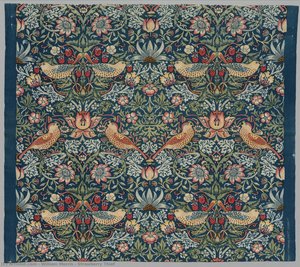 Strawberry Thief1936
 The Little Tree (Hammersmith Rug)1895
 Snakeshead1900
 Design for1881

Eseje o Rosa
 Romantic Realism's Finest: 10 Masterpieces for Your Home | OriginalUniqueArtExplore 10 defining masterpieces of Romantic Realism! Discover Courbet, Millet & Daumier's powerful paintings—capturing emotion and social …
 British artworks of the 1900sBritish artworks from the 1900s by Edmund Blair Leighton, Luke Fildes, and Arthur Trevethin Nowell. Find museum-quality reproductions on Or…
 Distinguishing Arts and Crafts from Art NouveauMaster the differences between Arts and Crafts and Art Nouveau through expert analysis. Learn to distinguish these iconic design movements …