Contemporary Realism · 1898
Taking the Count (Thomas Eakins, 1898)
Thomas Eakins (1844–1916) stworzył Taking the Count. Dzieło pochodzi z 1898. Należy do nurtu Contemporary Realism. Wykonano w technice Oil On Canvas. Przechowywane jest w Yale University Art Gallery w Hartford, Stany Zjednoczone.
- 1898
- Oil On Canvas
- Yale University Art Gallery, Hartford

 Podgląd w skali 1:1

 Ręcznie malowany obraz olejny
 Wyślij jako kartkę
 Udostępnij
 Karta informacyjna


 Pobierz obraz
 Podobne obiekty
 RTG
 Pokaz slajdów
 Pytania i odpowiedzi

 Statystyki
Taking the Count w skrócie
- Tytuł
- Taking the Count
- Artysta
- Thomas Eakins (1844–1916)
- Miejsce urodzenia artysty
- Filadelfia, Stany Zjednoczone
- Data powstania
- 1898
- Technika wykonania
- Oil On Canvas
- Gdzie można je zobaczyć
- Yale University Art Gallery, Hartford, Stany Zjednoczone
- Epoka
- 19th Century
- Temat
- boxing match, anatomy, crowd spectators, referee, philadelphia, realism
Co przedstawia Taking the Count?
The Raw Pulse of Philadelphia: A Masterclass in Realism
In the dim, electric atmosphere of Philadelphia’s Arena in 1898, a moment of profound human vulnerability is frozen in time. Thomas Eakins, a titan of American Realism, does not merely paint a boxing match; he dissects the very essence of endurance and physical struggle. In Taking the Count, we are thrust into the center of the ring, where the sweat, the tension, and the heavy breathing of the combatants feel almost palpable. This is not the romanticized, heroic athleticism often found in sporting art; instead, Eakins presents a gritty, unvarnished truth. The scene captures a fallen fighter at his most precarious moment, caught in the agonizing interval between a devastating blow and the referee's decisive count. It is a study of the human body under duress, rendered with a scientific precision that reflects Eakins’ lifelong obsession with anatomy.
The composition draws the eye through a complex web of gazes and physical postures. At the heart of the drama, the kneeling figure embodies a desperate struggle for recovery, his muscles taut and his spirit tested. Surrounding him, the referee and the standing opponent create a triangular tension that anchors the viewer within the ring. Beyond the immediate combatants, the presence of the crowd—a shadowy, watchful collective—adds a layer of psychological depth, reminding us that this private agony is being consumed as public spectacle. For the collector or the lover of fine art, this painting offers more than just a depiction of sport; it provides a window into the late 19th-century urban experience, where the boundaries between physical prowess and human frailty are perpetually blurred.
Anatomy of a Masterpiece: Technique and Light
Eakins’s technical mastery is most evident in his ability to marry scientific rigor with emotional resonance. Having spent years studying the intricacies of musculature and bone structure through dissection, he approaches the canvas with the eye of an anatomist. Every sinew and strained limb in Taking the Count is rendered with an uncompromising accuracy that makes the figures appear to possess weight and volume. His use of light does not serve to beautify the scene but to illuminate its harsh realities. The lighting within the arena creates deep, dramatic shadows that sculpt the bodies of the boxers, emphasizing the physical toll of the fight and adding a sense of cinematic gravity to the composition.
The palette, while grounded in the earthy, somber tones characteristic of Eakins’s realism, is used to direct the viewer's emotional journey. The muted colors of the background allow the pale, strained skin of the athletes to emerge from the gloom, focusing our attention on the visceral reality of the struggle. For interior designers seeking a centerpiece for a sophisticated space, this work offers a profound sense of gravitas. A high-quality reproduction of this masterpiece brings with it an air of intellectual depth and historical weight, making it an ideal choice for galleries, studies, or living spaces that value art which challenges the eye and stirs the soul.
A Legacy of Unflinching Honesty
To understand Taking the Count is to understand the rebellious spirit of Thomas Eakins himself. At a time when many of his contemporaries were retreating into the soft, fleeting impressions of light or the idealized myths of history, Eakins stood firm in his commitment to the real. He found beauty not in perfection, but in the truth of the human condition—in the grit of the city, the precision of science, and the raw intensity of life lived on the edge. This painting remains a testament to that courage.
Owning or displaying a reproduction of this work is an invitation to contemplate the themes of resilience and the cyclical nature of struggle. It serves as a powerful reminder that even in moments of defeat, there is a profound dignity in the attempt to rise again. Whether viewed as a historical document of Philadelphia’s sporting culture or as a timeless exploration of human anatomy, Taking the Count continues to captivate, offering an enduring source of inspiration for those who find beauty in the authentic and the unadorned.
W którym muzeum znajduje się Taking the Count?
Yale University Art Gallery
Hartford, Stany Zjednoczone
Początki i historia galerii Historia Yale University Art Gallery rozpoczęła się w 1832 roku, a jej fundamentem stał się dar pochodzący z kolekcji Johna Trumbulla. W tamtych wczesnych latach uwaga skupiała się przede wszystkim na malarstwie przedstawiającym amerykańską rewolucję, co stanowiło pierwotny rdzeń zbiorów tej instytucji. To właśnie te tematy ukształtowały tożsamość miejsca, które z czasem przeszło niebywałą metamorfozę.


Zdjęcia w wysokiej rozdzielczości dzieła Taking the Count
Domena publiczna: artysta zmarł w 1916.
Thomas Eakins, Taking the Count (1898), Yale University Art Gallery. Domena publiczna
Odpowiedzi na pytania dotyczące Taking the Count
Gdzie można zobaczyć oryginał „Taking the Count” – Thomas Eakins?
„Taking the Count” – Thomas Eakins znajduje się w zbiorach Yale University Art Gallery, Hartford, Stany Zjednoczone. Informacja o muzeum dotyczy oryginału, a nie reprodukcji.
W którym roku powstało dzieło „Taking the Count” – Thomas Eakins?
"Taking the Count" powstało w 1898 roku. Data ta pozwala umiejscowić dzieło w kontekście twórczości Thomas Eakins oraz epoki, w której powstało.
W jakiej technice wykonano „Taking the Count” – Thomas Eakins?
Thomas Eakins wykorzystał/a technikę Oil On Canvas w pracy „Taking the Count”. Technika ta definiuje materię oryginalnego dzieła.
Co przedstawia "Taking the Count"?
„Taking the Count” – Thomas Eakins przedstawia: boxing match, anatomy, crowd spectators, referee, philadelphia, realism, athlete.
Czy dzieło "Taking the Count" znajduje się w domenie publicznej?
Status praw autorskich dla „Taking the Count” – Thomas Eakins: dzieło znajduje się w należy do domeny publicznej – autorskie prawa majątkowe wygasły. Określa to, czy reprodukcje obrazu mogą być sporządzane swobodnie.
Kto stworzył "Taking the Count"?
„Taking the Count” zostało stworzone przez Thomas Eakins. Informacje na tej stronie dotyczą oryginalnego dzieła autorstwa Thomas Eakins.
Do jakiego nurtu artystycznego należy „Taking the Count” – Thomas Eakins?
„Taking the Count” – Thomas Eakins należy do nurtu Contemporary Realism. Nurt ten stanowi stylistyczny kontekst dzieła.
Do którego okresu twórczości Thomas Eakins należy dzieło "Taking the Count"?
W dorobku artystycznym Thomas Eakins dzieło „Taking the Count” przypada na Mature Period. Ten etap pozwala zestawić je z innymi pracami twórcy.
W jakim wieku Thomas Eakins stworzył(a) "Taking the Count"?
Thomas Eakins miał 54 lat w momencie powstania „Taking the Count” w 1898. Wiek ten obliczono na podstawie roku urodzenia artysty, 1844.
O artyście: Thomas Eakins

1844–1916, Stany Zjednoczone
Thomas Eakins
Życie Thomasa Eakinsa Urodzony 25 lipca 1844 roku w Filadelfii, w stanie Pensylwania, Thomas Eakins prowadził życie głęboko zakorzenione w mieście swojego pochodzenia. Był człowiekiem wielu pasji i dyscyplin, rozwijającym się jako malarz, fotograf, rzeźbiarz oraz pedagog sztuk pięknych. Choć artystyczne poszukiwania często wiodły go na zagraniczne studia, geografia jego egzystencji pozostawała w dużej mierze skupiona wokół Filadelfii. Przenikał przez intelektualne i towarzyskie kręgi miasta, z niezwykłą uważnością obserwując ludzi oraz fizyczną rzeczywistość, która definiowała lokalny krajobraz.
Inne prace Thomas Eakins
 Gabinet Grossa1875
 Pływanie1885
 Max Schmitt na łódce jednoszczeblowej1871
 Portrait of Samuel Murray1889
Eseje o Taking the Count
 Precision in Portraiture: The Technical Rigor of Anatomical Mastery and Hyper-RealismMaster the technical rigor of hyper-realism and anatomical precision. Explore the evolution of portraiture mastery now.
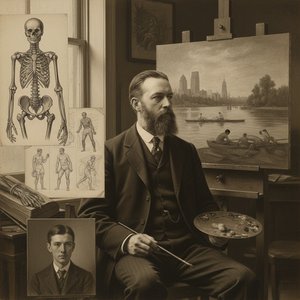 Thomas Eakins: Realism, Anatomy & the American Spirit – A Comprehensive Exploration of Life and LegacyExplore the life & legacy of Thomas Eakins, a pivotal American Realist painter. Discover his groundbreaking techniques, anatomical precisio…
 Romantic Realism's Finest: 10 Masterpieces for Your Home | OriginalUniqueArtExplore 10 defining masterpieces of Romantic Realism! Discover Courbet, Millet & Daumier's powerful paintings—capturing emotion and social …