
 Podgląd w skali
 Wyślij jako kartkę
 Udostępnij
 Szczegóły dzieła

 Pobierz
 Podobne obiekty
 RTG
RTG Pokaz slajdów
The Revenge of Tomyris
 Oil On Canvas
- WallArt
- Baroque
 1620
1620 185.0 x 175.0 cm
 Academy of Fine Arts Vienna
 Rozwiń treść
Ręcznie malowana reprodukcja olejowa
Ręcznie malowany obraz olejny na płótnie, wykonany na zamówienie przez naszych artystów w wybranym przez Ciebie wymiarze i oprawie. ( Zamów wydruk Przełącz na obraz)




P118B $10

P118H $10

P118W $10

P438Z $10

P508JH $12

P508YH $12

P805H $10

P805Z $10

P919BZ $10

P919G $10

P919XJ $10

P959ZH $10

P968JZ $12

W106C $8

W218G $10

W218JH $8

W218Y $10

W307PJ $10

W316G $10

W316PJ $8

W316Y $10

W398PJ $8

W4111J $10

W500HY $15

W500JH $15

W692G $12

W849H $8

W940BG $15

W953PJ $8




Wybierz spośród naszych standardowych rozmiarów, które zachowują oryginalne proporcje dzieła sztuki.

Możesz wprowadzić własne wymiary, aby dopasować obraz do konkretnej ramy lub przestrzeni. Jeśli wybrany rozmiar nie będzie odpowiadał proporcjom oryginału, przytniecie dzieło sztuki lub rozszerzymy je o dodatkowe elementy, ręcznie domalowane przez artystę. Przed rozpoczęciem produkcji wyślemy projekt cyfrowy do Twojej akceptacji.
Należy pamiętać, że podgląd na ekranie nie odzwierciedla rzeczywistego przycinania ani rozszerzania obrazu. Tylko projekt dokładnie pokaże ostateczną kompozycję.
Choć oferujemy możliwość zamówienia niestandardowych rozmiarów, zalecamy wybór wymiaru z gotowej listy, aby zachować oryginalne proporcje dzieła.
Po złożeniu zamówienia zespół OriginalUniqueArt.com skontaktuje się z klientem drogą mailową w celu uzyskania instrukcji i prześle wizualizację projektu
Dostawa na całym świecie () w ciągu 3–4 tygodni zamiast standardowych 5 tygodni. (9 Sierpień). Bez kompromisów w kwestii jakości.

Bezpłatna ekspresowa wysyłka na cały świat

Wysokiej jakości płótno lniane

Pełne ubezpieczenie przesyłki

Gwarancja zwrotu należności celnych i podatków importowych

Gwarancja wiernego odwzorowania kolorów

Polityka 60-dniowego zwrotu (tylko w przypadku wad)

Gwarancja 100% zwrotu kosztów

Zniżka przy zamówieniu wielu produktów
 Opcja ze szkłem jest dostępna wyłącznie w rozmiarach poniżej 110 cm

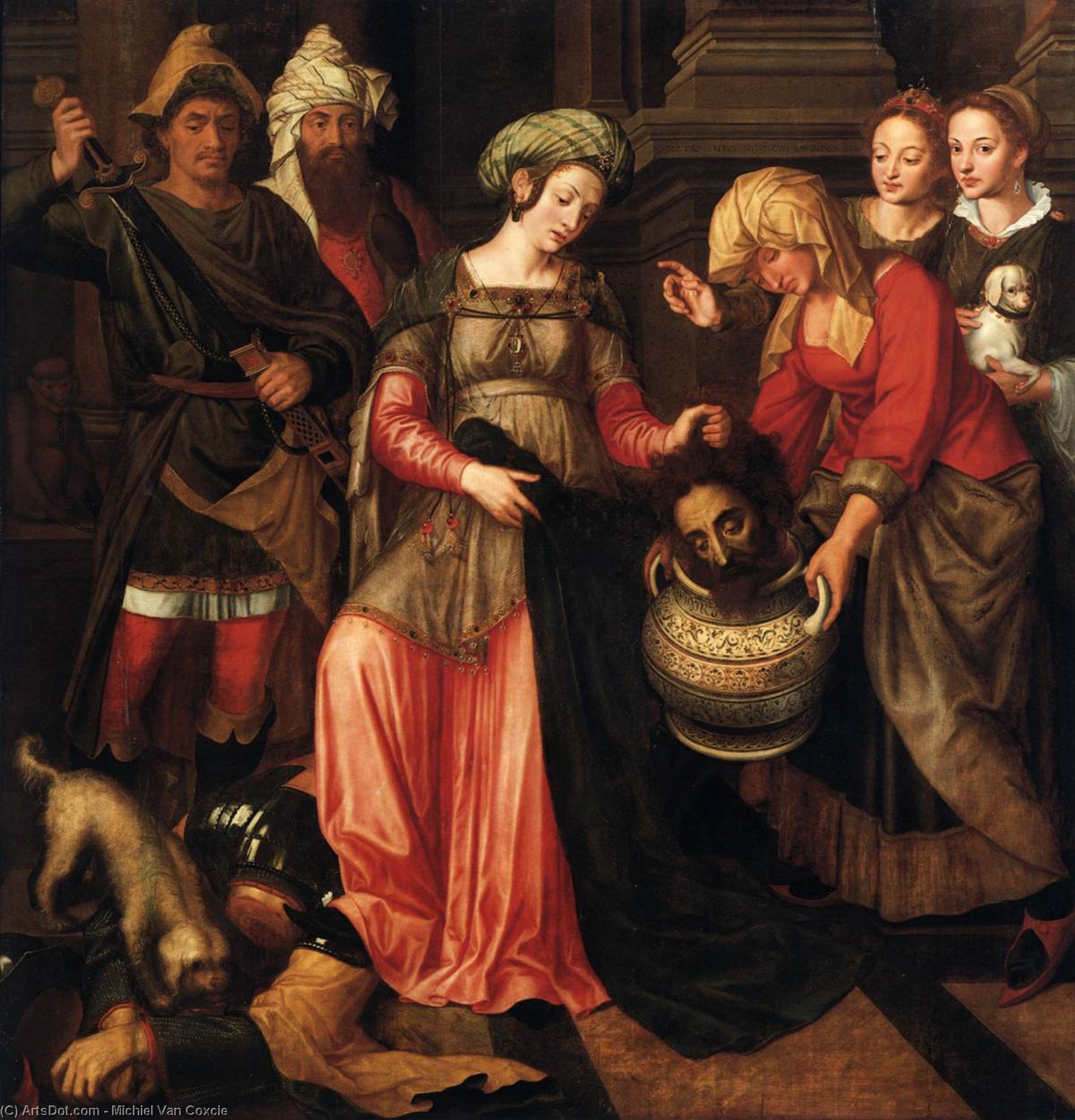
The Revenge of Tomyris
Technika reprodukcji
Wymiary reprodukcji
-


Cena całkowita
$ 425
Opis dzieła
The Revenge of Tomyris: A Baroque Meditation on Mortality
- Artist: Michiel van Coxcie (1499-1592)
- Title: The Revenge of Tomyris
- Date: 1620
- Size: 185 x 175 cm
A Symphony of Light and Shadow: Technique and Style
- Baroque Mastery: The painting firmly establishes itself within the Baroque style, characterized by its dynamic composition, dramatic lighting (chiaroscuro), and expressive handling of form. Coxcie’s approach reflects a deliberate move away from the serene idealism of the High Renaissance, embracing instead a heightened sense of emotional intensity and theatricality.
- Oil on Canvas: Executed in oil paints on canvas, the technique showcases layers of meticulous brushwork that build up texture and create rich, luminous colors. The artist’s deliberate application of paint – visible in the textured surfaces – contributes significantly to the work's palpable sense of volume and depth.
- Perspective and Composition: While employing a somewhat flattened perspective typical of Baroque painting, Coxcie skillfully manipulates spatial relationships to draw the viewer into the scene. The figures are clustered together, creating an intimate and dramatic tableau that emphasizes their shared grief and contemplation.
Symbolism and Narrative
- The Skull: The central element – the skull within the vessel – is a potent symbol of death and judgment, a recurring motif in Baroque art reflecting anxieties about divine retribution and the inevitability of mortality. Its placement at the heart of the composition immediately establishes the painting’s thematic core.
- Gestures and Emotion: The figures themselves are rendered with expressive gestures and faces conveying sorrow, concern, and perhaps even a sense of righteous indignation. The woman in dark clothing, directing attention towards the skull, acts as a focal point, embodying leadership and grief.
- Dog at the Base: The inclusion of a dog lying at the base of the composition adds another layer of somber symbolism – often associated with loyalty, fidelity, and even mourning itself.
Historical Context and Emotional Impact
- Flemish Renaissance & Baroque Synthesis: Coxcie’s work exemplifies the transition from the Renaissance to the Baroque period in Flanders. While influenced by Italian masters, he retained a distinctly Flemish sensibility, prioritizing emotional depth and narrative clarity.
- Themes of Mortality and Justice: “The Revenge of Tomyris” taps into universal themes of death, grief, and justice – concerns that were particularly prevalent during the turbulent religious landscape of 17th-century Europe. The painting’s dramatic presentation invites viewers to contemplate their own mortality and the consequences of sin.
- Evocative Atmosphere: The warm color palette dominated by reds, browns, and golds, contrasted with cooler blues and greens, creates a visually arresting effect. The strong chiaroscuro further intensifies the emotional impact, drawing attention to key elements and amplifying the sense of drama and foreboding.
O artyście
Michiel van Coxcie: Bridging Renaissance and Baroque Brilliance
Michiel van Coxcie (1499-1592), a Flemish master whose name echoes through the annals of art history, stands as a singular figure—the ‘Flemish Raphael,’ lauded for his ability to synthesize the grandeur of Italian artistic ideals with the profound spirituality of his homeland. Born in Mechelen, Belgium, Coxcie’s life unfolded against the backdrop of a turbulent era marked by religious upheaval and artistic innovation, shaping him into an artist whose legacy continues to inspire awe centuries later. Coxcie's formative years were steeped in Flemish tradition, receiving meticulous training from Jan Portaers and Pieter Bruegel the Elder—artists who championed realism and emotional depth. However, his gaze was undeniably drawn eastward, captivated by the revolutionary advancements of Michelangelo, Leonardo da Vinci, and Raphael. Unlike many of his contemporaries who slavishly imitated Italian styles, Coxcie skillfully blended these influences, forging a distinctive artistic voice that prioritized both anatomical accuracy and expressive emotion. This duality is palpable in his oeuvre, where figures possess breathtaking realism alongside profound psychological insight. He was thus an important artistic link between the artists of early Netherlandish painting and the Flemish Baroque. His prolific output spanned across various mediums—paintings, tapestries, sculptures—demonstrating an unparalleled versatility. He achieved considerable renown during his lifetime, securing commissions from prominent patrons including Maximilian I of Bavaria and Philip II of Spain. His monumental altarpiece in St. Michael and Gudula Cathedral in Brussels remains a testament to his ambition and technical prowess, showcasing intricate detail and masterful composition. The cathedral’s interior is adorned with stunning frescoes depicting biblical scenes—a bold undertaking that exemplifies Coxcie's mastery of perspective and color theory. Similarly, his contribution to the St. Rumbolds Cathedral tapestry—a depiction of Adam and God—is considered one of the finest examples of Renaissance textile art. The tapestry’s vibrant hues and meticulous rendering capture the majesty of creation, reflecting Coxcie’s deep understanding of symbolism and artistic convention. Coxcie’s artistic style evolved throughout his career, reflecting the shifting currents of artistic taste within Europe. Initially adhering to a Mannerist aesthetic characterized by elongated figures and stylized drapery—a stylistic choice that departed from the idealized proportions favored by earlier Renaissance artists—he gradually embraced Baroque principles, incorporating dramatic lighting and dynamic movement into his works. This stylistic progression underscores his adaptability and intellectual curiosity—qualities that cemented his position as a pivotal figure in shaping the visual landscape of the sixteenth century. He was particularly influenced by Michelangelo’s monumental sculptures and Leonardo da Vinci's scientific investigations, demonstrating an eagerness to explore new artistic horizons. Despite fading from artistic prominence after his death in 1592, Coxcie’s influence persisted within subsequent generations of painters. His meticulous observation of human anatomy and his ability to convey emotion through subtle gestures established him as an enduring inspiration for artists striving to capture the essence of human experience. Today, reproductions of his masterpieces—such as ‘The Revenge of Tomyris’ and ‘Saint Cecilia’—continue to resonate with audiences worldwide, ensuring that Michiel van Coxcie's contribution to art history remains vividly alive. His legacy endures not merely as a collection of impressive artworks but as a symbol of artistic innovation and the harmonious fusion of tradition and experimentation.
Michiel van Coxcie
1499 - 1592 , Belgia
Krótka nota
- Artistic Movement Or Style: Renaissance & Baroque Synthesis
- Artists Or Movements Influenced By This Artist: ['Baroque Painting']
- Artists Who Influenced This Artist:
- Michelangelo
- Da Vinci
- Raphael
- Date Of Birth: Mechelen, Belgium (1499)
- Date Of Death: 1592
- Full Name: Michiel van Coxcie
- Nationality: Flemish
- Notable Artworks:
- The Revenge of Tomyris
- Adam and the God
- Saint Cecilia
- Place Of Birth: Mechelen
Powiązane artykuły
25 Najlepszych Obrazów Vincenta van Gogha – Galeria Sztuki Online | OriginalUniqueArt
Odkryj 25 najsłynniejszych obrazów Vincenta van Gogha! Poznaj historie, techniki i emocje kryjące się za 'Gwieździstą noc', 'Słonecznikami' i innymi arcydziełami. Reprodukcje najwyższej jakości na OriginalUniqueArt.com – inspiracje dla Twojego wnętrza.

Złoty Wiek Niderlandów: Światło, Realizm i Kulturowe Innowacje w Malarstwie Barokowym
Odkryj fascynujący świat malarstwa holenderskiego Złotego Wieku! Poznaj arcydzieła Rembrandta, Vermeera i innych mistrzów. Analiza technik, gatunków i wpływu na sztukę europejską.

Złoty Wiek Holandii: 10 arcydzieł, które zmieniły historię sztuki | OriginalUniqueArt.com
Odkryj 10 arcydzieł Złotego Wieku Holandii! Poznaj historię Rembrandta, Vermeera i innych mistrzów. Reprodukcje obrazów najwyższej jakości do Twojego wnętrza – OriginalUniqueArt.com.

Golden Light & Dutch Skies: The Timeless Magic of Dutch Golden Age Landscapes
Discover the breathtaking beauty of Dutch Golden Age landscapes. Explore the mastery of light, chiaroscuro, and 17th-century realism through an expert art history lens, celebrating the enduring legacy of the Dutch Masters for discerning collectors and art lovers.

Holenderski Barok: 10 Arcydzieł, Które Zdefiniowały Epokę | OriginalUniqueArt
Poznaj 10 arcydzieł holenderskiego baroku! Odkryj historie Rembrandta, Vermeera i innych mistrzów XVII wieku. Reprodukcje obrazów najwyższej jakości – idealne do Twojego wnętrza. OriginalUniqueArt.com

