Pop Art · 1955
Collection (Robert Rauschenberg, 1955)
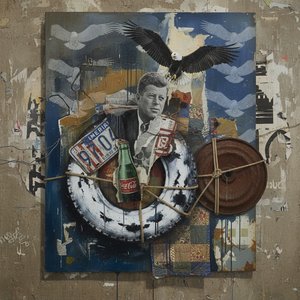
Robert Rauschenberg (1925–2008) stworzył Collection. Dzieło pochodzi z 1955. Należy do nurtu Pop Art. Wykonano w technice Mixed Media. Przechowywane jest w San Francisco Museum of Modern Art w San Francisco, Stany Zjednoczone Ameryki. Wymiary to 203 × 243 cm.
- 1955
- Mixed Media
- 203 × 243 cm
- San Francisco Museum of Modern Art

 Podgląd w skali 1:1

 Ręcznie malowany obraz olejny
 Wyślij jako kartkę
 Udostępnij
 Karta informacyjna


 Pobierz obraz
 Podobne obiekty
 RTG
 Pokaz slajdów
 Pytania i odpowiedzi

 Statystyki
Collection w pigułce
- Tytuł
- Collection
- Artysta
- Robert Rauschenberg (1925–2008)
- Miejsce urodzenia artysty
- Port Arthur, Stany Zjednoczone
- Data powstania
- 1955
- Technika wykonania
- Mixed Media
- Wymiary
- 203 × 243 cm
- Gdzie można je zobaczyć
- San Francisco Museum of Modern Art, San Francisco, Stany Zjednoczone Ameryki
- Ruch
- Pop Art
- Epoka
- Modern
- Temat
- combine painting, collage, fabric, wood scraps, color field, everyday objects
Co przedstawia Collection?
A Symphony of Chaos and Color: Rediscovering Rauschenberg’s “Collection”
In the mid-1950s, the art world was gripped by the intense, often brooding emotionalism of Abstract Expressionism. Yet, amidst this era of heavy shadows and singular gestures, Robert Rauschenberg emerged with a vision that refused to be contained by the edges of a traditional canvas. His 1955 masterpiece, “Collection,” serves as a breathtaking manifesto of this new era—a work that does not merely sit upon a wall but breathes with the vibrant, messy, and beautiful energy of life itself. To encounter this piece is to witness a pivotal moment in American art history, where the boundaries between the high art of the gallery and the raw textures of the street began to dissolve into something entirely new.
The visual impact of “Collection” is immediate and overwhelming. Spanning an impressive 203 x 243 cm, the work presents a kaleidoscopic tapestry that defies monochromatic simplicity. Instead of the somber tones favored by his contemporaries, Rauschenberg orchestrates a brilliant dialogue between deep reds, sunny yellows, calming blues, and fiery oranges. This is not a painting of static shapes, but a dynamic landscape of layered complexity. As your eyes wander across the surface, you encounter an asymmetrical dance of elements: fragments of weathered wood scraps juxtaposed against unexpected textures, and even the subtle, haunting presence of a mirror positioned off-center, which invites the viewer to physically enter the artwork’s space.
The Alchemy of the Combine: Technique and Texture
At the heart of this work lies Rauschenberg’s revolutionary “Combine” technique, a method that fundamentally redefined what a painting could be. He moved beyond the brush to embrace the world around him, seamlessly blending traditional painting with the tactile reality of collage. Through the use of silkscreen printing alongside meticulously applied fabric and found objects, he achieved a textural richness that is almost sculptural in nature. This hybrid approach allows light to play differently across the canvas, catching on raised surfaces and receding into deep, shadowed crevices.
For the discerning collector or interior designer, this piece offers an unparalleled depth of character. The way the artwork incorporates various shades—from verdant greens to stark whites—creates a sense of movement that changes depending on the lighting of a room. It is a work that demands attention, providing a sophisticated focal point that bridges the gap between modern abstraction and contemporary installation art. The inclusion of diverse shapes, including a delicate bird figure that drifts through the composition, adds a layer of narrative intrigue, making every viewing a new discovery.
A Legacy of Freedom and Artistic Rebellion
To understand “Collection” is to understand the spirit of rebellion that defined Rauschenberg’s career. Born in the oil fields of Texas, his life was one of transition and movement, a nomadic sensibility that allowed him to see beauty in the discarded and the everyday. By integrating found objects into his work, he sought to liberate painting from the rigid confines of form and content, mirroring the broader cultural shifts of a post-war America seeking new modes of expression. He rejected the perceived heaviness of the New York School in favor of a more democratic, inclusive aesthetic.
Ultimately, “Collection” is an invitation to embrace complexity. It symbolizes the beauty found in the collision of disparate parts—the way chaos can be orchestrated into harmony. For those seeking to bring a sense of historical significance and avant-garde energy into a curated space, a high-quality reproduction of this work offers more than just decoration; it offers a piece of the revolution. It is a profound statement of artistic freedom that continues to inspire awe, reminding us that art is not just something to be looked at, but something to be lived within.
W którym muzeum znajduje się Collection?
San Francisco Museum of Modern Art
San Francisco, Stany Zjednoczone Ameryki
Początki i historia instytucji San Francisco Museum of Modern Art powstało w 1935 roku. Założona pod przewodnictwem dyrektor Grace L. McCann Morley instytucja, funkcjonowała pierwotnie jako San Francisco Museum of Art.


Zdjęcia w wysokiej rozdzielczości dzieła Collection

Chronione prawem autorskim: obraz przedstawiono wyłącznie w celach informacyjnych.
Inne rozmiary, kadrowanie i cytowanie →Robert Rauschenberg, Collection (1955), San Francisco Museum of Modern Art.
Odpowiedzi na pytania dotyczące Collection
Gdzie można zobaczyć oryginał „Collection” – Robert Rauschenberg?
„Collection” – Robert Rauschenberg znajduje się w zbiorach San Francisco Museum of Modern Art, San Francisco, Stany Zjednoczone Ameryki. Informacja o muzeum dotyczy oryginału, a nie reprodukcji.
W którym roku powstało „Collection” – Robert Rauschenberg?
"Collection" powstało w 1955 roku. Data ta pozwala umiejscowić dzieło w kontekście twórczości Robert Rauschenberg oraz epoki, w której powstało.
Z jakiej techniki wykorzystano "Collection"?
Technika wykonania dzieła „Collection” – Robert Rauschenberg to Mixed Media. Reprodukcje mają na celu wierne oddanie wyglądu tej techniki.
Jakie są rzeczywiste wymiary dzieła „Collection” – Robert Rauschenberg?
Oryginalne wymiary dzieła „Collection” to 203 x 243 cm. Znajomość pierwotnej skali może być pomocna przy wyborze odpowiedniego rozmiaru reprodukcji.
Co przedstawia "Collection"?
Tematyka obecna w „Collection” – Robert Rauschenberg obejmuje combine painting, collage, fabric, wood scraps, color field, everyday objects, abstract forms. Razem stanowią one podsumowanie tematyki dzieła.
Czy dzieło "Collection" znajduje się w domenie publicznej?
Status praw autorskich dla „Collection” – Robert Rauschenberg: dzieło znajduje się w nadal objęte ochroną prawa autorskiego. Określa to, czy reprodukcje obrazu mogą być sporządzane swobodnie.
Kto stworzył "Collection"?
Autorem dzieła „Collection” jest Robert Rauschenberg. Praca ta figuruje w katalogu pod nazwiskiem Robert Rauschenberg.
Do jakiego nurtu w sztuce należy „Collection” – Robert Rauschenberg?
Nurt związany z „Collection” – Robert Rauschenberg to Pop Art. Ta klasyfikacja sytuuje dzieło wśród pokrewnych artystów i dzieł sztuki.
Do którego okresu twórczości Robert Rauschenberg należy dzieło „Collection”?
„Collection” pochodzi z okresu Combine Era w twórczości Robert Rauschenberg. Klasyfikacja ta wiąże dzieło z rozwojem artysty.
O artyście: Robert Rauschenberg

1925–2008, Stany Zjednoczone
Robert Rauschenberg
Życie i Początki: Wędrowiec z Teksasu Robert Rauschenberg, urodzony jako Milton Ernest Rauschenberg w 1925 roku w Port Arthur w stanie Teksas, był artystą, którego życie odzwierciedlało dynamizm i transformacyjną energię, którą wnosił do świata sztuki. Jego dzieciństwo nie było naznaczone jednym miejscem; zawód ojca wymagał koczowniczego trybu życia, podróży po różnorodnych terenach, które subtelnie zaszczepiły w nim wrażliwość na zmienne bodźce wizualne i gotowość do akceptacji zmian. To wczesne doświadczenie wykształciło poczucie dostrojenia się do tekstur i rytmów amerykańskiego życia – podprąd, który głęboko ukształtował jego artystyczne poszukiwania. Początkowo zainteresowany farmakologią na Uniwersytecie Teksańskim, Rauschenberg szybko zmienił ścieżkę, kierując się ku sztuce – najpierw z konieczności podczas służby w marynarce wojennej, a następnie poprzez studia w Kansas City Art Institute i, co kluczowe, w Black Mountain College w Północnej Karolinie.
O Robert Rauschenberg Najważniejsze dzieła Robert Rauschenberg
Inne prace Robert Rauschenberg
 Majestát1963
 Signs1970
 Barge1963
 Odalisk1958
Eseje o Collection
 Robert Rauschenberg: Bridging Painting & Life – A Comprehensive Exploration of Combines, Silkscreens, and the Erasure of BoundariesExplore the revolutionary art of Robert Rauschenberg – Combines, silkscreens & more. Discover his impact on Pop Art, investment potential &…
 Mastering Art Collecting: A Professional Guide to Acquiring Museum-Quality Famous ReproductionsMaster the art of collecting with our expert guide to museum-quality oil reproductions. Learn to distinguish hand-painted masterpieces from…
 Beyond the Subject: The Raw Power of Abstract Expressionism | A Definitive Guide for the Modern CollectorExplore the visceral power of Abstract Expressionism. From the New York School to action painting, discover how to collect high-impact, han…